Korean Braised Shiitake Mushrooms
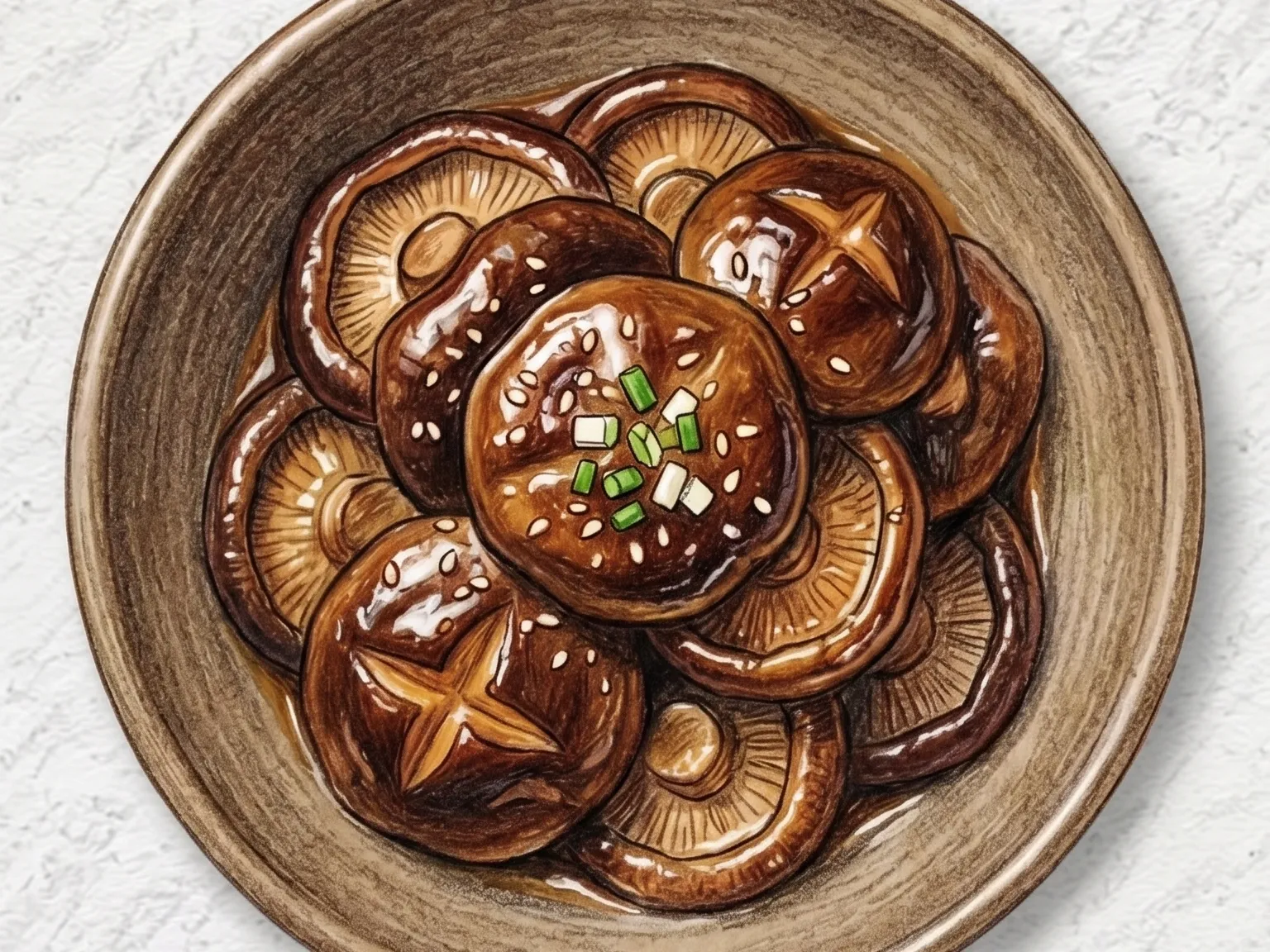
Pyogo-beoseot-jorim braises whole shiitake mushrooms in soy sauce with oligosaccharide syrup and minced garlic over low heat until glossy. The mushrooms' natural umami intensifies as they absorb the soy-based braising liquid, while the syrup caramelizes into a lacquer-like sheen on the surface. Each mushroom releases a burst of salty-sweet juice when bitten. A finishing touch of sesame oil and toasted sesame seeds adds a layer of nuttiness to the earthy base.
Adjust Servings
Instructions
- 1
Remove stems and slice shiitake thickly.
- 2
Boil water, soy sauce, syrup, and garlic in a pan.
- 3
Add mushrooms and simmer 8 minutes over medium heat.
- 4
When sauce reduces, drizzle sesame oil and toss.
- 5
Sprinkle sesame seeds and serve.
As an Amazon Associate, we may earn from qualifying purchases.
Tips
Nutrition (per serving)
More Recipes

Korean Braised Tofu and Mushrooms
Dubu-beoseot-jorim is a Korean braised dish of firm tofu and oyster mushrooms simmered in a soy-based sauce. The tofu develops a lightly firm exterior while staying soft inside as it absorbs the seasoning. Oyster mushrooms contribute a chewy bite and natural umami that deepens the overall flavor without additional stock. It is a straightforward braise that requires only soy sauce, water, and a few basic seasonings to produce a satisfying result.

Korean Soy Braised Eggplant
Gaji-jorim is a Korean braised eggplant dish simmered in soy sauce until the flesh is thoroughly tender and saturated with seasoning. The sweet-salty sauce permeates evenly through the eggplant as it cooks down. A finishing drizzle of sesame oil and a sprinkle of sesame seeds add a nutty aroma to each serving. Despite using only eggplant as the main ingredient, the slow braising concentrates the flavors into a compelling rice accompaniment.

Korean Soy-Braised Deodeok Root
Deodeok-jorim is mountain root braised in soy sauce, rice syrup, garlic, and sesame oil. The root's distinctive bitter-herbal aroma softens as the sweet-salty glaze coats it during simmering, while the interior stays dense and slightly chewy. A single green chili adds a quiet heat at the finish, and sesame seeds scattered on top bring a toasted nuttiness. It is a banchan that preserves the wild, earthy character of foraged deodeok and pairs naturally with other vegetable side dishes on a Korean table.

Korean Soy-Braised King Oyster Mushrooms
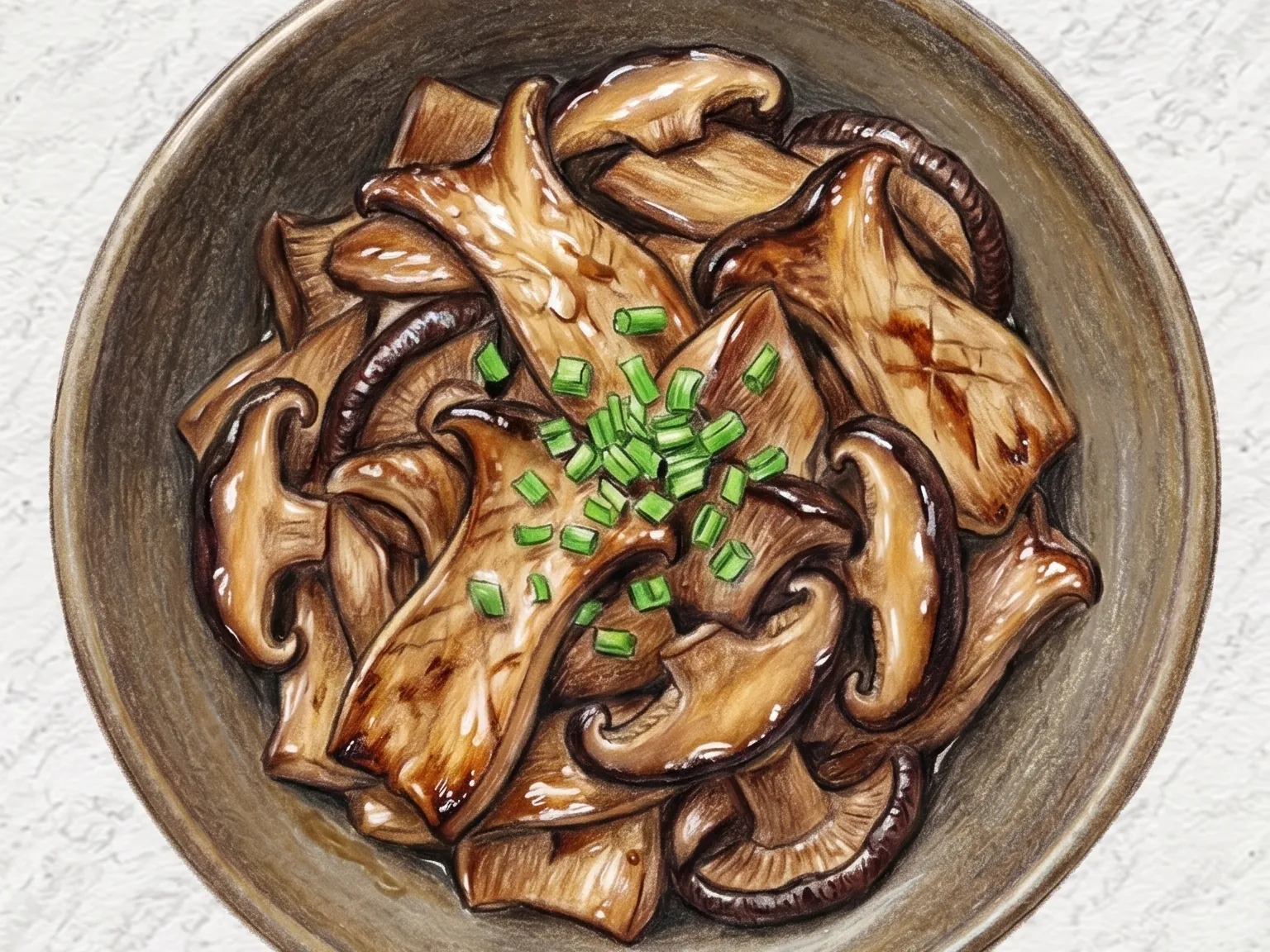
Saesongi-beoseot-jorim braises 300 grams of king oyster mushrooms in a soy-based sauce after an initial sear that drives off moisture and firms up the texture. The mushrooms are halved lengthwise, cut into bite-size pieces, and pan-fried in oil for about two minutes until lightly golden before the braising liquid - soy sauce, water, oligosaccharide syrup, and garlic - is poured in. Five minutes of simmering over medium heat reduces the liquid to a sticky glaze that clings to every surface. Sesame oil is drizzled in just before removing from heat, and chopped scallion adds a fresh green contrast. The finished dish stores well, making it a reliable make-ahead side for weekday meals.

Korean Braised Anchovy Side Dish
Myeolchi-jorim simmers tiny dried anchovies in soy sauce, rice syrup, and garlic into a moist, glazed banchan that contrasts fundamentally with stir-fried anchovy preparations. Where bokkeum chases crispness, jorim aims for softness - the anchovies absorb the braising liquid over a sustained simmer, becoming pliant and saturated with sweet-salty flavor throughout their interior. A one-minute dry toast removes any fishiness before soy sauce, syrup, minced garlic, and water go into the pan, simmering uncovered on low heat for ten minutes. As the liquid reduces, a sticky, dark glaze wraps around each anchovy; unlike the bokkeum, pressing one between your teeth releases a rush of seasoned juice from within. Sesame seeds and sesame oil stirred in off-heat add a final layer of nuttiness. Once fully cooled, the reduced sauce thickens further into an almost jelly-like coating that holds the anchovies together. Refrigerated in an airtight container, myeolchi-jorim keeps for over a week.

Korean Soy-Braised Beef with Mushrooms
Sogogi beoseot jangjorim is a Korean soy-braised banchan of beef eye round, shiitake mushrooms, and whole garlic cloves. The beef is boiled first and the resulting clear stock becomes the braising liquid, layering the soy sauce with deep meat flavor from the start. Shiitake mushrooms contribute their own aromatic umami, and whole garlic cloves lose their sharpness during the long simmer, turning mellow and sweet. Shredding the beef along the grain exposes more surface area to the sauce, and an overnight rest in the refrigerator lets every component absorb the seasoning more fully. It stores well for days, making it a reliable lunchbox and meal-prep staple.