Charim

2686 Korean & World Recipes

2686+ Korean recipes, clean and organized. Ingredients to instructions, all at a glance.

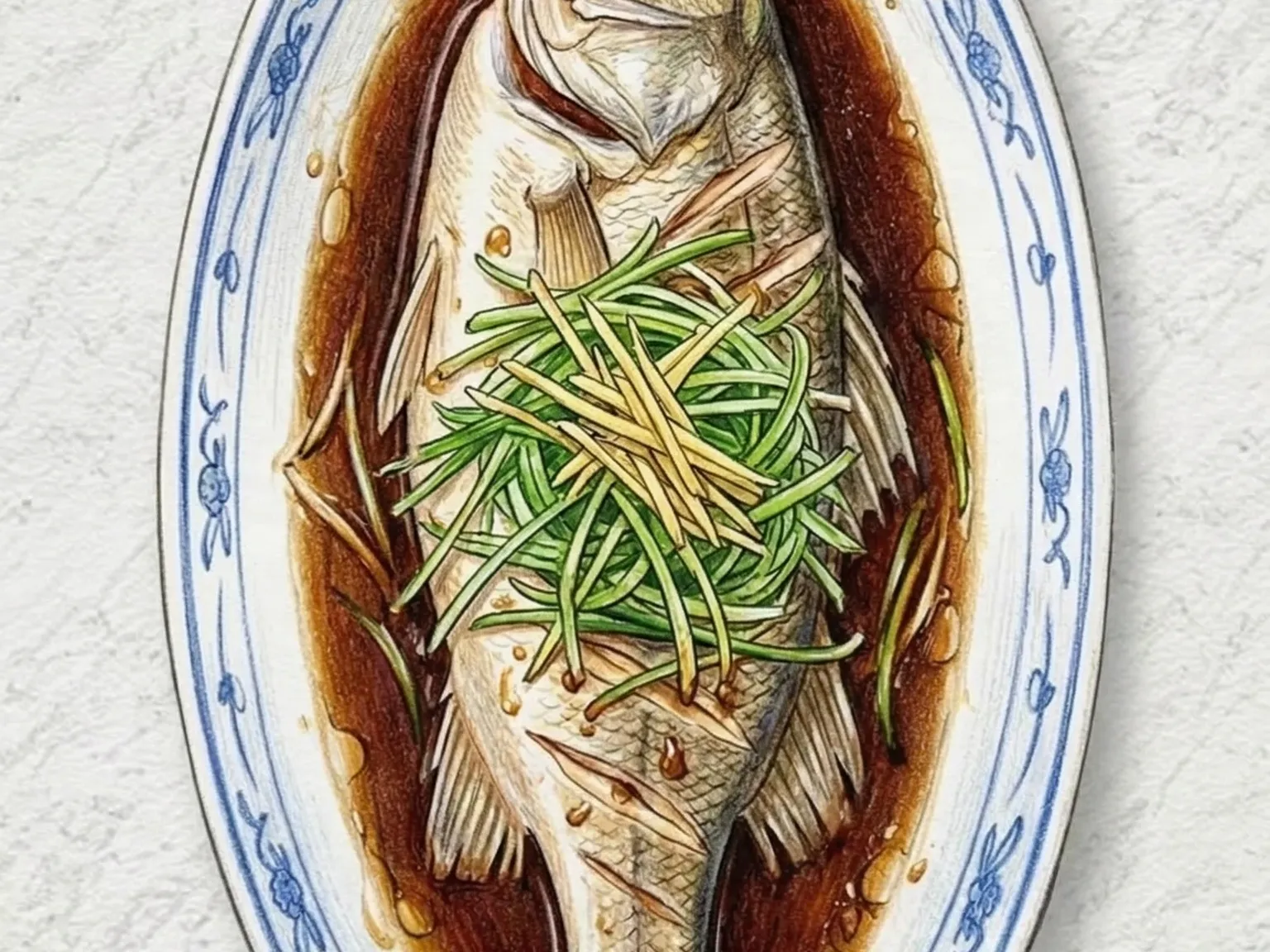
Cantonese Steamed Seabass
Steamed Medium

Cantonese Steamed Seabass

Qingzheng seabass is a Cantonese steamed fish dish where a scored seabass is rubbed with julienned ginger and rice wine, then steamed on high heat for ten to twelve minutes. A light sauce of soy and sugar is poured over the cooked fish, shredded scallions are piled on top, and sizzling hot oil is drizzled over everything to release an intense burst of allium fragrance. The fish flesh stays moist with its flaky grain intact, and the soy dressing is deliberately restrained so the seabass's own mild, clean taste remains the focus. The simplicity of the preparation and the dramatic finish of hot oil over scallions represent the Cantonese philosophy of letting quality ingredients speak for themselves.

Prep 20min Cook 15min 2 servings

Adjust Servings

2servings
servings

Instructions

  1. 1

    Score the seabass, rub with ginger and rice wine, and rest 10 minutes.

  2. 2

    Boil steamer water and place fish on a heatproof plate.

  3. 3

    Steam on high for 10-12 minutes until fully cooked.

  4. 4

    Mix soy sauce and sugar, then pour over fish.

  5. 5

    Top with scallions and pour hot oil to release aroma.

🛒Shop Ingredients on Amazon

As an Amazon Associate, we may earn from qualifying purchases.

Tips

Adjust steaming time by 1-2 minutes based on fish thickness.

Nutrition (per serving)

Calories
290
kcal
Protein
34
g
Carbs
4
g
Fat
14
g

More Recipes

Cantonese Steamed Fish
AsianEasy

Cantonese Steamed Fish

Cantonese steamed fish - ching jing yu - embodies the Cantonese culinary philosophy of letting premium ingredients speak for themselves with minimal intervention. The technique demands the freshest possible whole fish - sea bass, grouper, or pomfret - because steaming hides nothing; any hint of staleness is immediately exposed. The fish is scored, placed on a plate with ginger slices tucked underneath and inside the cavity, then steamed over roiling water for exactly eight to ten minutes depending on thickness. Overcooking by even a minute turns the flesh from silky and translucent to dry and chalky. The moment the fish leaves the steamer, any accumulated liquid is drained - it carries a fishy taste that would spoil the dish. Julienned scallion and ginger are piled on top, then a ladle of smoking-hot oil is poured directly over them, sizzling the aromatics and releasing their fragrance into the fish. A final drizzle of seasoned soy sauce and a few drops of sesame oil complete the dish. In Cantonese banquet culture, the steamed fish course is often the most expensive item on the table, chosen live from a restaurant tank.

🥗 Light & Healthy
Prep 15minCook 12min2 servings
Chinese Red-Braised Fish (Hong Shao Yu)
SteamedMedium

Chinese Red-Braised Fish (Hong Shao Yu)

Golden pan-seared white fish glazed in a glossy, caramelized soy-sugar sauce with ginger and green onion -- a Chinese home-cooking classic ready in under 30 minutes. Searing creates a firm exterior that holds the fish together throughout braising, while ginger and green onion infuse the sauce with fragrance and neutralize any fishiness. The sauce reduces into a glossy, dark glaze that coats each piece of fish. With a cooking time under 30 minutes, this is a practical weeknight dish that delivers the deep, caramelized soy flavors of long-braised Chinese cooking in a fraction of the time.

🎉 Special Occasion
Prep 20minCook 25min4 servings
Korean Steamed Sea Bream (Whole Fish with Soy Ginger Rice Wine)
SteamedMedium

Korean Steamed Sea Bream (Whole Fish with Soy Ginger Rice Wine)

Domi-jjim is a whole sea bream steamed with soy sauce, rice wine, and ginger. Sea bream is a firm white fish with mild flavor, and steaming preserves its moist, flaky flesh without drying it out. Rice wine and ginger eliminate any trace of fishiness, leaving only a clean umami taste, while soy sauce provides a subtle seasoning that does not overpower the fish. Presenting the whole fish on a platter gives the dish a striking appearance, making it a frequent choice for holiday tables and when hosting guests.

🎉 Special Occasion
Prep 20minCook 25min4 servings
Dongpo Pork (Chinese Soy-Braised Melt-in-Mouth Pork Belly)
SteamedHard

Dongpo Pork (Chinese Soy-Braised Melt-in-Mouth Pork Belly)

Dongpo rou is a Chinese-style pork belly braised slowly in soy sauce, rice wine, sugar, ginger, and green onion. Long cooking over low heat renders the fat layers translucent and meltingly soft, while the lean portions turn a deep mahogany from the soy and sugar. Rice wine drives off any porkiness and ginger sharpens the finish, though the dominant impression is a sweet, deeply savory richness. Named after the Song dynasty poet Su Dongpo, the dish is meant to be appreciated for the luxurious texture of the rendered fat as much as for its flavor.

🎉 Special Occasion
Prep 25minCook 150min4 servings
Chinese Soy-Braised Beef Shank
SteamedHard

Chinese Soy-Braised Beef Shank

Jiang niu rou is Chinese soy-braised beef shank simmered for at least 90 minutes with soy sauce, dark soy sauce, star anise, ginger, green onion, and sugar. The long, gentle braise breaks down the connective tissue in the shank while keeping the meat intact enough to slice cleanly against the grain once cooled. Star anise lends a distinctive warm, licorice-like aroma that penetrates deep into the beef. The dish is commonly served cold in thin slices as an appetizer, and the leftover braising liquid is traditionally repurposed for cooking soy-braised eggs.

🎉 Special Occasion
Prep 25minCook 110min4 servings
Douhua (Silky Tofu Pudding Dessert)
AsianMedium

Douhua (Silky Tofu Pudding Dessert)

Douhua - tofu pudding - has been a beloved street dessert across China, Taiwan, and Southeast Asian Chinese communities for centuries, occupying the same foundational role in Asian sweets that custard holds in European traditions. Freshly pressed soy milk is set with a coagulant such as gypsum or glucono delta-lactone, then left undisturbed until it solidifies into a texture softer than pudding yet more substantial than liquid - a trembling, barely-set curd that quivers on the spoon. In Taiwan, it is served cold with brown sugar syrup, tapioca pearls, red beans, or peanuts; in Hong Kong, a hot ginger sugar syrup is ladled over the warm curd. The tofu itself carries only the faintest nuttiness of soybean, letting the toppings define each bowl's character. Sold at Taiwanese night markets for pocket change, douhua appears simple but demands precise temperature control during coagulation - too fast and the curd turns grainy, too slow and it never sets.

🧒 Kid-Friendly
Prep 10minCook 15min2 servings
More Steamed →