Raclette (Alpine Melted Cheese over Potatoes and Charcuterie)
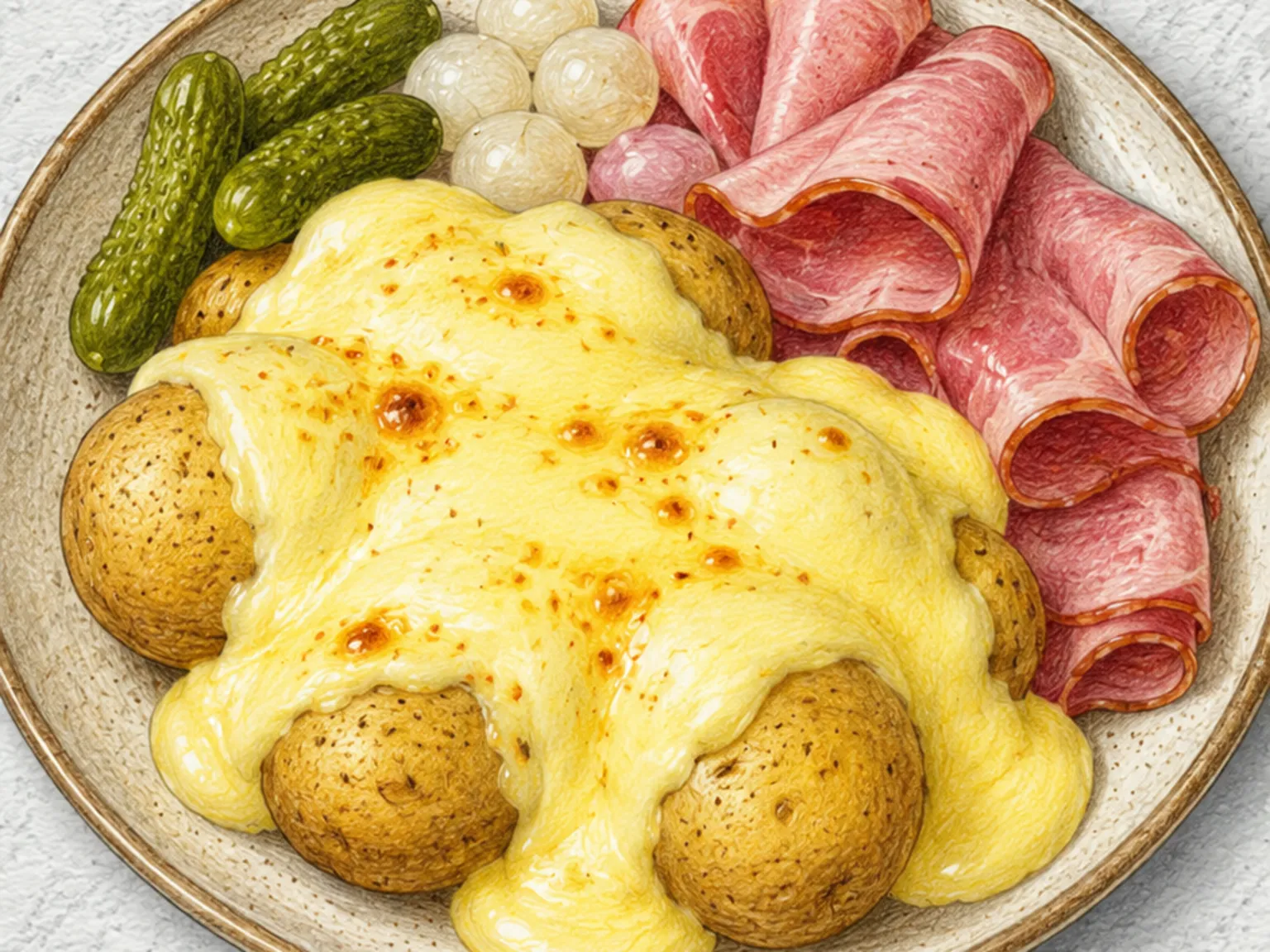
Raclette is an alpine winter dish in which thick slices of raclette cheese are melted under a broiler or in a dedicated raclette machine and poured generously over boiled potatoes, cured ham, cornichons, and pickled onions. The potatoes should be cooked until fork-tender but not mushy, so they hold their shape under the weight of the melted cheese. The raclette cheese delivers a salty, rich coating of milkfat, and tangy cornichons and pickled onions cut through the heaviness with their acidity, resetting the palate between bites. The communal format - each person melting their own portion of cheese and pouring it over arranged ingredients - makes it especially well suited for dinner parties and gatherings.
Adjust Servings
Instructions
- 1
Boil potatoes in their skins until fork-tender.
- 2
Slice raclette cheese and place in oven-safe pans.
- 3
Melt the cheese under a broiler or in a raclette machine.
- 4
Arrange potatoes, ham, and pickles on plates.
- 5
Pour melted cheese over everything and finish with black pepper.
As an Amazon Associate, we may earn from qualifying purchases.
Tips
Nutrition (per serving)
More Recipes

French Beef Stew
French beef stew takes tough, inexpensive cuts of beef and transforms them through patience and slow heat into a deeply flavored, fork-tender dish. Chuck or brisket is cut into large chunks, dusted with flour, and seared until a dark brown crust forms - this initial browning builds the foundation of flavor for the entire pot. Red wine and beef stock are poured in, and the pot goes into a low oven or onto a gentle burner for at least two hours. Root vegetables - carrots, potatoes, celery, and onions - braise alongside the meat, contributing natural sweetness and body to the liquid. As the wine reduces, its acidity dissipates while its fruit depth and tannic structure remain, giving the sauce a robust backbone. Thyme sprigs and bay leaves infuse the broth with herbal warmth. The stew tastes even better the next day, after the flavors have had time to marry overnight in the refrigerator.

Cheese Fondue
Cheese fondue melts grated Gruyere and Emmental into warmed white wine to create a thick, glossy cheese dip served with cubed baguette. Rubbing the inside of the pot with a halved garlic clove lays down a gentle garlic base before the wine goes in. Tossing the grated cheese with cornstarch before adding it gradually to the warm wine is what prevents the proteins from clumping and keeps the texture smooth and flowing. A small amount of lemon juice cuts through the richness of the cheese, and the wine's acidity balances the salt from the aged cheeses. The heat must stay low throughout - high flame causes the fat to separate from the protein almost immediately, turning the fondue grainy.

Salmon in Puff Pastry
Salmon en croute wraps a salmon fillet spread with a mixture of cream cheese, wilted spinach, dill, and lemon zest inside puff pastry and bakes it until golden. Patting the salmon completely dry with paper towels is crucial - any surface moisture will make the pastry soggy. The spinach must also be squeezed thoroughly to prevent a wet filling. Cream cheese and Dijon mustard form a barrier between the fish and the dough, blocking the salmon's moisture from softening the pastry. Baking at 200 degrees Celsius for twenty-five to thirty minutes puffs the pastry into flaky, crisp layers while the salmon inside stays tender and moist, delivering both textures in every slice. Chilling the assembled package for ten minutes before baking re-firms the butter in the pastry, producing sharper layers after baking.

Warm Melting Cheese (Whole Oven-Baked Camembert with Garlic and Honey)
Baked Camembert is a French-style appetizer in which an entire wheel of Camembert cheese is oven-roasted until its interior melts into a flowing cream. Shallow cuts scored across the rind allow garlic slivers and rosemary sprigs to infuse the cheese as it heats. After roughly fifteen minutes at 180 degrees Celsius, the firm center collapses into a dip-like consistency while the white-mold rind holds its shape as a natural vessel. Torn baguette pieces and toasted walnuts are the classic accompaniments, and a drizzle of honey bridges the mild funk of the cheese with sweetness. The preparation takes under five minutes of active work, making it one of the quickest warm appetizers to assemble. It pairs especially well with dry white wine or light-bodied reds.

Croquembouche (French Caramel-Glazed Cream Puff Tower Centerpiece)
Croquembouche is a French celebration centerpiece where cream-filled profiteroles are dipped in hot caramel and stacked into a towering cone. Each choux puff is baked until hollow and crisp, filled with vanilla pastry cream, and coated in a thin layer of caramelized sugar that hardens on contact. As the tower is built, strands of spun caramel are pulled between the puffs, creating a golden web of sugar threads. A finished tower can stand several feet tall, and guests pull individual puffs from it to eat. Breaking through the hardened caramel shell reveals soft choux pastry and cold cream inside - a three-part contrast of textures in a single bite. In France, the croquembouche traditionally replaces a tiered wedding cake at celebrations and christenings.

Sweet Potato Cream Cheese Galette
Cold butter is rubbed into flour to create a flaky pastry shell, which is rolled flat, spread with a blend of mashed sweet potato, cream cheese, honey, and cinnamon, and then folded at the edges into a free-form galette. The sweet potato contributes mellow sweetness while cream cheese adds a tangy counterpoint, and honey bridges the two into a cohesive filling. Cinnamon provides a warm spice note that suits the autumnal character of the galette. Keeping the butter cold throughout the process is essential for flaky layers - if the dough softens, it should return to the refrigerator immediately. Leaving a four-centimeter border of bare dough around the filling makes the folding step clean and prevents leaking. Drier sweet potato varieties, such as chestnut-type, absorb less moisture and keep the crust from turning soggy during baking. The galette is best served warm, when the pastry is at its crispest and the filling is still soft.