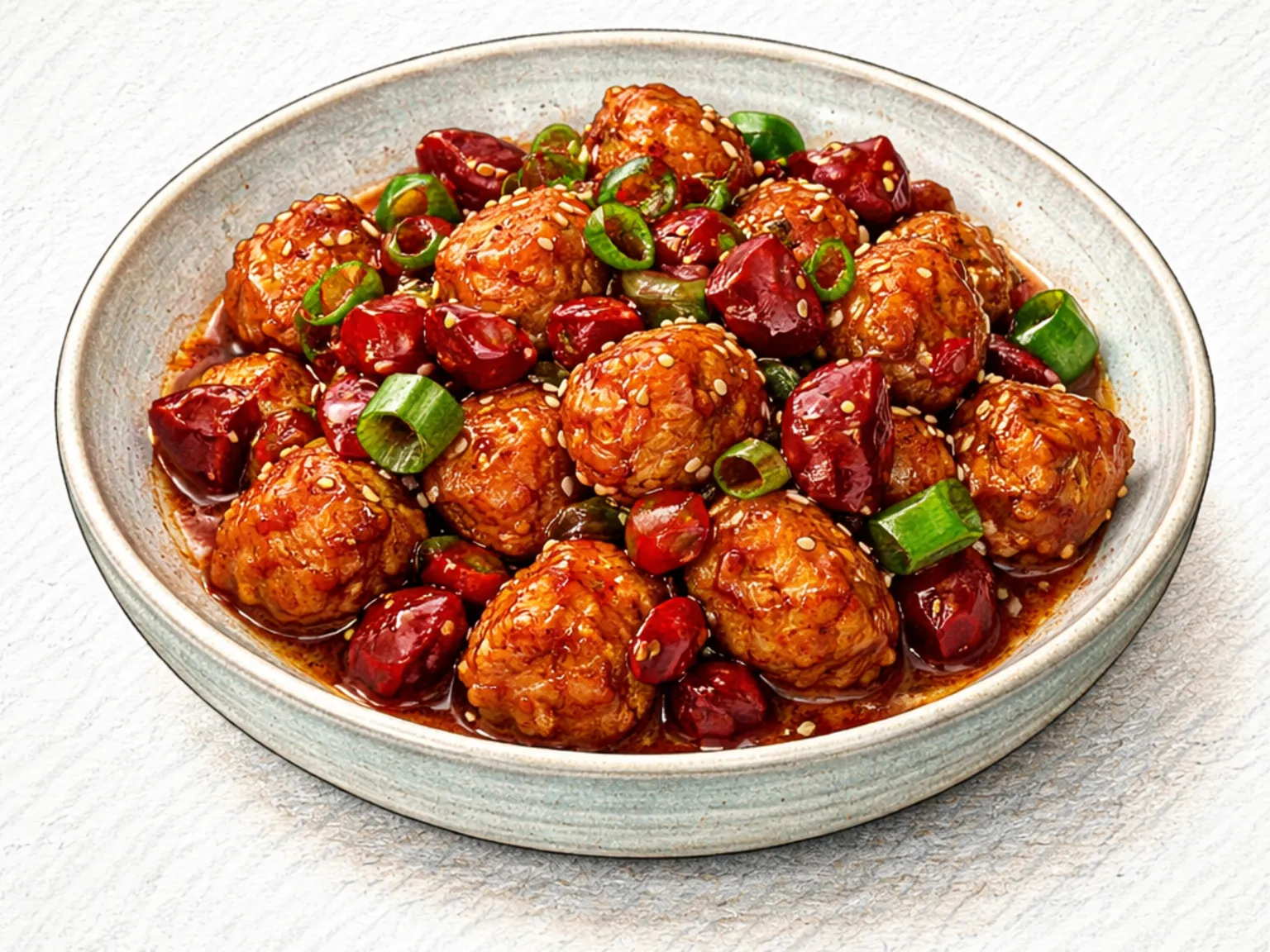
Spicy Fried Chicken Stir-fry
Rajogi is a Korean-Chinese dish of chicken thigh pieces coated in potato starch and deep-fried at 170 degrees Celsius until golden, then tossed in a sauce built from gochujang, ketchup, and vinegar. Onion and bell pepper are stir-fried separately to form the sauce base before the crispy chicken is folded in. The coating absorbs just enough glaze to deliver sweetness, tanginess, and chili heat simultaneously while retaining crunch underneath. Timing is critical -- the chicken must be tossed in sauce moments before serving to preserve its texture.
Adjust Servings
Instructions
- 1
Cut chicken thigh into bite-size pieces and coat with starch.
- 2
Deep-fry chicken at 170C until golden.
- 3
Lightly stir-fry onion and bell pepper.
- 4
Add gochujang, ketchup, and vinegar and simmer into a sauce.
- 5
Add fried chicken and toss quickly to coat.
As an Amazon Associate, we may earn from qualifying purchases.
Tips
Nutrition (per serving)
More Recipes

Crispy Chili Garlic Chicken
Kkanpunggi is a Korean-Chinese dish of chicken thigh pieces coated in potato starch and deep-fried until shattering-crisp, then tossed quickly over high heat in a sauce built from garlic, dried chilies, soy sauce, vinegar, and sugar. The thin glaze coats the crunchy exterior with a balance of salty, sour, and sweet notes without softening it. Intense garlic aroma and the slow burn of dried chilies define the dish's character, and speed is essential - the chicken must be served immediately to preserve its crunch. It is one of the most popular anju dishes, frequently ordered alongside beer or soju.

Chinese Chow Mein
Chinese chow mein stir-fries boiled noodles with vegetables and protein over fierce wok heat. The noodles are parboiled, lightly oiled, then tossed in a screaming-hot wok until the exterior crisps while the interior stays chewy. A sauce of soy, oyster sauce, and sesame oil lacquers each strand with salty depth and umami, while bean sprouts, cabbage, and carrot contribute crunch. The hallmark smoky flavor, known as wok hei, comes only from sustained high heat, so home cooks achieve the closest result by working in small batches and letting the pan recover between additions. Chicken, shrimp, or beef can replace one another as the main protein, making chow mein endlessly adaptable. A squeeze of lime at the table brightens the overall flavor.

Dry Mala Stir-fry (Sichuan Numbing Spice Dry Wok)
Mala xiangguo is a dry Sichuan stir-fry where beef slices, bok choy, shiitake mushrooms, and lotus root are coated in mala sauce and tossed over high heat without any broth. The Sichuan peppercorn's numbing tingle and the chili's sharp burn hit simultaneously, and the absence of liquid concentrates the seasoning directly onto each ingredient's surface. Lotus root adds crunch, shiitake contributes chewiness, and bok choy provides a soft counterpoint - the textural variety within a single plate is part of the appeal. Overcrowding the pan releases moisture and dilutes the sauce, so controlled portions are essential.

Stir-fried Bok Choy (Bok Choy with Garlic and Oyster Sauce Glaze)
Halved bok choy is stir-fried with sliced garlic over high heat for two minutes, then finished with oyster sauce and soy sauce in a one-minute reduction that glazes every leaf and stem. The thick white stalks need more heat than the tender green leaves, so placing them cut-side down first or adding the leaves halfway through prevents the greens from turning to mush while the stems stay undercooked. Oyster sauce lends a concentrated umami depth to the otherwise mild vegetable, and a splash of 40 milliliters of water helps the sauce flow between the tightly packed stems so seasoning reaches every layer. Black pepper and sesame oil are added only after the pan leaves the flame so their volatile aromas stay intact on the plate. Bok choy continues to release moisture after plating, so serving immediately is critical to preserving the contrast between crisp stalks and just-wilted leaves. At 105 calories per serving, this is a light side dish that still delivers meaningful amounts of vitamin A and calcium.

Mixed Seafood and Vegetable Stir-fry
Yusanseul is a Korean-Chinese stir-fry of shrimp, squid, bamboo shoots, shiitake mushrooms, and bok choy, finished with a light cornstarch sauce. The seafood is seared quickly over high heat to maintain a springy bite, while chicken stock and oyster sauce build a clean umami backbone. A starch slurry binds everything in a silky, translucent glaze that clings to each ingredient without heaviness. Bamboo shoots and bok choy retain their crunch, giving the dish textural contrast that makes it well-suited for a special occasion table.

Singapore Rice Noodles (Curry-Spiced Stir-Fried Vermicelli with Shrimp)
Singapore rice noodles are a Cantonese-style stir-fry of thin rice vermicelli tossed with curry powder, shrimp, and mixed vegetables over high heat. The curry powder is bloomed in hot oil at the edge of the wok to unlock its full aroma before being mixed into the noodles. Soy sauce adds seasoning depth, and bean sprouts go in during the last thirty seconds to keep their crunch. Soaking the vermicelli for only eight minutes prevents the noodles from breaking apart during stir-frying.