Korean Sweet Spicy Crispy Ramen Snack

Korean Sweet Spicy Crispy Ramen Snack

Quick answer

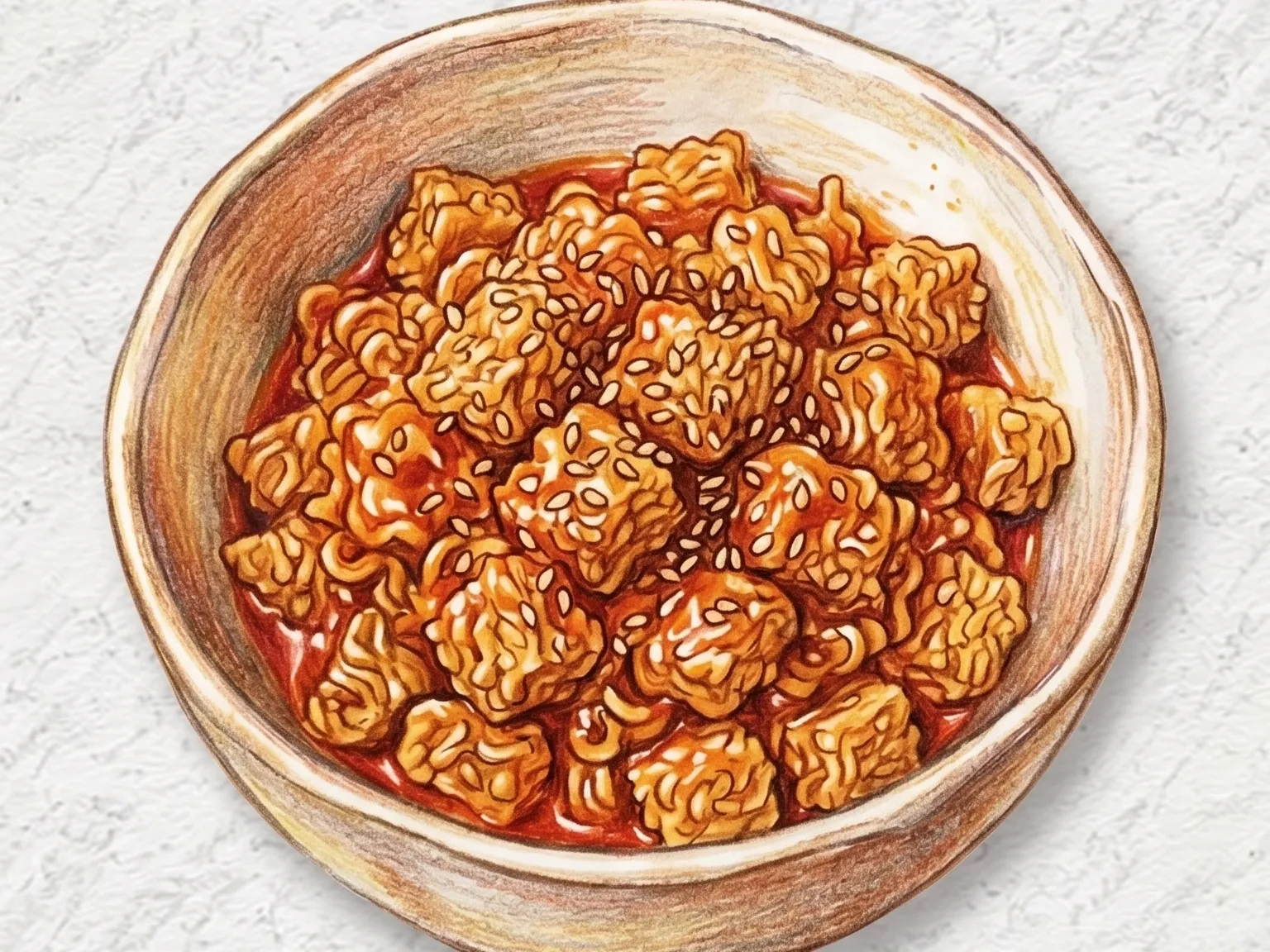
Ramyeon-ttang is a Korean snack made by crushing a bag of instant ramen noodles into bite-size shards, deep-frying them at 170 degrees Celsius for one to two minutes, the...

What makes this special

  • Deep-fried ramen shards tossed in a sweet-spicy gochujang glaze create a crunchy snack.
  • Crushing noodles in-bag preserves wavy form that maximizes crunch
  • Spread immediately after saucing; cooling on a flat tray keeps it crisp
Total time
17 min
Level
Easy
Servings
2 servings
Ingredients
7
Calories
480 kcal
Protein
8 g

Key ingredients

instant ramen noodlescooking oilgochujangketchupsugar

Core cooking flow

  1. 1 Remove the seasoning packets from 2 instant ramen packs before crushing.
  2. 2 Pour 400 ml cooking oil into a pan and heat it over medium heat to 170C.
  3. 3 Fry the ramen in batches for 1 to 2 minutes.

Ramyeon-ttang is a Korean snack made by crushing a bag of instant ramen noodles into bite-size shards, deep-frying them at 170 degrees Celsius for one to two minutes, then tossing them quickly in a sweet-spicy glaze of gochujang, ketchup, sugar, and corn syrup, and finishing with sesame seeds. The snack traces back to the 1980s and 1990s, when it was a staple at the small stationery shops and snack kiosks clustered around elementary schools across Korea. Its appeal comes from the combination of deep crunch, sticky glaze, and the familiar flavor of the ramen seasoning packet, all for almost no cost. The coated pieces must be spread out on a tray or silicone mat immediately after glazing, since leaving them in a pile traps steam and softens the crunch within minutes. Air-frying at 180 degrees for five minutes is a lighter alternative that produces a similar result with less oil. Pulling out the seasoning packet before crushing and adding a small amount of it to the glaze when the sauce seems flat is a useful trick for boosting the savory depth.

Prep 5min Cook 12min 2 servings
Recipes by ingredient → gochujang toasted sesame seeds

Instructions

Read the steps as a cooking flow: prep, heat, seasoning, doneness control, and finish.

6 steps
  1. 1
    Season

    Remove the seasoning packets from 2 instant ramen packs before crushing.

    Break the noodles inside the bags into rough bite-size shards, keeping some larger pieces so they fry evenly instead of burning quickly.

  2. 2
    Control

    Pour 400 ml cooking oil into a pan and heat it over medium heat to 170C.

    Drop in one noodle piece to check: steady small bubbles should appear right away, without darkening the noodle.

  3. 3
    Heat

    Fry the ramen in batches for 1 to 2 minutes.

    Stir gently so the pieces do not clump, then lift them out as soon as they turn light golden and sound dry and crisp.

  4. 4
    Control

    In another pan, combine 1 tablespoon gochujang, 1 tablespoon ketchup, 2 tablespoons sugar, and 2 tablespoons corn syrup.

    Warm over low heat, stirring until the sugar melts and the glaze looks glossy.

  5. 5
    Control

    When the glaze thickens slightly, reduce the heat to very low and add the fried ramen.

    Toss with lifting motions for about 30 seconds so every piece is coated before steam softens it.

  6. 6
    Finish

    Turn off the heat and sprinkle 1 teaspoon sesame seeds over the coated ramen.

    Spread the pieces separately on a tray or silicone mat, let them cool until crisp, then serve immediately.

After the steps

Pick a recipe that fits this dish.

Continue with shared ingredients, meal pairings, or a similar method.

Recipes That Go Well With This

More Street food →

Based on shared ingredients and meal pairing

Korean Sotteok-Sotteok Skewers
Shared ingredient: ketchup Grilled

Korean Sotteok-Sotteok Skewers

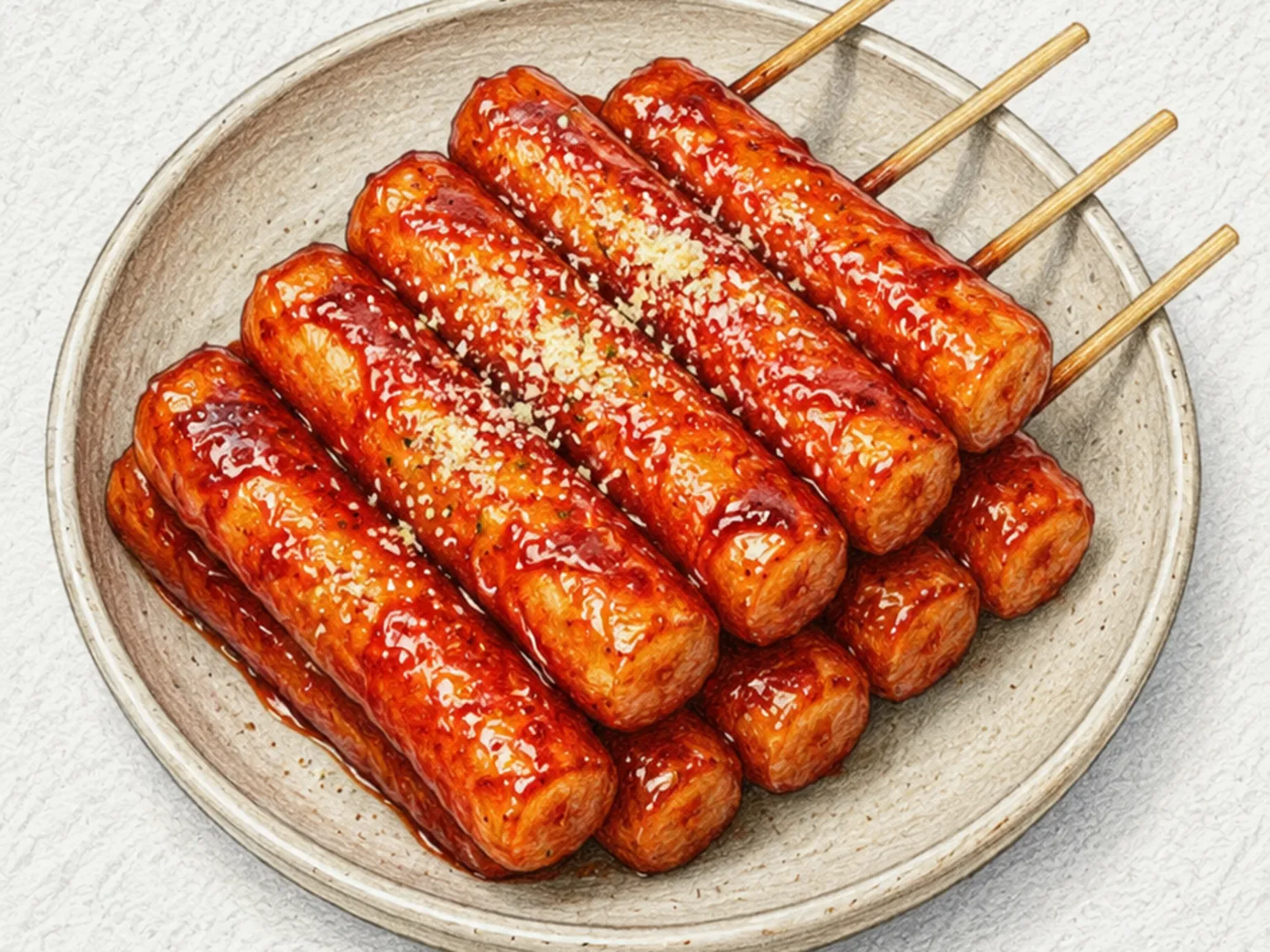
Cylinder-shaped rice cakes and mini sausages are skewered in alternating order, then pan-grilled for six to seven minutes until the surfaces turn golden. A glaze made from gochujang, ketchup, soy sauce, oligosaccharide syrup, and minced garlic is brushed on and cooked for two to three more minutes until glossy and sticky. Each skewer delivers a contrast between the dense chew of rice cake and the snappy bite of sausage, unified by the sweet-spicy coating. Originally a Korean street-food staple, sotteok-sotteok is also popular for camping trips and can be made quickly in an air fryer.

Korean Tteok Kkochi Yangnyeom Gui (Grilled Rice Cake Skewers)
Shared ingredient: ketchup Grilled

Korean Tteok Kkochi Yangnyeom Gui (Grilled Rice Cake Skewers)

Cylinder rice cakes are threaded onto skewers, lightly brushed with oil, and rolled on a grill pan over medium heat for six to seven minutes until the exterior turns golden. A sauce of gochujang, ketchup, oligosaccharide syrup, soy sauce, and minced garlic is applied in two rounds, building a glossy red glaze that clings to the surface. The outer layer develops a slight crispness while the inside remains stretchy and dense - that textural duality is the hallmark of this dish. A light dusting of cheese powder turns it into a kid-friendly snack, and it stands as one of the most iconic items in Korean street-food culture.

Omija Bead Ice Cream
Serve together Desserts

Omija Bead Ice Cream

This dessert features omija syrup shaped into small frozen spheres using a molecular gastronomy technique. The natural five-flavored profile of omija berries is concentrated into each tiny bead. The recipe uses two types of base mixtures: a clear pink omija juice and an opaque pink liquid made by blending the juice with milk and yogurt powder. These liquids are dropped from a pipette into a cup of cooking oil that has been chilled in the freezer for at least one hour. Upon contact with the cold oil, the droplets solidify into round spheres. The frozen beads are scooped out with a strainer, rinsed in cold water to remove the oil coating, and stored in the freezer. The clear red and milky pink beads are served mixed together, and they can also be added to sparkling water to make a beverage.

Korean Ramen Tteokbokki (Spicy Rice Cake and Ramen Noodle Stir-Fry)
Similar recipe Street food

Korean Ramen Tteokbokki (Spicy Rice Cake and Ramen Noodle Stir-Fry)

Rabokki is a popular Korean street food that combines chewy rice cakes and ramen noodles in a sweet and spicy sauce. The base sauce is made by dissolving gochujang, gochugaru, soy sauce, and sugar in water, then bringing the mixture to a boil. Rice cakes are added first and cooked for five minutes to absorb the flavors, followed by fish cakes and the ramen noodle block, which simmer for another three minutes. This sequential cooking prevents the noodles from becoming mushy while allowing them to absorb the concentrated, starchy sauce. Adding half a packet of the ramen seasoning powder is an option to increase the umami flavor. Once the broth reduces to a thick glaze, the dish is finished with chopped green onions and boiled eggs, and served hot before the noodles lose their springy texture.

Serve with this

Korean Dalgona Coffee (Whipped Instant Coffee Foam Milk)
Drinks Easy

Korean Dalgona Coffee (Whipped Instant Coffee Foam Milk)

Dalgona coffee is made by whipping equal parts instant coffee, sugar, and hot water with a hand mixer for three to five minutes until stiff, caramel-colored peaks form, then spooning the foam over iced milk. The whipped layer carries a concentrated, bittersweet coffee flavor that gradually blends into the cold, neutral milk below as you stir. A light dusting of cocoa powder on top introduces a faint chocolate note, and increasing the sugar slightly helps the whipped cream hold its stiff structure longer.

🍺 Bar Snacks 🧒 Kid-Friendly
Prep 8min 2 servings
Korean Rolled Omelette (Layered Vegetable Egg Roll)
Side dishes Easy

Korean Rolled Omelette (Layered Vegetable Egg Roll)

Gyeran-mari - Korean rolled omelette - is a staple of Korean lunchboxes and dinner tables, a dish every Korean home cook masters early. Finely diced carrot, onion, and scallion are mixed into beaten eggs and poured in a thin stream across a lightly oiled rectangular pan. When the egg layer is half-set, it is rolled from one side to the other, then more egg mixture is poured beside the roll and the process repeats three to four times, building concentric yellow layers visible when sliced. Air trapped between the thin sheets gives the omelette its characteristic pillowy softness. Temperature control is critical - too hot and the egg browns; too cool and the layers will not bond. After cooking, wrapping the roll in a bamboo mat or kitchen towel for two minutes sets its shape into a clean cylinder. Found in school cafeterias, picnic bento boxes, and family dinners across Korea.

🏠 Everyday 🧒 Kid-Friendly
Prep 10min Cook 8min 2 servings
Korean Buckwheat Mixed Noodles
Noodles Easy

Korean Buckwheat Mixed Noodles

Memil makguksu is a Gangwon-do regional dish where nutty buckwheat noodles are mixed with a soy sauce, vinegar, and gochugaru dressing that balances sweet, sour, and spicy notes. Buckwheat noodles have low gluten content and break apart easily when overcooked, so precise timing is essential during boiling. Rinsing several times in cold water removes surface starch and prevents clumping. Chopped kimchi brings fermented tang and a crunchy bite, while julienned cucumber adds freshness and a crisp contrast. A touch of sesame oil gives the dressing a glossy richness, and extra vinegar can be added at the table to sharpen the acidity to individual preference.

🏠 Everyday ⚡ Quick
Prep 18min Cook 6min 2 servings

Similar recipes

Korean Kimchi Cheese Gimbap
Street food Easy

Korean Kimchi Cheese Gimbap

Kimchi cheese gimbap rolls seasoned rice, stir-fried kimchi, mozzarella cheese, and pickled daikon radish in sheets of dried seaweed. The kimchi must be stir-fried until all the moisture has evaporated before rolling: this concentrates the tangy fermented flavor and prevents the released liquid from softening the rice and making the seaweed tear during and after rolling. The fat in the mozzarella wraps around the kimchi's sharp heat and moderates it, and the pickled radish adds sweet-sour crunch that varies the texture across each bite. Keeping the cheese in a single narrow line down the center of the roll is the key technique for tight rolling and a clean cross-section: too much cheese makes the roll thick and causes the seaweed to split. Sliced processed cheese can be used in place of mozzarella and melts similarly. Brushing the outside of the finished roll lightly with sesame oil gives it a glossy surface and seals the seam.

🧒 Kid-Friendly ⚡ Quick
Prep 20min Cook 10min 2 servings
Korean Grilled Jjondeugi (Sweet Spicy Glazed Wheat Cracker Snack)
Street food Easy

Korean Grilled Jjondeugi (Sweet Spicy Glazed Wheat Cracker Snack)

Jjondeugi-gui is a nostalgic Korean street snack made by gently heating thin pressed-wheat sheets over low heat until they become pliable, then applying a sauce of gochujang, soy sauce, sugar, oligosaccharide syrup, minced garlic, and sesame oil before returning them to the heat. The warming process shifts the sheets from rigid to genuinely chewy, and the sugars in the sauce caramelize slowly against the surface, building a sticky, sweet-spicy glaze that concentrates with each pass. Because the marinade has a high sugar content, applying it in a single thick coat scorches the outside before the heat can work evenly through the sheet. The correct technique is to brush on a thin layer, grill briefly, then repeat two or three times until the glaze has depth and the interior is fully softened. The finished pieces are cut into bite-size sections with kitchen scissors and served immediately while still warm.

🧒 Kid-Friendly 🌙 Late Night
Prep 5min Cook 8min 2 servings
Korean Sweet Spicy Dakgangjeong
Street food Medium

Korean Sweet Spicy Dakgangjeong

Yangnyeom dakgangjeong is Korean sweet-spicy fried chicken made by cutting boneless thigh meat into bite-size pieces, dredging them in potato starch, and running them through a two-stage fry. The first fry at 170 degrees Celsius cooks the meat through; the second fry at 185 degrees drives off the residual moisture the crust absorbed during the first pass, hardening the exterior into a shell that can withstand sauce tossing without collapsing. The glaze is a reduction of gochujang, gochugaru, corn syrup, and soy sauce, simmered down until the mixture is thick enough to coat a spoon without dripping off. Tossing the finished chicken in the hot glaze must happen off the heat and within twenty seconds, because the steam trapped between sauce and crust will turn the coating soggy if the process drags on. When done correctly, the result is a glossy, sticky exterior that crackles audibly at first bite even after the dish has cooled to room temperature, surrounding thigh meat that stays juicy inside.

🧒 Kid-Friendly 🌙 Late Night
Prep 25min Cook 20min 4 servings

Tips

If the glaze gets too thick, add 1 tbsp water to loosen it.
For a lighter version, air-fry at 180C for 5 minutes instead of deep-frying.

Nutrition (per serving)

Calories
480
kcal
Protein
8
g
Carbs
55
g
Fat
25
g