Reuben Sandwich
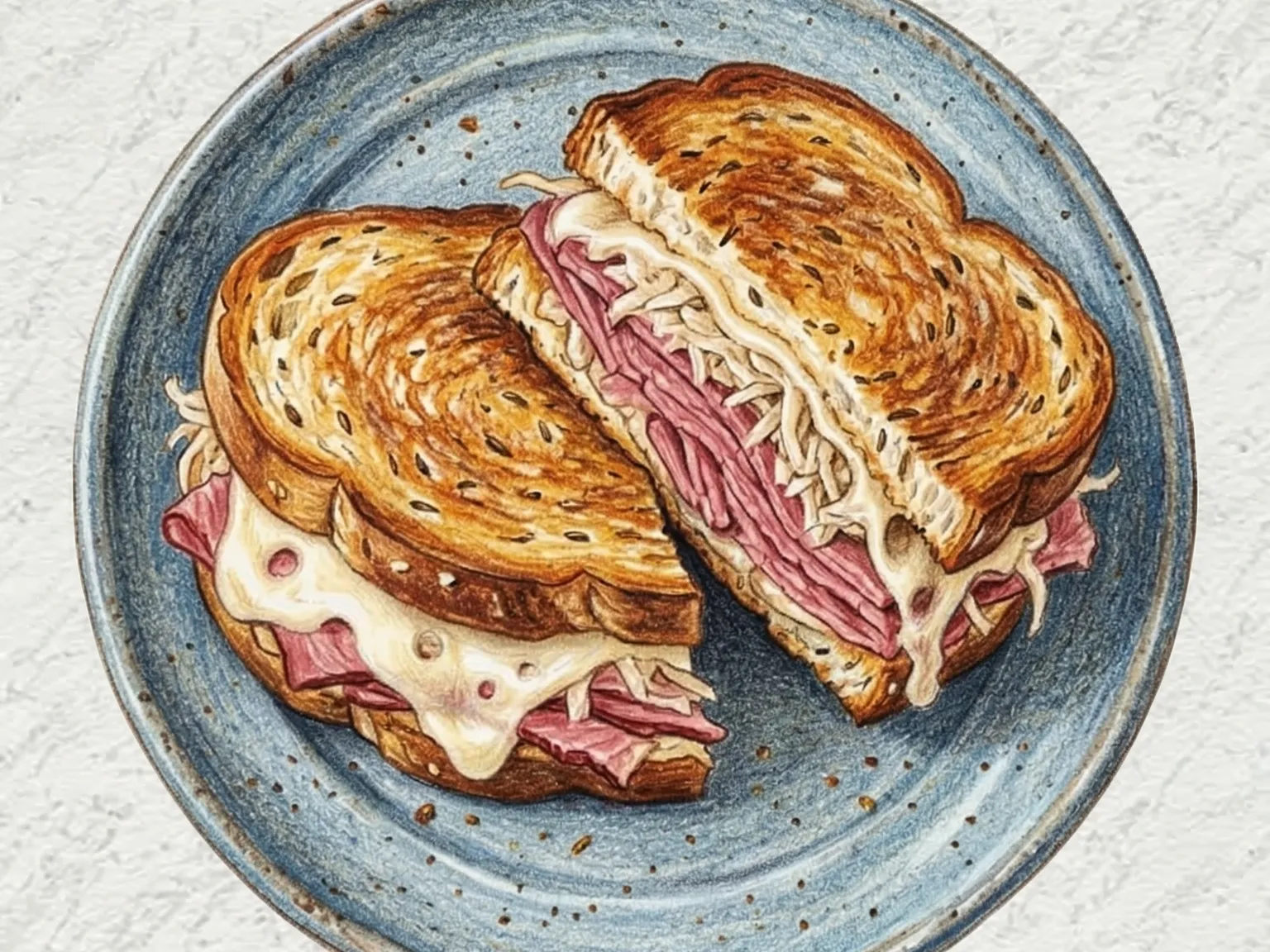
Reuben sandwich layers sliced corned beef, well-squeezed sauerkraut, and Swiss cheese between rye bread spread with mayonnaise, then griddled with butter on the outside until golden and crisp. Removing excess moisture from the sauerkraut is the most important step - residual water makes the bread soggy and prevents the cheese from melting properly. Cooking over medium-low heat for three to four minutes per side gives the bread time to turn deeply golden while the interior cheese melts fully, binding all the fillings together. Each bite combines the salty depth of corned beef, the fermented tang of sauerkraut, and the rich milkfat of Swiss cheese in a layered contrast of flavors.
Adjust Servings
Instructions
- 1
Squeeze sauerkraut well to remove excess moisture.
- 2
Spread mayo on bread, then layer corned beef, sauerkraut, and cheese.
- 3
Close sandwich and spread butter on the outside.
- 4
Griddle over medium-low heat for 3-4 minutes per side.
- 5
When cheese is fully melted, cut and serve.
As an Amazon Associate, we may earn from qualifying purchases.
Tips
Nutrition (per serving)
More Recipes

Philly Cheesesteak Sandwich
Philly Cheesesteak Sandwich originated in 1930s Philadelphia and remains one of America's defining street foods. Ribeye or top round is partially frozen for about thirty minutes so it can be sliced paper-thin, and these razor-thin slices are seared on a screaming-hot flat griddle where they caramelize almost instantly, developing char and retaining their juices. Onion and green bell pepper are cooked on the same griddle to absorb the beef's rendered fat and fond, and provolone cheese is draped over the pile of meat before a dome lid traps steam to melt it into a blanket that binds everything together. The hoagie roll provides the crucial structural balance - a lightly crisp exterior that gives way to a soft crumb capable of absorbing juices without becoming soggy or falling apart.

Patty Melt
Patty Melt is an American diner classic that sits between a burger and a grilled cheese sandwich, combining a thin beef patty with deeply caramelized onions and melted cheese between slices of toasted bread. The onions require at least twenty minutes over low heat to lose their moisture and concentrate their sugars into a dark, sweet jam-like consistency. The patty is shaped thin and wide to match the bread's footprint, and spreading a thin layer of mayonnaise on the outer surface of the bread before griddling produces a more even and deeper golden crust than butter. When the cheddar melts over the patty and mingles with the caramelized onions, each bite delivers saltiness from the beef, sweetness from the onions, and richness from the cheese in a single layer.

Tuna Melt
Tuna melt mixes drained canned tuna with finely diced celery and mayonnaise, spreads the mixture on sandwich bread, tops it with cheddar cheese, butters the outside, and grills in a pan until both sides are crisp and golden. Draining the tuna thoroughly is the first priority - excess moisture soaks into the bread and prevents it from crisping no matter how long it cooks. The celery adds a textural crunch that contrasts with the soft, creamy tuna filling. Using several thin slices of cheese rather than one thick piece ensures more even melting and full coverage across the bread. Medium-low heat is essential: it gives the cheese enough time to melt completely before the bread burns, which high heat makes nearly impossible. The sandwich is best served immediately after cutting in half, while the cheese is still stretchy and warm.

French Dip Sandwich
The French Dip sandwich was invented in Los Angeles, not France, and consists of thinly sliced roast beef piled onto a crusty French roll and served with a small bowl of au jus - the natural cooking juices rendered during roasting. The beef is typically roasted slowly until it can be sliced thin, retaining enough moisture to stay supple against the firm bread. Provolone or Swiss cheese melted over the meat adds a mild, creamy layer. The French roll must have a sturdy crust that holds its structure when dipped into the warm jus, absorbing the beefy, salty liquid without falling apart. Onions and garlic roasted alongside the beef enrich the jus with sweetness and depth. Each dip saturates the bread with concentrated meat flavor, and the contrast between the soaked, softened bread edges and the still-crisp center creates a texture that no dry sandwich can match.

Banana Walnut Bread
Banana walnut bread builds on the classic banana bread formula by folding in roughly chopped walnuts and ground cinnamon. Overripe bananas are mashed and mixed with flour, melted unsalted butter, and eggs, then the walnut pieces are gently stirred into the batter to distribute them throughout. Cinnamon adds a warm spice layer that complements the banana's sweetness without masking it. As the loaf bakes for about fifty minutes, the walnuts toast inside the batter and release their oils, spreading a nutty aroma through the crumb. The finished bread slices neatly once fully cooled, with visible walnut pieces in each cross-section. It keeps well wrapped at room temperature for two to three days, and toasting a slice before eating brings the crust back to life.

Classic Bagel
Classic bagels owe their distinctive chewy density to a two-stage cooking process: boiling followed by baking. The dough is made with high-gluten bread flour and relatively little water, then kneaded extensively to develop a strong gluten network. After shaping into rings and a brief proof, the bagels are dropped into boiling water - sometimes sweetened with honey or malt syrup - for about a minute per side. This boil gelatinizes the surface starch, creating a thin, glossy skin that restricts the dough's expansion in the oven. The result is a crust that is firm and slightly shiny, encasing an interior that is dense, chewy, and deeply satisfying to bite through. The low hydration and extensive kneading produce a texture entirely unlike soft sandwich bread - each chew rewards with resistance and a faint sweetness from the malt. Topped with cream cheese and smoked salmon in the New York tradition, or simply split and toasted with butter, a well-made bagel is defined by its structure.