Ribollita (Tuscan Bread and Bean Soup)
Quick answer
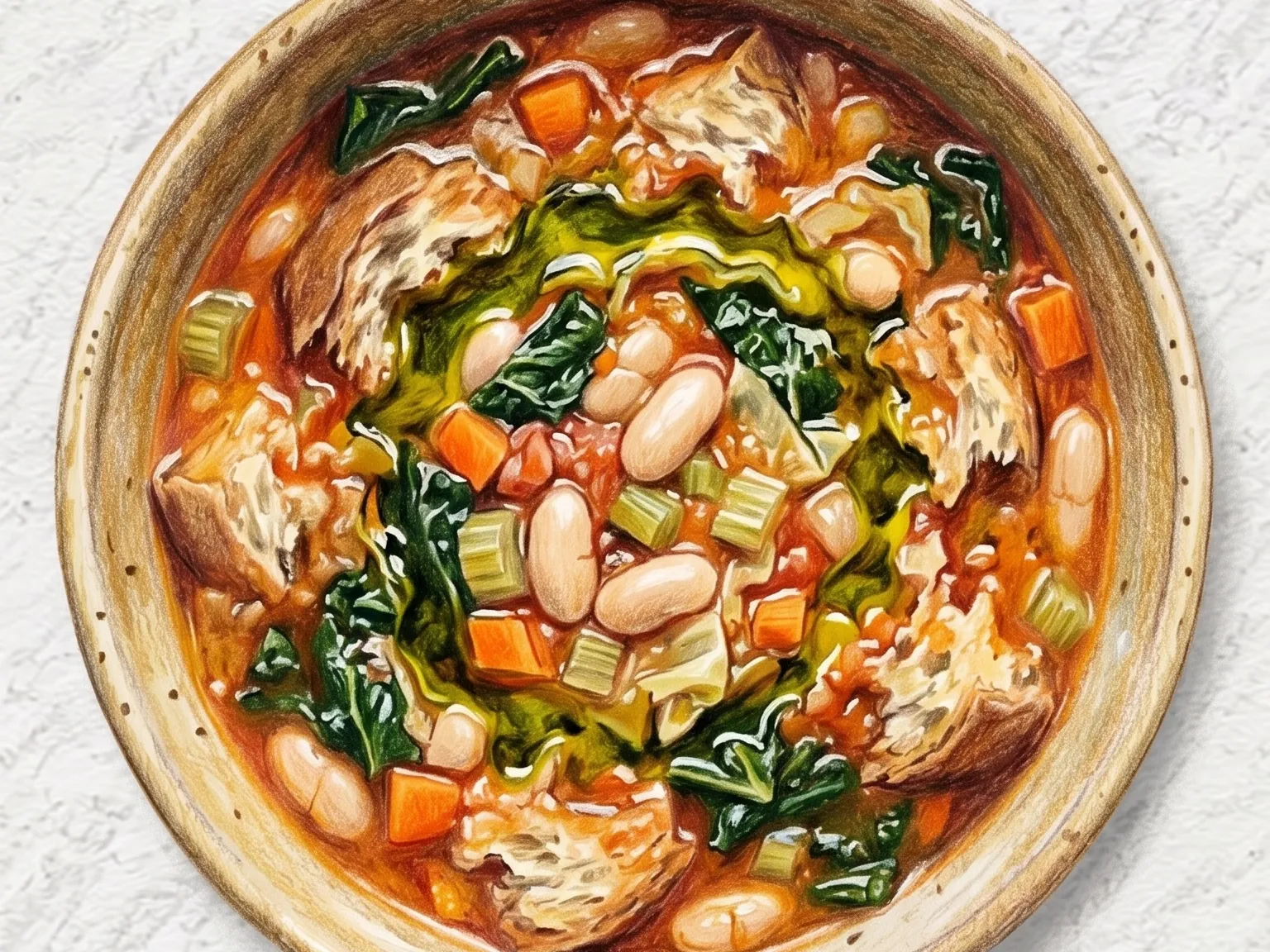
Ribollita is a traditional Tuscan soup that sautees cannellini beans, cabbage, carrot, tomato, celery, and onion in olive oil, simmers them in vegetable stock, and thicke...
What makes this special
- Stale bread torn into a kale and bean broth thickens this traditional Tuscan Ribollita soup.
- Stale bread torn in thickens the soup without any roux or cream
- Named 'reboiled': the soup reaches its best flavor reheated the next day
Key ingredients
Core cooking flow
- 1 Dice 1 onion, 1 carrot, and 80 g celery into small even pieces.
- 2 Warm 2 tablespoons olive oil in a heavy pot over medium heat.
- 3 Add the cabbage and tomato, keeping the heat at medium.
Ribollita is a traditional Tuscan soup that sautees cannellini beans, cabbage, carrot, tomato, celery, and onion in olive oil, simmers them in vegetable stock, and thickens the pot by tearing in stale baguette near the end of cooking. The name itself means 're-boiled,' reflecting its origin as leftover soup reheated with bread. Starch from the beans and the bread's absorption of broth create a hearty body without any roux or cream. The cabbage grows sweeter the longer it simmers, and a finishing drizzle of olive oil adds richness to the otherwise lean vegetable base. Reheating the next day allows the flavors to meld further, which is why this soup traditionally tastes better on the second day.
Instructions
Read the steps as a cooking flow: prep, heat, seasoning, doneness control, and finish.
- 1Prep
Dice 1 onion, 1 carrot, and 80 g celery into small even pieces.
Cut 250 g cabbage and 200 g tomato into bite-size pieces so they soften at a similar pace in the pot.
- 2Control
Warm 2 tablespoons olive oil in a heavy pot over medium heat.
Add the onion, carrot, and celery, then cook about 6 minutes, stirring often, until the onion looks translucent and the vegetables smell sweet, not browned.
- 3Heat
Add the cabbage and tomato, keeping the heat at medium.
Cook about 7 minutes, stirring from the bottom, until the cabbage loses about half its volume and the tomato releases enough juice to moisten the vegetables.
- 4Control
Add 400 g cannellini beans and 900 ml vegetable stock.
Once the soup reaches a boil, lower to gentle heat, leave the lid slightly ajar, and simmer 25 minutes so the beans thicken the broth without scorching.
- 5Control
Tear 150 g stale baguette into bite-size pieces and stir it into the pot.
Simmer on low heat for 10 more minutes, stirring more often once the bread absorbs broth, until the soup looks thick and spoonable.
- 6Finish
Season with salt and pepper after the bread has thickened the soup, then turn off the heat and rest 5 minutes to settle the texture. Serve warm with a light final drizzle of olive oil.
After the steps
Pick a recipe that fits this dish.
Continue with shared ingredients, meal pairings, or a similar method.
Recipes That Go Well With This
More Western →Based on shared ingredients and meal pairing
Minestrone
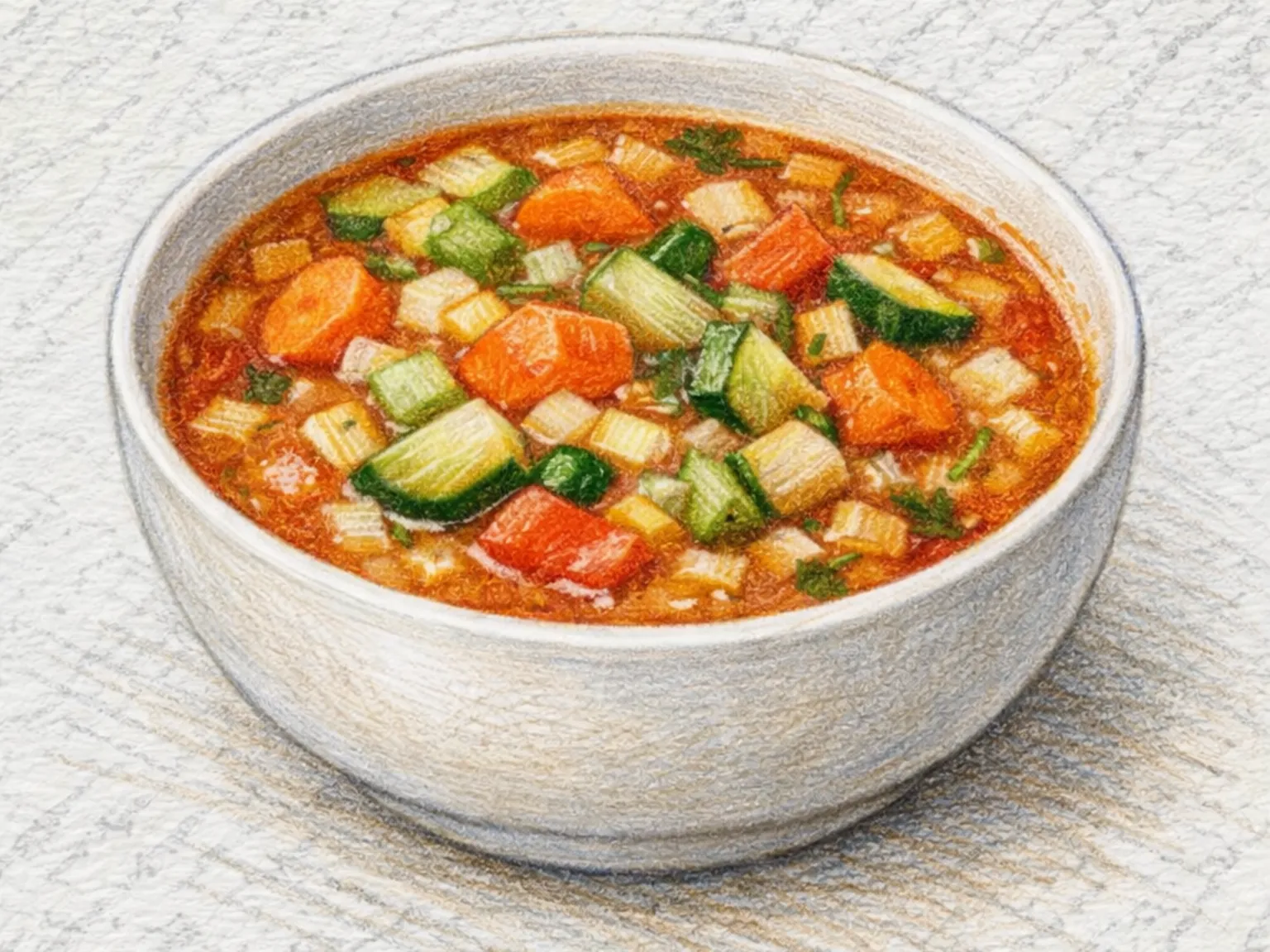
Minestrone is an Italian home-style soup that sautees onion, carrot, celery, and zucchini in olive oil, then simmers them with crushed tomatoes and vegetable stock before adding kidney beans and short pasta. Its greatest strength is flexibility - virtually any leftover vegetable works, and there is no single correct combination. The beans add protein and body, while the tomato's acidity forms the backbone of the broth. Cooking the pasta directly in the soup releases starch that naturally thickens the liquid. Finishing with fresh basil and a drizzle of olive oil preserves the herb's fragrance. Minestrone improves overnight as the vegetable flavors continue to meld into the broth, making it an ideal make-ahead meal.
Pasta e Fagioli (Italian Rustic Bean and Pasta Soup)
Pasta e Fagioli is a bean and pasta soup rooted in the rural Italian kitchen, where cannellini beans and short pasta come together in a thick, starchy broth. A soffritto of finely diced onion, celery, and carrot sauteed in olive oil forms the flavor foundation, layered with garlic and fresh rosemary. Crushing half the beans and stirring them into the broth thickens the soup naturally without any added starch. Short pasta like ditalini is cooked directly in the broth, releasing its starch to further enrich the texture. Whole peeled tomatoes contribute a mild acidity, and simmering a Parmigiano rind in the pot infuses the entire broth with a deep, savory umami that transforms the dish from simple to complex.
Bam Tiramisu (Chestnut Tiramisu)
Chestnut tiramisu is a variation of the traditional Italian dessert that incorporates chestnut puree into the mascarpone cheese filling. This modification transforms a standard cafe dessert into a preparation specifically associated with the autumn season in Korea. The fundamental elements of the recipe remain consistent with the classic version. It utilizes ladyfinger biscuits that have been soaked in espresso, a filling made of whipped mascarpone and cream, and a final layer of cocoa powder. However, the introduction of chestnut puree alters the profile of the cream. Instead of a simple dairy richness, the mixture takes on an earthy quality. Using a puree made from chestnuts boiled at home, rather than a store-bought paste, helps maintain the natural grain of the nut. This provides the cream with a specific texture that is noticeable in every spoonful. When preparing the ladyfingers, the espresso soak requires a high level of precision. Each biscuit should be dipped for approximately one to two seconds. If the ladyfingers are submerged for a longer duration, they absorb an excessive amount of liquid. This leads to a waterlogged consistency which can cause the structural layers of the dessert to collapse while it sits in the refrigerator. The assembly process follows a predictable sequence. A layer of soaked ladyfingers is placed at the bottom, followed by a layer of the chestnut cream. This pattern is repeated once more before the entire dish is placed in the refrigerator to rest for at least four hours. This period of refrigeration is essential to the final outcome. During these hours, the ladyfingers absorb moisture from both the espresso and the cream layer above them. This process changes the biscuits from a crunchy state to a soft texture similar to cake, which allows for clean slices. Just before the dessert is served, a thin layer of cocoa powder is applied to the top. This adds a bitter element that balances the sweetness of the chestnuts. Preparing the tiramisu in individual glass containers or cups ensures that the portions are easy to manage and allows the different layers of the dessert to be clearly visible from the side.
Tomato Basil Soup
Tomato basil soup sautés onion and garlic in olive oil, adds canned whole tomatoes crushed by hand, simmers with vegetable stock for 15 minutes, then blends until smooth and finishes with cream and fresh basil. Crushing and cooking the tomatoes for the first five minutes before adding stock concentrates their natural sugars and reduces raw acidity, building a sweeter, deeper base. The 15-minute simmer lets the flavors merge without overcooking, and blending produces a velvety texture that cream enhances without masking the tomato. Basil is heat-sensitive - its volatile oils dissipate within minutes of cooking - so it goes in only after the heat is off, releasing its fragrance through residual warmth alone. A tablespoon of tomato paste can be stirred in during the sauté stage for a more intense tomato flavor if desired.
Serve with this
Bulgogi Meatball Tomato Spaghetti
Bulgogi meatball tomato spaghetti grounds the concept of Korean bulgogi - soy sauce, sugar, garlic, sesame - into a meatball format and cooks it inside an Italian tomato sauce. The ground beef is seasoned with the bulgogi mix, then breadcrumbs and egg are added to trap moisture so the meatballs hold together and stay tender through the twenty-minute simmer in passata. Searing the exterior first in a hot pan builds a Maillard crust that dissolves into the sauce as the meatballs cook through, thickening and deepening it in a way that uncooked meatballs dropped straight into the sauce cannot achieve. The soy-sugar seasoning intersects with the tomato's natural acidity to produce a sweet-salty depth that neither Korean nor Italian cooking arrives at independently. As the meatballs finish cooking inside the sauce, the boundary between meat and liquid blurs - each absorbs character from the other. Basil or parsley added at the end provides an herbal brightness that offsets the richness of the meat and tomato.
Zucchini Noodle Salad
Zucchini noodle salad spiralizes or peels zucchini into long noodle strands and tosses them with halved cherry tomatoes and minced garlic in a lemon juice and olive oil dressing, finished with shaved Parmesan and fresh basil. Zucchini has a high water content that releases quickly once dressed, so the salad must be tossed immediately before serving to prevent the dressing from becoming diluted. Finely minced garlic dispersed through the olive oil distributes a sharp, pungent flavor evenly across every strand, and lemon juice gives the mild zucchini a defined, bright direction. The cherry tomatoes burst with juice that acts as a secondary dressing, and the Parmesan contributes salt and umami that pair with basil's herbaceous aroma to produce depth without any cooking.
Tomato Basil Juice
Tomato basil juice is a cold savory drink made by blending ripe tomatoes with fresh basil leaves and straining the result through a fine sieve to remove seeds and skins. The ripeness of the tomato determines much of the flavor: fully ripe tomatoes carry free glutamates that produce a natural umami depth, whereas underripe fruit tastes predominantly sour without the sweetness and savory body that makes the juice satisfying. Basil should be added to the blender immediately before blending rather than sitting cut or torn, because the volatile oils that produce its aroma begin oxidizing quickly once the leaves are damaged. After blending to a smooth consistency, passing the juice through a fine-mesh strainer or cheesecloth removes the solids and produces a texture smooth enough to drink without resistance. Salt and black pepper season the juice, and fresh lemon juice raises the acidity in a way that brightens the overall flavor rather than making it sour. A small addition of olive oil emulsifies into the juice and activates fat-soluble aromatic compounds in both the tomato and the basil, producing a fuller, rounder flavor than the unstrained version. The juice must be thoroughly chilled before serving, as warmth mutes the herbal freshness. It works well as a brunch drink, a light non-alcoholic aperitif, or a base for savory cocktails.
Similar recipes
Zuppa Toscana (Hearty creamy soup with sausage)
Zuppa Toscana is a warm Italian style soup featuring seasoned sausage, potatoes, and kale in a creamy broth. The cooking starts by browning the Italian sausage to render its flavorful fat, which is then used to sauté the minced garlic and chopped onion. Slicing the potatoes to a thickness of at least 0.5 centimeters prevents them from disintegrating during the twelve minutes of simmering in chicken stock. Once the potatoes soften, the cooked sausage and kale are incorporated, allowing the greens to wilt without releasing any bitterness. The dish is finished by stirring in heavy cream and black pepper over low heat. Keeping the heat low prevents the cream from splitting, resulting in a cohesive, smooth broth that pairs well with the textured ingredients.
Panzanella Salad (Italian Ciabatta Bread Salad)
Stale ciabatta is torn into rough chunks, drizzled with olive oil, and toasted in the oven until the exterior is crisp while the interior remains slightly chewy. Ripe tomatoes are cut into large pieces and salted briefly to draw out their juice, and that released liquid soaks into the bread and becomes the sweet-tart flavor that defines the dish. Cucumber and red onion add crunch and pungency, while torn basil leaves release their fragrance across the plate. A vinaigrette of red wine vinegar and good olive oil binds everything together. The salad reaches its best point after resting fifteen to twenty minutes, once the bread has absorbed enough dressing and tomato juice to soften slightly without going completely soggy, a balance that is the defining characteristic of a well-made panzanella. Using genuinely stale bread matters here: fresh bread soaks through too quickly and disintegrates, while properly dried ciabatta holds its structure and provides a textural contrast with the juicy tomatoes and crisp vegetables. Panzanella originated as a practical summer dish in Tuscany, where leftover bread was too valuable to discard, and it remains most rewarding when made with ripe summer tomatoes at the peak of the season.
Tortellini in Brodo (Italian Stuffed Pasta in Clear Meat Broth)
Tortellini in brodo is a traditional soup from Emilia-Romagna in which small stuffed pasta parcels are served in a clear, full-flavored meat broth. The filling typically combines pork, prosciutto, and Parmigiano-Reggiano. The broth - usually made from chicken or beef bones - is simmered long enough to develop deep body while remaining transparent. In Italy, this dish is closely associated with Christmas and holiday meals. Using store-bought tortellini, the recipe can be completed in about 40 minutes.