Ricotta Spinach Gnudi (Naked Ricotta Dumplings)
Quick answer
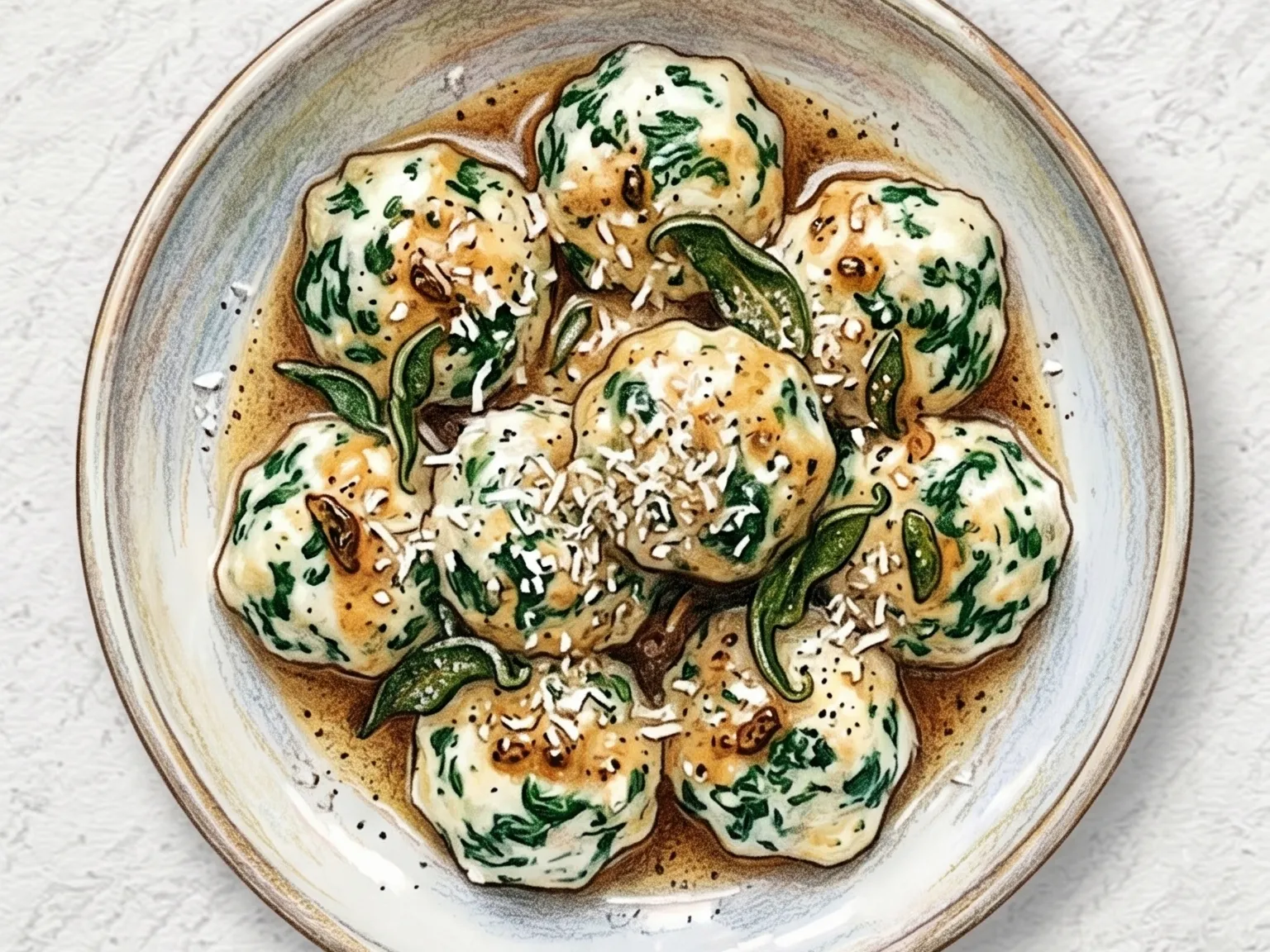
Ricotta spinach gnudi are Italian dumplings made by mixing ricotta cheese with thoroughly squeezed spinach, Parmigiano Reggiano, egg yolks, and a minimal amount of flour...
What makes this special
- Ricotta spinach gnudi are tender Italian dumplings made with cheese and greens instead of dough.
- Squeezing all moisture from spinach is the prerequisite for gnudi holding shape while boiling
- No pasta shell; the ricotta and spinach flavors come through directly as the naked filling
Key ingredients
Core cooking flow
- 1 Blanch 180 g spinach in boiling water for about 30 seconds, then cool it in cold water.
- 2 Put 350 g ricotta, the chopped spinach, 60 g Parmigiano Reggiano, 2 egg yolks, and salt in a bowl.
- 3 Add half of the 90 g flour first and mix until the dough just holds together while staying slightly tacky.
Ricotta spinach gnudi are Italian dumplings made by mixing ricotta cheese with thoroughly squeezed spinach, Parmigiano Reggiano, egg yolks, and a minimal amount of flour, then poaching in salted boiling water. The name 'gnudi' means 'naked' - these are essentially ravioli filling without the pasta shell, so the cheese and spinach flavors come through directly. Removing every bit of moisture from the spinach is the critical step; any residual water weakens the dough and causes the dumplings to fall apart during cooking. Once they float to the surface, one additional minute of poaching yields a pillowy, crumbly texture. A brown butter sauce with sage leaves adds a deep, nutty richness that complements the mild ricotta.
Instructions
Read the steps as a cooking flow: prep, heat, seasoning, doneness control, and finish.
- 1Heat
Blanch 180 g spinach in boiling water for about 30 seconds, then cool it in cold water.
Squeeze it very firmly in a cloth until almost no drops come out, then chop it finely.
- 2Season
Put 350 g ricotta, the chopped spinach, 60 g Parmigiano Reggiano, 2 egg yolks, and salt in a bowl.
Mix with a spatula, pressing gently, until the spinach is evenly distributed.
- 3Prep
Add half of the 90 g flour first and mix until the dough just holds together while staying slightly tacky.
If it feels loose or wet, add more flour 1 tablespoon at a time, then chill for 20 minutes.
- 4Prep
Dust your hands and a tray lightly with the remaining flour, then shape the dough into small ovals.
Roll them gently instead of pressing hard, because compacting the mixture makes the gnudi dense.
- 5Season
Keep a wide pot of salted water at a gentle boil, then add the gnudi in batches so they do not hit each other.
Once they float, cook for 1 more minute and lift them out carefully with a slotted spoon.
- 6Finish
Melt 50 g unsalted butter in a pan over medium low heat, add 8 sage leaves, and cook until the butter smells nutty and turns light brown. Add the gnudi, roll them gently to coat, and serve immediately.
After the steps
Pick a recipe that fits this dish.
Continue with shared ingredients, meal pairings, or a similar method.
Recipes That Go Well With This
More Western →Based on shared ingredients and meal pairing
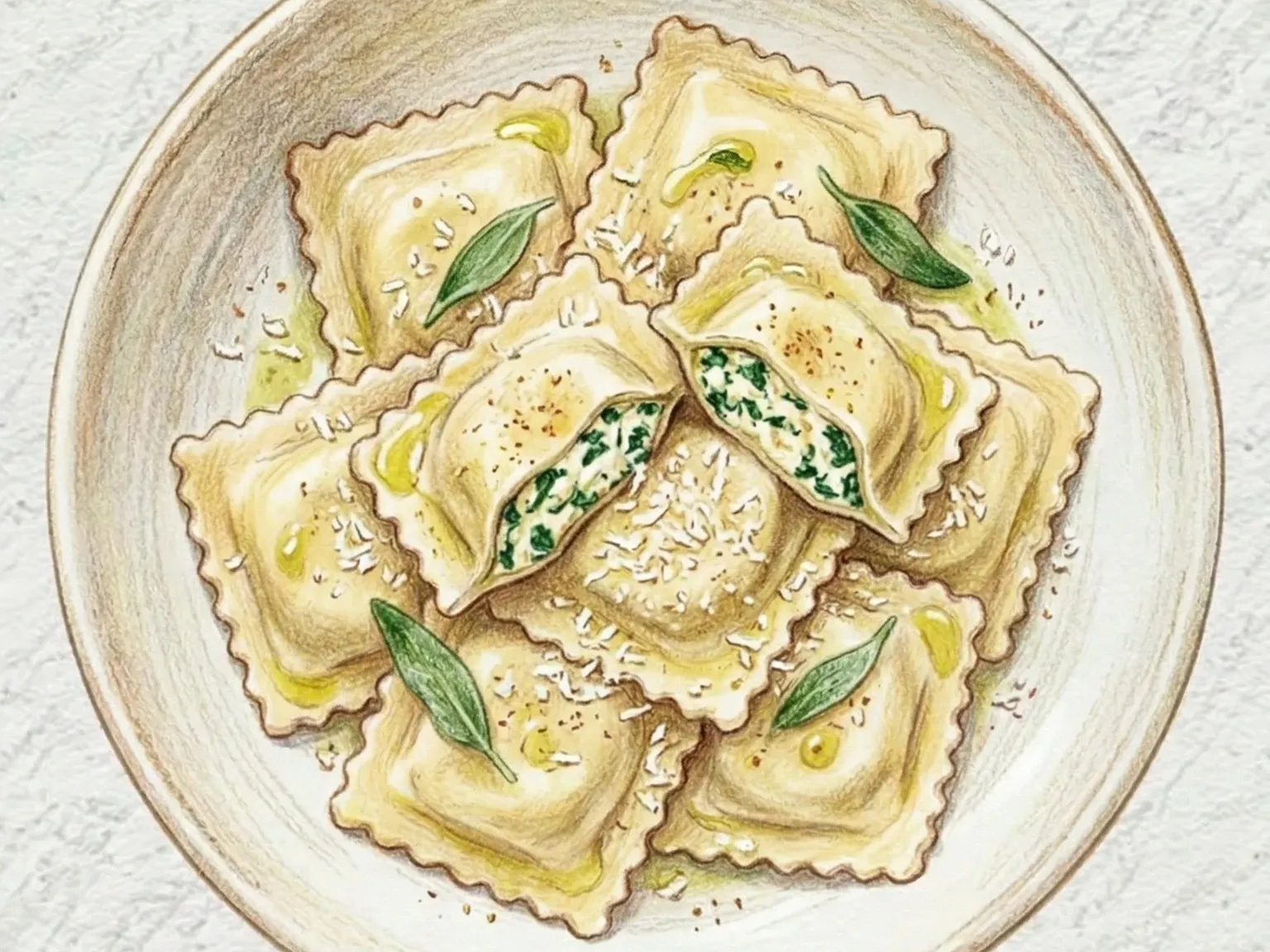
Tofu Ricotta Spinach Ravioli
Tofu ricotta spinach ravioli is a pasta dish featuring a filling made from firm tofu that has been thoroughly pressed, combined with ricotta cheese, blanched spinach, Parmigiano Reggiano, and a measured amount of nutmeg, all of which are enclosed within sheets of fresh pasta. The inclusion of tofu serves to diminish the heavy richness often associated with ricotta, although it ensures that the internal mixture maintains a consistency that is both smooth and creamy. The nutmeg provides a warm spice element that functions to bridge the flavor gap between the earthy qualities of the spinach and the various dairy ingredients. It is essential to press the tofu until the vast majority of its liquid content has been removed. Failure to eliminate this excess water will result in a filling that is too thin, which subsequently makes it difficult to achieve a clean and effective seal on the pasta sheets. To prevent the ravioli from opening or splitting during the boiling process, the edges of the pasta must be crimped firmly using a fork. This technique establishes a tight seal capable of withstanding the three to four minutes of cooking time required for the dish. Once the ravioli has been drained, it should be immediately transferred into brown butter infused with sage and tossed for approximately thirty seconds. This specific step prevents the exterior surface of the pasta from becoming dry and ensures that every piece is evenly coated in a layer of herb-scented fat. Since the boiling period is quite short, the subtle and delicate flavors contained within the filling are successfully preserved. This recipe is designed to yield four servings, which makes the dish a suitable option for a dinner event where the visual presentation of the food is a priority.
Sweet Potato Gnocchi with Sage Butter
Sweet potato gnocchi with sage butter begins with steamed sweet potato that has been rested uncovered to drive off excess steam, then mashed while still warm and folded gently with potato starch, all-purpose flour, and egg yolk into a soft, cohesive dough. The critical rule is minimal kneading - once the ingredients combine, the dough should be handled as little as possible to prevent gluten from developing, which would make the finished pieces dense and rubbery instead of fluffy and tender. The gnocchi are shaped by rolling ropes of dough, cutting them into small pillows, and pressing each one against a fork to create ridges that catch the sauce. Once boiled until they float, they go directly into browned butter: unsalted butter melted with fresh sage leaves over medium heat until the milk solids turn hazelnut-brown and the sage releases a dry, herbal aroma that complements the sweet potato's natural caramel notes. Toasted, chopped walnuts scattered over the top add a crunchy contrast to the pillowy gnocchi, and a generous grating of Parmigiano Reggiano provides the sharp, crystalline saltiness that pulls the whole dish together.
Bam Tiramisu (Chestnut Tiramisu)
Chestnut tiramisu is a variation of the traditional Italian dessert that incorporates chestnut puree into the mascarpone cheese filling. This modification transforms a standard cafe dessert into a preparation specifically associated with the autumn season in Korea. The fundamental elements of the recipe remain consistent with the classic version. It utilizes ladyfinger biscuits that have been soaked in espresso, a filling made of whipped mascarpone and cream, and a final layer of cocoa powder. However, the introduction of chestnut puree alters the profile of the cream. Instead of a simple dairy richness, the mixture takes on an earthy quality. Using a puree made from chestnuts boiled at home, rather than a store-bought paste, helps maintain the natural grain of the nut. This provides the cream with a specific texture that is noticeable in every spoonful. When preparing the ladyfingers, the espresso soak requires a high level of precision. Each biscuit should be dipped for approximately one to two seconds. If the ladyfingers are submerged for a longer duration, they absorb an excessive amount of liquid. This leads to a waterlogged consistency which can cause the structural layers of the dessert to collapse while it sits in the refrigerator. The assembly process follows a predictable sequence. A layer of soaked ladyfingers is placed at the bottom, followed by a layer of the chestnut cream. This pattern is repeated once more before the entire dish is placed in the refrigerator to rest for at least four hours. This period of refrigeration is essential to the final outcome. During these hours, the ladyfingers absorb moisture from both the espresso and the cream layer above them. This process changes the biscuits from a crunchy state to a soft texture similar to cake, which allows for clean slices. Just before the dessert is served, a thin layer of cocoa powder is applied to the top. This adds a bitter element that balances the sweetness of the chestnuts. Preparing the tiramisu in individual glass containers or cups ensures that the portions are easy to manage and allows the different layers of the dessert to be clearly visible from the side.
Spinach Ricotta Cannelloni
Spinach ricotta cannelloni fills tube-shaped pasta with a mixture of sautéed spinach, ricotta cheese, garlic, and Parmesan, then bakes them in tomato sauce topped with mozzarella. Removing as much moisture from the spinach as possible is the most important step - excess water thins the filling and causes the tubes to split during baking. Half the Parmesan goes into the filling for depth, while the rest is scattered on top with mozzarella to build a golden, bubbling crust. Baking covered at 190 degrees Celsius for the first 25 minutes lets the sauce steam the pasta through, and uncovering for the final 10 minutes crisps the cheese surface. Resting the dish for 10 minutes after it comes out of the oven allows the sauce to thicken and the filling to set, producing cleaner portions when sliced.
Serve with this
Gorgonzola Pear Walnut Gnocchi
Gorgonzola pear walnut gnocchi pairs the sharp, salty punch of Italian blue cheese with ripe pear natural sweetness over pillowy potato gnocchi. The sauce is built by melting gorgonzola into butter and heavy cream until it forms a smooth, pungent coating that clings to each dumpling. Pear slices are sauteed briefly so their sugars concentrate without losing structure, and dry-toasted walnuts contribute crunch and a roasted nuttiness that complements the cheese. A small amount of lemon juice cuts through the richness to keep the palate fresh. Cook time is just 15 minutes, making it one of the faster gnocchi dishes despite its layered flavor profile.
Caprese Salad
Caprese salad alternates slices of ripe tomato, fresh mozzarella, and basil leaves of equal thickness, dressing them with nothing more than extra virgin olive oil and salt. The recipe excludes cooking entirely, so the tomato's ripeness and the mozzarella's fresh, milky quality carry the entire flavor of the dish - substituting underripe tomatoes or low-moisture mozzarella changes the result significantly. A thin drizzle of balsamic glaze over the top introduces a concentrated grape-vinegar sweetness that contrasts directly with the cheese's fat, while basil's volatile aromatic compounds release on contact with the oil rather than surviving any heat. Dressing the salad at the last possible moment prevents the salt from drawing moisture out of the tomatoes ahead of time, which dilutes the oil on the plate. The dish originates from the island of Capri and is recognized by the green, white, and red color arrangement that mirrors the Italian flag.
Tomato Basil Juice
Tomato basil juice is a cold savory drink made by blending ripe tomatoes with fresh basil leaves and straining the result through a fine sieve to remove seeds and skins. The ripeness of the tomato determines much of the flavor: fully ripe tomatoes carry free glutamates that produce a natural umami depth, whereas underripe fruit tastes predominantly sour without the sweetness and savory body that makes the juice satisfying. Basil should be added to the blender immediately before blending rather than sitting cut or torn, because the volatile oils that produce its aroma begin oxidizing quickly once the leaves are damaged. After blending to a smooth consistency, passing the juice through a fine-mesh strainer or cheesecloth removes the solids and produces a texture smooth enough to drink without resistance. Salt and black pepper season the juice, and fresh lemon juice raises the acidity in a way that brightens the overall flavor rather than making it sour. A small addition of olive oil emulsifies into the juice and activates fat-soluble aromatic compounds in both the tomato and the basil, producing a fuller, rounder flavor than the unstrained version. The juice must be thoroughly chilled before serving, as warmth mutes the herbal freshness. It works well as a brunch drink, a light non-alcoholic aperitif, or a base for savory cocktails.
Similar recipes
Creamy Tuscan Chicken
Creamy Tuscan chicken begins by searing seasoned chicken breasts in olive oil until a deep golden crust forms on both sides, locking in juices. Minced garlic is sauteed briefly in the same pan drippings, then chicken stock deglazes the fond for extra savory depth. Heavy cream and grated Parmesan simmer on low heat for three minutes, thickening into a velvety sauce. Sun-dried tomatoes bring concentrated sweetness while fresh spinach wilts into the sauce, adding color and a mild vegetal note. Returning the chicken for a final four-minute simmer ensures the breast cooks through to a safe internal temperature while absorbing the sauce's rich flavor. Adding more Parmesan thickens the sauce further, and a few drops of lemon juice stirred in at the end lifts the cream's weight and brings it into balance with the acidity of the sun-dried tomatoes.
Slow-Simmered Meat Sauce Pasta
Beef ragu tagliatelle is an Italian braised meat sauce pasta built on slow cooking rather than speed. Ground beef and a soffritto of finely diced onion, carrot, and celery are cooked together in a heavy pot for ninety minutes or longer until the vegetables dissolve entirely into the sauce. Tomato paste is stirred in and caramelized during the early stages to deepen its sweetness and concentrate flavor, then red wine deglazes the pot, lifting the browned fond from the bottom into the liquid. The long, low simmer breaks the meat down into small, tender pieces suspended in a thick, glossy sauce. Wide tagliatelle ribbons are ideal here because their surface texture and broad folds trap the heavy ragu rather than letting it slide off, delivering concentrated beef flavor with every bite.
Calzone
Calzone rolls pizza dough into a circle, fills one half with ricotta, mozzarella, diced ham, and fresh basil, then folds into a half-moon shape, seals the edges with a fork, and bakes until golden at 220 degrees Celsius. Leaving a two-centimeter border free of filling is critical -- overstuffing causes steam pressure to burst the seam during baking. Brushing a thin line of water along the edge before pressing firmly with a fork creates a tighter seal that holds through the full bake. Fifteen to twenty minutes in a well-preheated oven produces a crisp, burnished exterior while the interior heats the ricotta into a soft cream and melts the mozzarella into long, stretchy strings. Brushing olive oil on the surface before baking adds a richer color and a slight nuttiness to the crust. Tomato sauce served on the side for dipping provides an acidic counterpoint that cuts through the dense cheese filling and keeps each bite feeling balanced.