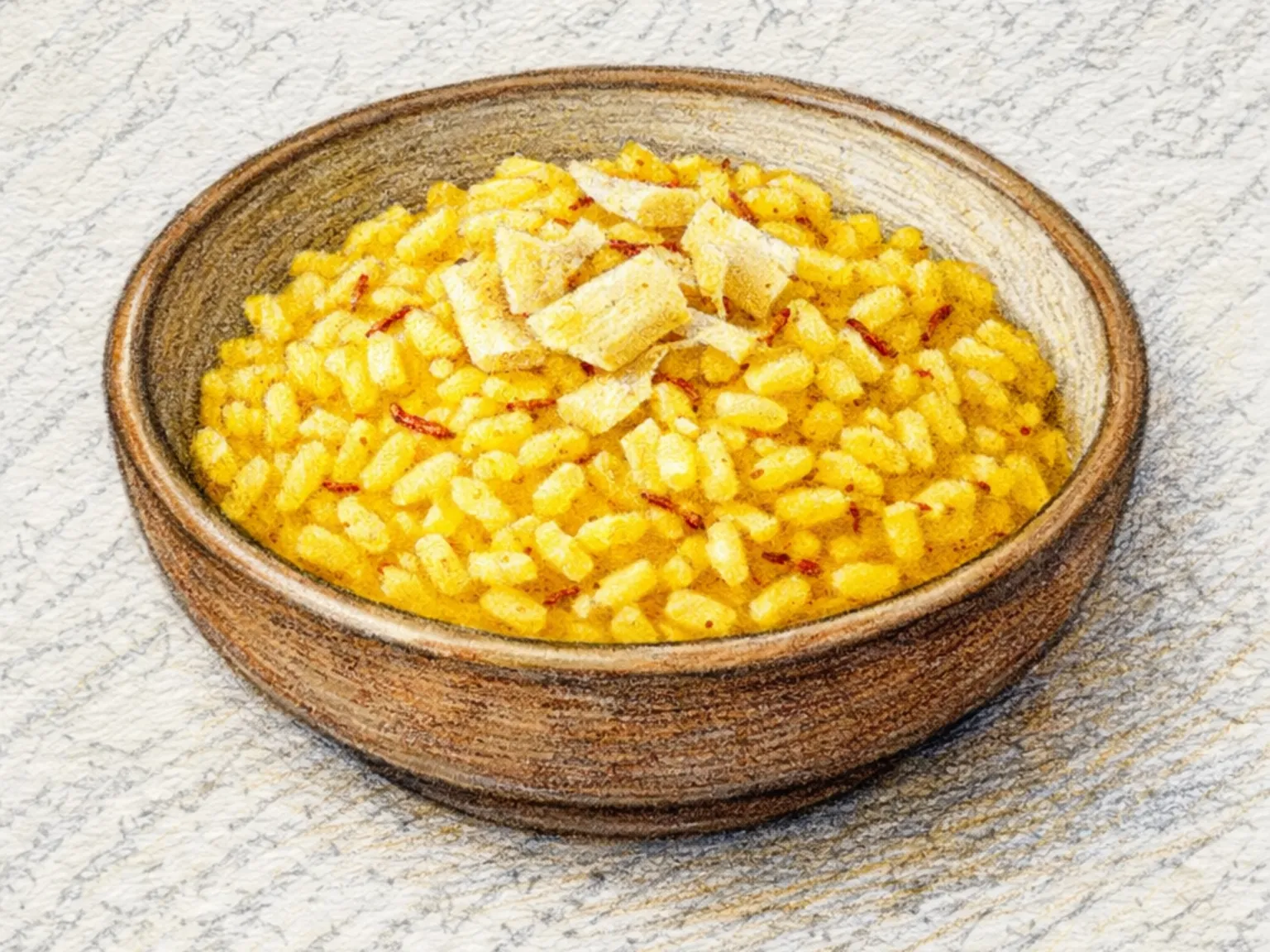
Risotto alla Milanese
Risotto alla Milanese is Milan's signature rice dish, made by toasting Arborio rice in olive oil and butter with onion, deglazing with white wine, and gradually stirring in saffron-infused chicken stock one ladle at a time. Toasting the rice first coats each grain in fat, which slows starch release and builds the characteristic creamy consistency. The white wine adds an acidity that balances the richness of butter and cheese underneath. Saffron must be steeped in warm stock beforehand so its golden color and floral aroma distribute evenly, and the stock should always be kept hot to avoid dropping the rice temperature mid-cook. Stirring in cold butter and grated Parmesan off the heat at the very end emulsifies them into the starch, producing the loose, flowing texture that defines a properly finished risotto.
Adjust Servings
Instructions
- 1
Infuse saffron in warm stock and keep it hot.
- 2
Heat oil and 1 tbsp butter, then saute finely chopped onion until translucent.
- 3
Add rice, toast briefly, then deglaze with white wine and reduce.
- 4
Add saffron stock gradually, stirring and allowing each addition to absorb.
- 5
After about 18 minutes, turn off heat and stir in remaining butter and Parmesan.
- 6
Adjust to a loose, creamy consistency and serve immediately.
As an Amazon Associate, we may earn from qualifying purchases.
Tips
Nutrition (per serving)
More Recipes

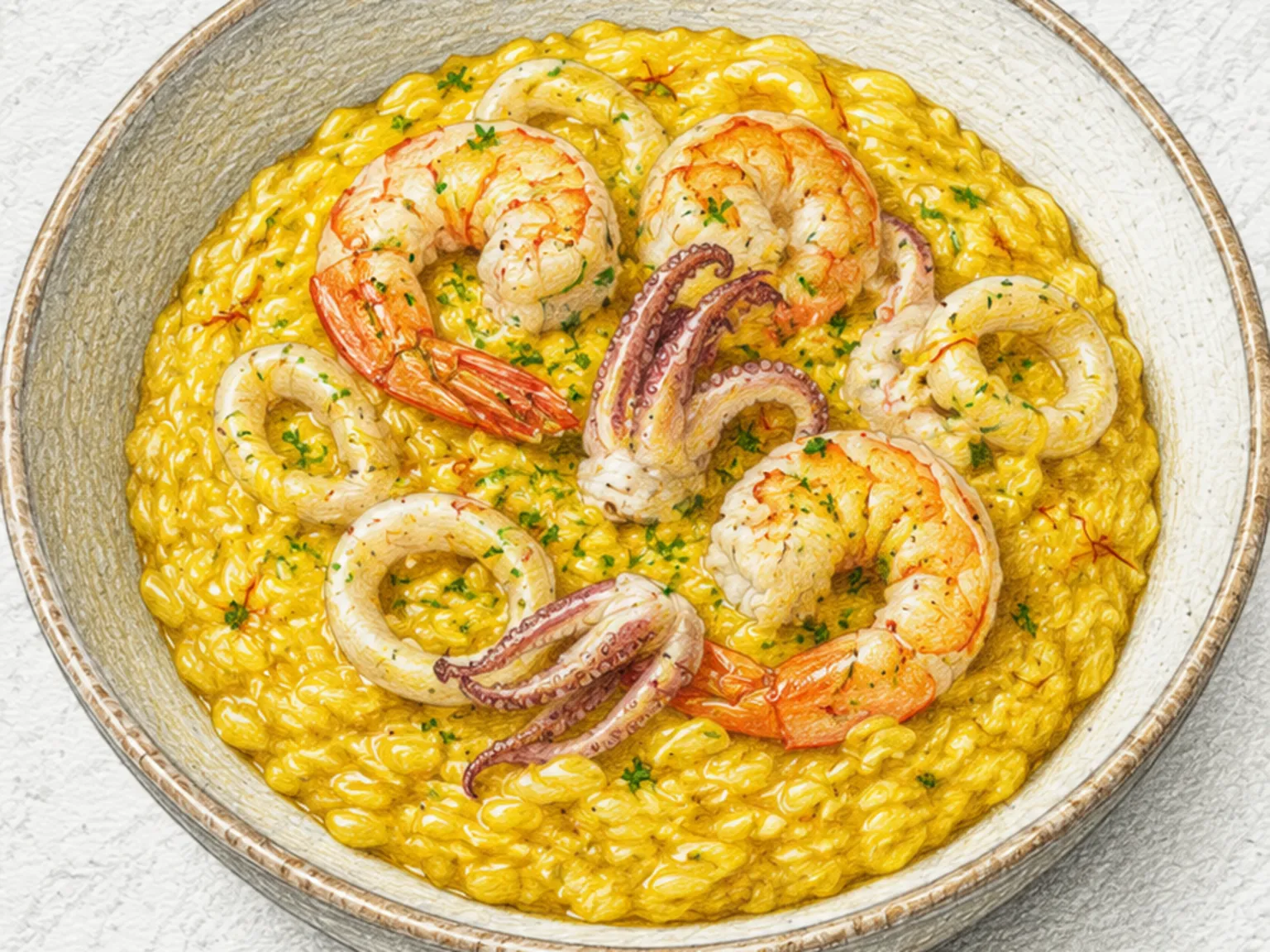
Seafood Saffron Risotto
Seafood saffron risotto is built by stirring Arborio rice into warm seafood stock one ladle at a time, coaxing out starch until the grains are creamy yet intact. Saffron threads steeped in a small amount of warm stock release their golden color and floral, slightly metallic aroma evenly through the rice. Toasting the rice in olive oil before adding liquid coats each grain in fat, which controls starch release and prevents the risotto from turning gluey. White wine added early provides acidity that tempers the richness of the seafood. Shrimp and squid go in during the final minutes to keep their texture firm and springy. Butter and Parmesan folded in off the heat create the signature wave-like consistency that should flow slowly across a tilted plate.

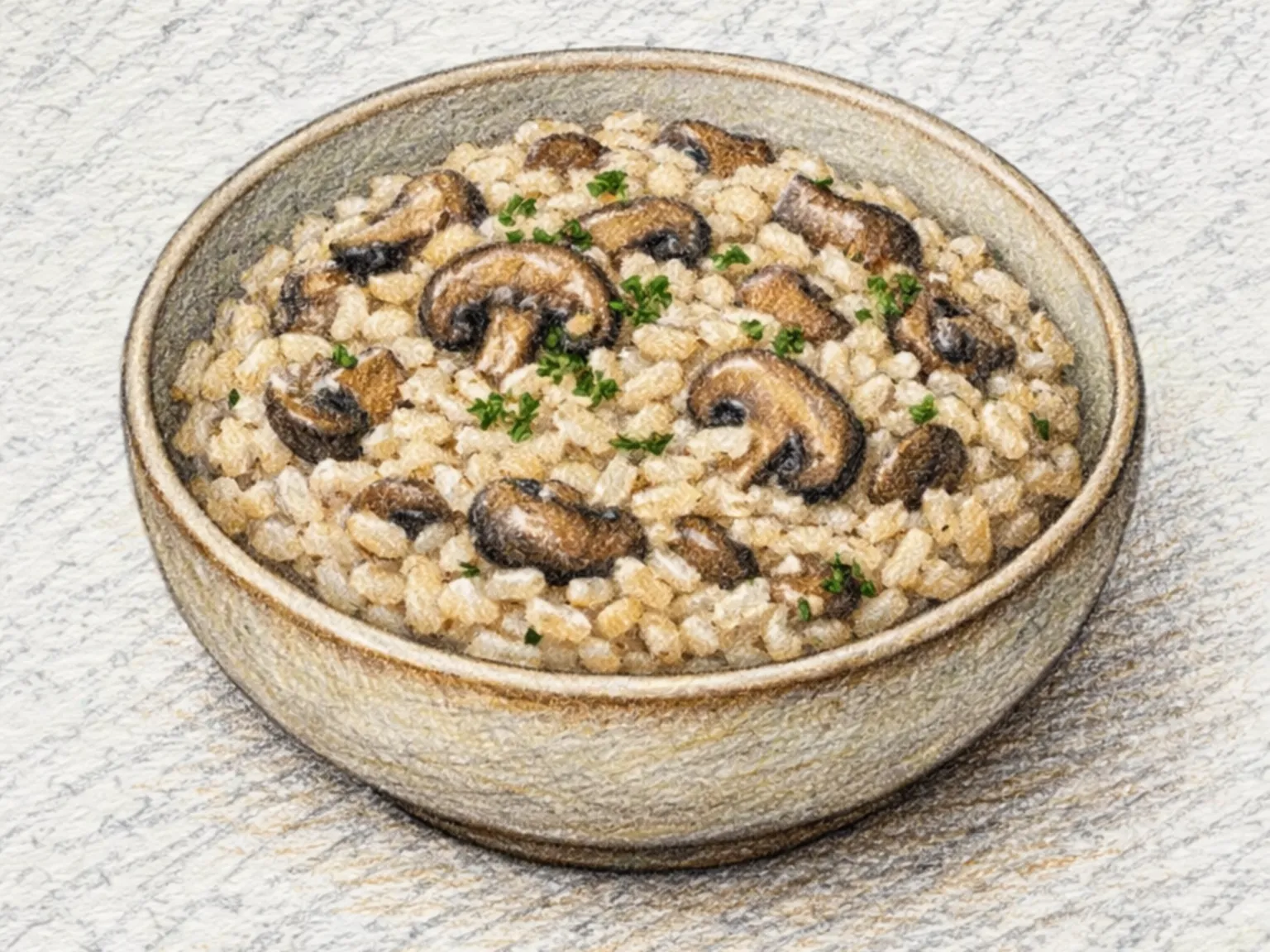
Mushroom Risotto
Mushroom risotto cooks unwashed arborio rice in olive oil and butter to activate the surface starch, then adds warm chicken stock one ladle at a time over 18 to 20 minutes of continuous stirring. Not rinsing the rice is essential - the starch released during cooking is what creates the signature creamy consistency without any cream. The mushrooms are sauteed on high heat until their moisture evaporates and they develop a deep brown color, which concentrates the earthy aroma. White wine is added to the toasted rice and stirred until absorbed, leaving behind a subtle acidity once the alcohol cooks off. Finishing off the heat with cold butter and grated Parmesan - a step called mantecatura - gives the risotto its glossy, velvety texture.

Arancini (Crispy Sicilian Risotto Balls with Melted Cheese)
Arancini - 'little oranges' in Sicilian dialect - originated in 10th-century Arab-ruled Sicily, where leftover rice was shaped, filled, and fried as portable food for travelers and field workers. Day-old risotto is rolled around a core of mozzarella and sometimes ragu, then coated in flour, egg wash, and fine breadcrumbs before deep-frying at 180°C until the shell turns a deep amber. The breadcrumb crust shatters on first bite, giving way to a dense, saffron-tinted rice layer that holds its shape, and then the molten cheese center pulls into long strings. Each region of Sicily argues over the correct shape - Palermo makes them round, Catania prefers a pointed cone. Street vendors in Catania's markets sell them from glass cases by the hundreds each morning, still warm from the fryer.

Gnocchi alla Romana (Baked Semolina Cheese Rounds)
Gnocchi alla Romana is made by cooking semolina in milk until thick, then enriching the mixture with butter, egg yolks, and Parmigiano-Reggiano before spreading it flat to cool and set. The milk is heated with salt, nutmeg, and half the butter, and the semolina is rained in while whisking continuously to prevent lumps. Adding the cheese and yolks off the heat allows the residual warmth to bind them into the dough without scrambling, contributing a rich golden color and savory depth. Once cooled and firm, the dough is cut into rounds, overlapped in a buttered dish, and topped with the remaining butter and cheese. Baking at 200 degrees Celsius with a final broil produces a golden, crisp surface over a tender, creamy interior that holds its shape when served.

Penne alla Vodka
Penne alla vodka combines tomato puree, heavy cream, and a splash of vodka into a smooth, coral-colored sauce. The vodka helps release flavor compounds in the tomato that are not soluble in water or fat alone, then cooks off to leave only a subtle warmth. Butter-softened onions and a pinch of chili flakes round out the base before cream is stirred in on low heat. The tubular shape of penne catches the thick sauce inside each piece.

Pasta alla Norma (Sicilian Fried Eggplant Tomato Pasta)
Pasta alla Norma originates from Catania in Sicily and combines fried eggplant cubes with a simple tomato passata sauce. Salting the eggplant beforehand draws out moisture and bitterness, resulting in firmer pieces that absorb less oil during cooking. Garlic provides aromatic depth, while fresh basil added off-heat preserves its fragrance. The dish is named after Vincenzo Bellini's opera Norma, a tribute to its status as a Sicilian culinary masterpiece.