Korean Rosé Cup Tteokbokki
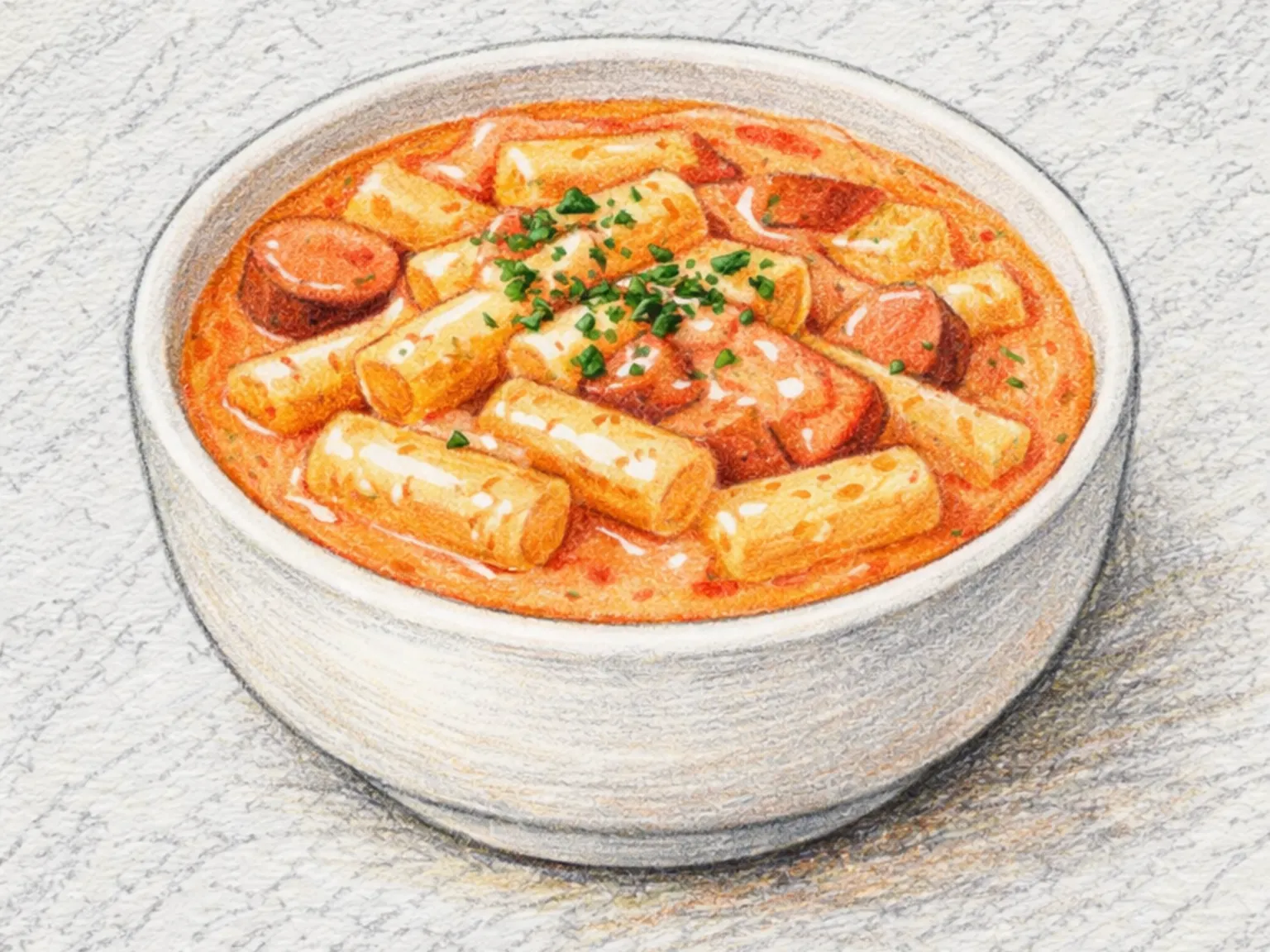
A base of water and milk is whisked with gochujang, red chili flakes, sugar, and minced garlic, then brought to a simmer with rice cakes and fish cake over medium-low heat until the sauce thickens. Mozzarella cheese is stirred in at the end, melting into the sauce to create a creamy, velvety consistency that softens the chili heat. Keeping the flame moderate throughout is important because high heat can cause the milk to separate.
Adjust Servings
Instructions
- 1
If rice cakes are firm, soak them in lukewarm water for 5 minutes.
- 2
Combine water, milk, chili paste, chili flakes, sugar, and garlic in a pot and whisk.
- 3
Once simmering, add rice cakes and fish cake, then cook over medium-low heat.
- 4
When cakes are tender and sauce thickens, add cheese and melt it in.
- 5
Serve in cups for a street-style presentation.
As an Amazon Associate, we may earn from qualifying purchases.
Tips
Nutrition (per serving)
More Recipes

Korean Spicy Rice Cakes (Gochujang Braised Chewy Tteok with Fish Cake)
Tteokbokki is Korea's signature street-food dish, made by simmering cylindrical rice cakes and flat fish cake in a sauce of gochujang, gochugaru, sugar, and soy sauce. As the broth reduces, starch from the rice cakes thickens the liquid into a glossy, clinging glaze that coats every piece. The fish cake absorbs the surrounding spice while contributing its own subtle seafood depth to the pot. A scattering of green onion added at the last moment introduces a bright, herbal note that cuts through the sweet heat.

Korean Ramen Tteokbokki (Spicy Rice Cake and Ramen Noodle Stir-Fry)
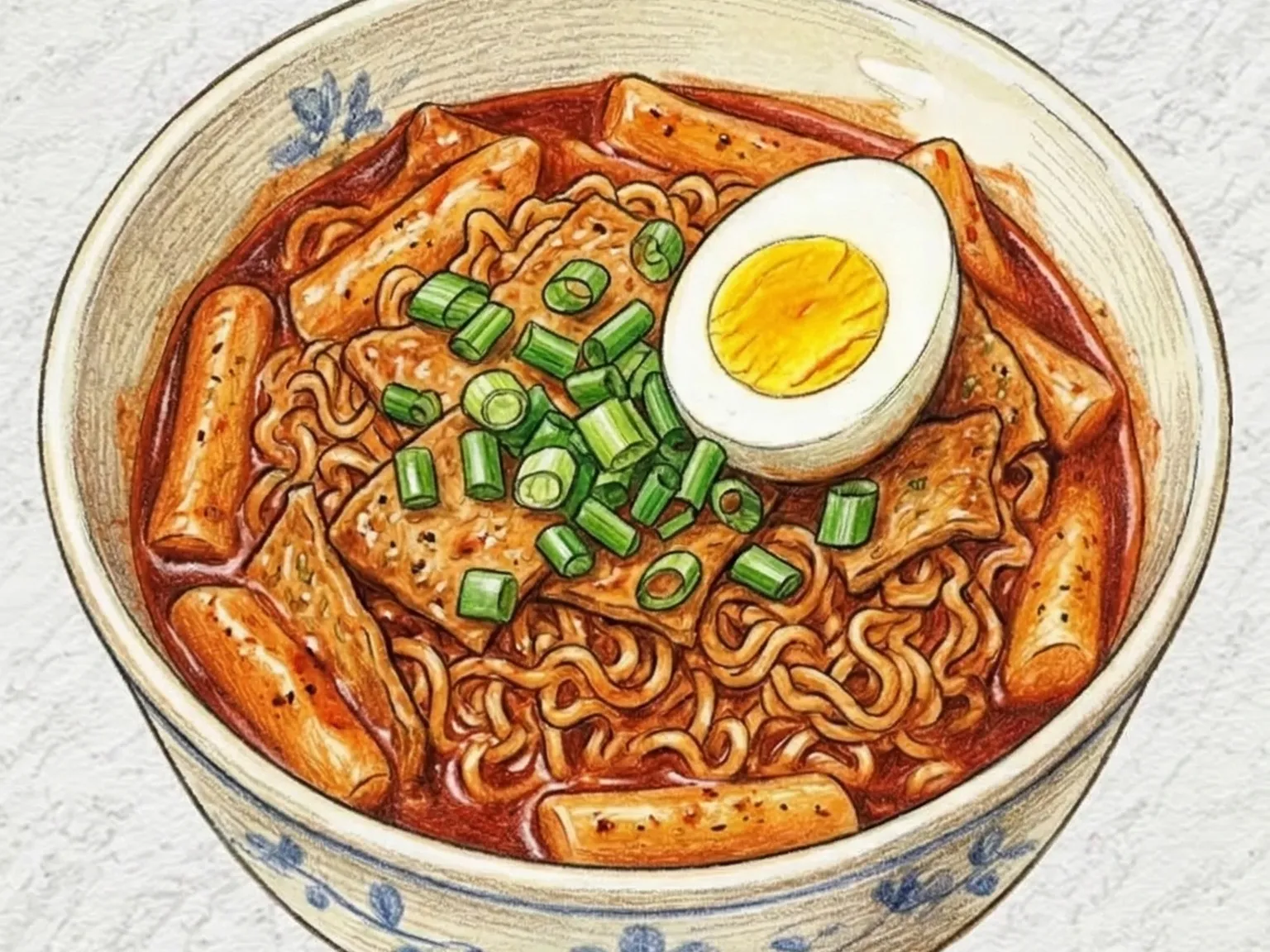
A sauce of gochujang, red pepper flakes, soy sauce, and sugar is dissolved in water and brought to a boil, then rice cakes are cooked for five minutes before ramen noodles and fish cake are added for three more minutes. The ramen noodles absorb the spicy tteokbokki sauce, producing a more concentrated flavor than tteokbokki alone, and the dish is finished with green onion and halved boiled eggs once the broth has thickened. Adding half a packet of ramen seasoning powder boosts the overall umami.

Korean Mala Cup Tteokbokki
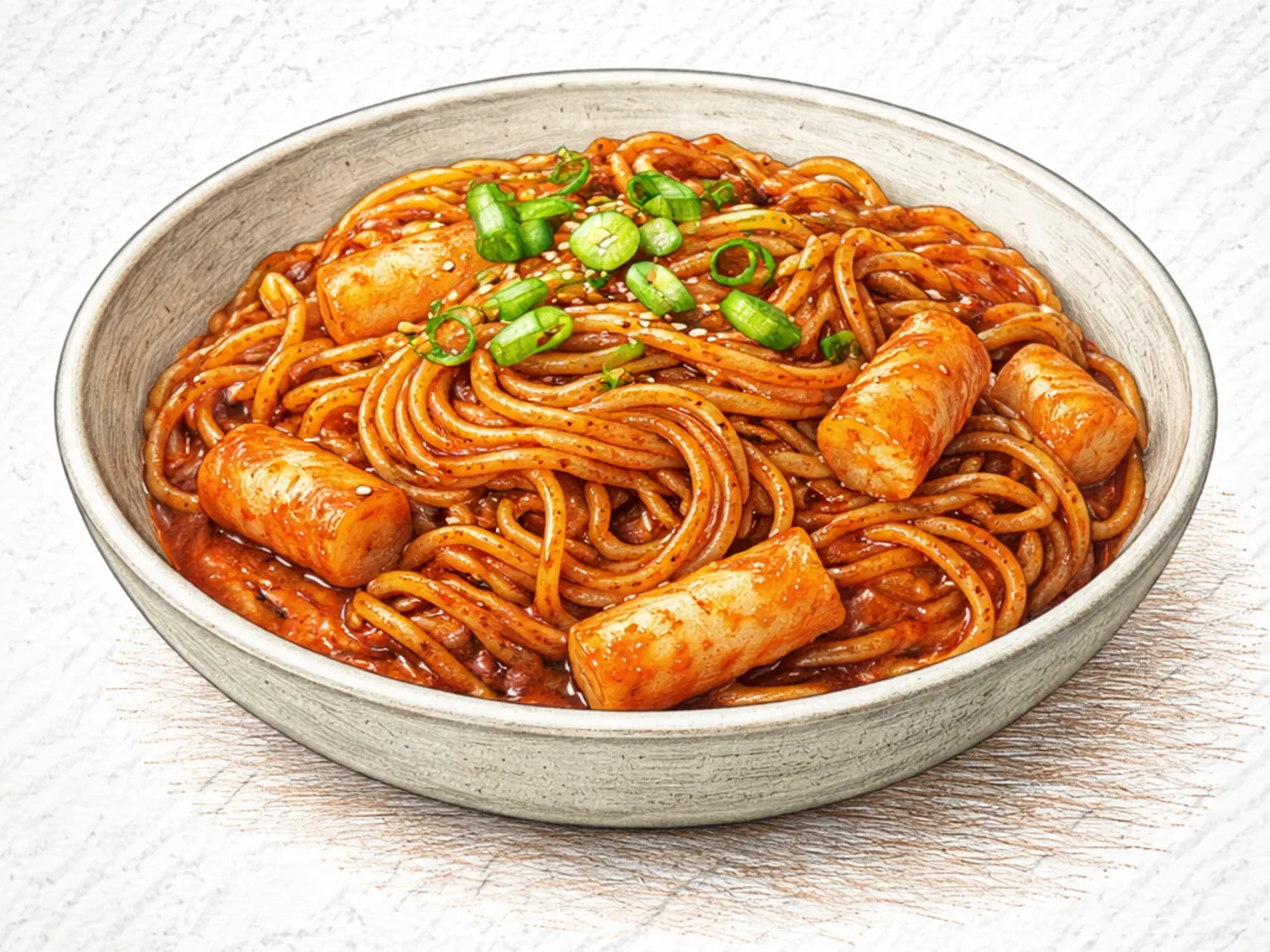
This cup-style tteokbokki combines gochujang with mala sauce to deliver both Korean chili heat and the numbing tingle of Sichuan peppercorn. Rice cakes and fish cake are simmered for six to seven minutes, stirring constantly, until the broth reduces into a thick, clinging glaze, then finished with sliced green onion. Because mala sauce saltiness varies widely between brands, starting with one tablespoon and adjusting upward is the safest approach.

Korean Soupy Tteokbokki (Rice Cakes in Spicy Gochujang Broth)
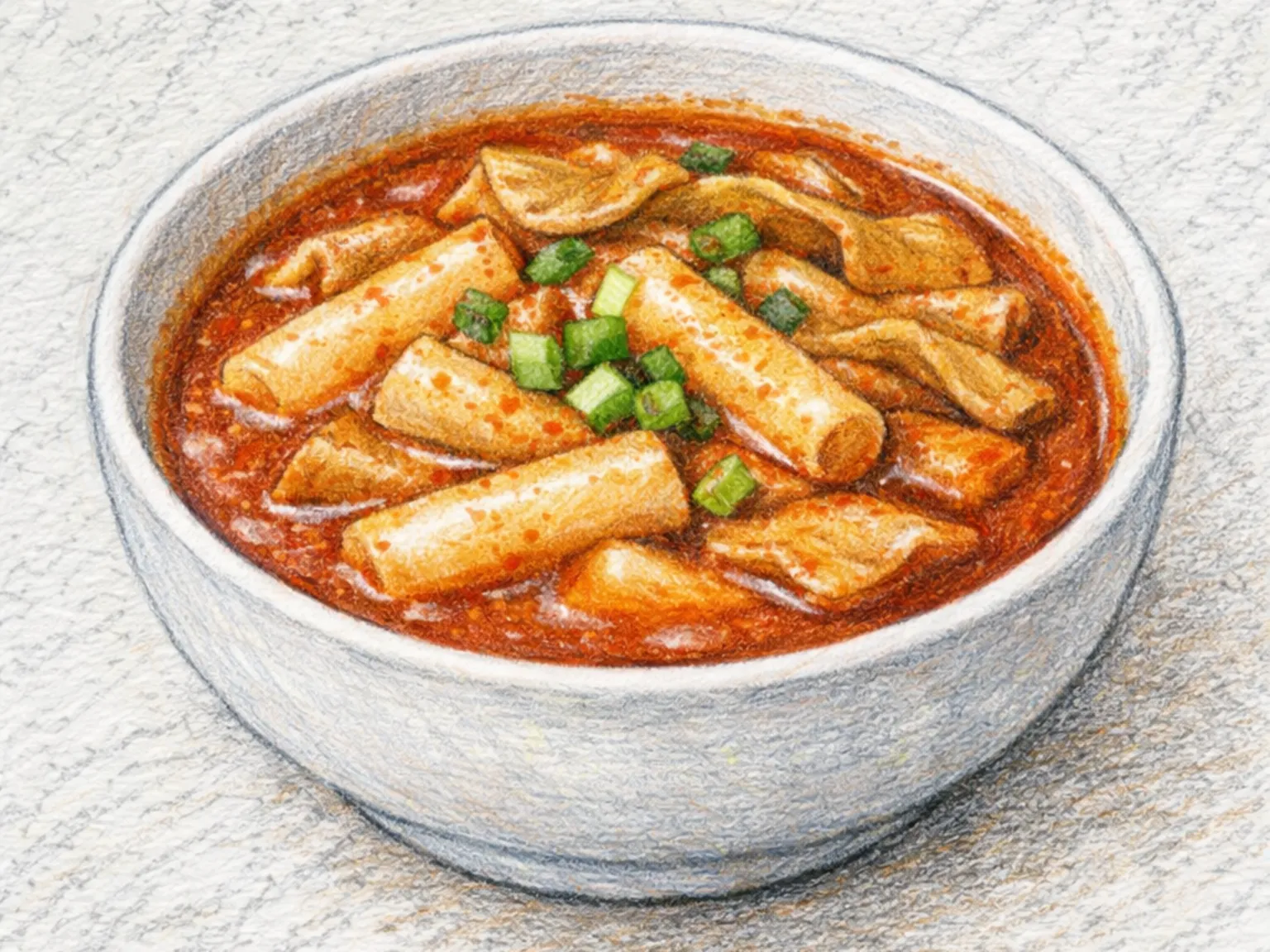
Gukmul-tteokbokki is a broth-based tteokbokki where rice cakes and fish cakes simmer in a kelp stock seasoned with gochujang, gochugaru, soy sauce, and sugar. Unlike dry or stir-fried versions, the generous broth lets the seasoning penetrate each rice cake while the fish cakes boost the soup's savory depth. Simmering over medium heat for eight to ten minutes softens the rice cakes while preserving a chewy core, and scallions stirred in at the end add freshness. The leftover broth is commonly enjoyed with a bowl of rice stirred in or with added ramyeon noodles.

Korean Fire Chicken Fried Rice
Buldak bokkeumbap is a Korean fried rice that packs serious heat, made by stir-frying chicken breast coated in fiery buldak sauce with rice over high flame. The spice hits immediately and builds with each bite, delivering the kind of intense burn that spicy food lovers crave. Topping it with melted mozzarella cheese tempers the heat just enough to keep you reaching for another spoonful, as the stretchy cheese wraps around the rice and creates pockets of creamy relief amid the fire. Quick to prepare with minimal ingredients, it has become a popular late-night meal or solo dining option, especially among those who enjoy pushing their spice tolerance to its limit.

Korean Royal Soy Sauce Tteokbokki
Gungjung-tteokbokki is a royal court-style Korean rice cake stir-fry rooted in Joseon dynasty cuisine. Unlike the common spicy version, it uses soy sauce and sesame oil instead of gochujang, producing a mild, sweet-savory glaze. Sliced rice cakes are stir-fried with beef, shiitake mushrooms, carrots, and onions so the soy seasoning coats each ingredient evenly. The rice cakes stay chewy while the beef and mushrooms contribute depth, making this a refined dish without any heat.