Rosemary Garlic Grissini
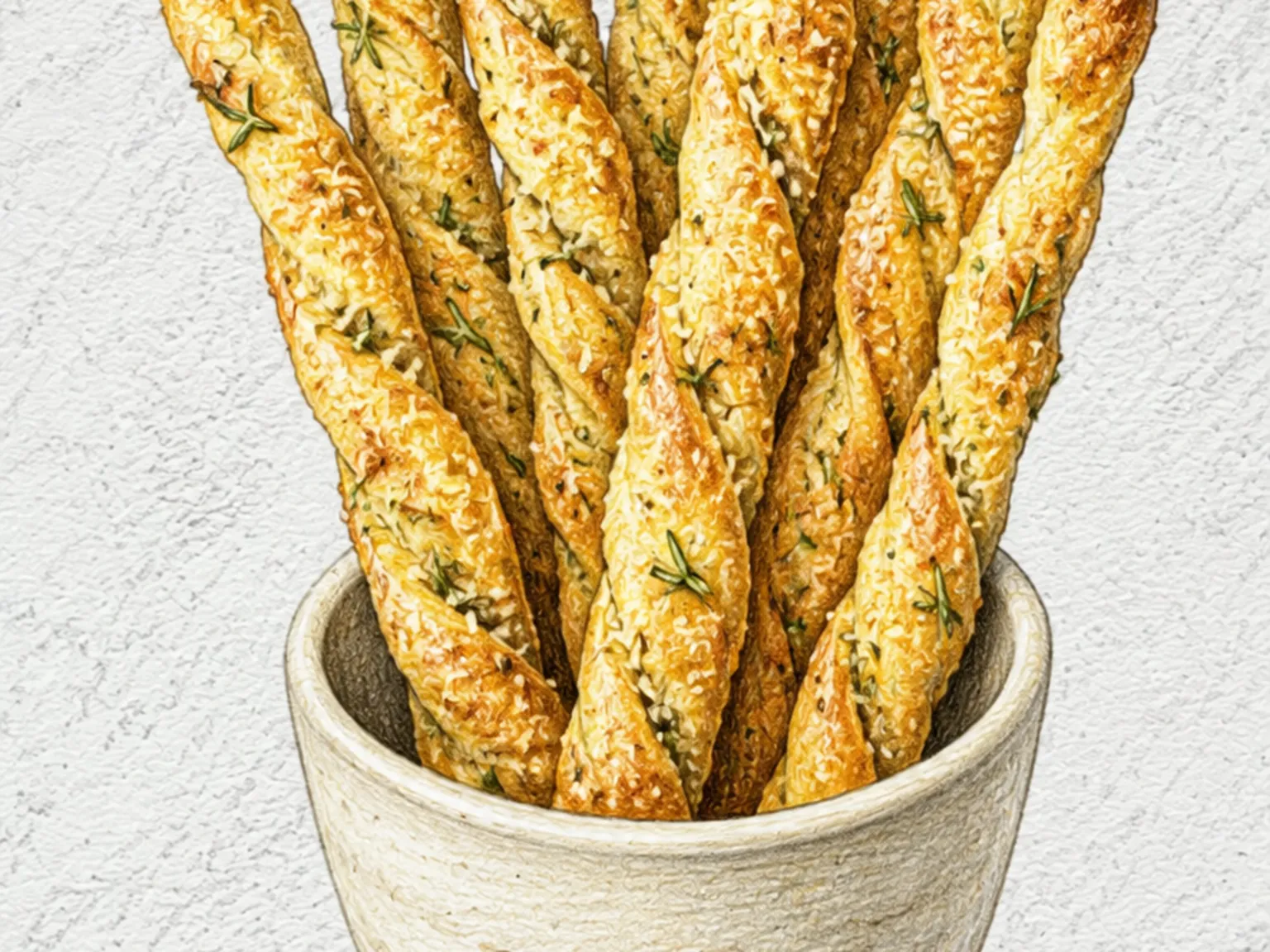
These Italian breadsticks are made from a simple yeasted dough enriched with olive oil, minced garlic, and fresh rosemary. After a forty-minute proof, the dough is rolled flat, cut into narrow strips, and twisted before baking at high heat until deeply golden and audibly crisp. The garlic infuses the crumb with a mellow, roasted warmth, while the rosemary contributes a piney, slightly resinous aroma that intensifies during baking. A dusting of grated Parmesan on top melts into a thin, salty crust that makes the first bite immediately savory. Keeping the strips uniform in thickness ensures even baking - thin ones will burn while thick ones stay pale if mixed on the same tray. The breadsticks cool to a firm snap and store well in an airtight container, maintaining their crunch for several days. They work equally well alongside a bowl of soup, a cheese board, or a glass of wine.
Adjust Servings
Instructions
- 1
Mix flour, yeast, and salt, then knead with water and olive oil for about 8 minutes.
- 2
Add minced garlic and rosemary, then knead 1 more minute to distribute evenly.
- 3
Cover and proof in a warm place for 40 minutes.
- 4
Roll flat, cut into 1 cm strips, twist each strip gently, and place on a baking tray.
- 5
Brush lightly with olive oil and sprinkle parmesan on top.
- 6
Bake at 200C for 15-18 minutes until deep golden at the edges.
As an Amazon Associate, we may earn from qualifying purchases.
Tips
Nutrition (per serving)
More Recipes

Rosemary Focaccia
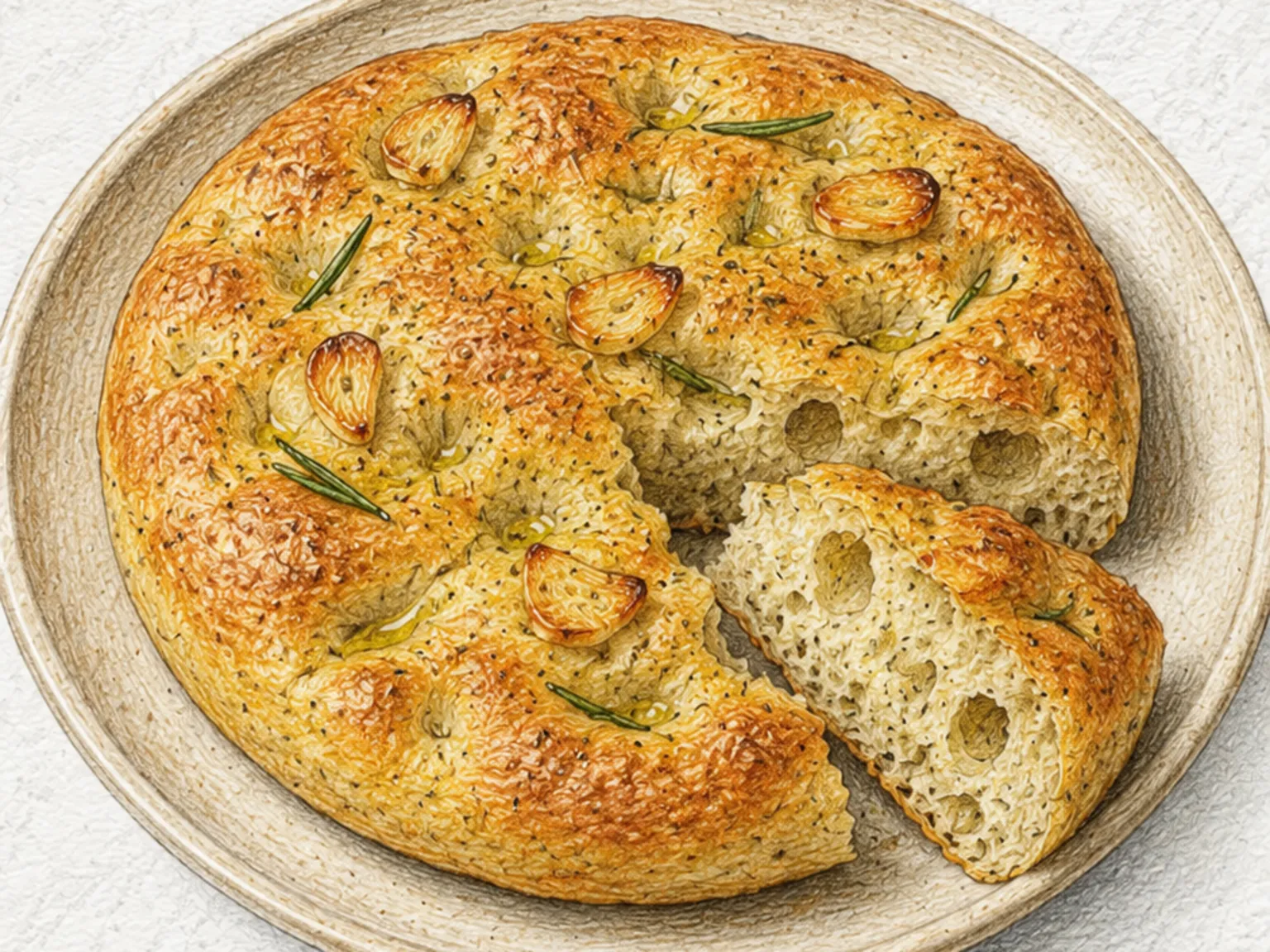
Rosemary focaccia is an Italian olive-oil bread made from a high-hydration dough that is proofed twice, dimpled with fingertips, topped with rosemary, minced garlic, and flaky salt, and baked at 220 degrees Celsius. The wetter the dough, the better the signature open crumb and chewy interior develop, so resisting the urge to add extra flour during handling is important. A sixty-minute first proof followed by a thirty-minute second proof gives the yeast enough time to produce the gas that creates a light, airy structure. Generous olive oil pooled in the dimples essentially fries the surface during baking, creating crisp pockets across the top. Cooling for ten minutes after baking lets steam escape and sharpens the contrast between the crunchy crust and the moist, pillowy crumb inside.

Focaccia Bread
Focaccia is an Italian flatbread defined by its generous use of olive oil and high-hydration dough. The simple mixture of flour, water, yeast, and salt develops large, irregular air pockets during a long fermentation, yielding a crumb that is simultaneously chewy, airy, and moist. The dough is pressed into an oiled pan and dimpled deeply with fingertips - these wells collect pools of olive oil that fry the surface and bottom during baking, creating a crisp, golden crust. Flaky sea salt and fresh rosemary scattered on top before the oven provide a fragrant, savory finish. The bread can be customized endlessly: olives, cherry tomatoes, red onion, or thinly sliced potatoes all work as toppings. Focaccia is at its peak minutes after leaving the oven, when the crust is crackling and the interior is still warm and pillowy. Torn by hand rather than sliced, it is meant for sharing.

Verona Butter Bread Cake (Star-Shaped Italian Yeast Cake)
This tall Italian bread cake relies on generous amounts of egg yolk and butter worked into a yeasted dough through long, patient kneading. Baked in a star-shaped mold, the risen loaf emerges with a distinctive silhouette and a crumb so airy it pulls apart in long, feathery strands. Vanilla perfumes the interior without competing with the buttery richness, and a thick dusting of powdered sugar before serving gives the cake its signature snow-capped appearance. Adding the softened butter in three stages prevents the dough from breaking and ensures even distribution of fat through every strand of gluten. Maintaining a proof temperature between twenty-six and twenty-eight degrees Celsius produces the best balance of flavor development and structural rise.

Cannoli
Cannoli are Sicilian pastries consisting of crisp, tube-shaped shells filled with sweetened ricotta cream. The shell is made from dough enriched with lard, rolled thin, wrapped around metal tubes, and deep-fried until it develops multiple flaky layers that shatter audibly with each bite. The ricotta filling has a slight graininess that distinguishes it from smooth pastry cream, giving it a lighter, more textured quality. Chopped pistachios, candied citrus peel, or chocolate chips pressed into the exposed ends add color and contrasting flavor. The cardinal rule is that shells must be filled just before serving, because any contact with the wet filling turns the crisp pastry limp. In Sicily, cannoli are traditionally tied to Carnival season, though bakeries serve them year-round.

Ciabatta Bread
Ciabatta is a flat Italian bread developed in Veneto in 1982, defined by its exceptionally high hydration dough. The flour-to-water ratio reaches 70 to 80 percent, making the dough sticky and difficult to handle but producing the bread's signature open crumb - large, irregular holes throughout the interior that trap olive oil when dipped. The crust is thin and crackly, shattering lightly when pressed, while inside the crumb is moist and elastic with a wheaty sweetness revealed through chewing. A long cold bulk fermentation in the refrigerator develops mild acidity and complex flavor. The bread stales faster than denser loaves, so it is best eaten the day it is baked. Its flat shape and crisp-soft contrast make it ideal for panini, dipping in olive oil, or serving alongside soup.

Chicken Marsala
Chicken Marsala pounds chicken breast thin, dredges it in flour, and pan-sears it until golden, then builds a sauce from Marsala wine, sliced mushrooms, chicken stock, and a finish of heavy cream. Deglazing the pan with Marsala lifts the browned fond from the surface, concentrating the wine's sweetness and acidity into a deeply flavored base. The mushrooms are sauteed until their moisture evaporates, which intensifies their earthy taste rather than diluting the sauce. Adding cream at the end gives the sauce a velvety body without making it heavy. Dry Marsala is essential - sweet Marsala produces an overly sugary sauce and masks the wine's characteristic walnut and caramel nuances.