Roti Canai (Malaysian Flaky Ghee Flatbread with Curry Dip)
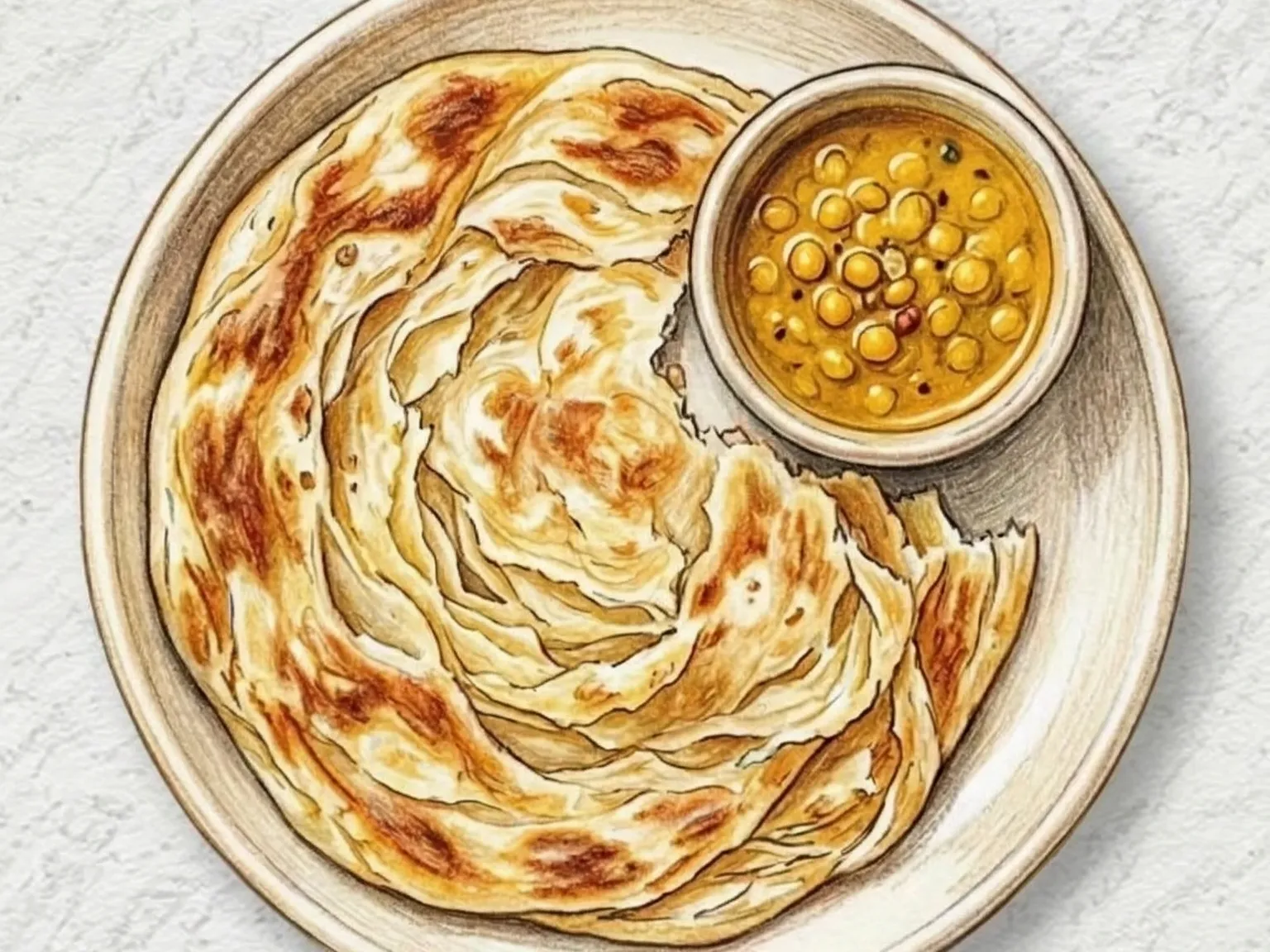
Roti canai is a flaky, pan-fried flatbread served at mamak stalls across Malaysia from dawn until late at night. The dough is enriched with ghee and stretched by hand until nearly translucent, then folded back onto itself multiple times to create dozens of paper-thin layers. On a well-oiled griddle, the bread puffs and crisps on the outside while the interior stays chewy and layered. Each tear reveals the laminated structure inside. The standard pairing is a bowl of dhal curry for dipping, though sardine curry and chicken curry are equally common. Variations abound: roti telur folds in a beaten egg, roti pisang wraps sliced banana inside, and roti bom is a thicker, butterier version dusted with sugar. The bread is torn by hand, never cut, and the best versions leave a faint sheen of ghee on the fingers.
Adjust Servings
Instructions
- 1
Mix flour, salt, and sugar, then knead with egg and milk.
- 2
Coat dough with oil and rest for at least 30 minutes.
- 3
Divide into four and stretch each piece very thin.
- 4
Brush with butter and fold into a square parcel.
- 5
Pan-cook both sides until golden and clap lightly to fluff layers.
As an Amazon Associate, we may earn from qualifying purchases.
Tips
Nutrition (per serving)
More Recipes

Murtabak (Malaysian Stuffed Pan-Fried Flatbread with Spiced Beef and Egg)
Murtabak is a stuffed pan-fried flatbread popular across Malaysia, Singapore, and Indonesia. Wheat dough is stretched paper-thin by hand, then folded around a filling of curry-spiced ground beef and beaten eggs before being pan-fried on a well-oiled griddle. The result is a multilayered parcel with a shatteringly crisp exterior and a moist, savory interior where the egg binds the spiced meat into a cohesive layer. Street vendors typically cut it into squares and serve it alongside a bowl of sweet curry dipping sauce. The aroma of curry powder and caramelized onion stays trapped inside the folds, releasing in waves with each bite.

Nasi Kandar (Penang Indian-Muslim Rice with Mixed Curries)
Nasi kandar is a Penang-born rice dish rooted in the culinary traditions of Malaysia's Indian-Muslim community. A mound of steamed white rice is doused with multiple curry gravies and accompanied by a choice of protein and vegetable sides. The defining technique is kuah campur - the deliberate mixing of different curry sauces so they pool together and soak into the rice, creating a layered complexity no single curry could achieve alone. Coconut milk lends a gentle richness, curry powder supplies aromatic depth, and chili brings lingering warmth. Diners select their own combination from a counter full of dishes, making each plate unique.

Bak Kut Teh (Malaysian Pork Rib Herbal Pepper Broth Soup)
Bak kut teh - 'meat bone tea' in Hokkien - originated with Chinese laborers in colonial-era Malaya who slow-simmered pork ribs with medicinal herbs to sustain through long workdays. The Klang Valley style, now most widely known, features a broth dominated by garlic and white pepper rather than Chinese herbal flavors, resulting in a clear, pale soup with an assertive peppery kick that warms from the throat down. Whole heads of garlic soften to a paste-like sweetness over the long simmer, while the pork ribs give up their collagen until the meat slides cleanly off the bone. The broth is traditionally poured over rice or eaten with fried dough sticks (youtiao) for dipping. In Kuala Lumpur's Klang district, bak kut teh shops open before dawn, serving it as a fortifying breakfast.

Ayam Lemak Cili Padi (Malay Coconut Chicken with Bird's Eye Chili)
Ayam lemak cili padi is a Malay kampung dish - village cooking at its most direct. Chicken simmers in a thin coconut milk broth spiked with bird's eye chilies, turmeric, lemongrass, and sliced shallots. The coconut milk stays light and soupy rather than reduced to a thick gravy, keeping the dish from becoming heavy. Bird's eye chilies deliver a sharp, immediate heat that lingers long after each spoonful, distinct from the slow burn of dried chili pastes. Turmeric tints the broth pale gold and adds an earthy bitterness beneath the coconut sweetness. This is comfort food across Malaysia's east coast states, typically served with steamed rice that soaks up the fragrant, spicy broth.

Mee Rebus (Noodles in Sweet Potato Curry Gravy)
Mee rebus is a Malaysian noodle dish where springy yellow noodles are topped with a thick gravy built from mashed sweet potato, curry powder, peanut butter, and chicken stock. The sweet potato dissolves into the stock to form a naturally thick base, and the curry powder and peanut butter contribute layers of spice and nuttiness that make the sauce unlike any other noodle topping. Soy sauce adds fermented depth and ties the sweetness and spice together. If the gravy becomes too thick during cooking, extra stock loosens it without diluting the flavor. A halved boiled egg and a squeeze of fresh lime just before eating cut through the richness, bringing the bright acidity that is a hallmark of Southeast Asian noodle dishes.

Currywurst (Sliced Sausage in Curry Ketchup)
Currywurst is a German street food built around a homemade curry-tomato sauce ladled over sliced bratwurst. Finely chopped onion is sautéed until translucent, then tomato paste is cooked for one minute to mellow its raw acidity. Ketchup, curry powder, paprika, sugar, Worcestershire sauce, and apple cider vinegar are stirred in and simmered for eight minutes until the sauce thickens and the spices meld. Bratwurst is browned separately in a pan, rolled to crisp all sides, then sliced into bite-size rounds. A final dusting of curry powder over the sauced sausage intensifies the spice aroma, and the sauce improves noticeably after resting overnight.