Saba Misoni (Japanese Miso Mackerel Recipe)
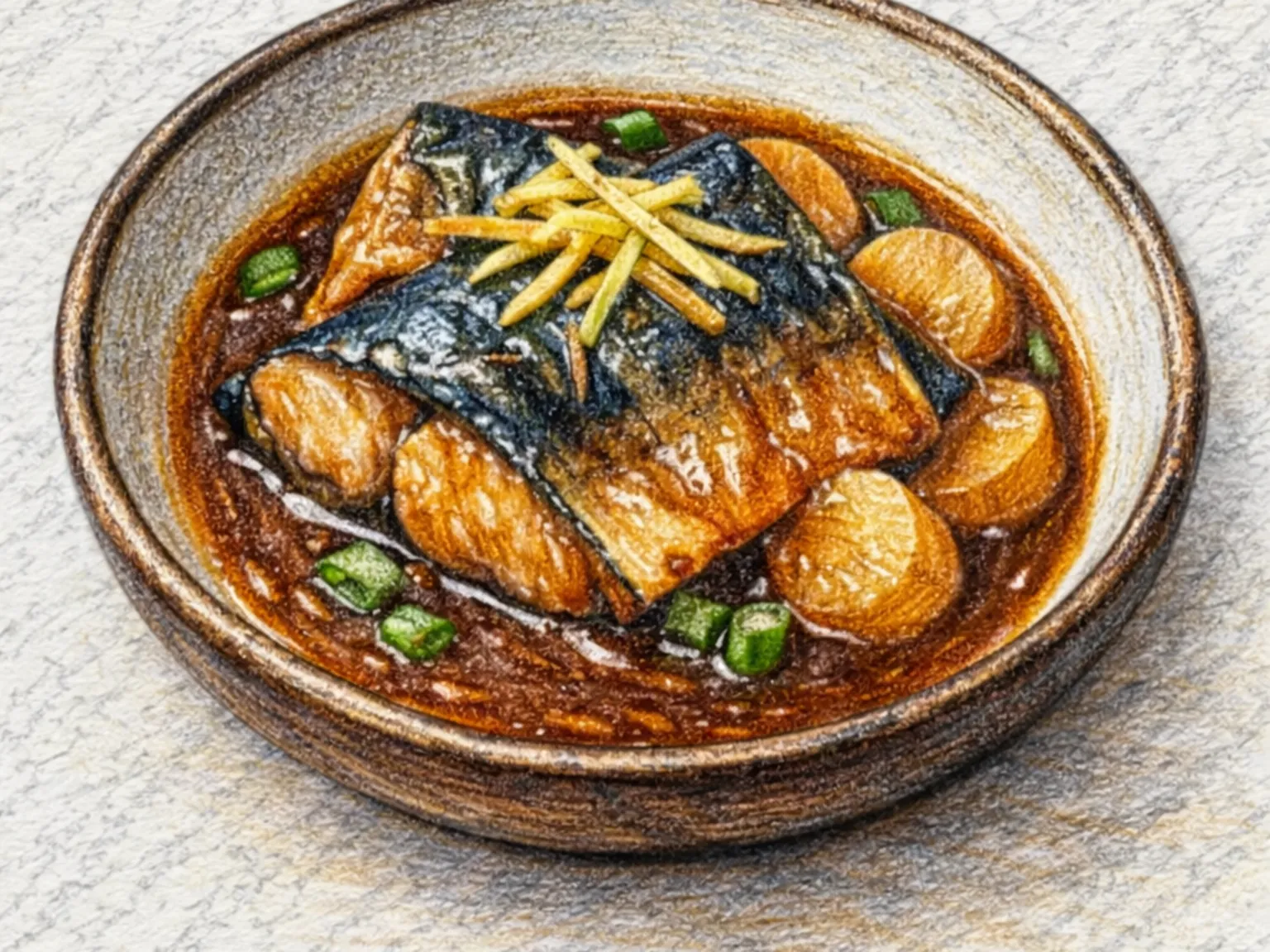
Saba miso-ni is a cornerstone of Japanese home cooking, a dish most cooks can make from memory. Mackerel fillets are first doused with boiling water to remove surface proteins and odor, then placed skin-side up in a shallow pan with a sauce of white or red miso, soy sauce, mirin, sake, and sugar. Thick slices of ginger go in alongside the fish, neutralizing any remaining fishiness and lending a clean, sharp note to the broth. The pan is covered with a drop lid so the simmering liquid bastes the fillets continuously, building a glossy, caramelized miso coating on the surface. The finished fish is so tender it flakes at the touch of chopsticks, and the reduced sauce has concentrated into a thick glaze that clings to each piece. Served over steamed rice, a single fillet and a spoonful of sauce make a complete meal.
Adjust Servings
Instructions
- 1
Score the mackerel skin 2-3 times and slice ginger thinly.
- 2
In a small pot, bring water, mirin, sake, sugar, and soy sauce to a simmer.
- 3
Dissolve miso into the broth completely, then add ginger.
- 4
Place mackerel skin-side up, cover with parchment drop-lid, and simmer 10 minutes.
- 5
Remove lid and baste while reducing for 4 more minutes.
- 6
Plate and garnish with finely sliced scallion.
As an Amazon Associate, we may earn from qualifying purchases.
Tips
Nutrition (per serving)
More Recipes

Japanese Simmered Yellowtail and Daikon
Yellowtail and daikon radish are simmered together in a dashi-based sauce of soy sauce, mirin, and sake. The fatty yellowtail becomes flaky and rich as it cooks, while the daikon absorbs the concentrated braising liquid and turns translucent. Sugar adds a gentle sweetness to balance the salty soy, and fresh ginger cuts through the fishiness. This is a quintessential Japanese home-cooked dish, best made in winter when yellowtail is at its fattiest.

Japanese Beef Bowl (Gyudon)
Gyudon starts with paper-thin slices of beef and thinly cut onion simmered together in a broth of soy sauce, mirin, sugar, and grated ginger. The key is keeping the heat at medium rather than high, which prevents the beef from toughening and allows the onion to break down gently, releasing sweetness into the sauce. As the liquid reduces to a glossy, concentrated state, the flavors intensify into a layered combination of salty, sweet, and faintly sharp ginger notes. A one-minute rest off the heat lets the beef absorb more of the seasoned broth before it goes over the rice. The dish differs from stir-fried beef bowls in that the meat is never seared; instead it poaches in the simmering liquid, staying notably soft. A runny egg on top is traditional and adds richness when the yolk breaks into the sauce.

Japanese Braised Pork Belly
Thick cubes of pork belly are blanched for five minutes to purge impurities, then simmered for fifty minutes in water with ginger and green onion until the fat layers turn translucent and yielding. The parboiled meat is transferred to a fresh pot with soy sauce, mirin, and sugar, where it braises over medium-low heat for another thirty minutes as the liquid reduces by half and lacquers each piece in a dark, glossy coat. Mirin carries away any residual off-odors along with its alcohol while depositing a gentle sweetness into the pork, and ginger neutralizes the musky quality that belly fat can develop during long cooking. Boiled eggs added to the braising liquid absorb the soy-mirin mixture through their whites, turning amber and picking up flavor all the way to the yolk. Cooling the finished dish and reheating it once transforms the texture further: collagen that dissolved during cooking sets into a gel while cold, then melts again upon warming, thickening the sauce into something close to a demi-glace. Skimming the solidified fat from the chilled surface removes excess grease without dulling the flavor.

Sapporo Miso Ramen (Hokkaido-Style Rich Miso Broth Ramen with Pork)
Sapporo miso ramen was born in Hokkaido's capital as a way to warm up against brutal northern winters, and everything about the bowl reflects that purpose. The broth starts with chicken stock fortified with a generous amount of miso paste, giving it a thick, opaque body and a deep fermented savoriness. Ground pork, cabbage, and bean sprouts are stir-fried in a wok before being added to the broth, which picks up smoky wok flavor in the process. Sweet corn kernels and a pat of butter melt into the surface, adding richness that feels earned rather than excessive. The noodles are thick and curly, engineered to trap the heavy broth in every coil. Garlic and chili oil variations are common in Sapporo's ramen shops.

Shabu Shabu (Japanese Hot Pot with Thin-Sliced Beef in Kombu Broth)
Shabu-shabu is a Japanese hot pot built on simplicity: a pot of simmering kombu dashi, a plate of beef sliced so thin it is nearly translucent, and a selection of vegetables arranged on a separate platter. The name mimics the swishing sound made when a slice of beef is swept back and forth through the broth for just a few seconds until it turns from red to pale pink. Each piece is then dipped in either ponzu, a citrus-soy sauce, or a creamy sesame dipping sauce before eating. Napa cabbage, tofu, enoki mushrooms, shungiku greens, and rice cakes cook alongside the beef, each ingredient releasing its flavor into the broth and building complexity as the meal progresses. By the end, the enriched broth is used for a closing course of udon noodles or rice porridge, ensuring nothing is wasted.

Yuzu Karaage (Japanese Citrus-Marinated Fried Chicken)
Yuzu karaage is a citrus-accented variation of Japanese fried chicken that incorporates yuzu into the traditional soy-ginger marinade. Boneless chicken thighs are marinated in soy sauce, cooking sake, garlic, ginger, and yuzu marmalade, which infuses the meat with a floral citrus fragrance distinct from lemon or lime. After marinating, the pieces are coated in potato starch and deep-fried until the exterior turns shatteringly crisp while the inside stays moist and well-seasoned. The yuzu adds a bright, aromatic acidity that lifts the richness of the fried coating and dark soy marinade, giving each bite a clean finish rather than a heavy aftertaste.