Korean Fish Soup (White Fish and Radish Clear Broth)
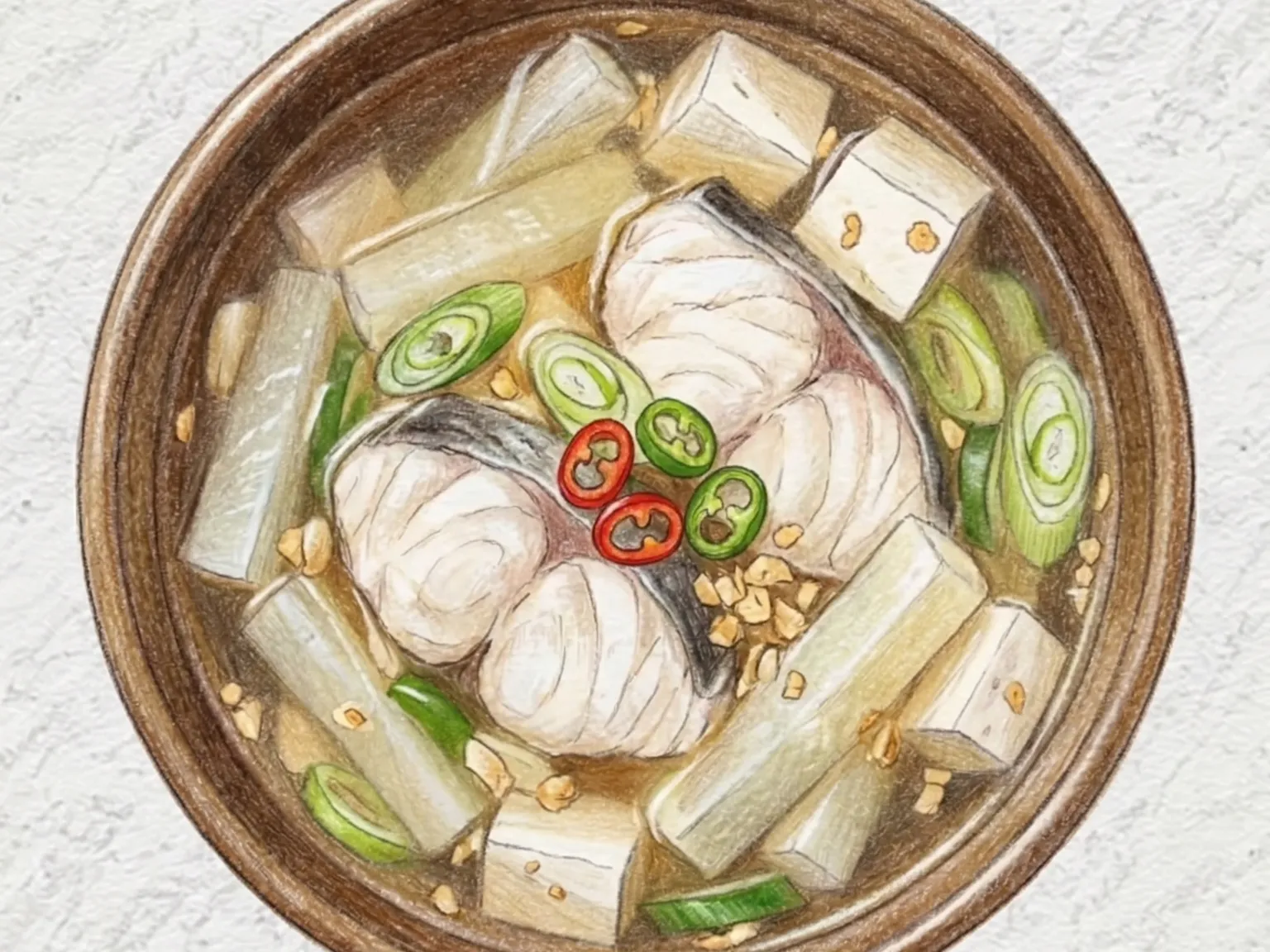
Saengseon-guk is a traditional Korean fish soup made with white-fleshed fish and radish in a clear broth. The radish simmers first, building a base of natural sweetness, before garlic and soup soy sauce are added for depth. The fish goes in once the radish is halfway cooked, and timing matters - it should cook only until the flesh turns opaque and begins to flake, as prolonged boiling would break it apart and cloud the broth. Tofu and sliced Korean chili peppers join near the end, adding soft texture and a mild kick. Green onion finishes the bowl with a fresh note. The result is a light, transparent soup where the fish's own clean, marine flavor does most of the work. It is the kind of straightforward home cooking that appears on Korean dinner tables throughout the year, requiring little more than fresh fish and basic pantry staples.
Adjust Servings
Instructions
- 1
Slice radish and bring to boil in water.
- 2
When radish is half-cooked, add garlic and soy sauce.
- 3
Add fish and simmer.
- 4
Add tofu, green onion, chili and simmer 5 more minutes.
- 5
Season with salt.
As an Amazon Associate, we may earn from qualifying purchases.
Tips
Nutrition (per serving)
More Recipes

Kimchi Soegogi-guk (Fermented Kimchi Beef Soup)
Kimchi-soegogi-guk is a Korean soup that unites two powerhouse ingredients-well-fermented kimchi and beef-in a ruddy, aromatic broth. The beef is stir-fried in sesame oil first, building a savory foundation, then chopped kimchi joins the pan and cooks until its acidity mellows and merges with the rendered fat. Water is added, and as the pot simmers, the kimchi continues to break down, thickening the liquid and staining it a deep red. Soup soy sauce and garlic adjust the seasoning, while blocks of tofu absorb the surrounding flavors and provide a soft counterpoint to the chewy beef. The finished soup is robust and warming, with the tangy complexity of aged kimchi meeting the clean savoriness of beef in every spoonful. It pairs inseparably with a bowl of steamed rice, which soaks up the broth and balances the heat.

Korean Perilla Radish Soup
Deulkkae mu-guk is a Korean radish soup enriched with perilla seed powder, giving it a distinctly nutty, creamy quality that sets it apart from plain radish broth. Thinly sliced daikon radish simmers in anchovy stock for ten minutes first, releasing a clean sweetness into the liquid. When perilla powder is stirred in, it transforms the thin broth into something noticeably thicker and more substantial - unlike sesame, perilla carries a heavier, earthier fat that coats the palate. Adding the powder just before turning off the heat preserves its toasted fragrance, which fades if it simmers too long.

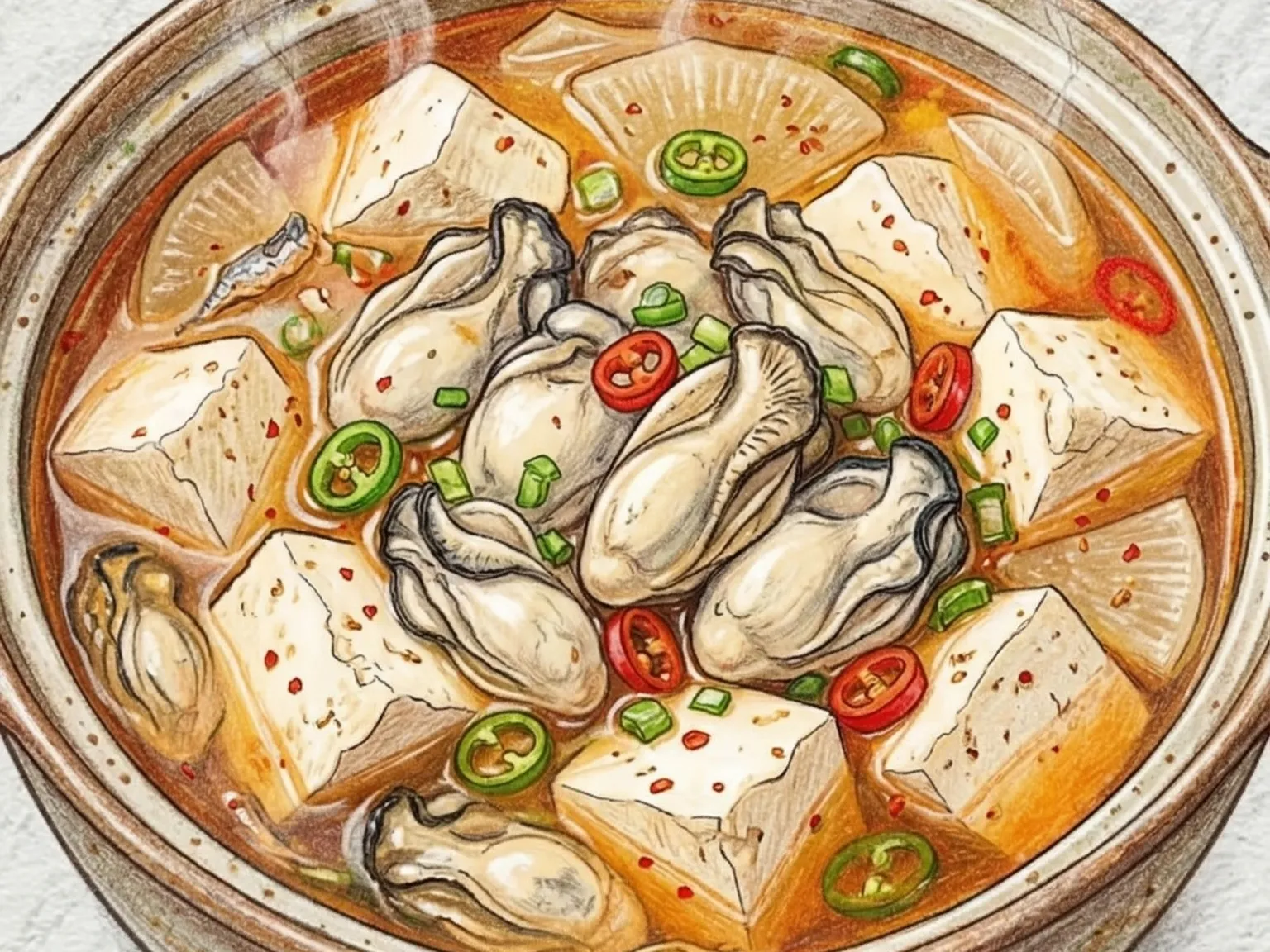
Gul-guk (Clear Oyster Radish Soup)
Gul-guk is a clear Korean oyster soup built on the simplest possible foundation: water, radish, and fresh oysters. The radish simmers first, lending a cool sweetness to the broth before the oysters are slid in near the end to preserve their plump, springy texture. Seasoning is deliberately restrained-soup soy sauce and minced garlic are enough-because the oysters themselves provide an intense, briny depth that needs no amplification. The resulting bowl is translucent and clean-tasting, with a lingering marine finish. Along Korea's south coast, where winter oyster harvests are abundant, this soup often appears on breakfast tables or as a gentle remedy after a long night.

Gomchi-guk (Eelpout Fish Radish Soup)
Gomchi-guk is an East Coast Korean fish soup made with eelpout, a soft-fleshed deep-sea fish rich in natural gelatin. The fish is cut into chunks and simmered with radish in plain water, producing a broth that is remarkably clean yet carries a gentle marine richness and a slightly viscous body from the dissolved collagen. Radish tames any fishiness and adds a refreshing sweetness, while a splash of cheongju rice wine helps eliminate residual off-notes. As the soup cooks, the eelpout flesh breaks apart and melds into the liquid, making the broth and the fish nearly inseparable. Garlic and green onion provide the finishing aromatics. This is a regional specialty of the Gangwon and North Gyeongsang coastal towns, where it is typically served bubbling in a stone pot during the winter months. For those who live far from the coast, frozen or dried eelpout can approximate the experience.

Korean Clear Broth Tofu Stew
Tofu simmers in a deep beef stock alongside shiitake mushrooms and zucchini in this clean-flavored stew. The quality of the beef stock drives the entire dish, with shiitake mushrooms reinforcing the umami depth. Soft tofu cubes absorb the rich broth, while zucchini contributes a mild sweetness. Seasoned only with soup soy sauce and salt, this stew showcases a restrained, elegant approach to Korean jjigae without any chili heat.

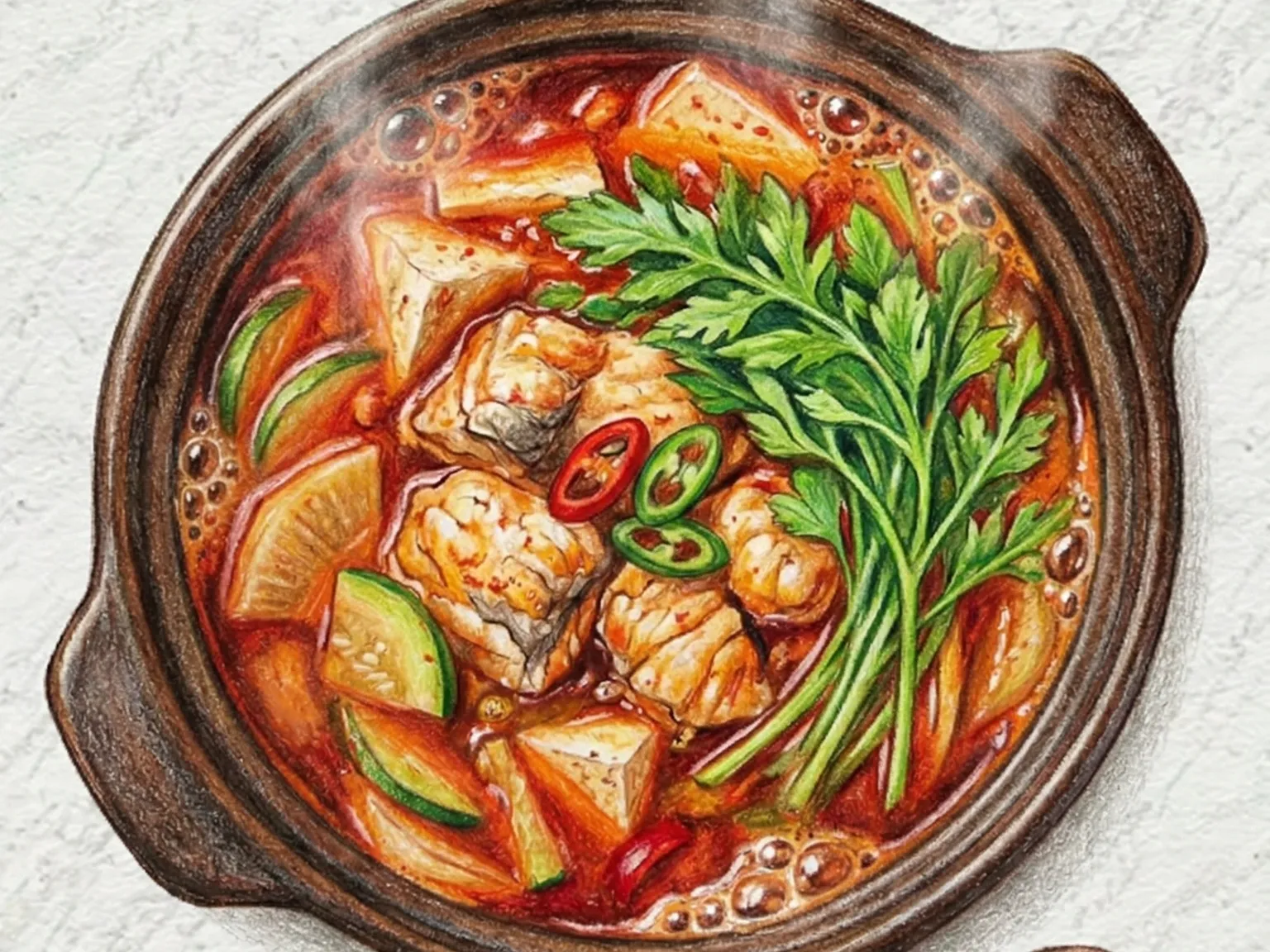
Korean Spicy Fish Roe Stew
Altang is a Korean stew built around pollock roe - the egg sacs prized in Korean coastal cooking for their briny, concentrated marine flavor. The dish has long been associated with Korea's east coast fishing towns, where fresh roe is available during winter spawning season and needs to be used quickly. Anchovy-kelp stock simmers first with radish to establish a clean, sweet base before the roe and tofu go in. The roe sacs release their eggs into the broth as they cook, turning the liquid cloudy and giving it a rich, oceanic body. Gochugaru and doenjang season the stew with a spicy-fermented edge that cuts through the fishiness. Crown daisy greens - ssukgat - are dropped in at the last moment, contributing a sharp, herbaceous perfume. A popular hangover remedy in Korean drinking culture, altang is often ordered steaming hot at the end of a long evening.