Korean Spicy Fish Stew (Mackerel in Chili-Radish Broth)
Stews Medium

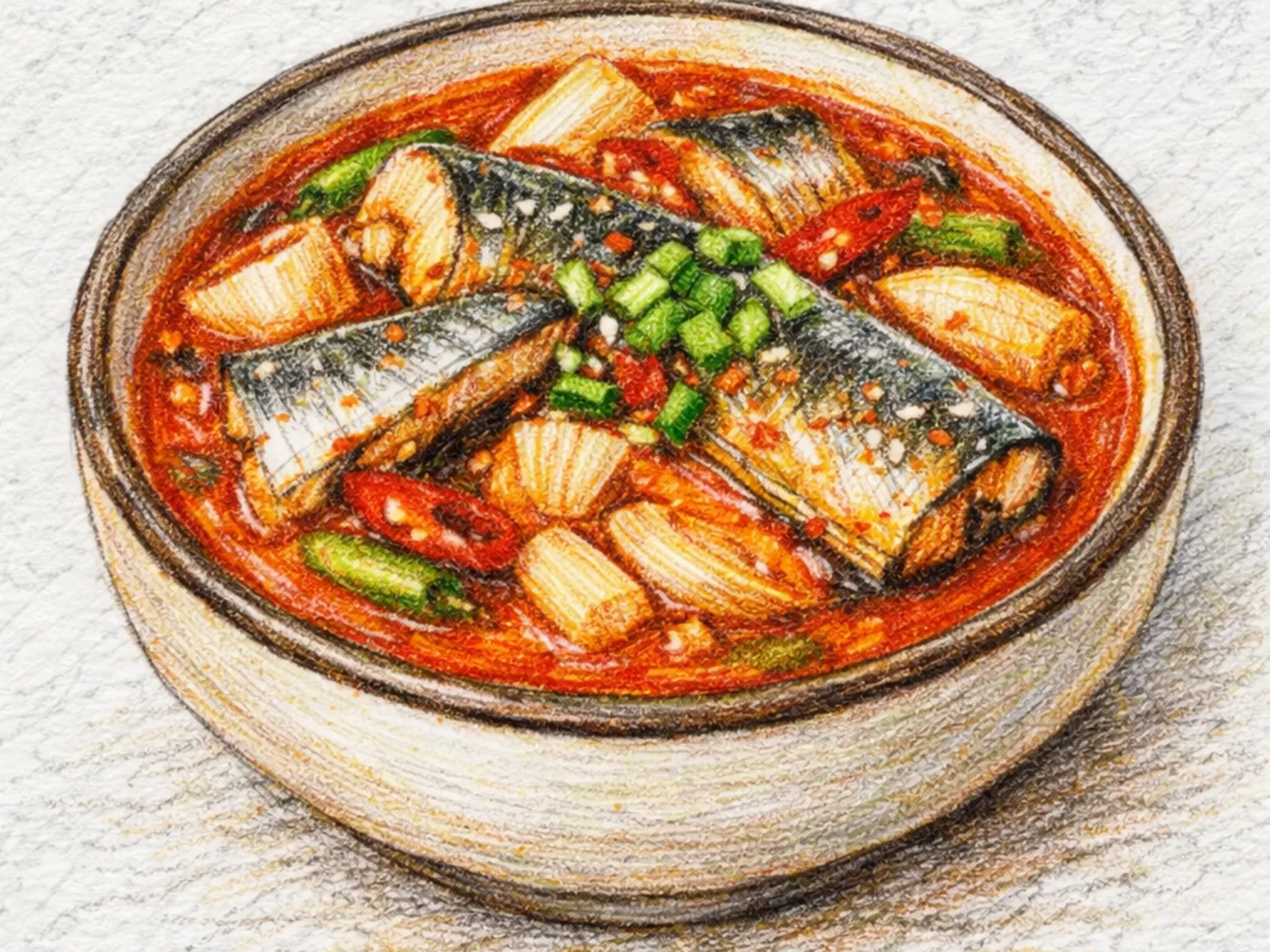
Korean Spicy Fish Stew (Mackerel in Chili-Radish Broth)

Quick answer

This spicy Korean fish stew is prepared with mackerel or beltfish pieces and simmered with daikon radish and zucchini.

What makes this special

  • Saengseon jjigae balances mackerel and daikon radish in a sharp chili broth, relying on quick cooking to keep the fish meat firm and intact.
  • Radish absorbs fishy odor while releasing sweetness into the broth
  • Gochujang and gochugaru together give sweet heat in one base
Total time
35 min
Level
Medium
Servings
2 servings
Ingredients
9
Calories
280 kcal
Protein
28 g

Key ingredients

Mackerel (or beltfish)Daikon radishZucchiniGreen onionGochujang

Core cooking flow

  1. 1 Cut 150g daikon into 1cm half-moons, slice 100g zucchini to a similar thickn...
  2. 2 Put the daikon and 600ml anchovy stock in a pot and bring it to a strong boil over high heat.
  3. 3 Add 1.5 tablespoons gochujang, 1 tablespoon gochugaru, 1 tablespoon soy sauc...

This spicy Korean fish stew is prepared with mackerel or beltfish pieces and simmered with daikon radish and zucchini. The base is an anchovy stock mixed with gochujang, gochugaru, soy sauce, and minced garlic to create a savory broth. Slices of daikon radish are boiled first to release their sweetness and absorb fishy odors. The fish chunks are then laid flat in the pot and cooked with the lid slightly ajar to let steam escape. Zucchini and green onions are added during the final minutes to soften and enrich the soup. Cooking the fish for under fifteen minutes keeps the flesh firm and prevents it from breaking apart in the boiling liquid. Once the fish separates easily from the bone, the stew is adjusted with salt if needed and served hot with steamed rice. It offers a balanced combination of chili heat and tender, flaky fish.

Prep 15min Cook 20min 2 servings

Instructions

Read the steps as a cooking flow: prep, heat, seasoning, doneness control, and finish.

6 steps
  1. 1
    Prep

    Cut 150g daikon into 1cm half-moons, slice 100g zucchini to a similar thickness, and cut 1 stalk green onion on the diagonal.

    Keep the 400g fish pieces ready to add without stacking.

  2. 2
    Control

    Put the daikon and 600ml anchovy stock in a pot and bring it to a strong boil over high heat.

    Once bubbling, boil 5 minutes longer, until the daikon edges look slightly translucent.

  3. 3
    Control

    Add 1.5 tablespoons gochujang, 1 tablespoon gochugaru, 1 tablespoon soy sauce, and 1 tablespoon minced garlic.

    Lower to medium heat and stir until no paste clumps remain and the broth turns deep orange-red.

  4. 4
    Control

    Lay 400g cleaned mackerel or beltfish into the broth without stacking the pieces.

    Leave the lid slightly ajar and simmer over medium heat for 7 minutes, so fishy steam can escape.

  5. 5
    Control

    Spoon hot broth over the fish two or three times, then add the zucchini and green onion.

    Simmer 5 more minutes, keeping the bubbles steady but not violent, until the zucchini softens without falling apart.

  6. 6
    Finish

    Check the thickest fish piece.

    It is done when the flesh separates from the bone with light pressure. Adjust the broth with salt only if needed, then serve immediately with rice before the fish breaks apart.

After the steps

Pick a recipe that fits this dish.

Continue with shared ingredients, meal pairings, or a similar method.

Recipes That Go Well With This

More Stews →

Based on shared ingredients and meal pairing

Korean Frozen Pollack Stew
Shared ingredient: korean radish Stews

Korean Frozen Pollack Stew

Dongtae jjigae is a spicy Korean stew made with frozen pollack, radish, and tofu. To prepare the dish, half-thawed pollack is sliced to keep the flesh intact, the inner black lining is removed to avoid bitterness, and the pieces are salted for firmness. Sliced radish is boiled first to build a sweet, clean broth base. Seasonings like gochugaru, doenjang, soup soy sauce, and minced garlic are then dissolved into the pot. Adding doenjang is essential, as it neutralizes fishy odors and deepens the umami. Next, the pollack and tofu are added and simmered for ten minutes. The delicate fish should not be turned; instead, spoon the hot broth over the pieces. Finally, zucchini, green onions, and chilies are added, simmering for five more minutes to yield a warming, spicy stew.

Korean Godeungeo Mu Jjigae (Mackerel Radish Stew)
Shared ingredient: korean radish Stews

Korean Godeungeo Mu Jjigae (Mackerel Radish Stew)

Godeungeo-mu-jjigae is a spicy Korean stew that pairs mackerel with Korean radish in a gochugaru and gochujang broth. Mackerel is an oily, fatty fish, and as it simmers, those fats render into the surrounding liquid, giving the broth a richness and depth of savory flavor that leaner fish cannot produce. The radish is laid on the bottom of the pot before the mackerel is placed on top - a deliberate positioning that lets the radish absorb the direct heat of the base while soaking up the fish juices and rendered fat dripping down from above. Radish cooked this way turns tender and sweet, and each bite releases concentrated broth from within the vegetable. Using both gochugaru and gochujang in the seasoning paste is important: gochugaru provides clean, direct heat and red color while gochujang adds fermented depth and body to the broth that chili powder alone cannot achieve. Soup soy sauce for the final seasoning keeps the saltiness measured and blended rather than sharp. Sliced green onion and cheongyang chili pepper added toward the end contribute freshness and a sharper layer of heat. For those sensitive to fishiness, thin slices of ginger added to the initial seasoning paste are effective at suppressing the odor without altering the stew's overall flavor profile. The traditional way to eat this is to spoon the broth-soaked radish and a piece of mackerel over rice, letting the concentrated cooking liquid soak into each grain.

Korean Hot Stone Pot Rice
Serve together Rice

Korean Hot Stone Pot Rice

Dolsot bap consists of rice prepared within a heavy, pre-heated stone pot, a method that relies on slow heat to cook the grains thoroughly. The primary base involves rice that has been soaked in water beforehand, combined with specific additions including dried jujubes, whole chestnuts, and small ginkgo nuts. Because the stone pot has thick walls, the heat spreads in a uniform manner during the entire cooking process. This results in rice grains that appear glossy and have a texture that is both plump and somewhat sticky from top to bottom. Each added ingredient provides a distinct element to the final profile. Jujubes offer a light sweetness, chestnuts provide a dense and nutty quality, and ginkgo nuts introduce a subtle bitter quality that balances the other flavors to prevent the dish from becoming cloying. To prepare the pot, the interior surface is coated with a layer of sesame oil prior to adding the rice and other components. This step is essential for developing a golden and crispy layer of scorched rice, known as nurungji, which forms at the very bottom of the vessel. After the heat is turned off, the rice must remain covered to steam for a duration of ten minutes. This resting period allows the moisture to move through every layer of the pot before the lid is removed. When it is time to serve, the lid should be lifted at a slow pace so the steam does not leave the pot immediately, as a sudden release of vapor can cause the top layer of rice to become dry. Dolsot bap is typically served with a dipping sauce made of soy sauce and sesame oil. Diners mix the rice and ingredients at the table, allowing for a meal where each bite features a contrast between the soft, aromatic grains and the firm, crunchy crust found at the base.

Korean Galchi Kimchi Jjigae (Hairtail Kimchi Stew)
Similar recipe Stews

Korean Galchi Kimchi Jjigae (Hairtail Kimchi Stew)

Galchi kimchi jjigae is a Korean stew that pairs hairtail fish with deeply fermented aged kimchi, simmered together in a base of anchovy and dried kelp stock. The richness of hairtail - an oily, full-flavored white fish - works in counterpoint to the sharp, acidic punch of well-aged kimchi, and as the two cook together their flavors blur into something more complex than either ingredient alone. Korean radish and onion go into the pot first, their natural sweetness dissolving into the broth to form a mild, rounded base before the fish is added. The hairtail is laid in gently and cooked covered to preserve the flesh, which would fall apart if stirred. Gochugaru and soup soy sauce season the broth with spice and salt, while the fish releases its own deep umami gradually, enriching every spoonful of liquid. Pouring the stew over a bowl of rice is one of the most common ways to eat it - the broth soaks into the grains and pulls every element of the dish together. It is particularly well-suited to cold-weather cooking, when a hot, assertive broth is exactly what is needed.

Serve with this

Korean Crumbled Tofu Stir-fry
Side dishes Easy

Korean Crumbled Tofu Stir-fry

Dubu seoboro - crumbled tofu stir-fry - is a Korean banchan that transforms a block of tofu into something resembling a dry, granular scramble. The tofu is crumbled by hand into rough, irregular pieces rather than diced, creating a range of textures from large curds to fine crumbs that hold seasoning differently. Squeezed thoroughly in a cloth to remove as much moisture as possible, it then goes into a hot pan with diced carrot, onion, and zucchini. The key technique is cooking on high heat without stirring too often, allowing the tofu crumbles to develop lightly golden edges before soy sauce and sesame oil go in at the end. The result is a fluffy, granulated side dish that soaks into rice like a savory topping - satisfying without being rich. Popular in Korean daycare and school lunches because it delivers plant protein in a form that children eat willingly, and it travels cleanly in lunchboxes without leaking. The ingredient cost is low and the cooking time short, which makes it one of the first recipes to reach for when the refrigerator is running low on banchan.

🥗 Light & Healthy 🏠 Everyday
Prep 12min Cook 10min 2 servings
Korean Soy Pickled Radish Cubes
Kimchi Easy

Korean Soy Pickled Radish Cubes

Mu jangajji is a fundamental Korean soy-pickled radish made by cutting radish into 1.5 cm cubes, packing them in a sterilized jar with dried chili, and pouring over a boiled brine of soy sauce, vinegar, and sugar. The radish's firm flesh absorbs the sweet-salty brine gradually while maintaining its crisp bite, and the dried chili adds a gentle warmth and aroma to the liquid. Pouring the brine while still hot is important because the heat briefly opens the cell walls of the radish, allowing the seasoning to penetrate more evenly throughout. Vinegar balances the soy's saltiness with a clean tang, and using dense winter radish yields the best texture. This is one of the most versatile Korean pickles, appearing alongside gimbap, bibimbap, and gukbap as a reliable everyday table companion.

🍱 Lunchbox 🏠 Everyday
Prep 20min Cook 10min 4 servings
Korean Radish & Shrimp Pancake
Pancakes Easy

Korean Radish & Shrimp Pancake

Julienned Korean radish and small peeled shrimp are combined in a pancake batter fortified with a measured amount of potato starch for added crispiness. Egg is mixed into the batter to improve binding and keep the pancake intact when flipped. Scallions are distributed throughout for a mild, grassy fragrance. Radish releases notable moisture as it cooks, so frying over high heat is essential to drive off that liquid quickly and achieve a crisp outer surface. The sharp, slightly bitter edge of raw radish disappears with heat and gives way to a gentle natural sweetness that pairs cleanly with the mild, delicate flavor of the shrimp. Pressing the center of the pancake down with a spatula while frying encourages even browning all the way through.

🍺 Bar Snacks ⚡ Quick
Prep 15min Cook 12min 2 servings

Similar recipes

Korean Dried Greens Mackerel Stew
Stews Medium

Korean Dried Greens Mackerel Stew

Siraegi-godeungeo-jjigae is a spicy Korean stew that combines mackerel and boiled dried radish greens in a gochugaru-seasoned broth. The oily, pronounced umami of the mackerel and the earthy, slightly musty depth of the dried greens amplify each other in the pot, while Korean radish maintains a clean, refreshing base that prevents the combination from becoming too heavy. Using rice-rinse water as the broth foundation is a traditional technique that neutralizes the mackerel's fishiness while simultaneously giving the liquid a mild, rounded body that plain water cannot provide. The radish greens must be well squeezed after boiling to remove any grassy, off-putting odor; briefly sauteing them in perilla oil before adding them to the stew deepens their nutty character further. Seasoning with gochugaru alone, without gochujang, preserves the clarity and clean red color of the broth and keeps its defining quality: a penetrating spiciness that is simultaneously bracing and warming rather than paste-thick and murky. Onion, green onion, and minced garlic round out the aromatics and complete the flavor profile of a classic everyday Korean jjigae. Mackerel is typically added bone-in, and eating it by working the flesh off the bones with chopsticks as you go is part of the simple, unhurried character of the dish.

🏠 Everyday
Prep 20min Cook 35min 4 servings
Korean Braised Mackerel with Radish
Stir-fry Medium

Korean Braised Mackerel with Radish

Layering thick slices of radish beneath fresh mackerel prevents the delicate fish from sticking to the pot while allowing the vegetables to soak up the seasoning like a sponge. This traditional Korean preparation uses a base of soy sauce, red chili powder, and red chili paste to create a thick braising liquid. As the pot simmers, the cook repeatedly spoons the sauce over the fish pieces to ensure the heat and spices reach every part of the mackerel. Ginger serves as a crucial ingredient to eliminate any strong fishy scents, so adding it early in the cooking process allows its aromatic properties to fully integrate into the broth. Over time, the radish softens into a translucent texture, absorbing the spicy and salty elements of the sauce until it becomes a substantial part of the meal. Adding onions and green onions during the final stages of cooking preserves their crispness and prevents their fresh aroma from fading. The process concludes when the liquid reduces into a glossy glaze that coats the mackerel. Serving this dish immediately over warm white rice allows the grains to catch the concentrated sauce. Beyond its taste, the mackerel provides omega-3 fatty acids while the radish contributes digestive enzymes and vitamin C to balance the natural oils of the fish.

🏠 Everyday 🍱 Lunchbox
Prep 15min Cook 25min 2 servings
Korean Spicy Marinated Mackerel Grill
Grilled Medium

Korean Spicy Marinated Mackerel Grill

Godeungeo yangnyeom-gui is Korean spicy marinated mackerel, made by coating thick fish pieces in a paste of gochujang, soy sauce, sugar, minced garlic, ginger juice, and sesame oil, resting them for thirty minutes or longer, then grilling over medium heat with repeated turning. The mackerel's subcutaneous fat melts as the fish cooks, feeding the caramelization of the sugars in the marinade and forming a glossy, deep-red crust across the skin and flesh. Ginger juice pulls double duty: it neutralizes the raw fishy odor and introduces a subtle freshness that sits beneath the fermented heat of the gochujang. Because the fat content is high, a strong flame causes the marinade to scorch quickly, so steady medium heat and patient turning are essential for an even char. A wedge of lemon served alongside cuts through the rendered fat and sharpens the overall flavor.

🍺 Bar Snacks 🏠 Everyday
Prep 30min Cook 15min 2 servings

Tips

Do not over-simmer fish - 10~15 minutes keeps the flesh intact.

Nutrition (per serving)

Calories
280
kcal
Protein
28
g
Carbs
14
g
Fat
12
g