Korean Seasoned King Oyster Mushroom
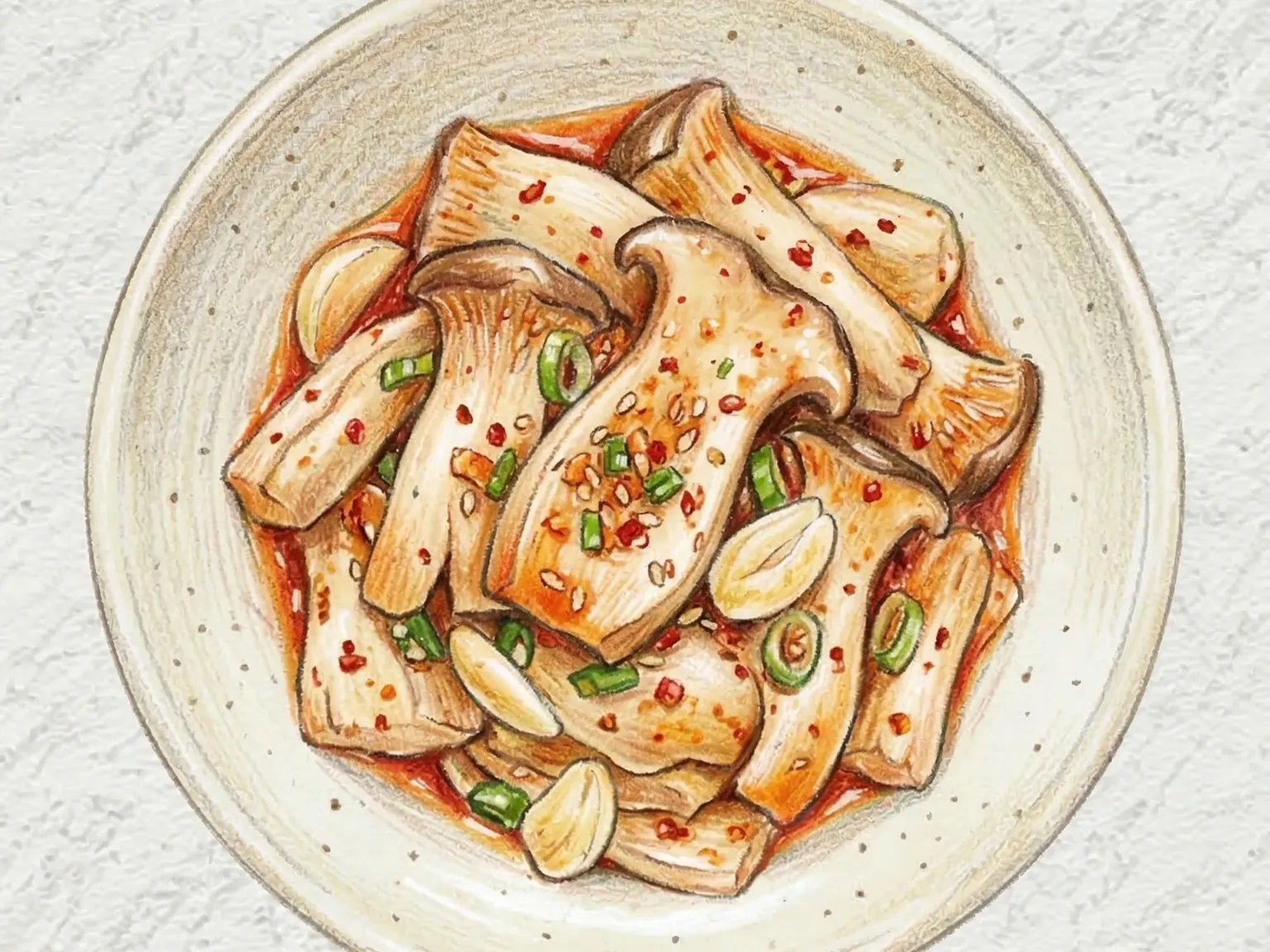
Saesongi-beoseot-muchim steams 250 grams of king oyster mushrooms, torn into strips along the grain, for six minutes over high heat to preserve their chewy, fibrous texture better than boiling would. After cooling slightly and squeezing out excess moisture, the strips are tossed in a dressing of soy sauce, vinegar, chili flakes, garlic, and sugar. The vinegar provides a tangy lift, while the chili flakes introduce gentle warmth without overwhelming the mushroom's mild flavor. Sesame oil and sesame seeds finish the dish with a nutty aroma. It holds up well when chilled and served cold, making it a convenient banchan to prepare ahead of time.
Adjust Servings
Instructions
- 1
Pull mushrooms into strips and place in a steamer.
- 2
Steam over high heat for 6 minutes.
- 3
Cool slightly and gently squeeze out moisture.
- 4
Mix soy sauce, vinegar, chili flakes, garlic, and sugar.
- 5
Add mushrooms and chopped green onion, then toss.
- 6
Finish with sesame oil and sesame seeds.
As an Amazon Associate, we may earn from qualifying purchases.
Tips
Nutrition (per serving)
More Recipes

Korean Spicy Seasoned Deodeok
Deodeok - Codonopsis lanceolata - is a mountain root used in Korean cooking and folk medicine for centuries. Its flesh is fibrous and sticky, with a ginseng-like bitterness. Peeled and pounded with a mallet to split fibers into ribbon-like shreds, then soaked in cold water to draw out bitterness. A gochujang-vinegar dressing with garlic, sugar, and gochugaru clings to each strand's rough surface. The finished dish is chewy and resinous, with a sweet-sour-spicy glaze.

Korean Soy-Braised King Oyster Mushrooms
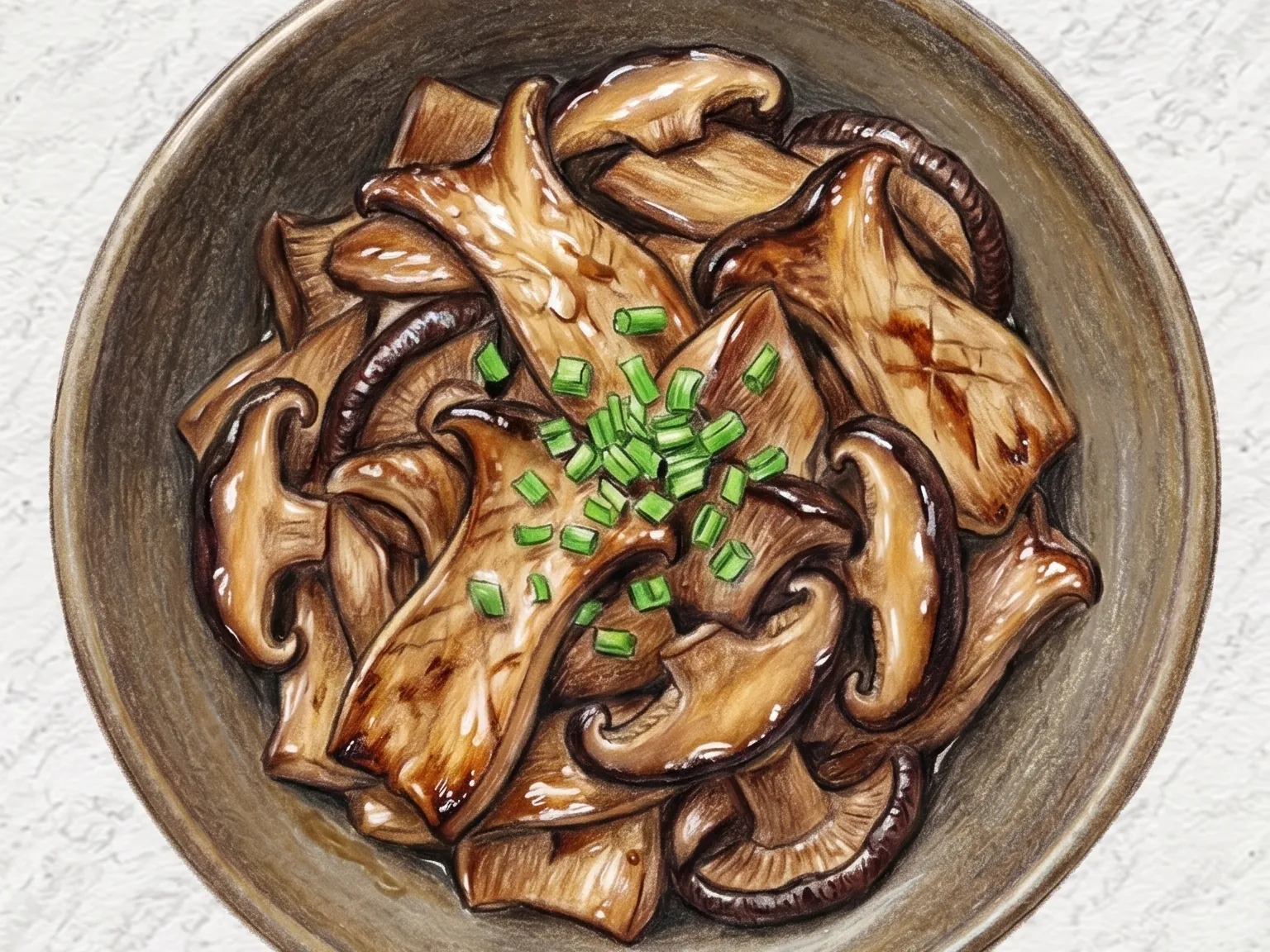
Saesongi-beoseot-jorim braises 300 grams of king oyster mushrooms in a soy-based sauce after an initial sear that drives off moisture and firms up the texture. The mushrooms are halved lengthwise, cut into bite-size pieces, and pan-fried in oil for about two minutes until lightly golden before the braising liquid - soy sauce, water, oligosaccharide syrup, and garlic - is poured in. Five minutes of simmering over medium heat reduces the liquid to a sticky glaze that clings to every surface. Sesame oil is drizzled in just before removing from heat, and chopped scallion adds a fresh green contrast. The finished dish stores well, making it a reliable make-ahead side for weekday meals.

Korean King Oyster Mushroom Stir-fry with Perilla
This stir-fry combines 250 grams of julienned king oyster mushrooms with onion, cooked rapidly over high heat in a blend of perilla oil and cooking oil to prevent the mushrooms from releasing too much water. Garlic is sauteed for 20 seconds first to infuse the oil, followed by onion for one minute to draw out its natural sweetness. The mushrooms then go in for a quick two-minute toss before soup soy sauce and a splash of water are added to create a light braising liquid. One and a half tablespoons of ground perilla seeds are stirred in during the final minute, thickening the sauce into a creamy coating without becoming pasty. Scallion is added off heat for a finishing touch of color and freshness.

Korean Cucumber Doenjang Salad
Oi-doenjang-muchim dresses cucumber in a doenjang-based seasoning - a milder alternative to the gochugaru-forward oi-muchim, foregrounding the fermented soybean paste's savory depth over spicy heat. Cucumber is sliced into half-moons or diagonal cuts and salted for five minutes to draw out moisture; skipping this step dilutes the dressing into a watery puddle. The seasoning blends doenjang, soup soy sauce, minced garlic, sesame oil, and sesame seeds, with the doenjang quantity being the critical ratio - too much and the dish is aggressively salty, too little and the cucumber's blandness dominates. Roughly one tablespoon of doenjang to two cucumbers is the working proportion. The cucumber's cool moisture meets doenjang's deep umami to produce a combination that is refreshing yet substantial enough to anchor a rice meal, especially in summer. This banchan must be eaten promptly after assembly - over time, osmotic pressure draws water from the cucumber and collapses its crunch. Served alongside grilled meat, the doenjang's savoriness complements the char while cleansing the palate.

Korean Grilled King Oyster Mushrooms
Saesongi-beoseot-gui is a Korean grilled king oyster mushroom dish where the mushrooms are sliced lengthwise to 0.7-centimeter thickness, seared in melted butter until golden on both sides, then glazed with a sauce of soy sauce, minced garlic, oligosaccharide syrup, and black pepper. King oyster mushrooms contain a lot of moisture, so arranging the slices in a single layer without overlap is essential-crowding steams rather than sears, preventing the Maillard browning that gives the surface its golden color and savory depth. Butter burns quickly above medium heat, so temperature control is key, and the soy glaze should only be added after both sides are already browned so it coats the surface rather than making it soggy. Chopped chives and sesame seeds scattered on top add a nutty, aromatic layer over the salty butter-soy base.

Korean King Oyster & Quail Egg Braise
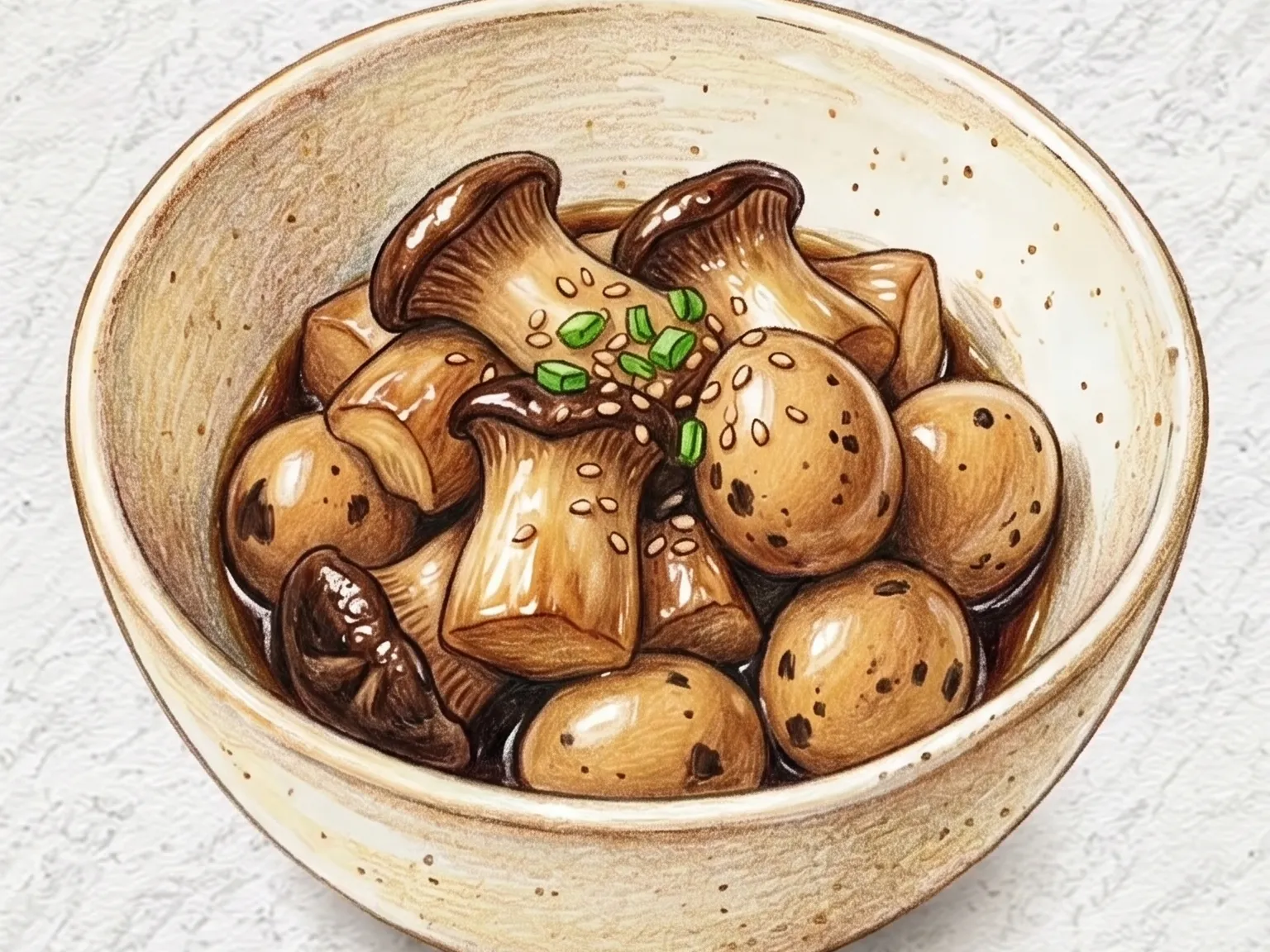
Saesongi quail egg jorim is a Korean soy-braised side of king oyster mushrooms and quail eggs with a balance of salty and gently sweet flavors. The mushrooms are braised first so they absorb moisture and seasoning before the eggs are added, giving the eggs time to soak up the liquid without overcooking. A spoonful of oligosaccharide syrup at the end adds gloss and softens the soy base. The dish requires only a handful of pantry ingredients and comes together in under thirty minutes, yet it tastes even better after a day in the refrigerator, making it a practical make-ahead banchan.