Korean King Oyster Mushroom Stir-fry with Perilla

Korean King Oyster Mushroom Stir-fry with Perilla

Quick answer

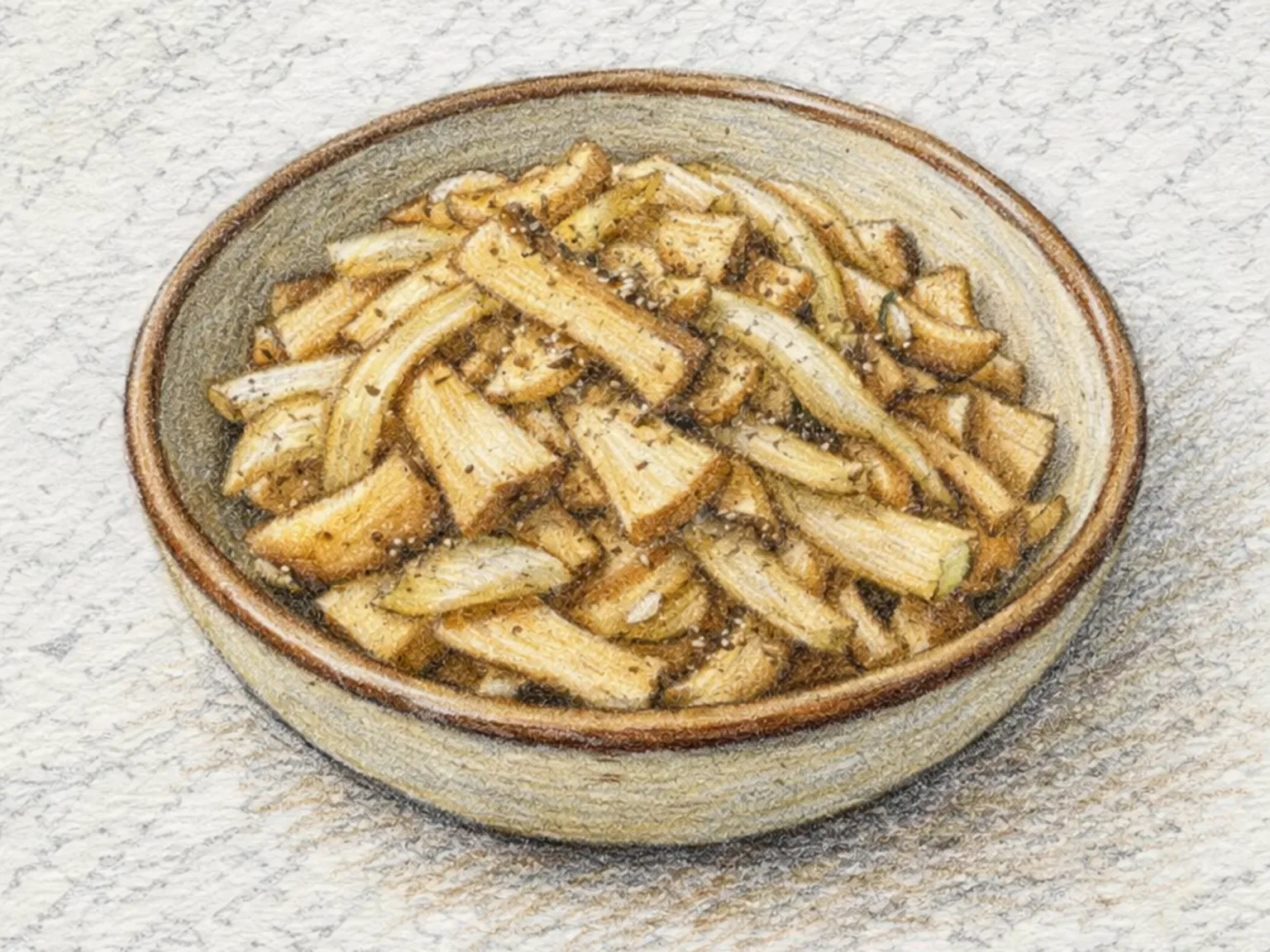
This stir-fry combines 250 grams of julienned king oyster mushrooms with onion, cooked rapidly over high heat in perilla oil and cooking oil to prevent the mushrooms from...

What makes this special

  • King oyster mushroom stir-fry combines earthy perilla oil with julienned onion and garlic.
  • Perilla oil blended with cooking oil sustains high heat without burning
  • Garlic pre-fried 20 seconds infuses the oil before mushrooms go in
Total time
18 min
Level
Easy
Servings
2 servings
Ingredients
9
Calories
180 kcal
Protein
5 g

Key ingredients

king oyster mushroomsonionperilla oilcooking oilsoup soy sauce

Core cooking flow

  1. 1 Julienne 250 grams of king oyster mushrooms lengthwise into strips of even t...
  2. 2 Heat the pan over high heat, then add 1 tablespoon each of cooking oil and perilla oil.
  3. 3 Add the sliced onion and stir-fry over high heat for 1 minute, tossing frequ...

This stir-fry combines 250 grams of julienned king oyster mushrooms with onion, cooked rapidly over high heat in perilla oil and cooking oil to prevent the mushrooms from releasing too much water. Garlic is sauteed for 20 seconds first to infuse the oil, followed by onion for one minute to draw out its natural sweetness. The mushrooms then go in for a quick two-minute toss before soup soy sauce and a splash of water are added to create a light braising liquid. One and a half tablespoons of ground perilla seeds are stirred in during the final minute, thickening the sauce into a creamy coating without becoming pasty. Scallion is added off heat for a finishing touch of color and freshness.

Prep 10min Cook 8min 2 servings

Instructions

Read the steps as a cooking flow: prep, heat, seasoning, doneness control, and finish.

6 steps
  1. 1
    Heat

    Julienne 250 grams of king oyster mushrooms lengthwise into strips of even thickness, then thinly slice 60 grams of onion with the grain so both cook at the same rate.

  2. 2
    Control

    Heat the pan over high heat, then add 1 tablespoon each of cooking oil and perilla oil.

    Add 1 teaspoon of minced garlic and sauté for 20 seconds, stirring constantly until the oil smells fragrant.

  3. 3
    Control

    Add the sliced onion and stir-fry over high heat for 1 minute, tossing frequently until the edges turn translucent and a gentle sweetness begins to develop from the natural sugars.

  4. 4
    Control

    Add the julienned mushrooms and stir-fry vigorously over high heat for 2 minutes, keeping them moving so the surfaces sear lightly and excess moisture does not accumulate in the pan.

  5. 5
    Control

    Pour in 1 tablespoon of soup soy sauce and 3 tablespoons of water, then simmer for 1 minute until the liquid reduces slightly.

    Stir in 1.5 tablespoons of ground perilla seeds until evenly combined.

  6. 6
    Control

    Reduce to low heat and stir for 1 more minute until the sauce thickens into a creamy perilla coating that clings to the mushrooms.

    Add 10 grams of scallion and remove from heat.

After the steps

Pick a recipe that fits this dish.

Continue with shared ingredients, meal pairings, or a similar method.

Recipes That Go Well With This

More Side dishes →

Based on shared ingredients and meal pairing

Korean Soy-Braised King Oyster Mushrooms
Shared ingredient: king oyster mushrooms Side dishes

Korean Soy-Braised King Oyster Mushrooms

Saesongi-beoseot-jorim braises 300 grams of king oyster mushrooms in a soy-based sauce after an initial sear that drives off moisture and firms up the texture. The mushrooms are halved lengthwise, cut into bite-size pieces, and pan-fried in oil for about two minutes until lightly golden before the braising liquid - soy sauce, water, oligosaccharide syrup, and garlic - is poured in. Five minutes of simmering over medium heat reduces the liquid to a sticky glaze that clings to every surface. Sesame oil is drizzled in just before removing from heat, and chopped scallion adds a fresh green contrast. The finished dish stores well, making it a reliable make-ahead side for weekday meals.

Korean Napa Cabbage Perilla Stir-fry
Shared ingredient: onion Side dishes

Korean Napa Cabbage Perilla Stir-fry

Two ingredients carry this dish: baby napa cabbage and ground perilla seeds. Perilla oil goes into the pan first, then cabbage over high heat until just wilted. A splash of water and a measure of soup soy sauce follow, with the lid on for two minutes more. The timing gap between leaf and stem matters here - stems retain a little bite while leaves turn soft, and that contrast is the point of the dish rather than an oversight. Ground perilla seeds go in just before turning off the heat: too early and the nutty fragrance dissipates in the steam; too late and they do not thicken the liquid properly. When done right, the seeds create a pale, creamy sauce that clings to the cabbage and soaks into rice underneath. Salt and pepper are the only other seasoning. It keeps well cold and travels without issue in a lunchbox.

Korean Tofu Jeon (Golden Egg-Coated Pan-Fried Tofu)
Serve together Grilled

Korean Tofu Jeon (Golden Egg-Coated Pan-Fried Tofu)

Dubu-jeon is a Korean pan-fried tofu dish and a standard side dish in everyday home cooking as well as a fixture on ancestral rite tables. Firm tofu is sliced to about 1 cm thickness, seasoned with salt and pepper, dusted in a thin layer of flour to help the coating adhere, dipped in beaten egg, then fried on each side in a lightly oiled pan until the exterior turns golden and set. Pressing the tofu before cooking is the most important preparatory step: wrapping the slices in paper towels and placing a heavy object on top for at least fifteen minutes removes enough moisture to prevent the oil from splattering and allows the egg coating to bond tightly to the surface. Three to four uninterrupted minutes per side over medium heat are needed to develop an even golden crust without burning the egg; turning the pieces too often strips the batter away and leaves patches of bare tofu. The fried tofu is mild and nutty on its own, but a dipping sauce of soy sauce mixed with a small amount of vinegar and red pepper flakes adds salt, acidity, and heat that transform the simple base into something more complex. Eaten hot, the egg coating is thin and slightly crisp; as it cools the exterior softens while the interior remains tender.

Korean Seasoned King Oyster Mushroom
Similar recipe Side dishes

Korean Seasoned King Oyster Mushroom

Saesongi-beoseot-muchim steams 250 grams of king oyster mushrooms, torn into strips along the grain, for six minutes over high heat to preserve their chewy, fibrous texture better than boiling would. After cooling slightly and squeezing out excess moisture, the strips are tossed in a dressing of soy sauce, vinegar, chili flakes, garlic, and sugar. The vinegar provides a tangy lift, while the chili flakes introduce gentle warmth without overwhelming the mushroom's mild flavor. Sesame oil and sesame seeds finish the dish with a nutty aroma. It holds up well when chilled and served cold, making it a convenient banchan to prepare ahead of time.

Serve with this

Korean Steamed Egg (Gyeran-jjim)
Steamed Easy

Korean Steamed Egg (Gyeran-jjim)

Gyeran-jjim is a Korean steamed egg dish made by whisking eggs together with anchovy stock and salted shrimp, then cooking the mixture slowly in a stone pot over low heat with the lid on. The anchovy stock establishes a deep savory backbone, and the salted shrimp adds a fermented, briny salinity that eliminates the need for additional seasoning. Straining the egg mixture through a fine sieve before cooking removes air bubbles and ensures the finished custard has a smooth, unbroken surface rather than the pitted texture that forms when bubbles are trapped and burst during cooking. The stone pot should not be preheated before the egg mixture is added. Starting cold and bringing the heat up slowly with the lid in place traps steam inside, which gives the custard its signature cloud-like softness and prevents the surface from drying out. Small pieces of carrot and sliced green onion add color, and a final drizzle of sesame oil with a scatter of sesame seeds brings a nutty fragrance to each spoonful. The right point to remove it from heat is when the center still wobbles slightly when the pot is nudged, because residual heat will finish setting the middle as it rests.

🍱 Lunchbox ⚡ Quick
Prep 5min Cook 12min 2 servings
Korean Stir-fried Garlic Scapes
Stir-fry Easy

Korean Stir-fried Garlic Scapes

Maneul jong bokkeum is a Korean banchan of garlic scapes cut into 4 cm lengths and stir-fried with onion, then coated in a sauce of gochujang, soy sauce, and oligosaccharide syrup. The pungent, sharp character of garlic scapes meets gochujang's spicy heat and the syrup's glossy sweetness, producing a balanced three-way flavor of salty, sweet, and spicy that is immediately addictive. Timing is the most important variable in making this dish properly. Garlic scapes become tough and fibrous if overcooked, so pulling them from the heat while the color is still a vivid, saturated green is essential. When cooked to the right point, the exterior of each scape is lacquered with the glossy sauce while the interior stays crisp and slightly snappy. The onion caramelizes gently as it cooks, adding a background sweetness that rounds out the sauce without competing with the garlic. Sesame seeds scattered over the finished dish add a layer of toasted nuttiness. The banchan holds well in the refrigerator for three to four days, making it a practical dish to prepare ahead of time. It works equally well as a rice accompaniment or as a drinking snack.

🏠 Everyday 🍱 Lunchbox
Prep 10min Cook 8min 2 servings
Korean Garlic Chive Egg Soup
Soups Easy

Korean Garlic Chive Egg Soup

This simple home-style soup combines garlic chives, egg, and tofu in a light broth seasoned with soup soy sauce and garlic. Tofu cubes go in first to warm through for two minutes, then beaten egg is poured in a slow, circular stream and left undisturbed for thirty seconds to form silky ribbons. Chives and sesame oil are added in the final half-minute so their aroma stays vivid in the finished bowl. Because the ingredient list is short, cutting the tofu into even cubes and managing the heat carefully are what separate a polished result from a cloudy one. Pouring the egg too forcefully or stirring immediately breaks up the ribbons and muddies the broth.

🏠 Everyday ⚡ Quick
Prep 10min Cook 10min 2 servings

Similar recipes

Korean Deulkkae Aehobak Beoseot Bokkeum (Perilla Zucchini Mushroom Stir-fry)
Stir-fry Easy

Korean Deulkkae Aehobak Beoseot Bokkeum (Perilla Zucchini Mushroom Stir-fry)

Deulkkae-aehobak-beoseot-bokkeum is a Korean stir-fry of zucchini and oyster mushrooms finished with ground perilla seeds. The perilla powder is added toward the end of cooking, where it combines with the moisture released from the vegetables to form a thick, nutty coating that clings to each piece. Oyster mushroom brings natural umami and a slightly fibrous chew, while the zucchini contributes its gentle sweetness and keeps the dish from drying out. No strong spices or fermented pastes are needed - the toasted, herbal fragrance of the perilla seeds carries the flavor from start to finish. The result is a moist, mild side dish that demonstrates how a single aromatic ingredient can add significant depth to a simple vegetable stir-fry.

🏠 Everyday 🍱 Lunchbox
Prep 16min Cook 12min 4 servings
Korean Kkaennip Gamja Bokkeum (Perilla Potato Stir-fry)
Stir-fry Easy

Korean Kkaennip Gamja Bokkeum (Perilla Potato Stir-fry)

High heat and a well-preheated pan are the keys to achieving the distinct texture of these stir-fried potato matchsticks. Before cooking, soaking the cut potatoes in cold water is a critical step to remove surface starch, ensuring the pieces stay separate and do not stick to the pan. Once thoroughly dried to prevent oil splattering, the potatoes are tossed quickly until the edges become translucent while the centers retain a subtle firmness. Overcooking results in a mushy consistency that lacks the intended character of the dish. Pouring the soy sauce around the perimeter of the pan allows it to caramelize against the hot surface before it is incorporated into the vegetables, adding a layer of savory complexity. Fresh perilla leaves should be tossed in just before the heat is turned off to preserve their bright green color and herbal fragrance. A final drizzle of perilla oil complements the leaves with its toasted scent, and a sprinkle of sesame seeds provides a light crunch. Sliced Cheongyang chilies can be included during the initial sautéing for a gentle heat. This combination pairs the carbohydrates of potatoes with the vitamin K and calcium found in perilla leaves, creating a nutritionally rounded side dish that tastes even better the next day after the flavors have settled.

🏠 Everyday 🍱 Lunchbox
Prep 12min Cook 15min 2 servings
Korean Garlic Scape Bacon Stir-fry
Stir-fry Easy

Korean Garlic Scape Bacon Stir-fry

Maneuljjong bacon bokkeum is a side dish built around rendered bacon fat. Bacon goes into the pan first over low heat until the white fat turns translucent and releases its fragrant, smoky oil, and that rendered fat then becomes the cooking medium for the garlic scapes and onion that follow. No additional cooking oil is needed, and the depth of flavor that results from this single step makes the dish taste far more complex than its short ingredient list suggests. Garlic scapes bring a sharp, grassy bite and a satisfying crunch that disappears quickly if they sit on the heat too long, so the pan temperature is turned up at the end for a fast, high-heat finish. Soy sauce sets the salty foundation, and a drizzle of oligosaccharide syrup coats every piece in a thin, glossy lacquer that softens the salt with restrained sweetness. Because bacon is already heavily seasoned, the soy sauce should be added gradually and tasted as you go rather than measured out in advance. A scatter of toasted sesame seeds over the finished dish adds one more layer of nutty fragrance.

🏠 Everyday 🍱 Lunchbox
Prep 8min Cook 9min 2 servings

Tips

Add perilla powder near the end to preserve aroma.
High heat and short cooking keep mushrooms from turning watery.

Nutrition (per serving)

Calories
180
kcal
Protein
5
g
Carbs
12
g
Fat
13
g