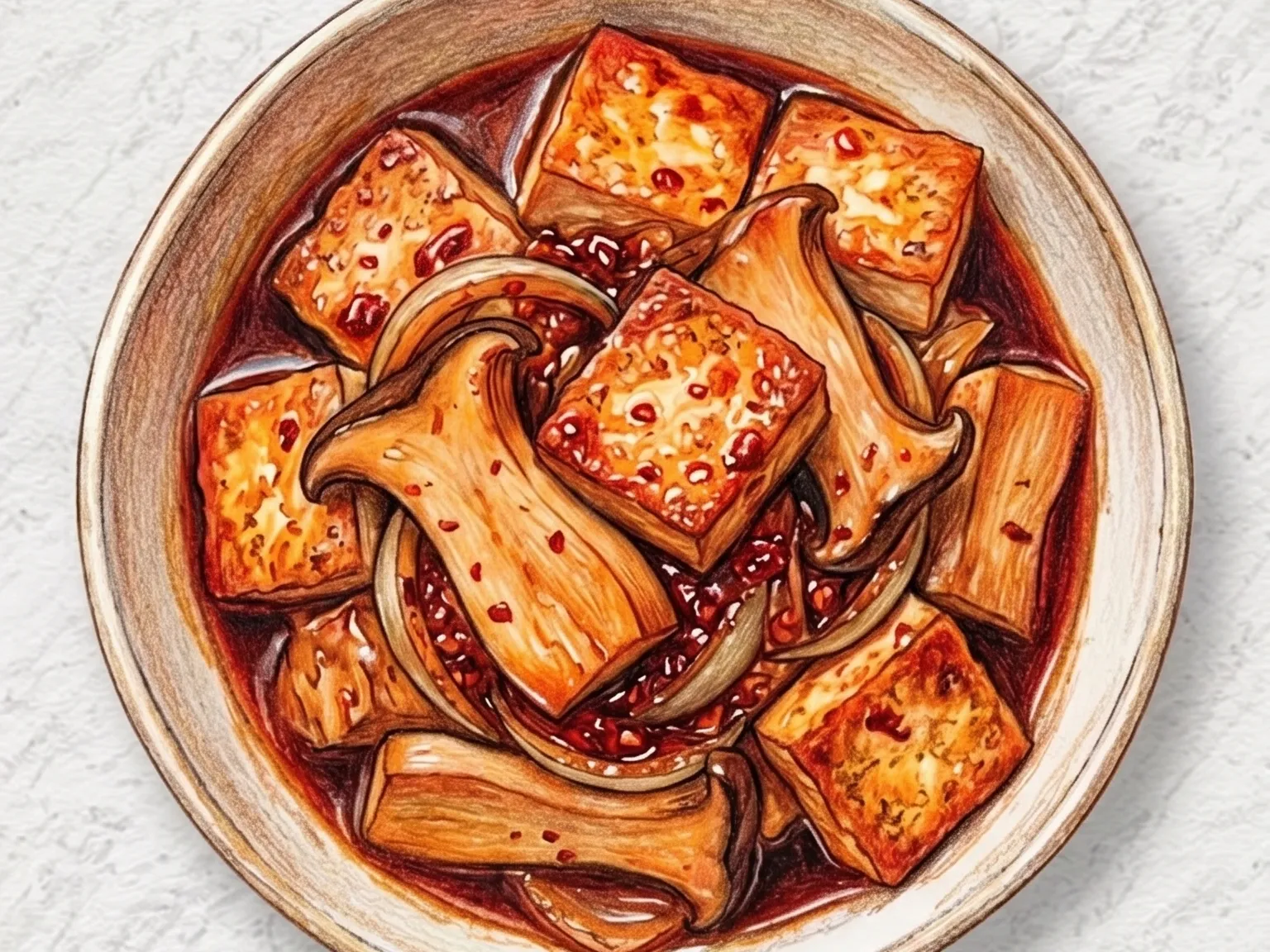
Korean Braised Tofu and King Oyster Mushrooms
Saesongi dubu yangnyeom jorim is a Korean braised side dish featuring firm tofu and king oyster mushrooms in a sauce built from soy sauce, gochujang, and Korean chili flakes. Pan-searing the tofu first creates a golden crust that holds its shape through braising and locks the seasoning onto the surface. Thick-cut mushrooms keep their springy bite, while onion adds a subtle sweetness that rounds off the heat. Sesame oil stirred in at the very end unifies the aroma. It works equally well as an everyday banchan with rice or as a lunchbox staple that reheats without losing texture.
Adjust Servings
Instructions
- 1
Slice tofu to 1.5 cm thick and remove moisture with paper towels.
- 2
Halve king oyster mushrooms lengthwise and slice thick; slice onion.
- 3
Mix soy sauce, gochujang, chili flakes, garlic, and water for the braising sauce.
- 4
Pan-sear tofu on low heat until lightly golden on both sides and set aside.
- 5
In the same pan, saute mushrooms and onion for 2 minutes, then add tofu and sauce.
- 6
Braise on medium heat for 8 minutes, then add green onion and sesame oil for 1 more minute.
As an Amazon Associate, we may earn from qualifying purchases.
Tips
Nutrition (per serving)
More Recipes

Korean Braised Eggplant and Tofu
Gaji dubu jorim combines eggplant and firm tofu braised together in a soy sauce and gochugaru seasoning. The eggplant soaks up the sauce and turns silky soft, while the pan-fried tofu holds its shape with a slight firmness on the outside. Garlic and green onion round out the flavor, creating a lightly spicy, umami-rich side dish. This is a practical vegetarian-friendly banchan that pairs well with plain steamed rice.

Korean Braised Tofu in Spicy Sauce
Dubu-jorim is arguably the single most frequently made tofu dish in Korean home kitchens. The technique is straightforward but the sequence matters: tofu must be fried first to build a crust that holds its shape during braising, then simmered in a sauce that penetrates through that crust into the soft interior. The braising liquid - soy sauce, gochugaru, garlic, sugar, and water - reduces around the tofu slabs for eight to ten minutes, concentrating into a thick, spicy-sweet glaze. The finished tofu has three distinct zones: a dark, slightly chewy exterior where sauce has caramelized, a transitional layer where seasoning has seeped in, and a pristine white center that provides a bland, creamy contrast. Korean home cooks often make a double batch on Sunday, refrigerating half for weekday lunches. The dish dates back to Buddhist temple cooking traditions where tofu was the primary protein.

Korean Braised Tofu and Mushrooms
Dubu-beoseot-jorim is a Korean braised dish of firm tofu and oyster mushrooms simmered in a soy-based sauce. The tofu develops a lightly firm exterior while staying soft inside as it absorbs the seasoning. Oyster mushrooms contribute a chewy bite and natural umami that deepens the overall flavor without additional stock. It is a straightforward braise that requires only soy sauce, water, and a few basic seasonings to produce a satisfying result.

Korean Soy-Braised King Oyster Mushrooms
Saesongi-beoseot-jorim braises 300 grams of king oyster mushrooms in a soy-based sauce after an initial sear that drives off moisture and firms up the texture. The mushrooms are halved lengthwise, cut into bite-size pieces, and pan-fried in oil for about two minutes until lightly golden before the braising liquid - soy sauce, water, oligosaccharide syrup, and garlic - is poured in. Five minutes of simmering over medium heat reduces the liquid to a sticky glaze that clings to every surface. Sesame oil is drizzled in just before removing from heat, and chopped scallion adds a fresh green contrast. The finished dish stores well, making it a reliable make-ahead side for weekday meals.

Korean Braised Squid with Shishito Peppers
Kkwari-ojingeo-jorim is a Korean braise of squid and shishito peppers simmered in a gochujang and soy sauce seasoning. The squid retains its chewy bounce while soaking in the bold sauce, and the peppers absorb enough flavor to stand on their own while keeping a slight crunch. Gochujang brings a warm spiciness that combines with soy sauce's depth into a multilayered seasoning, and garlic with ginger neutralizes any seafood odor. As the liquid reduces, it coats each piece in a concentrated glaze that makes this banchan work especially well spooned over a bowl of steamed rice.

Korean Soy-Braised Deodeok Root
Deodeok-jorim is mountain root braised in soy sauce, rice syrup, garlic, and sesame oil. The root's distinctive bitter-herbal aroma softens as the sweet-salty glaze coats it during simmering, while the interior stays dense and slightly chewy. A single green chili adds a quiet heat at the finish, and sesame seeds scattered on top bring a toasted nuttiness. It is a banchan that preserves the wild, earthy character of foraged deodeok and pairs naturally with other vegetable side dishes on a Korean table.