Korean King Oyster & Quail Egg Braise

Korean King Oyster & Quail Egg Braise

Quick answer

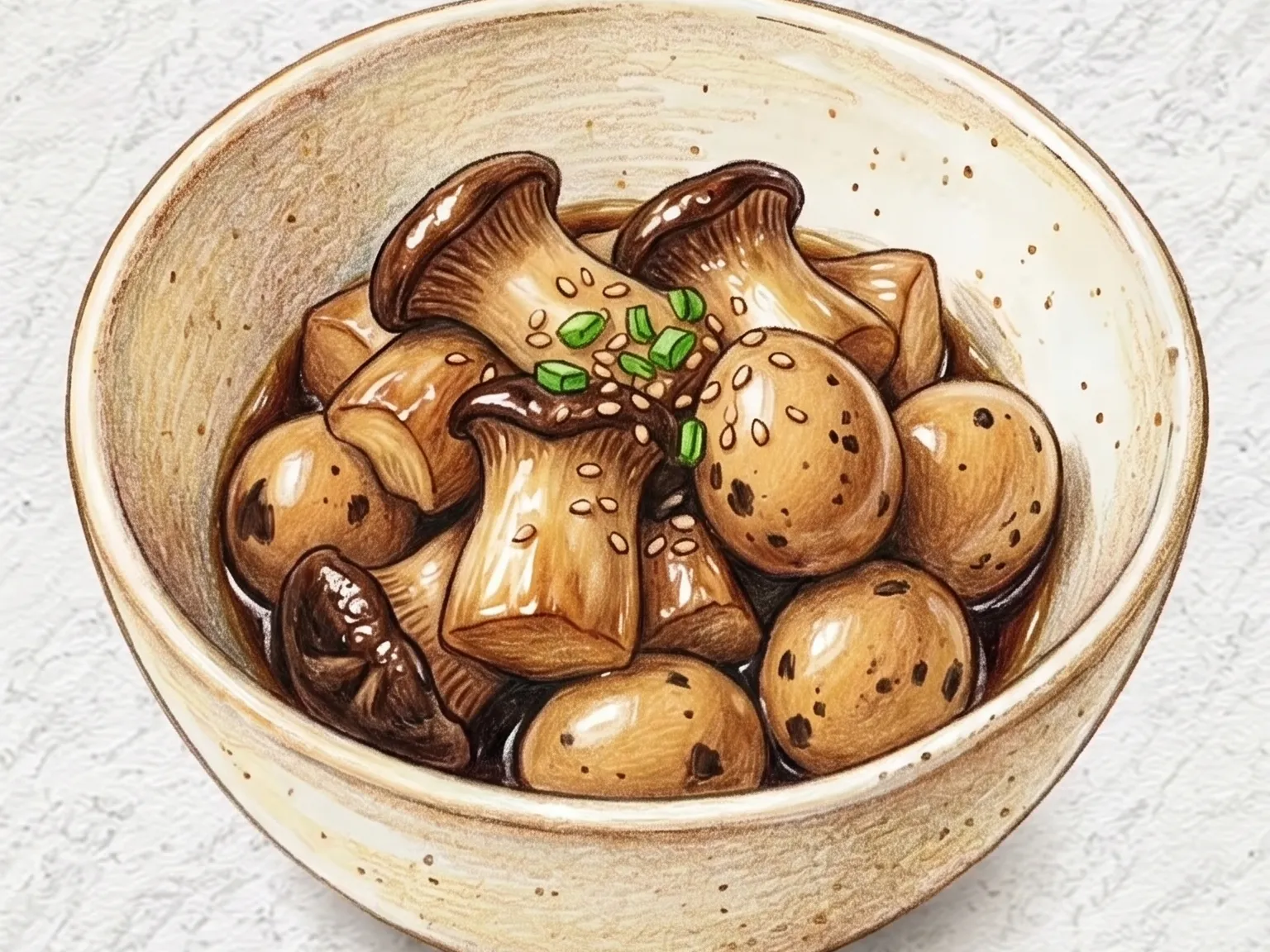
Saesongi quail egg jorim is a soy-braised Korean banchan featuring king oyster mushrooms and quail eggs with a balance of savory and gently sweet flavors.

What makes this special

  • Saesongi quail egg jorim simmers mushrooms and quail eggs in a savory soy base until they absorb a dark, rich color.
  • King oyster mushroom simmers first to absorb moisture before quail eggs join
  • Oligosaccharide added last creates the glossy brown coating
Total time
35 min
Level
Easy
Servings
2 servings
Ingredients
9
Calories
236 kcal
Protein
13 g

Key ingredients

king oyster mushroomsboiled quail eggssoy saucewateroligosaccharide syrup

Core cooking flow

  1. 1 Slice 250 g king oyster mushrooms at least 1 cm thick so they keep some bite.
  2. 2 Put 200 ml water, 2.5 tablespoons soy sauce, 1 teaspoon minced garlic, and 1...
  3. 3 When the sauce comes to a boil, add the mushrooms and turn them once to coat.

Saesongi quail egg jorim is a soy-braised Korean banchan featuring king oyster mushrooms and quail eggs with a balance of savory and gently sweet flavors. The mushrooms are braised first to let them absorb moisture and seasoning thoroughly before the eggs are added, giving the eggs time to soak up the liquid without becoming tough. A spoonful of oligosaccharide syrup added near the end gives the surface a glossy sheen and softens the saltiness of the soy base. The dish calls for only a handful of pantry staples and comes together in under thirty minutes, making it easy to prepare on a busy day. It also keeps well in the refrigerator, improving in flavor over two days as the braising liquid penetrates deeper, which makes it a reliable choice for packed lunches.

Prep 15min Cook 20min 2 servings

Instructions

Read the steps as a cooking flow: prep, heat, seasoning, doneness control, and finish.

6 steps
  1. 1
    Season

    Slice 250 g king oyster mushrooms at least 1 cm thick so they keep some bite.

    Chop 1/2 scallion, then drain the 12 boiled quail eggs well so the braising sauce can cling to the surface.

  2. 2
    Control

    Put 200 ml water, 2.5 tablespoons soy sauce, 1 teaspoon minced garlic, and 1/4 teaspoon black pepper in a pot.

    Set it over medium heat and bring it just to a steady bubbling around the edges.

  3. 3
    Season

    When the sauce comes to a boil, add the mushrooms and turn them once to coat.

    Keep the heat at medium and braise for about 8 minutes, until the mushrooms soften and turn lightly brown.

  4. 4
    Control

    Add the quail eggs and roll them gently while spooning the liquid over them.

    Lower to medium-low heat and braise for 6 more minutes, avoiding a long boil so the eggs do not turn rubbery.

  5. 5
    Control

    When only a shallow layer of liquid remains on the bottom, add 1 tablespoon oligosaccharide syrup and the scallion.

    Simmer for about 2 minutes, until the surface turns glossy and the soy flavor tastes softer.

  6. 6
    Season

    Turn off the heat, drizzle in 1 teaspoon sesame oil, and toss lightly so the coating stays glossy.

    Let it cool briefly, check the seasoning, and store it with the braising liquid if refrigerating.

After the steps

Pick a recipe that fits this dish.

Continue with shared ingredients, meal pairings, or a similar method.

Recipes That Go Well With This

More Steamed →

Based on shared ingredients and meal pairing

Korean Braised Tofu and King Oyster Mushrooms
Shared ingredient: king oyster mushrooms Steamed

Korean Braised Tofu and King Oyster Mushrooms

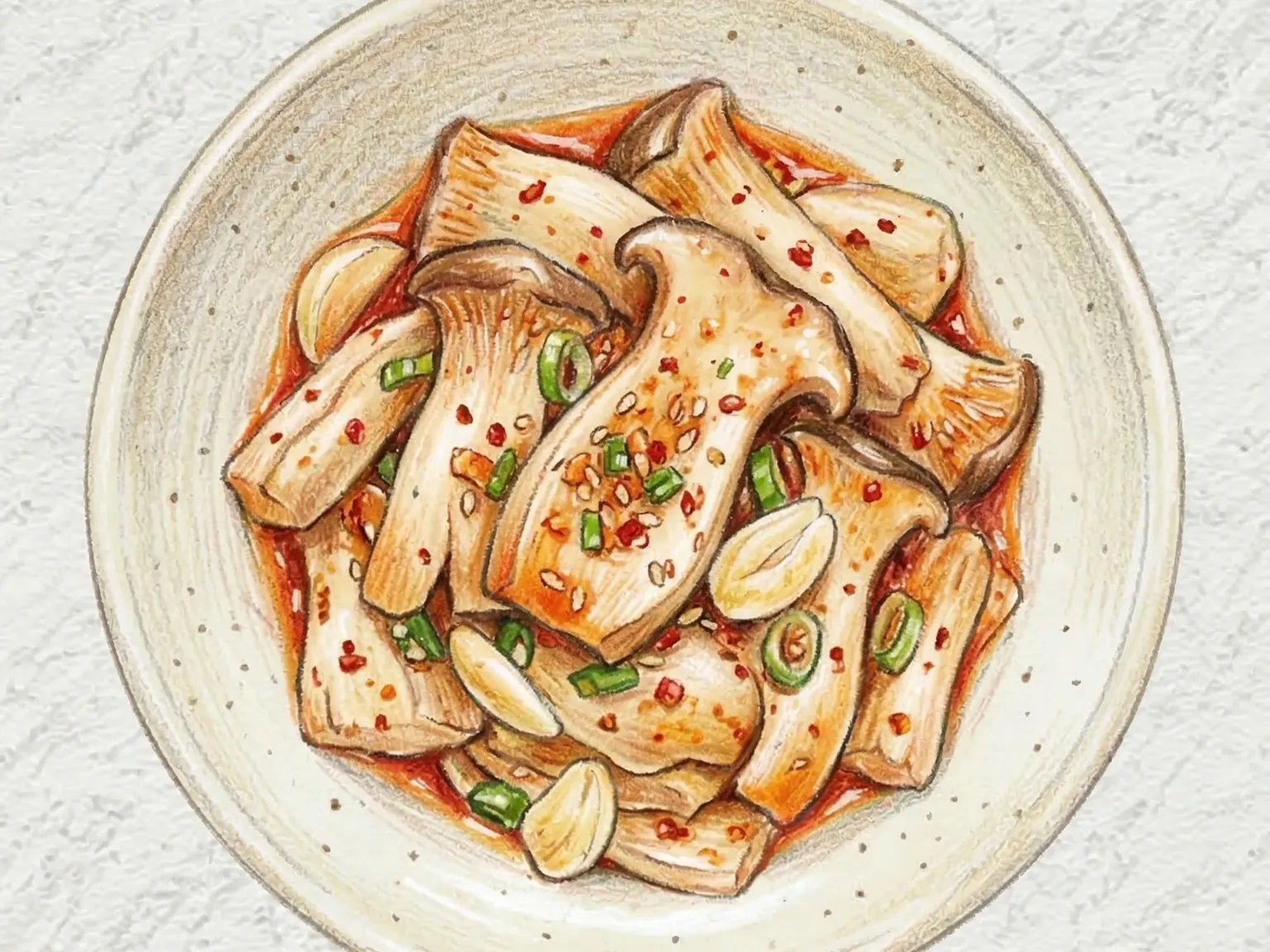
Saesongi dubu yangnyeom jorim is a braised side dish of firm tofu and king oyster mushrooms cooked down in a sauce of soy sauce, gochujang, and Korean chili flakes until the liquid is nearly gone and every surface is glazed. Pan-searing the tofu first over low heat until golden builds a crust that keeps it intact through braising and gives the seasoning somewhere to grip. Thick-cut king oyster mushrooms stay springy even after the long braise, while onion woven through the pot contributes a sweetness that softens the heat of the gochujang. Sesame oil stirred in at the end draws all the aromatics together into a cohesive finish. The result is a banchan with layers, gochujang spice, deep soy saltiness, and a savory earthiness from the mushrooms, that holds its flavor cold, making it a natural fit for packed lunches.

Korean Seasoned King Oyster Mushroom
Shared ingredient: king oyster mushrooms Side dishes

Korean Seasoned King Oyster Mushroom

Saesongi-beoseot-muchim steams 250 grams of king oyster mushrooms, torn into strips along the grain, for six minutes over high heat to preserve their chewy, fibrous texture better than boiling would. After cooling slightly and squeezing out excess moisture, the strips are tossed in a dressing of soy sauce, vinegar, chili flakes, garlic, and sugar. The vinegar provides a tangy lift, while the chili flakes introduce gentle warmth without overwhelming the mushroom's mild flavor. Sesame oil and sesame seeds finish the dish with a nutty aroma. It holds up well when chilled and served cold, making it a convenient banchan to prepare ahead of time.

Korean Potato Salad (Creamy Mashed Potato Ham Cucumber)
Serve together Side dishes

Korean Potato Salad (Creamy Mashed Potato Ham Cucumber)

Korean potato salad arrived through Japan's yoshoku tradition but developed its own distinct identity in Korean home kitchens. Potatoes are boiled until tender and mashed while still hot, but not to a perfectly smooth consistency - leaving some lumps gives the salad a dual texture of creamy mashed potato and soft, intact chunks that hold together when eaten. Diced ham is pan-seared briefly to render out excess fat before being incorporated, preventing the finished salad from becoming greasy. Cucumber is salted and squeezed to remove water, which keeps the salad from turning watery as it sits. Boiled carrot is mixed in for color and a mild sweetness. The dressing is mayonnaise adjusted with sugar and salt, resulting in a distinctly sweet-creamy profile that is noticeably different from Western versions of the dish. Chilling the assembled salad for at least one hour before serving allows the seasoning to equalize throughout the mixture, improving the flavor considerably compared to eating it straight away. The salad is served as a banchan alongside rice, and it is also commonly spread inside sandwiches.

Korean Soy-Braised King Oyster Mushrooms
Similar recipe Side dishes

Korean Soy-Braised King Oyster Mushrooms

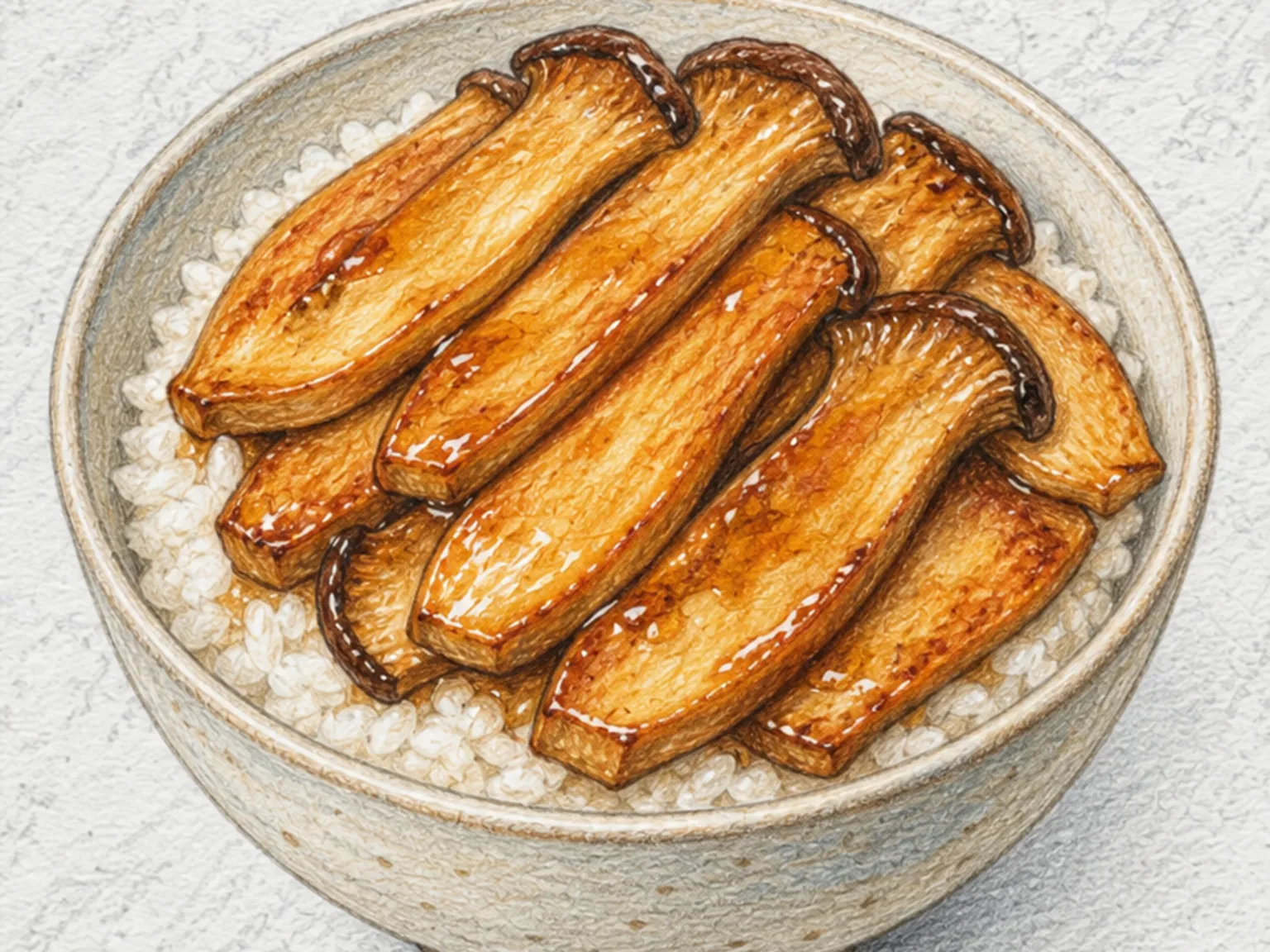
Saesongi-beoseot-jorim braises 300 grams of king oyster mushrooms in a soy-based sauce after an initial sear that drives off moisture and firms up the texture. The mushrooms are halved lengthwise, cut into bite-size pieces, and pan-fried in oil for about two minutes until lightly golden before the braising liquid - soy sauce, water, oligosaccharide syrup, and garlic - is poured in. Five minutes of simmering over medium heat reduces the liquid to a sticky glaze that clings to every surface. Sesame oil is drizzled in just before removing from heat, and chopped scallion adds a fresh green contrast. The finished dish stores well, making it a reliable make-ahead side for weekday meals.

Serve with this

Korean Taro Porridge (Perilla Oil-Toasted Rice with Taro Root)
Rice Medium

Korean Taro Porridge (Perilla Oil-Toasted Rice with Taro Root)

Soaked rice is toasted in perilla oil until fragrant, then simmered with peeled taro in a generous amount of water until the porridge reaches a thick, flowing consistency. Some taro pieces dissolve into the liquid and naturally thicken it, while others hold their shape and offer a starchy, crumbly bite. The gentle nuttiness of perilla oil and the mild earthiness of taro create a soothing combination with no sharp flavors. Seasoning with just salt preserves the delicate taste of the taro without masking it.

🏠 Everyday 🍱 Lunchbox
Prep 20min Cook 35min 4 servings
Korean Spicy Pollock Tripe Jeotgal
Kimchi Medium

Korean Spicy Pollock Tripe Jeotgal

Changnan jeotgal is a traditional Korean fermented condiment made from pollock tripe that is cleaned thoroughly, salted with coarse salt for thirty minutes to firm the texture and draw out moisture, then seasoned with gochugaru, garlic, ginger, and fish sauce. Meticulous washing and complete drying of the tripe are essential for a clean-tasting result. The chili flakes and fish sauce develop a complex, salty savory depth during fermentation, while a small amount of sesame oil rounds out the aroma. Sealed and refrigerated for at least three days, the jeotgal deepens in flavor over time, with the tripe taking on a more concentrated tang and firmer bite as fermentation progresses. Even a small portion placed on hot steamed rice delivers an intense savory punch.

🍱 Lunchbox 🏠 Everyday
Prep 35min 4 servings
Korean Rice Cake Soup (New Year Sliced Rice Cake Beef Broth)
Soups Easy

Korean Rice Cake Soup (New Year Sliced Rice Cake Beef Broth)

Tteokguk is the soup that marks the Korean New Year - eating a bowl is said to add one year to your age, and no Lunar New Year table is complete without it. Thinly sliced oval rice cakes made from garaetteok, a long cylindrical rice cake, are dropped into a clear beef broth that has been carefully skimmed of fat until it gleams. In the hot liquid, the rice cake surfaces soften just enough to release a faint starch that gives the broth the barest hint of body, while the interiors hold a dense, satisfying chew. The broth itself is kept deliberately simple - brisket simmered low and slow, seasoned only with soup soy sauce and salt - so that the rice cakes and their subtle sweetness remain the focus. Beaten egg swirled into the boiling soup forms wispy threads that add a delicate texture, and strips of egg garnish, crushed seaweed, and sometimes sliced scallion complete the bowl. Despite its apparent simplicity, tteokguk carries deep cultural weight: the white color of the rice cakes symbolizes purity and a fresh start, and the round shape of the slices represents coins and wishes for prosperity.

🏠 Everyday 🎉 Special Occasion
Prep 20min Cook 20min 2 servings

Similar recipes

Korean Grilled King Oyster Mushrooms
Grilled Easy

Korean Grilled King Oyster Mushrooms

Saesongi-beoseot-gui is a Korean grilled king oyster mushroom dish where the mushrooms are sliced lengthwise to 0.7-centimeter thickness, seared in melted butter until golden on both sides, then glazed with a sauce of soy sauce, minced garlic, oligosaccharide syrup, and black pepper. King oyster mushrooms contain a lot of moisture, so arranging the slices in a single layer without overlap is essential-crowding steams rather than sears, preventing the Maillard browning that gives the surface its golden color and savory depth. Butter burns quickly above medium heat, so temperature control is key, and the soy glaze should only be added after both sides are already browned so it coats the surface rather than making it soggy. Chopped chives and sesame seeds scattered on top add a nutty, aromatic layer over the salty butter-soy base.

🍺 Bar Snacks 🏠 Everyday
Prep 10min Cook 12min 2 servings
Korean Butter Soy Grilled King Oyster Mushrooms
Side dishes Easy

Korean Butter Soy Grilled King Oyster Mushrooms

Three king oyster mushrooms are quartered lengthwise, scored on the surface, and seared in butter until golden on one side. After flipping, the remaining butter joins a sauce of soy sauce, oligosaccharide syrup, minced garlic, and black pepper, which reduces into a glossy glaze that coats every groove cut into the mushroom flesh. The scoring allows the sweet-salty sauce to penetrate deeper, so each bite releases a concentrated burst of buttery umami. King oyster mushrooms hold their dense, meaty chew even after cooking, making this dish satisfying without any actual meat. A final scattering of scallion and sesame seeds adds freshness and textural contrast.

🏠 Everyday 🍱 Lunchbox
Prep 10min Cook 12min 2 servings
Korean Soy Braised Quail Eggs
Stir-fry Easy

Korean Soy Braised Quail Eggs

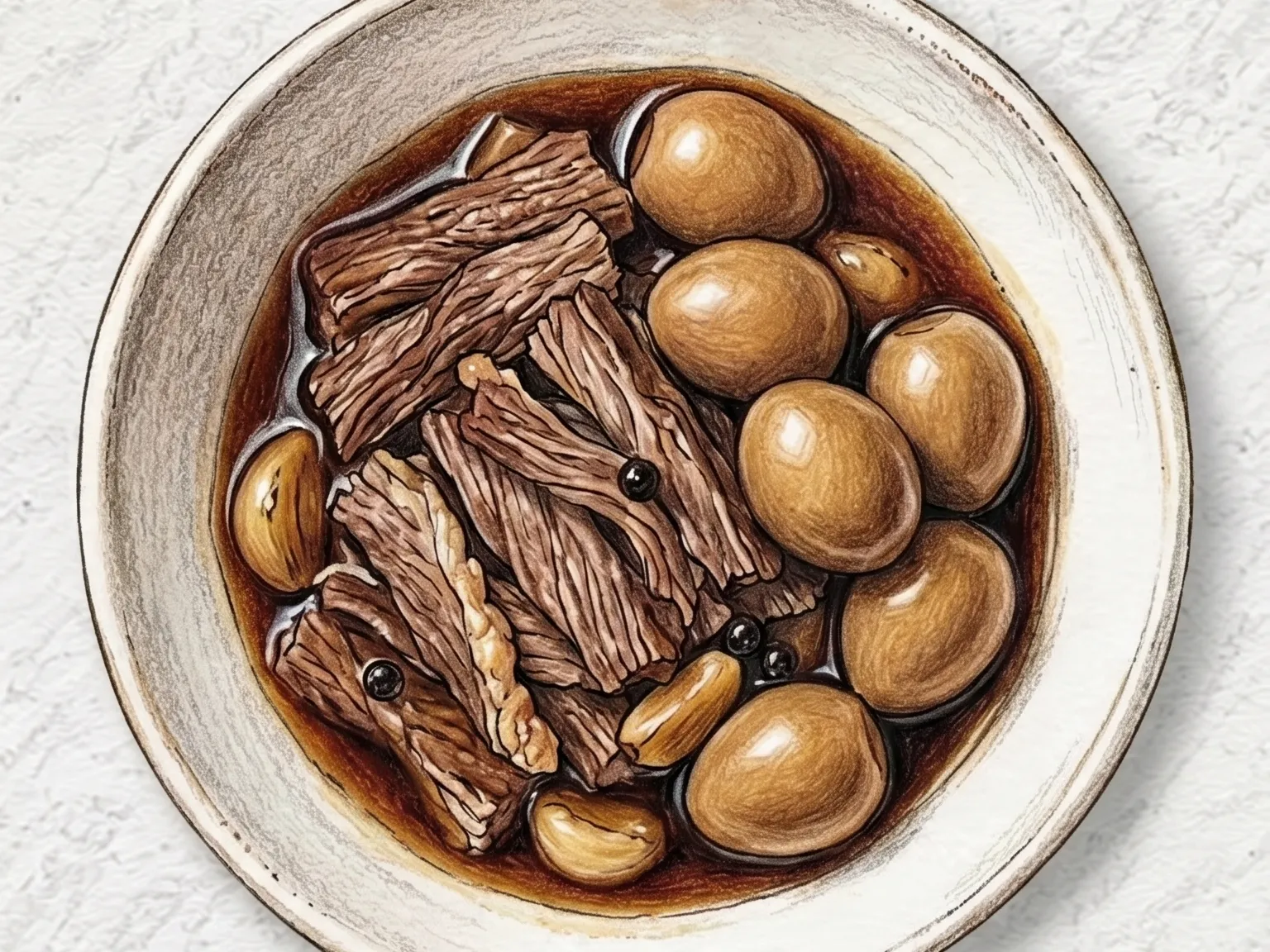
Al-jorim - soy-braised quail eggs - is one of Korea's most universal banchan, appearing in school cafeteria trays, packed office lunchboxes, and home refrigerators as a reliable standby. The dish belongs to the broader Korean jorim tradition of simmering proteins low and slow in a sweetened soy-based liquid until the glaze seeps through to the center. Peeled quail eggs go into a pan with soy sauce, water, sugar, cooking wine, and minced garlic, then simmer over medium-low heat for ten minutes. Turning the eggs occasionally is essential - it ensures the soy stain reaches every surface evenly rather than leaving pale patches. The liquid starts thin and gradually reduces as the eggs cook, concentrating into a sticky, glossy glaze that clings to the surface in the final two to three minutes over higher heat. The outside takes on a deep chestnut brown while the yolk inside stays vivid yellow. A sliced cheongyang chili added near the end introduces a low, slow heat that keeps the sweet-salty profile from becoming monotonous. Sesame oil and toasted sesame seeds scattered over the finished eggs add a nutty note against the soy base. Left overnight in the refrigerator, the seasoning penetrates further and the flavor deepens, making this one of the few banchan that genuinely improves after a day.

🏠 Everyday 🍱 Lunchbox
Prep 10min Cook 15min 2 servings

Tips

Keep mushroom slices at least 1 cm thick for better bite.
Add quail eggs near the end to avoid a rubbery texture.

Nutrition (per serving)

Calories
236
kcal
Protein
13
g
Carbs
16
g
Fat
13
g