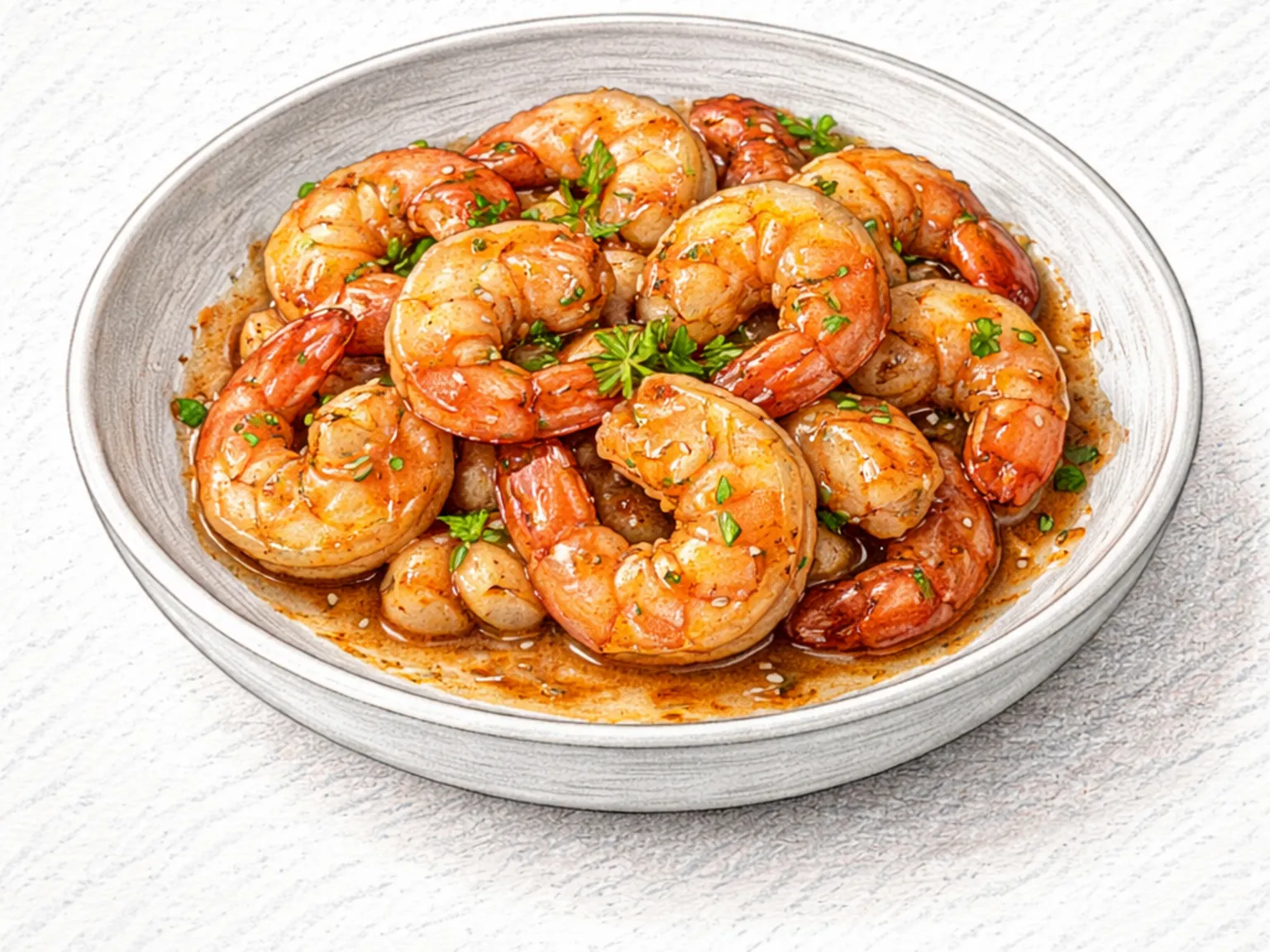
Korean Stir-Fried Shrimp (Garlic Butter Soy Glazed Shrimp)
Saeu-bokkeum is a Korean shrimp stir-fry cooked in melted butter with garlic, then seasoned with soy sauce, sugar, and black pepper. The shrimp are peeled and deveined, patted dry, and cooked only until they turn pink -- a matter of minutes. Butter and garlic form the aromatic base, while soy sauce and a small amount of sugar build a savory-sweet glaze that coats each shrimp without a separate sauce. Green onion scattered on top adds a fresh bite to finish.
Adjust Servings
Instructions
- 1
Peel and devein shrimp; pat dry.
- 2
Melt butter in a pan and sauté garlic.
- 3
Add shrimp and cook until pink and opaque.
- 4
Add soy sauce, sugar, and pepper; stir-fry briefly.
- 5
Add green onion to finish.
As an Amazon Associate, we may earn from qualifying purchases.
Tips
Nutrition (per serving)
More Recipes

Korean Soy-Glazed Shrimp Stir-Fry
Ganjang saeu bokkeum coats plump shrimp in a sweet-savory soy glaze built on a base of melted butter and garlic. A single cheongyang chili adds a subtle kick that lifts the buttery richness without overpowering it. The key is to add the sauce the moment the shrimp turn pink, preventing them from becoming rubbery while allowing the glaze to caramelize lightly. With only 8 minutes of cooking time, this dish works equally well as a quick banchan alongside rice or as an appetizer with drinks.

Korean Stir-Fried Chicken
Dak-bokkeum is a Korean stir-fried chicken dish in a soy sauce-based seasoning. A mix of soy sauce, sugar, and minced garlic coats the chicken evenly, producing a salty, umami-forward flavor. Onion and carrot cook together with the chicken, and their released moisture blends with the seasoning to form a natural sauce. A final drizzle of sesame oil wraps everything in a nutty aroma. Using breast meat yields a leaner result, while thigh meat produces a more moist, succulent texture.

Korean Butter Soy Stir-fried Dried Squid
Butter-soy jinmichae-bokkeum stir-fries dried shredded squid (jinmichae) in melted butter with soy sauce and oligosaccharide syrup, producing a side dish that is rich, salty-sweet, and distinctly different from the gochujang-dressed version. The butter's milk fat coats each strand, giving a smoother mouthfeel than oil-based preparations. Garlic goes into the melted butter first - just twenty seconds - followed by the soy-syrup mixture to build the glaze base, then the squid strands are added and tossed for no more than two to three minutes. Overcooking on high heat causes the squid proteins to contract and toughen, so quick handling is essential. Half a tablespoon of gochugaru adds gentle warmth and color without masking the butter flavor. This banchan is popular in children's lunchboxes and doubles as a snack alongside beer.

Korean Blue Crab Soy Stir-Fry
Kkotge ganjang bokkeum is a Korean blue crab stir-fry where halved crabs are lightly dusted with flour, pan-seared until the shells turn red, then braised briefly under a lid in a sauce of soy sauce, sugar, garlic, ginger, and gochugaru. The flour coating seals in moisture and helps the sweet-salty sauce cling to the shell surface, leaving a sticky glaze meant to be eaten with your hands. Ginger neutralizes any fishiness, while scallion and sesame oil contribute the final aromatic layer. Using live crabs and cooking them immediately ensures the meat stays firm and sweet.

Korean Stir-Fried Eggplant Banchan
Gaji bokkeum transforms eggplant - a vegetable Koreans have cultivated since the Goryeo period - into a quick, oil-glazed banchan where the cooking speed matters as much as the seasoning. The eggplant is sliced into half-moons, and the pan must be scorching hot before the pieces enter; any hesitation and the eggplant will steam rather than sear, turning it into a soggy mass. High heat with minimal oil produces lightly charred edges while the interior turns silky and almost custardy. Soy sauce, garlic, and sesame oil go in during the final thirty seconds, sizzling against the hot surface and coating each piece in a thin, caramelized layer. The dish has a concentrated, clean umami taste without the heaviness of a braised preparation. Korean home cooks make this as a weeknight banchan precisely because it takes under ten minutes from cutting board to table.

Korean Spicy Stir-fried Octopus
Nakji-bokkeum is a fiery Korean stir-fry of small octopus (nakji) coated in a sauce of gochujang, gochugaru, soy sauce, sugar, and garlic, tossed with bean sprouts, onion, carrot, and scallion. Bean sprouts line the bottom of the pan, releasing moisture to prevent sticking while adding crunch. The vegetables and half the sauce go on next, then the octopus on top, covered and steamed on medium heat for three minutes before a final high-heat stir-fry sears everything for two minutes. Speed is critical - octopus toughens with prolonged cooking - and the dish is often mixed with boiled thin wheat noodles for a heartier meal.