Korean Saeu Doenjang Beoteo Gui (Doenjang Butter Shrimp Grill)

Korean Saeu Doenjang Beoteo Gui (Doenjang Butter Shrimp Grill)

Quick answer

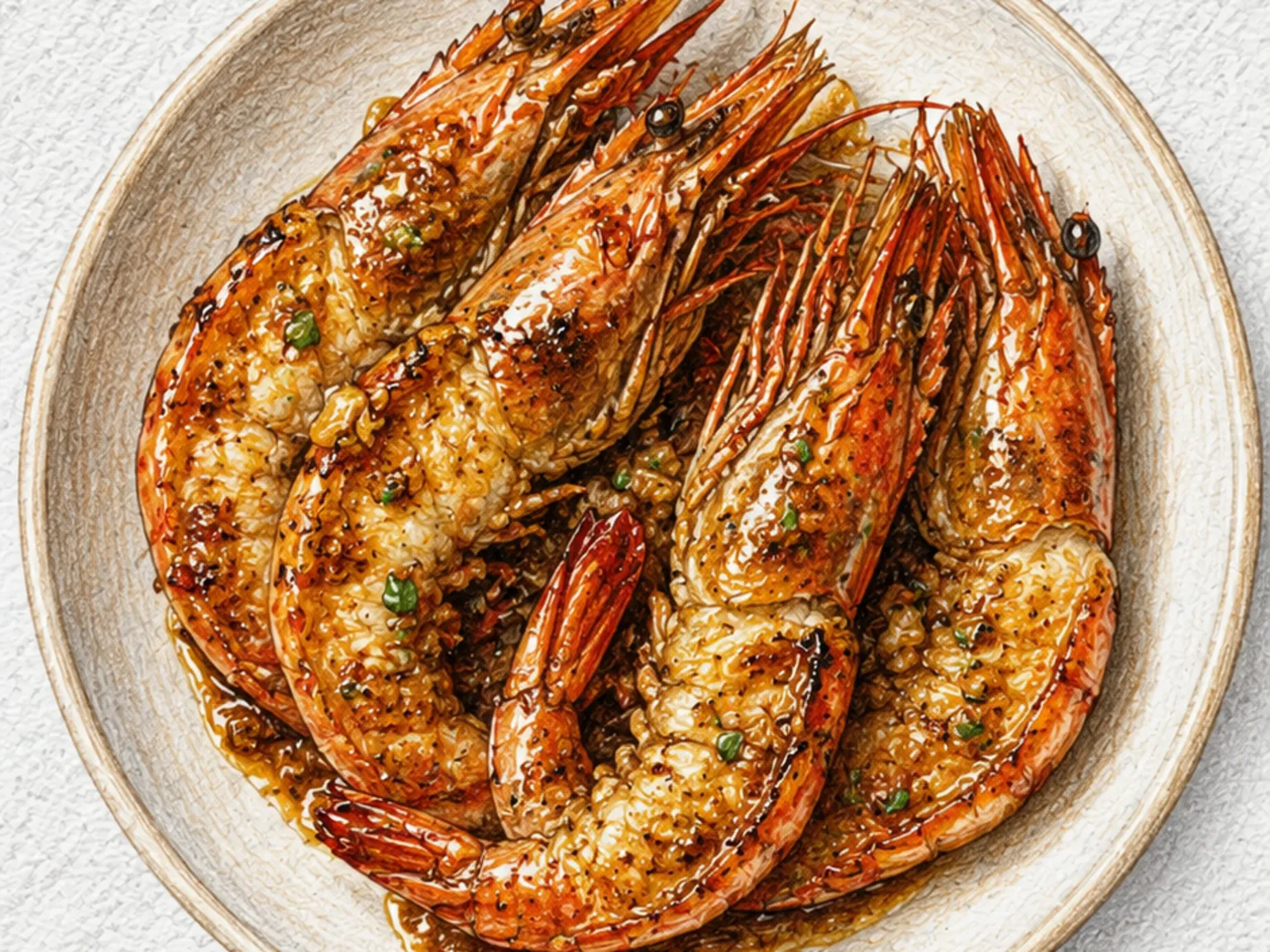
Saeu-doenjang-beoteo-gui is Korean doenjang-butter grilled shrimp, where deveined large shrimp are tossed with two-thirds of a sauce made from doenjang, melted unsalted b...

What makes this special

  • Savory doenjang and melted butter create a deep umami glaze for these grilled jumbo shrimp.
  • Fermented doenjang and butter fat create a savory depth unlike any Western sauce
  • Total cook time under 5 minutes keeps shrimp snappy, not rubbery
Total time
23 min
Level
Easy
Servings
2 servings
Ingredients
7
Calories
260 kcal
Protein
30 g

Key ingredients

large shrimpdoenjangunsalted butterminced garliclemon juice

Core cooking flow

  1. 1 Devein 360 g large shrimp along the back, rinse briefly under running water...
  2. 2 Mix 1 tablespoon doenjang with the melted unsalted butter, minced garlic, le...
  3. 3 Add only two-thirds of the sauce to the shrimp and toss gently by hand or with a spatula.

Saeu-doenjang-beoteo-gui is Korean doenjang-butter grilled shrimp, where deveined large shrimp are tossed with two-thirds of a sauce made from doenjang, melted unsalted butter, minced garlic, lemon juice, and black pepper, marinated for eight minutes, then seared on a hot grill pan for two minutes per side. The fermented soybean paste and butter fat together create a deeply savory richness distinct from any Western butter sauce, and the lemon juice cuts through that heaviness with clean acidity. Total cooking time must stay under five minutes to keep the shrimp flesh snappy rather than rubbery, and brushing the reserved sauce on during a final one-minute sear builds a concentrated doenjang-butter crust on the surface. Because doenjang is inherently salty, any additional salt should only be considered after tasting the finished dish.

Prep 15min Cook 8min 2 servings

Instructions

Read the steps as a cooking flow: prep, heat, seasoning, doneness control, and finish.

6 steps
  1. 1
    Season

    Devein 360 g large shrimp along the back, rinse briefly under running water, and pat them very dry with paper towels.

    Keep the surface dry so the doenjang butter sauce clings instead of thinning out.

  2. 2
    Season

    Mix 1 tablespoon doenjang with the melted unsalted butter, minced garlic, lemon juice, and black pepper until smooth.

    Press any firm bits of doenjang against the bowl with a spoon so the seasoning coats evenly.

  3. 3
    Season

    Add only two-thirds of the sauce to the shrimp and toss gently by hand or with a spatula.

    Marinate for 8 minutes only, so the salty doenjang seasons the shrimp without making them too salty or soft.

  4. 4
    Control

    Heat the grill pan well over high heat, then arrange the shrimp in a single layer without crowding.

    Sear the first side for 2 minutes, and turn them when the edges turn red and the underside releases easily.

  5. 5
    Finish

    After turning, cook the second side for 2 minutes, then brush on the reserved sauce in a thin layer.

    Grill for just 1 more minute, until the surface looks glossy and the sauce lightly clings and browns.

  6. 6
    Finish

    Remove the shrimp from the heat as soon as the flesh is opaque and springy, keeping total cooking time under 5 minutes.

    Taste before adding any salt, then finish with finely chopped chives and serve warm.

After the steps

Pick a recipe that fits this dish.

Continue with shared ingredients, meal pairings, or a similar method.

Recipes That Go Well With This

More Grilled →

Based on shared ingredients and meal pairing

Korean Salt-Grilled King Prawns
Shared ingredient: large shrimp Grilled

Korean Salt-Grilled King Prawns

Daeha-sogeum-gui is a Korean salt-grilled king prawn preparation where whole shell-on prawns are placed directly on a bed of coarse sea salt and cooked over indirect heat. The salt draws out surface moisture while conducting steady, even heat beneath the shells, so the prawns essentially steam inside their own carapace and keep their flesh springy rather than contracted. Scoring the back with kitchen scissors and removing the intestinal tract before cooking eliminates any off-note from the gut, leaving only the clean, natural sweetness of the prawn. The precise moment to pull them from the heat is when the shells turn a solid bright orange, as any longer drives off the moisture that keeps the flesh tender. A squeeze of fresh lemon adds acidity that sharpens the natural umami without masking it, and the dish works well with no additional seasoning at all.

Korean Gapojingeo Beoteo Maneul Gui (Butter Garlic Cuttlefish Grill)
Shared ingredient: butter Grilled

Korean Gapojingeo Beoteo Maneul Gui (Butter Garlic Cuttlefish Grill)

Gapojingeo beoteo-maneul-gui is butter-garlic grilled cuttlefish in which the thick body of the cuttlefish is scored in a crosshatch pattern and cooked in a pan with foaming butter and minced garlic. Cuttlefish flesh is substantially thicker and denser than regular squid, which means scoring is not optional for even cooking. Without it, the outside would overcook before heat reaches the center. The cuts also create channels that the melted butter and garlic flow into as the cuttlefish sears, infusing each section with concentrated fat and aromatics rather than just coating the surface. The timing of when to add the cuttlefish matters. The butter should be on medium heat and just beginning to foam at the edges when the cuttlefish goes in. At that temperature, the garlic releases its fragrance into the oil without burning, and the cuttlefish develops a golden crust before it has time to toughen. Two minutes per side is typically enough. The crosshatch pattern spreads open as the flesh cooks, and the surface takes on a lightly charred color that signals the Maillard reaction has done its work. Leaving it longer makes the flesh rubbery. A squeeze of lemon juice at the end cuts the richness of the butter and lifts the whole dish with a clean, acidic finish.

Korean Spicy Stir-Fried Anchovies
Serve together Side dishes

Korean Spicy Stir-Fried Anchovies

Spicy stir-fried anchovies (maeun myeolchi-bokkeum) toss medium-sized dried anchovies in a gochujang-gochugaru glaze, occupying the opposite end of the flavor spectrum from the sweet jiri-myeolchi version and targeting adult palates. Medium anchovies are larger and thicker than the tiny variety, requiring individual head-and-gut removal to eliminate bitterness - a tedious prep step that nonetheless determines the dish's clean finish. After dry-toasting to drive off moisture, the anchovies simmer in a sauce of gochujang, gochugaru, soy sauce, oligosaccharide, and minced garlic until each piece is coated in a rust-colored glaze. The gochujang's fermented heat combines with gochugaru's vivid red to create both flavor depth and visual appeal. The larger anchovy size delivers a satisfying crunch that lingers alongside a lasting savory umami. Heat intensity is adjustable via gochugaru quantity - adding chopped cheongyang chili ratchets it up another notch. This banchan doubles as a soju drinking snack, appearing as frequently on bar tables as on dinner tables.

Korean Saeu Herb Sogeum Gui (Herb Salt Grilled Shrimp)
Similar recipe Grilled

Korean Saeu Herb Sogeum Gui (Herb Salt Grilled Shrimp)

Saeu herb-sogeum-gui is Korean herb-salt grilled shrimp, where shell-on medium shrimp are deveined, tossed with olive oil, minced garlic, rosemary, thyme, and black pepper for ten minutes, then seared over high heat on a grill pan lined with a thin layer of coarse salt. Keeping the shells on prevents moisture loss during the intense heat, so the flesh stays moist while the shells themselves crisp into an edible, crunchy layer. Grilling on a salt bed distributes radiant heat evenly and draws surface moisture away from the shrimp, preventing the steaming effect that makes shellfish soggy. A finishing squeeze of lemon juice lifts the herb and garlic aromas while sharpening the shrimp's natural sweetness.

Serve with this

Korean Spam Fried Rice (Crispy Spam Cubes with Egg and Rice)
Rice Easy

Korean Spam Fried Rice (Crispy Spam Cubes with Egg and Rice)

Spam bokkeumbap is a Korean fried rice built around crispy cubes of pan-seared Spam, whose salty, caramelized edges give the dish an addictive quality. The Spam is diced small and dry-fried without added oil - its own rendered fat crisps the outside while keeping the inside moist and savory. Onion and scallion go in next for aromatic depth, followed by cold leftover rice that is tossed over high heat until every grain picks up the salty pork flavor left in the pan. Beaten egg is scrambled into the rice, coating the grains in a thin, soft layer. A splash of soy sauce and a drizzle of sesame oil finish the dish with umami and nuttiness. The whole thing comes together in under ten minutes, making it one of the fastest comfort meals in the Korean home-cooking repertoire.

⚡ Quick 🏠 Everyday
Prep 5min Cook 10min 2 servings
Chicken Mu (Korean Fried Chicken Radish Pickle)
Kimchi Easy

Chicken Mu (Korean Fried Chicken Radish Pickle)

The crunchy, sweet-sour radish pickle served with every order of Korean fried chicken - now easy to make at home in under 15 minutes. Cubed radish is submerged in a cooled brine of vinegar, sugar, salt, and whole black peppercorns. Using fully cooled brine rather than hot is critical for maintaining the radish's firm, snapping crunch. Ready to eat after one day of refrigeration, its bright acidity cleanses the palate between bites of crispy chicken. Stored in a glass jar, this pickle keeps for over a week.

⚡ Quick 🏠 Everyday
Prep 10min Cook 5min 4 servings
Korean Soft Tofu Soup (Mild Clear Broth with Silken Tofu)
Soups Easy

Korean Soft Tofu Soup (Mild Clear Broth with Silken Tofu)

Sundubu-guk is the gentler sibling of the more widely known sundubu-jjigae, trading the latter's fiery red broth for a clear, mild soup that puts silken tofu front and center. The base is a simple anchovy and kelp stock, seasoned with soup soy sauce and nothing more assertive, so the broth stays transparent and clean on the palate. Blocks of unpressed soft tofu are slipped into the simmering liquid and heated just until they are warmed through - overcooked sundubu loses the trembling, custard-like texture that defines the dish. Each spoonful collapses gently on the tongue, releasing a faint, sweet soybean flavor that pairs effortlessly with the umami-rich stock. A small addition of salted shrimp paste can be stirred in at the table to introduce a subtle marine depth without disrupting the soup's calm character. This is the soup Koreans turn to when appetite is low, digestion needs rest, or the body simply craves something warm and uncomplicated. It is equally suitable for young children and elderly diners, and its quiet simplicity is precisely its strength.

🏠 Everyday ⚡ Quick
Prep 5min Cook 15min 4 servings

Similar recipes

Korean Doenjang-Grilled Pork Jowl
Grilled Easy

Korean Doenjang-Grilled Pork Jowl

Hangjeongsal doenjang-gui is a Korean doenjang-marinated pork jowl dish where the meat is sliced five millimeters thick, coated in a mixture of doenjang, minced garlic, sesame oil, cooking wine, honey, and black pepper for fifteen minutes, then grilled three minutes per side over medium-high heat. Pork jowl carries more evenly distributed intramuscular fat than loin or shoulder, so it renders its own cooking oil from the moment it hits a dry pan without any added fat. As that fat melts across the hot surface, it merges with the fermented savoriness of the doenjang, building a concentrated, layered umami coating on every grilled face. Starting with a conservative tablespoon of doenjang and adjusting to taste prevents oversalting, since the paste's sodium concentrates further as moisture evaporates during grilling. The honey contributes a faint sweetness while encouraging a glossy caramelized crust that catches the eye and holds the seasoning. After the edges brown, reducing to medium-low for a final two minutes cooks the center through without scorching the glaze, and a finish of sliced green onion adds a sharp, fresh contrast that lifts the richness. The doenjang marinade suppresses any gamey undertone in the pork while simultaneously deepening the umami, delivering the paste's complexity through a grilling method that differs entirely from the way doenjang performs in a stew.

🍺 Bar Snacks 🏠 Everyday
Prep 20min Cook 15min 2 servings
Korean Salt-Grilled Shrimp
Drinks Easy

Korean Salt-Grilled Shrimp

Saeu-sogeum-gui is a Korean salt-bed grilled shrimp prepared by spreading coarse salt in a heavy pan, laying whole shell-on shrimp over it, and covering with a lid to cook. The thick layer of heated salt acts as an indirect heat source that traps moisture inside the shells, so the shrimp flesh steams from within and retains its natural sweetness. After four minutes covered, the shrimp are flipped for three more minutes, then finished with a light coat of melted butter that adds richness on top of the salt's seasoning. Black pepper, chopped parsley, and a wedge of lemon complete the dish, proving that minimal ingredients and a simple technique can concentrate shrimp flavor more effectively than elaborate sauces.

🍺 Bar Snacks ⚡ Quick
Prep 10min Cook 12min 2 servings
Korean Butter-Grilled Scallops
Drinks Medium

Korean Butter-Grilled Scallops

Garibi butter-gui sears fresh scallops in garlic butter until each side develops a deep golden-brown crust, then finishes with lemon juice and parsley to balance the richness. Removing every trace of surface moisture with paper towels before seasoning is the single most important step -- water on the surface of the scallop causes it to steam rather than sear, and no caramelized crust will form until that moisture has evaporated. Each side cooks for only one to two minutes at the highest heat the pan can sustain, leaving the center just barely opaque and the texture tender rather than rubbery. After flipping, butter and minced garlic are added directly to the hot pan and spooned continuously over the scallops so the aroma infuses the surface. A squeeze of lemon and a scatter of chopped parsley added just before removing from heat layers acidity and freshness over the butter richness. Simple to prepare and fast to cook, this dish appears regularly at home gatherings in Korea as a crowd-pleasing appetizer.

🍺 Bar Snacks 🎉 Special Occasion
Prep 12min Cook 8min 2 servings

Tips

Overcooked shrimp get tough, so keep total cook time around 5 minutes.
Doenjang is salty, so decide on extra salt only at the end.

Nutrition (per serving)

Calories
260
kcal
Protein
30
g
Carbs
4
g
Fat
13
g