Korean Steamed Shrimp
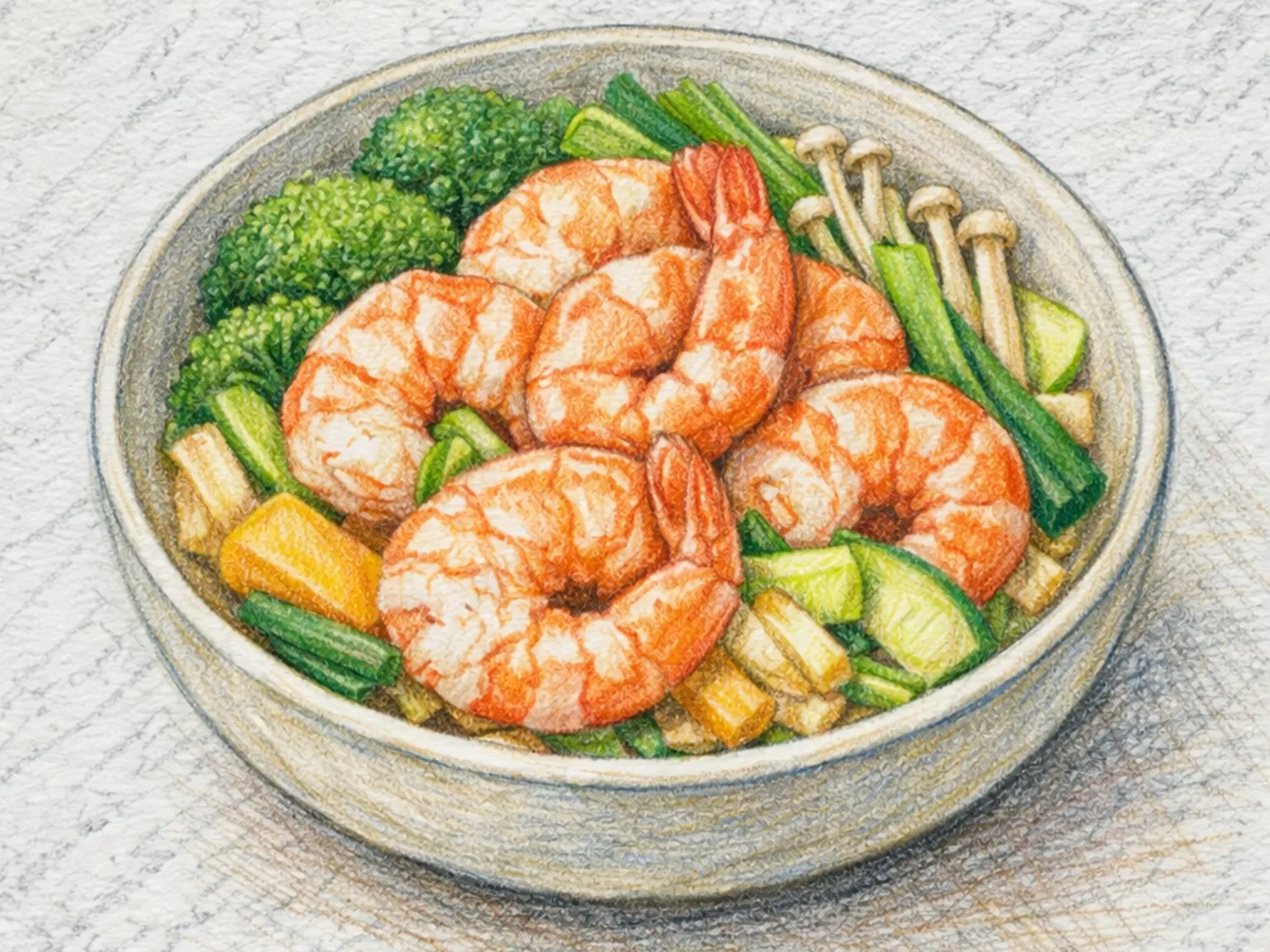
Saeu jjim is a Korean steamed shrimp dish where whole shrimp are placed over a bed of onion, green onion, and garlic in a steamer. The aromatic vegetables infuse the shrimp as it cooks, while a splash of rice wine neutralizes any off-odors. Steaming with the shells on minimizes moisture loss, keeping the flesh firm and naturally sweet. A squeeze of lemon juice just before serving lifts the flavor with bright acidity. The entire process takes under ten minutes, producing a high-protein dish that needs no dipping sauce to taste satisfying.
Adjust Servings
Instructions
- 1
Trim shrimp whiskers and sharp points.
- 2
Layer onion and green onion in the steamer as an aromatic base.
- 3
Place shrimp on top and add garlic and rice wine.
- 4
Steam over boiling water for 7-8 minutes.
- 5
Finish with lemon juice and serve immediately.
As an Amazon Associate, we may earn from qualifying purchases.
Tips
Nutrition (per serving)
More Recipes

Korean Steamed Abalone (Whole Shell Soy Sesame)
Jeonbok-jjim is Korean steamed abalone prepared by scrubbing the shells clean, scoring the flesh for even cooking, and steaming with green onion and ginger for 10 to 12 minutes. The gentle steam preserves the abalone's signature chewy-tender texture and briny ocean flavor. A light drizzle of soy sauce, rice wine, and sesame oil after steaming adds just enough seasoning without masking the natural taste. The separated innards can be repurposed for porridge or sauce, and the dish is often reserved for special occasions and guest-hosting due to its premium standing among Korean seafood.

Korean Shrimp Jeon (Egg-Battered Pan-Fried Shrimp Pancake)
Saeu-jeon is a Korean shrimp pancake where peeled, deveined medium shrimp are butterflied, seasoned with salt and pepper, dredged in flour, dipped in beaten egg, and pan-fried for one to two minutes per side over medium heat. Butterflying flattens each shrimp so heat transfers evenly across the surface, and the flour layer between the shrimp and egg acts as adhesive that keeps the coating from sliding off. Shaking excess flour through a sieve before dipping ensures an even egg coat and uniform thickness across every piece, and medium heat is essential-too high and the egg scorches while the shrimp inside stays undercooked. The shrimp should be removed the moment the flesh turns pink; any additional time on the heat contracts the protein and turns the texture tough.

Korean Steamed Clams
Jogae-jjim is Korean steamed clams cooked with rice wine, garlic, green onion, and cheongyang chili over high heat. Properly purged clams open within minutes and release their natural juices into the pot, creating a clean, intensely savory seafood broth. The chili adds a background warmth without overpowering the shellfish, and minimal salt lets the clams' natural salinity and sweetness come through. The remaining broth is flavorful enough to serve as a base for noodles or porridge, so nothing goes to waste.

Korean Steamed Snow Crab (Whole Crab with Soy Vinegar Dip)
Daege-jjim is steamed snow crab cooked whole in lightly salted water, served with lemon wedges and a vinegar soy dipping sauce. Cracking open the long legs reveals moist, delicate meat carrying the clean salinity of the sea. A squeeze of lemon sharpens the natural sweetness of the crab without masking it. The preparation is intentionally minimal, letting the quality of the crab speak for itself, which makes it well suited as a centerpiece dish for gatherings or celebratory meals.

Korean Steamed Pomfret (Whole Fish with Soy Ginger Sauce)
Whole pomfret is gently steamed with soy sauce, rice wine, ginger, and green onion. Pomfret has thin, delicate flesh that separates easily from the bone after steaming, with a mild, clean flavor. Ginger and green onion work together to neutralize any fishiness, while soy sauce provides subtle seasoning. A light touch of sesame oil finishes the dish, making this a gentle, non-spicy preparation suitable for all ages.

Korean Braised Tofu with Shrimp
Dubu-saeu-jorim pairs pan-fried tofu with whole shrimp in a soy-based braising sauce - a combination that bridges the protein gap in banchan beyond the usual tofu-only preparations. The tofu is seared first until golden, then set aside while shrimp cook briefly in the same pan, picking up the fond. The braising sauce - soy sauce, garlic, sugar, cooking wine, and a touch of gochugaru - goes in next, and both proteins return to simmer together for five minutes. The shrimp release their marine sweetness into the sauce, which the porous tofu absorbs alongside the soy seasoning. The textural pairing matters: the tofu is yielding and soft, while the shrimp curl and firm up with a springy bite. A banchan that works equally well as a main dish over rice when made in larger quantity.