Korean Shrimp Seaweed Soup
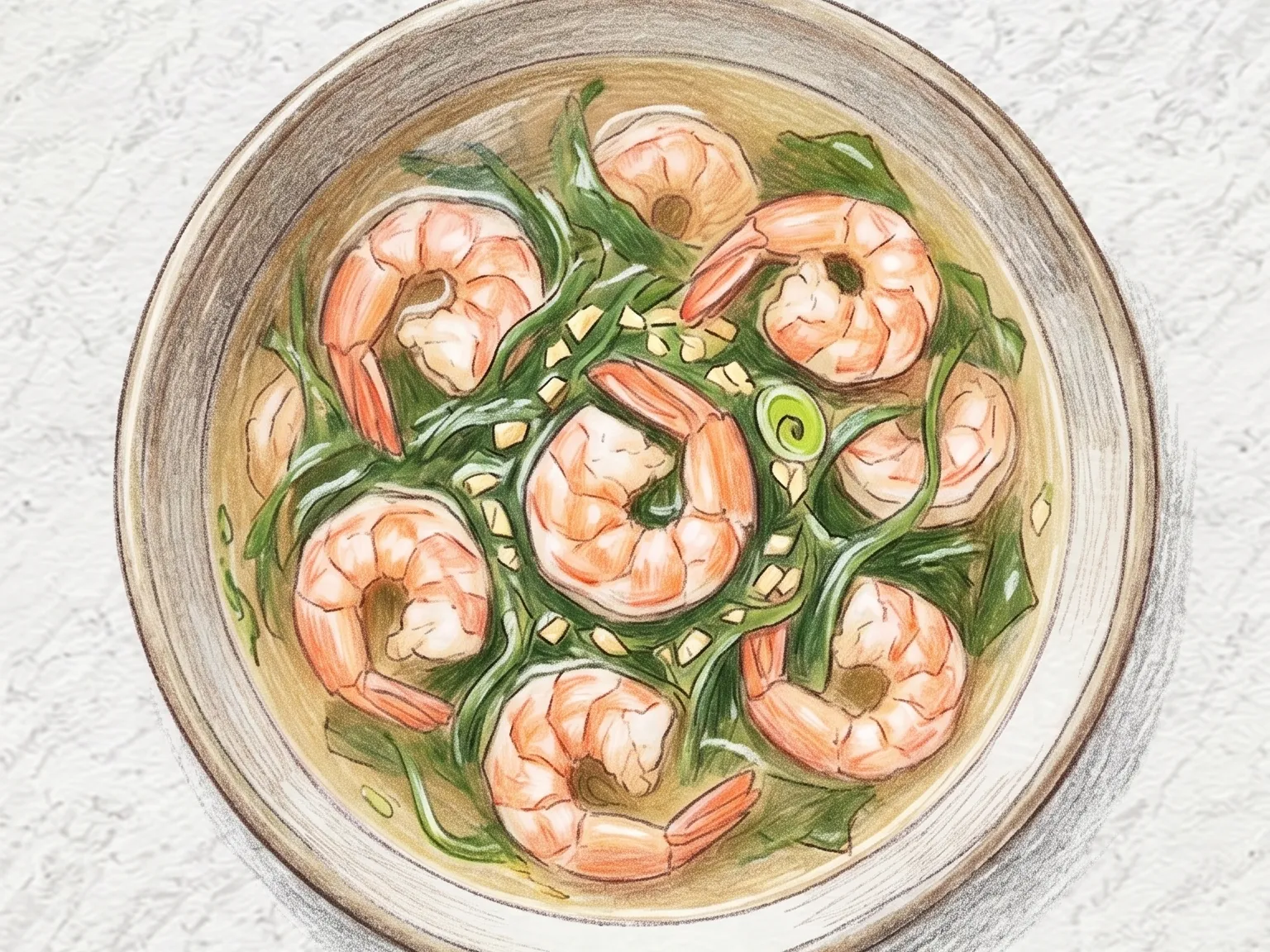
Saeu-miyeok-guk is a Korean seaweed soup made with shrimp instead of the more common beef, producing a lighter bowl with a distinct marine character. The preparation begins by sautéing rehydrated seaweed and garlic in sesame oil, a step that reduces any raw ocean smell and builds a nutty base. Shrimp are added to the pan and cooked just until they begin to turn pink, at which point their natural sweetness melts into the oil. Water is poured in and the soup simmers on medium-low heat for twelve minutes, allowing the mineral-rich seaweed and the shellfish umami to merge into a cohesive broth. Soup soy sauce and salt provide the final seasoning. The texture of the slippery seaweed against the firm shrimp makes each spoonful interesting, and the overall effect is clean and ocean-forward - a lighter alternative to the traditional beef-based version.
Adjust Servings
Instructions
- 1
Soak dried seaweed in cold water for 10 minutes, squeeze, and cut.
- 2
Pat shrimp dry and season lightly with black pepper.
- 3
Heat sesame oil in a pot and stir-fry seaweed with garlic for 2 minutes.
- 4
Add shrimp and cook 1 minute until they begin to turn pink.
- 5
Add water, bring to a boil, then simmer on medium-low for 12 minutes.
- 6
Season with soup soy sauce and salt, then simmer 2 more minutes.
As an Amazon Associate, we may earn from qualifying purchases.
Tips
Nutrition (per serving)
More Recipes

Korean Mussel Seaweed Soup
Honghap-maesaengi-guk is a winter specialty from Korea's southern coast that pairs fresh mussels with maesaengi, a hair-thin green seaweed harvested in cold water. The seaweed is briefly sautéed in sesame oil before water and mussels are added, and as the pot simmers, the broth turns a deep green with a mineral-rich ocean fragrance. Soup soy sauce and garlic provide just enough seasoning to frame the natural salinity without masking it. The textural contrast is central to the experience: maesaengi slides across the palate in silky strands while the mussels offer a firm, meaty chew. Each spoonful delivers both the vegetal depth of seaweed and the concentrated brininess of shellfish, making it a dish greater than the sum of its two main ingredients.

Hobeop-guk (Korean Zucchini Shrimp Soup)
Hobak-guk is a mild, clear Korean soup starring thinly half-moon-sliced zucchini. Small dried or fresh shrimp are often added, infusing the broth with a gentle seafood undertone that complements rather than overpowers the vegetable. The seasoning is pared back to soup soy sauce and minced garlic, allowing the zucchini's own soft sweetness to define the bowl. As the slices simmer, they turn translucent and tender while keeping just enough structure to hold their shape on a spoon. The entire soup comes together in about fifteen minutes, making it one of the fastest side dishes in the Korean home kitchen. A handful of sliced green onion stirred in at the end brings a bright finish to an otherwise understated bowl.

Korean White Clam Clear Soup
Baekhap jogae tang is a clear Korean soup built entirely on the flavor of hard clams simmered in water without additional stock. The clams are soaked in salt water until fully purged of sand, then placed in cold water and heated gradually; this slow temperature rise draws maximum flavor from the shells into the broth. Daikon radish simmers alongside, lending a cool sweetness that tempers the clams' saltiness. A tablespoon of cheongju (clear rice wine) is added to neutralize any briny off-notes and leave a clean finish. Garlic is used sparingly so it does not compete with the shellfish flavor, and scallion and red chili are added at the end for color and fragrance. Salt is kept minimal since the clam liquor itself provides ample seasoning. The soup's entire philosophy rests on a single ingredient doing all the heavy lifting: no anchovy, no kelp, just clams producing a broth that is simultaneously light and deeply flavored.

Korean Seaweed Winter Soup
Maesaengi-guk is a winter soup made with capsosiphon, a fine, thread-like green seaweed harvested along Korea's southern coast from December to February. Garlic is briefly sauteed in sesame oil, anchovy stock is poured in, and the seaweed is added and loosened with chopsticks to prevent clumping. The entire cooking time after adding the maesaengi is only three to four minutes; any longer and its delicate ocean aroma fades. After turning off the heat, the soup rests for two minutes so the seasoning of soup soy sauce and black pepper distributes evenly through the silky, deep-green broth.

Korean Shrimp Mulmandu in Light Broth
Saeu-mulmandu-broth is a Korean dumpling soup where shrimp dumplings are simmered in a clear broth seasoned with soup soy sauce and garlic. The shrimp goes into the pot first to build a seafood base before the dumplings are added, so the wrappers absorb that briny depth as they cook. Green onion is stirred in at the end for a fresh aromatic lift, and the broth is finished with salt and pepper. Despite its light, transparent appearance, the soup carries layered flavor from both the shrimp stock and the filling inside each dumpling.

Korean Shrimp Porridge (Creamy Rice Porridge with Shrimp Broth)
Saeu-juk is a Korean shrimp porridge that simmers rice with shell-on shrimp to draw out a gentle oceanic broth. The heads and shells are cooked down to build a flavorful stock, while the shrimp meat is minced and stirred in separately so each spoonful carries bursts of umami. Diced zucchini and carrot add mild sweetness that balances the seafood character. Soaked rice is first toasted in sesame oil before the liquid goes in, which gives the finished porridge a nuttier base and slightly thicker consistency. The result is a light, nourishing bowl with a clean finish - commonly served as a gentle breakfast or a recovery meal, where the warmth and mild flavor are as important as the nutrition.