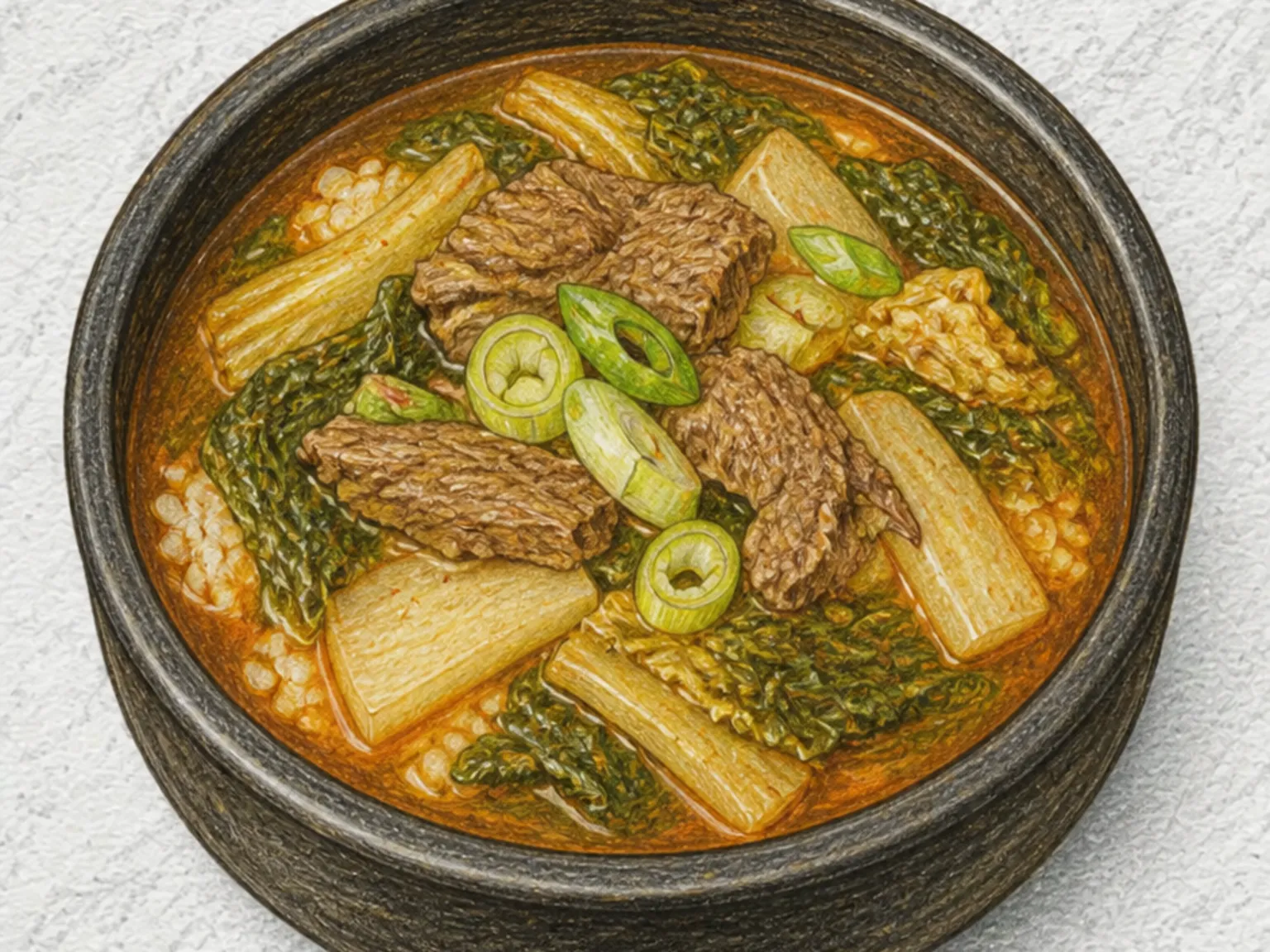
Korean Ox Bone Broth with Napa Outer Leaves
Sagol-ugeoji-guk is a hearty Korean soup that combines milky ox bone broth with seasoned napa cabbage outer leaves. The ugeoji is pre-mixed with doenjang, gochugaru, garlic, and perilla oil, then stir-fried briefly to develop its flavor before the ox bone broth is added. The soup simmers for thirty-five minutes, during which the rich, collagen-laden stock absorbs the earthy depth of the seasoned greens, and the greens in turn soften into the broth, releasing their own savory notes. The result is a thick, warming bowl where the milky heaviness of the bone broth meets the fermented, slightly spicy character of the dressed vegetables. Soup soy sauce adjusts the final seasoning, and sliced green onion provides a fresh finish. This soup occupies the overlap between comfort food and restorative cooking in the Korean kitchen.
Adjust Servings
Instructions
- 1
Cut ugeoji into bite-size pieces and squeeze out moisture.
- 2
Season ugeoji with doenjang, red pepper flakes, garlic, and perilla oil.
- 3
Stir-fry seasoned ugeoji for 3 minutes to develop flavor.
- 4
Pour in ox bone broth and simmer on medium heat for 35 minutes.
- 5
Add soup soy sauce and simmer for 8 more minutes.
- 6
Add green onion, cook 2 minutes, and serve hot.
As an Amazon Associate, we may earn from qualifying purchases.
Tips
Nutrition (per serving)
More Recipes

Korean Chicken Bone Broth Soup
Dak-gomtang is a Korean chicken bone broth soup made by simmering a whole chicken with onion, garlic, and ginger over medium-low heat for at least fifty minutes. After the meat is removed and shredded, the bones go back into the pot for another fifteen minutes, releasing gelatin that gives the broth a silky body - when chilled, the liquid sets into a soft gel, a sign of its collagen richness. Skimming the fat layer after refrigeration produces a noticeably cleaner taste on reheating. The broth is seasoned simply with soup soy sauce and salt, and sliced green onion added at the end brings a fresh, sharp contrast to the mellow chicken flavor.

Korean Ginger Chicken Gomtang
This ginger chicken gomtang is a clear, restorative soup made by simmering a whole chicken with fresh ginger, onion, garlic, and green onion until the broth turns golden and deeply flavorful. The ginger cuts through the richness of the chicken fat, lending a sharp, warming note that distinguishes this from heavier beef-bone soups. After straining, the broth is remarkably clean-tasting despite its depth, and the chicken is pulled into tender shreds and returned to the bowl. Seasoning is kept to soup soy sauce, salt, and a generous amount of black pepper, which amplifies the ginger's heat. This is the kind of soup that Korean households turn to when someone is feeling under the weather or recovering - light enough to sip without strain, yet nourishing enough to rebuild strength. It also works as an elegant first course when served in small portions before a larger meal.

Korean Cabbage Oyster Soup
Baechu gul guk is a Korean winter soup that pairs seasonal napa cabbage with fresh oysters in a clear broth. The oysters are gently rinsed in salted water to remove grit and any briny off-flavors, then added only in the final one to two minutes of cooking so they stay plump rather than shriveling. Napa cabbage and daikon radish go in first and simmer until their natural sugars dissolve into the water, sweetening the broth without any added sugar. Seasoning is limited to minced garlic and guk-ganjang, kept restrained because the oysters contribute their own salinity. Thinly sliced scallion floated on top releases a fresh aroma with each spoonful. Overcooking the oysters risks both a rubbery texture and a bitter aftertaste, making their timing the single most critical step. The finished soup layers the soft sweetness of cabbage, the clean coolness of radish, and the marine depth of oyster into one bowl.

Korean Ox Bone Soup (Milky Slow-Simmered Beef Bone Broth)
Seolleongtang is one of Korea's oldest and most revered soups, made by boiling ox bones and beef brisket for six to eight hours until the broth turns opaque, milky white. The bones are soaked for at least two hours and blanched once to purge impurities before the real simmering begins. Over the course of half a day at a gentle boil, marrow and collagen dissolve into the water, creating a broth with a heavy, almost creamy mouthfeel and a deep, bovine savoriness that no shortcut can replicate. The brisket is pulled out after two hours, sliced thin, and placed on top of the soup as garnish. By tradition, the broth arrives at the table unseasoned - each diner adds salt, pepper, and sliced green onion to taste, a custom that underscores how the flavor of the broth itself is expected to carry the bowl. Rice or thin wheat noodles are added directly to the soup, soaking up the rich liquid.

Korean Pork Soup with Rice
Dwaeji gukbap is Busan's signature pork soup with rice, built on a broth that simmers pork shoulder in bone stock for over an hour until the liquid turns milky-white and deeply flavored. The pork is blanched first to remove impurities, then transferred to the main pot where it cooks low and slow until fork-tender. Sliced thinly against the grain, the meat is arranged over a bowl of rice and doused with the steaming broth, which carries the richness of rendered collagen and the depth of long-simmered bones. Green onion and garlic chives added on top provide freshness, while diners season to taste at the table with fermented shrimp paste or minced chili. The broth is hearty enough to serve as a full meal at any hour - breakfast hangover cure, midday refuel, or late-night comfort. In Busan, gukbap restaurants that have been ladling from the same stockpot for decades are a point of neighborhood pride.

Korean Ox Bone Broth (Milky Collagen-Rich Marrow Soup)
Sagol-guk is a Korean beef bone broth made by simmering marrow bones for hours until the liquid turns milky white from dissolved collagen and marrow. The seasoning is minimal - just green onion, garlic, and a touch of salt - letting the bone's natural richness speak for itself. The bones can be reboiled three or four times, each batch yielding progressively lighter broth. It is traditionally served piping hot with rice, seasoned to taste at the table.