Salmon in Puff Pastry
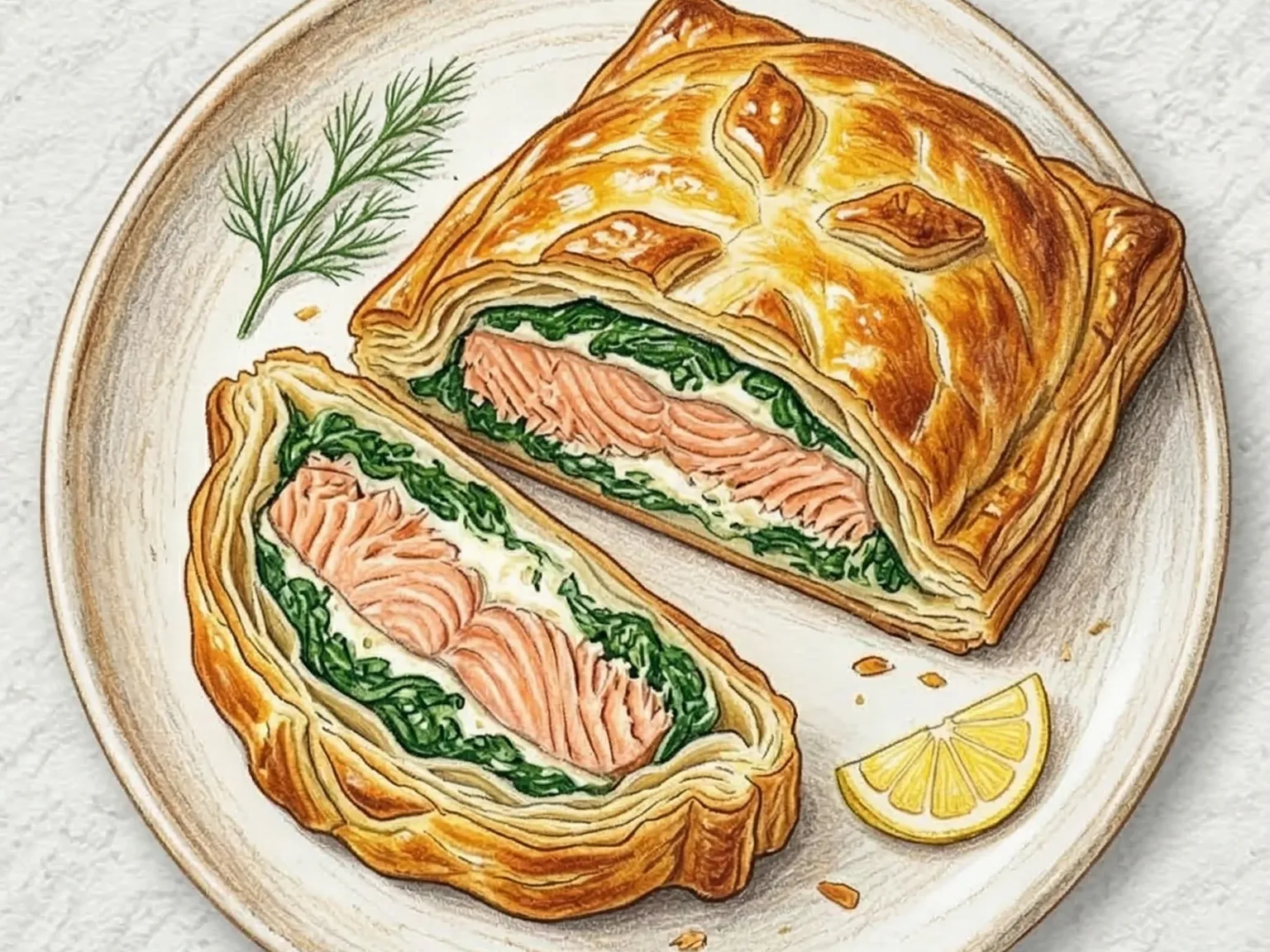
Salmon en croute wraps a salmon fillet spread with a mixture of cream cheese, wilted spinach, dill, and lemon zest inside puff pastry and bakes it until golden. Patting the salmon completely dry with paper towels is crucial - any surface moisture will make the pastry soggy. The spinach must also be squeezed thoroughly to prevent a wet filling. Cream cheese and Dijon mustard form a barrier between the fish and the dough, blocking the salmon's moisture from softening the pastry. Baking at 200 degrees Celsius for twenty-five to thirty minutes puffs the pastry into flaky, crisp layers while the salmon inside stays tender and moist, delivering both textures in every slice. Chilling the assembled package for ten minutes before baking re-firms the butter in the pastry, producing sharper layers after baking.
Adjust Servings
Instructions
- 1
Preheat the oven to 200C and pat the salmon completely dry.
- 2
Wilt the spinach briefly in a pan, squeeze out moisture, and chop finely.
- 3
Mix cream cheese, mustard, dill, lemon zest, salt, pepper, and spinach for the filling.
- 4
Roll out pastry, spread some filling in the center, place salmon, top with remaining filling, and wrap tightly.
- 5
Seal with the seam side down, score the top, and brush with egg wash.
- 6
Bake for 25-30 minutes, rest for 5 minutes, then slice thickly and serve.
As an Amazon Associate, we may earn from qualifying purchases.
Tips
Nutrition (per serving)
More Recipes

Cod en Papillote (French Parchment-Steamed Cod with Vegetables)
Cod en papillote seals cod fillets with zucchini, cherry tomatoes, shallot, thyme, and lemon slices inside parchment paper, then bakes at 200 degrees Celsius for fifteen to eighteen minutes. The tightly crimped seal traps steam inside the packet, cooking the fish gently without drying it out. Dry white wine added before sealing generates additional aromatic steam that infuses the cod with bright, clean flavor. The vegetables release their natural sweetness as they soften, and olive oil ties the components together with a smooth richness. Opening the parchment at the table releases the trapped aroma all at once.

Ratatouille
Ratatouille is a Provencal vegetable dish where thinly sliced eggplant, zucchini, tomato, and bell pepper are arranged in overlapping circles over a sauce base and slow-baked in the oven. The base is made by sauteing onion, garlic, and diced bell pepper in olive oil, and it mingles with the moisture released from the vegetables during baking to form a naturally thickened sauce. Cutting all vegetables to a uniform thickness is critical - uneven slices lead to some pieces turning mushy while others remain underdone. Thyme adds a quiet herbal note that lifts the natural sweetness of the vegetables. Refrigerating overnight and reheating the next day lets the vegetable juices fully merge with the sauce, deepening the flavor considerably.

French Onion Soup
French onion soup is an exercise in patience. Thinly sliced onions are cooked slowly in butter over low heat for forty minutes or more, losing their sharp bite as their natural sugars caramelize into a deep, golden-brown mass with an intensity of sweetness and umami that raw onions cannot hint at. Beef stock and dry white wine are added, and the pot simmers until the broth absorbs every layer of onion flavor. The soup is then ladled into oven-safe crocks, topped with thick slices of toasted baguette and a generous blanket of grated Gruyere cheese. Under the broiler, the cheese melts, bubbles, and browns into a golden crust that stretches in long strings when broken with a spoon. Beneath that crust lies the reward - a rich, dark broth steeped in caramelized onion flavor, with bread that has softened into the soup and cheese that drapes over every spoonful.

Lobster Thermidor
Lobster thermidor is a French dish in which boiled lobster meat is cut into bite-size pieces, folded into a cream sauce made from shallots sauteed in butter, white wine reduced by half, Dijon mustard, and heavy cream, then packed back into the cleaned shell and topped with grated Parmesan for a brief gratin under high heat. Reducing the wine concentrates its acidity, and the mustard adds a sharp undercurrent that prevents the cream sauce from tasting flat. Baking at 220 degrees Celsius for only six to eight minutes gives the cheese a golden crust while keeping the lobster meat tender. Lemon juice stirred into the filling at the last moment lifts the richness. The dramatic presentation in the shell makes it a natural choice for entertaining.

Mille-Feuille (Layered Puff Pastry with Vanilla Cream)
Mille-feuille stacks three sheets of puff pastry with layers of vanilla pastry cream between them, creating a dessert defined by the tension between crisp and soft. The pastry itself is built through repeated folding with cold butter, generating hundreds of paper-thin layers that puff apart in the oven into shatteringly flaky sheets. Pastry cream - egg yolks, sugar, milk, and a touch of flour cooked to a thick custard - fills the gaps with a smooth richness that yields immediately to the fork. The top is typically dusted with powdered sugar or glazed with fondant, sometimes decorated with a feathered chocolate pattern. Timing matters: once assembled, moisture from the cream migrates into the pastry, so the window for peak crispness is roughly one to two hours. When eaten fresh, each bite collapses with an audible crunch before the cream takes over.

Palmier (Caramelized Sugar Puff Pastry Butterfly Cookie)
Puff pastry is coated in granulated sugar, rolled inward from both edges to the center, chilled, and sliced into rounds that bake into crisp, caramelized butterfly shapes. The sugar melts against the hot pan and forms a glassy, toffee-like shell on each side while the interior layers remain light and flaky. A pinch of cinnamon mixed into the sugar adds warmth without masking the buttery pastry flavor. Chilling the log before slicing keeps the spirals tight and symmetrical. Each cookie is flipped midway through baking so both faces develop an even amber crust. They cool to a satisfying snap and pair naturally with espresso or tea, where their sweetness offsets the drink's bitterness.