Salmon Piccata
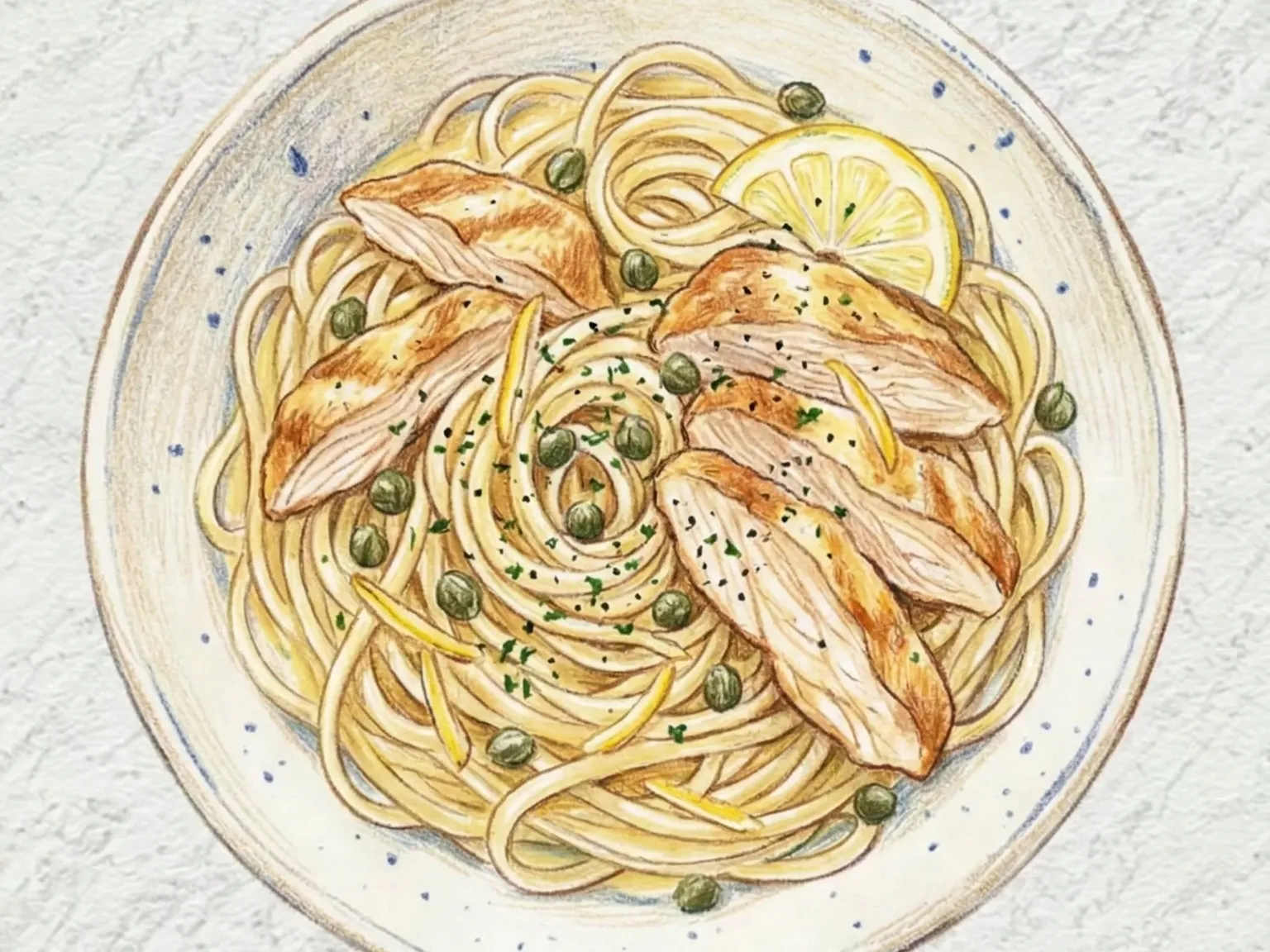
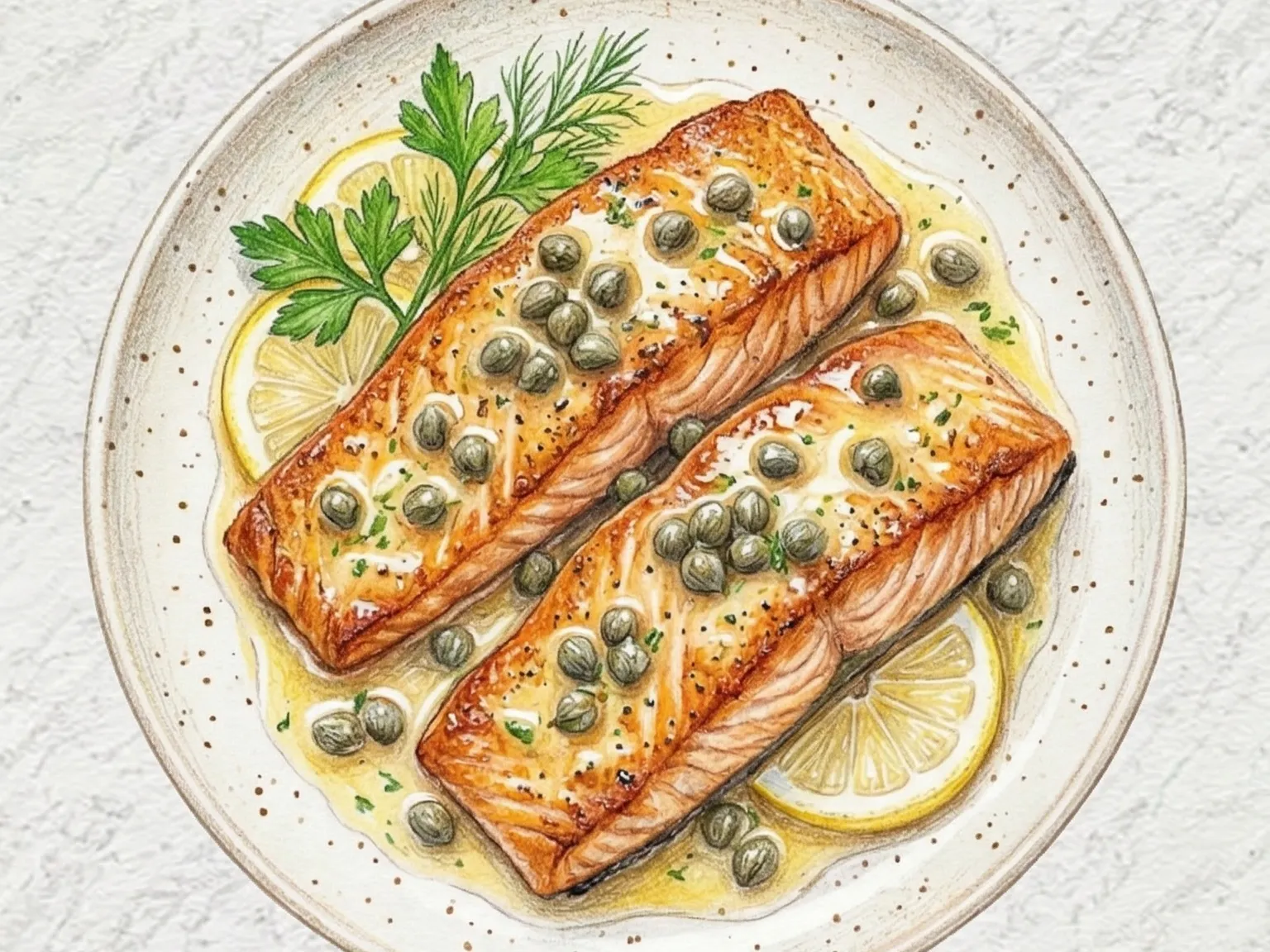
Salmon piccata is an Italian fish dish where salmon fillets are seasoned, dusted in a thin layer of flour, and pan-seared in olive oil until golden on both sides. The flour coating promotes a Maillard crust on the surface while sealing moisture inside the flesh. Melting butter in the same pan and deglazing with lemon juice and chicken stock dissolves the caramelized fond into a bright sauce. Capers add bursts of briny saltiness that meet the lemon's acidity to create the piccata sauce's signature sharp, savory character, cutting cleanly through the salmon's rich fat. Because salmon dries out quickly when overcooked, the final step of returning it to the sauce should last no more than two minutes.
Adjust Servings
Instructions
- 1
Season salmon with salt and pepper, then lightly dust with flour.
- 2
Pan-sear salmon in oil over medium-high heat until golden, then set aside.
- 3
Melt butter in the same pan, add lemon juice and stock, and simmer 2 minutes.
- 4
Add capers and reduce slightly to concentrate flavor.
- 5
Return salmon and baste with sauce for about 2 more minutes.
- 6
Finish with parsley and serve immediately.
As an Amazon Associate, we may earn from qualifying purchases.
Tips
Nutrition (per serving)
More Recipes

Chicken Piccata
Chicken piccata pounds chicken breast thin, dredges it in flour, and sears it in butter, then builds a pan sauce from white wine, lemon juice, and capers. Deglazing the pan with wine dissolves the browned bits on the surface, forming the flavorful base of the sauce. Lemon juice adds a sharp acidity that cuts through the butter's richness, while capers contribute a briny saltiness that deepens the overall flavor. Swirling in cold butter at the end emulsifies the sauce into a glossy, clinging consistency. The lemon juice should be added off the heat to preserve its fresh aroma, and this clean, bright acidity paired with the flour-coated chicken is what defines the dish.

Chicken Francese (Egg-Battered Chicken in Lemon Butter Sauce)
Chicken francese is an Italian-American dish where butterflied chicken breast cutlets are dredged in flour, dipped in beaten egg, and pan-fried until golden, then finished in a lemon-butter sauce made with chicken stock. The egg coating seals the surface of the chicken, trapping moisture inside during cooking, while the flour layer between the egg and the pan creates a thin, crisp texture. After removing the chicken, butter is melted in the same pan and chicken stock and lemon juice are added, simmering for three minutes to dissolve the browned fond on the pan bottom into the sauce. Returning the chicken and spooning the sauce over it for two more minutes allows the egg coating to absorb the lemon-butter liquid, so each bite delivers both the bright citrus acidity and the rich butter fat simultaneously. Chopped parsley adds a fresh herbal note to the finished plate.

Chicken Alfredo
Chicken alfredo is an Italian-American pasta of pan-seared chicken breast and fettuccine tossed in a sauce of butter, heavy cream, and Parmesan cheese. Garlic is sauteed in melted butter before the cream is poured in and the grated Parmesan stirred through - the cheese protein emulsifies with the cream fat into a thick coating that clings to every strand of pasta. The chicken breast is seasoned with salt and pepper and seared until the surface reaches a deep golden brown, developing a Maillard-reaction flavor that the cream sauce alone cannot provide. Adding the pasta to the sauce immediately after draining, while surface starch is still present, helps the sauce adhere more effectively. A generous amount of black pepper adds a quiet warmth inside the rich, creamy base.

Chicken Saltimbocca (Prosciutto and Sage Italian Chicken Sauté)
Chicken saltimbocca lays sage leaves and prosciutto over pounded chicken breast, sears the assembly in a pan, then finishes with a sauce made from white wine, chicken stock, and butter. The name means 'jumps in the mouth' in Italian, referring to how the salty depth of prosciutto and the aromatic intensity of sage leap out against the mild chicken. Dusting only the non-prosciutto side with flour gives the pan-contact surface a light crust while the prosciutto side crisps directly and the sage fries in the rendered fat. Deglazing with wine lifts the fond from the pan, and reducing it with stock by half concentrates the sauce into a glossy coating. Whisking in cold butter at the end emulsifies the liquid into a smooth, shiny finish.

Fettuccine Alfredo
Fettuccine Alfredo is an exercise in simplicity where technique matters more than a long ingredient list. Wide fettuccine noodles are tossed with unsalted butter and finely grated Parmigiano-Reggiano cheese, using starchy pasta water to create a smooth emulsion that clings to every strand. The original Roman recipe contains no cream at all - the silky texture comes from the marriage of melted butter fat, cheese protein, and the starch released by the pasta during cooking. The pan must stay off direct heat while tossing, as excessive temperature breaks the emulsion and turns the sauce grainy. Speed is essential: the dish should move from pan to plate in under a minute. Generous freshly cracked black pepper provides a sharp counterpoint to the rich, concentrated cheese flavor.

Roasted Pumpkin Alfredo Fettuccine
Roasted pumpkin Alfredo fettuccine purées oven-roasted kabocha squash into a cream-based Alfredo sauce. The squash is roasted at 200°C with olive oil until its edges caramelize and its starch concentrates, giving the sauce natural body without added thickeners. Onion and garlic sautéed in butter form the aromatic base before the roasted squash and cream are blended smooth. Parmigiano-Reggiano adds savory salt, and a pinch of nutmeg introduces warm spice that keeps the squash's sweetness grounded on the savory side. The sauce clings thickly to wide fettuccine ribbons. Cook time is about 25 minutes excluding the squash roasting, which can be done in advance.