Salted Doenjang Caramel Cookies
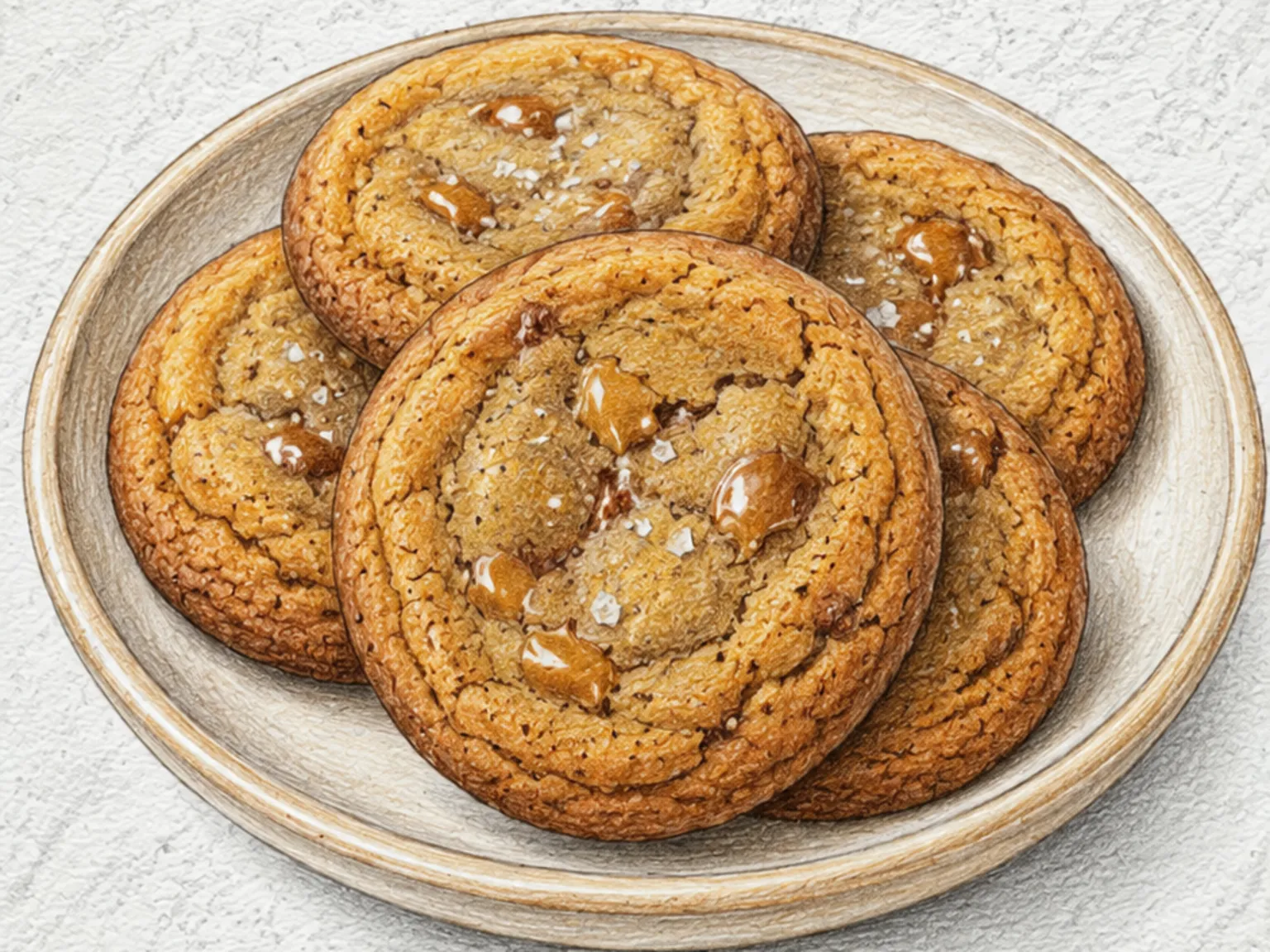
These cookies channel the umami depth of Korean fermented soybean paste into a brown sugar caramel dough. A small amount of doenjang, roughly one to two percent of the total batter weight, adds a savory undercurrent that most people cannot identify but find irresistibly complex. The brown sugar caramelizes at the edges during baking, producing crisp, toffee-like rims around a chewy center. Sea salt flakes pressed into the top before baking amplify both the sweetness and the fermented savoriness. The result tastes neither obviously Korean nor conventionally Western, occupying a unique middle ground that provokes curiosity. They pair exceptionally well with espresso, where the bitterness of coffee draws out the doenjang's deeper notes.
Adjust Servings
Instructions
- 1
Melt 40 g sugar over medium heat for caramel, add cream, then cool.
- 2
Cream butter with brown sugar, then mix in egg and doenjang until smooth.
- 3
Mix in cooled caramel, then fold in flour, baking soda, and salt.
- 4
Portion into 30 g balls and chill for 20 minutes.
- 5
Preheat oven to 180°C; bake cookies with spacing for 12-14 minutes.
- 6
Cool on tray for 5 minutes, then transfer to a rack to finish cooling.
As an Amazon Associate, we may earn from qualifying purchases.
Tips
Nutrition (per serving)
More Recipes

Doenjang Caramel Pecan Tartlets
Doenjang caramel pecan tartlets bridge Korean fermented soybean paste with Western pastry technique. Mini tart shells are filled with toasted pecans and topped with caramel into which a small amount of doenjang has been whisked. The doenjang introduces a salty, fermented depth beneath the caramel's sweetness - similar to salted caramel but with an added umami dimension. The caramel is cooked to a deep amber where faint bitterness matches the doenjang's fermented edge. Once cooled, the caramel sets into a glossy layer that cracks under a fork. The overall effect is a dessert that is sweet, salty, umami-rich, and nutty in every bite.

Yuja Cheesecake Bars (Citron Cheesecake)
Yuja cheesecake bars start with a pressed base of cracker crumbs and melted butter, pre-baked for 8 minutes, then topped with a filling of cream cheese, eggs, sugar, and yuja citron marmalade baked at 170 degrees Celsius. Pre-baking the crust before adding the filling ensures the layers stay distinct, and bringing the cream cheese to room temperature beforehand lets it blend into a completely smooth batter. Seventy grams of yuja marmalade cuts through the dense cheese richness with a sharp citrus fragrance and clean acidity, keeping the aftertaste light. Chilling for two full hours before slicing produces neat, straight edges, and the texture lands between dense and silky, melting slowly on the palate.

Dasik (Korean Honey-Pressed Roasted Grain Confection)
Dasik is a traditional Korean pressed confection made by kneading roasted grain or nut powders with honey and pressing the mixture into carved wooden molds. Unlike baked goods, dasik holds its shape through the binding power of honey alone, which gives it a distinctive texture - slightly sticky on the teeth at first, then dissolving softly at body temperature. Roasted soybean powder produces a nutty version, black sesame yields a deeply aromatic one, and additions of pine nut powder or cinnamon deepen the flavor further. The wooden molds imprint decorative patterns onto the surface, making each piece as visually refined as it is flavorful. Dasik has been a staple of Korean tea ceremonies for centuries.

Honey Ginger Ribbon Cookies
Maejakgwa are traditional Korean ribbon cookies made from a firm dough of wheat flour, sesame oil, and ginger juice, rolled to 2 mm thickness, slit in the center, and twisted into a knot shape before frying. Slow-frying at 160 degrees Celsius turns them light golden and crisp all the way through, and a warm coating of honey blended with rice syrup adds a glossy, sweet shell. The ginger lends a subtle warm bite that sits behind the nuttiness of sesame oil, while a final dusting of pine nut powder contributes a soft, buttery fragrance. Each piece shatters lightly when bitten, yet the syrup-soaked edges carry a slight chewiness that gives the cookie a layered texture.

Honey Rice Puff Cookies (Korean Double-Fried Puffed Glutinous Rice)
Yugwa is a traditional Korean rice puff cookie made by kneading glutinous rice flour with makgeolli, drying the shaped pieces for two hours, then double-frying them at low and high temperatures to achieve dramatic puffing. The yeast in makgeolli creates tiny air pockets in the dough that expand during the second, hotter fry, and thorough drying beforehand is essential to prevent dangerous oil splatter. A warm glaze of rice syrup and honey is tossed over the fried pieces, forming a sticky layer that anchors a coating of puffed rice and a dusting of ground cinnamon. The finished cookie shatters into airy shards when bitten, with the nutty, fermented depth of glutinous rice meeting the warm spice of cinnamon under a crisp cereal shell.

Injeolmi Mochi Brownies (Chewy Rice Flour Cocoa Bars)
Glutinous rice flour replaces wheat flour in these brownies, producing a chewy, mochi-like texture coated in roasted soybean powder for an injeolmi twist. The cocoa and brown sugar create a deep chocolate flavor while the rice flour gives the crumb an elastic, stretchy quality that regular brownies lack entirely. After baking, a generous coating of toasted soybean powder adds the signature nutty aroma of injeolmi rice cakes. The combination of chocolate and roasted soybean may sound unusual, but the flavors share a common toasty warmth that binds them together naturally. Eaten cold from the refrigerator, the chew becomes firmer and more pronounced. At room temperature, the brownie softens and stretches, offering a completely different mouthfeel from the same recipe.