Korean Grilled Spanish Mackerel

Korean Grilled Spanish Mackerel

Quick answer

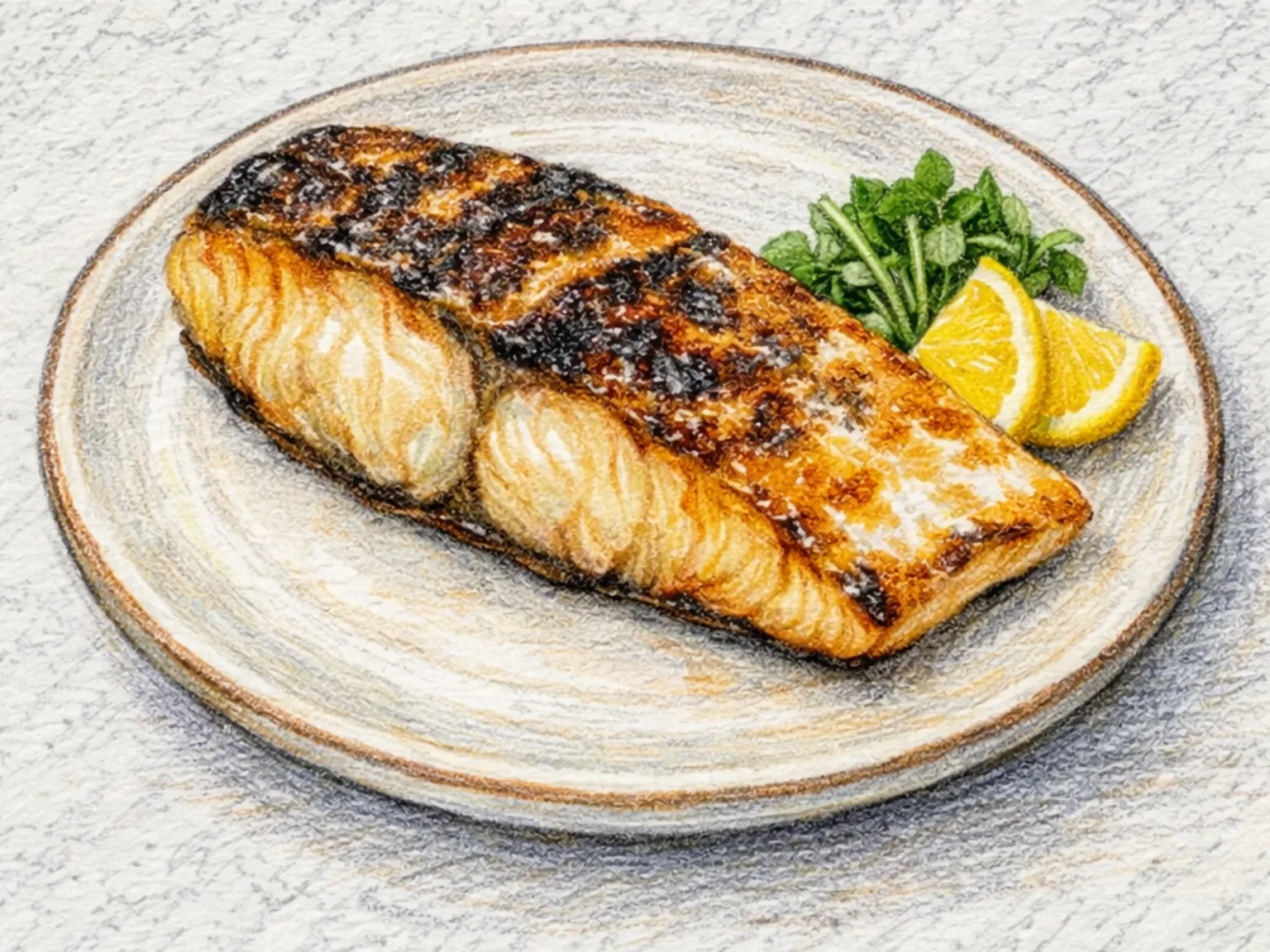
Samchi-gui is Korean grilled Spanish mackerel, a common home-style fish side dish where thick mackerel steaks are salted and peppered for ten minutes, dusted lightly with...

What makes this special

  • Spanish mackerel offers a mild flavor and soft texture, seasoned simply with salt and pepper.
  • Spanish mackerel has milder fishiness and softer flesh than its mackerel cousins
  • Thin flour coat seals in moisture while crisping the outer surface
Total time
22 min
Level
Easy
Servings
2 servings
Ingredients
6
Calories
360 kcal
Protein
32 g

Key ingredients

spanish mackerel filletssaltblack pepperflourcooking oil

Core cooking flow

  1. 1 Sprinkle 1 teaspoon salt and 0.3 teaspoon black pepper evenly over both sides of 400 g Spanish mackerel.
  2. 2 Dust the fish with 2 tablespoons flour, keeping the layer very thin.
  3. 3 Heat a pan over medium heat and spread 1 tablespoon cooking oil in a thin layer.

Samchi-gui is Korean grilled Spanish mackerel, a common home-style fish side dish where thick mackerel steaks are salted and peppered for ten minutes, dusted lightly with flour, and pan-fried in oil over medium heat for four minutes per side. Spanish mackerel belongs to the same family as regular mackerel but has milder odor and softer flesh, making simple salt seasoning sufficient. The thin flour coating serves two purposes: it seals in moisture during cooking and creates a crisp, golden exterior. Applying too much flour causes the fish to absorb excess oil and turn greasy, so shaking off the surplus through a sieve is an important step. A squeeze of lemon juice at the end binds with the fish oils and adds acidity that neutralizes any lingering fishy aftertaste, keeping the flavor clean when eaten over rice.

Prep 12min Cook 10min 2 servings
Recipes by ingredient → flour lemon juice

Instructions

Read the steps as a cooking flow: prep, heat, seasoning, doneness control, and finish.

6 steps
  1. 1
    Season

    Sprinkle 1 teaspoon salt and 0.3 teaspoon black pepper evenly over both sides of 400 g Spanish mackerel.

    Let it sit for 10 minutes, then lightly remove any moisture that collects on the surface.

  2. 2
    Step

    Dust the fish with 2 tablespoons flour, keeping the layer very thin.

    Shake off the excess through a sieve until the grain of the fish is still visible, so the coating does not absorb too much oil.

  3. 3
    Control

    Heat a pan over medium heat and spread 1 tablespoon cooking oil in a thin layer.

    It is ready when the oil moves loosely and a tiny pinch of flour sizzles gently on contact.

  4. 4
    Heat

    Place the mackerel in the pan and cook the first side for about 4 minutes without moving it.

    Wait until the edges turn golden, because shifting it too early can tear off the flour coating.

  5. 5
    Control

    Turn the fish over and cook the other side over medium heat for about 4 minutes.

    Turn off the heat when the surface is crisp and the flesh separates easily without looking dry.

  6. 6
    Finish

    Move the fish to a plate and drizzle 1 tablespoon lemon juice evenly over the top.

    Serve it right away with rice before the fish oils make the crust feel heavy.

After the steps

Pick a recipe that fits this dish.

Continue with shared ingredients, meal pairings, or a similar method.

Recipes That Go Well With This

More Grilled →

Based on shared ingredients and meal pairing

Korean Grilled Yellow Croaker
Shared ingredient: flour Grilled

Korean Grilled Yellow Croaker

Yellow croaker is scaled and gutted, then salted for ten minutes to draw surface moisture out of the flesh, which simultaneously reduces any fishy odor and firms the exterior slightly before cooking. A light dusting of flour creates a thin barrier between the skin and the hot oil, preventing the delicate skin from sticking to the pan and forming a fine crisp layer that holds the juices inside. The mild, clean white flesh of yellow croaker is one of its most valued qualities, and the flour coating allows that flavor to express itself without interruption from heavy seasoning. Knowing when to flip is the central technique: the fish should not be touched until the underside has turned fully golden-brown and released naturally from the pan surface, at which point two wide spatulas used simultaneously keep the body intact through the turn. Yellow croaker has been a fixture on ancestral memorial tables (jesa-sang) and ceremonial spreads throughout Korean history, and remains a steady everyday banchan alongside rice and soup.

Korean Stir-Fried Sweet Potato Stems
Serve together Side dishes

Korean Stir-Fried Sweet Potato Stems

Goguma julgi - sweet potato stems - are the above-ground vines of the sweet potato plant, a byproduct that Korean cooks transform into a summer namul rather than discarding. The most labor-intensive step is peeling each stem by hand, pinching the outer skin with a fingernail and pulling it away to reveal the tender core beneath. After blanching for two minutes and rinsing in cold water, the stems are stir-fried in perilla oil with garlic and seasoned with soup soy sauce. Perilla powder stirred in at the end thickens the remaining liquid into a nutty glaze. In season during summer, the stems are harvested from sweet potato fields before the tubers themselves are dug up.

Korean Spicy Stir-Fried Octopus Rice Bowl
Serve together Rice

Korean Spicy Stir-Fried Octopus Rice Bowl

Spicy stir-fried baby octopus in a gochujang sauce is served over a bowl of steamed rice. The octopus delivers a satisfying chew, coated alongside onion and cheongyang chili in a well-seasoned glaze that makes each bite of rice deeply flavorful. Stir-frying on high heat for just a few minutes keeps the octopus springy rather than tough, and scrubbing it with flour before rinsing ensures a clean taste free of any sliminess. Adding a layer of bean sprouts under the stir-fry introduces a contrasting crunch.

Korean Grilled Mackerel (Crispy Skin Salt-Grilled Blue Fish)
Similar recipe Grilled

Korean Grilled Mackerel (Crispy Skin Salt-Grilled Blue Fish)

Godeungeo-gui is Korea's classic grilled mackerel, prepared by salting the fish for ten minutes to draw out moisture and reduce fishiness, patting the surface completely dry, then pan-frying or grilling over direct heat. Cooking skin-side down first for five to six minutes renders the abundant subcutaneous fat and crisps the skin, while flipping and cooking the flesh side for four to five more minutes keeps the interior moist and flaky. Mackerel's high omega-3 fat content transforms under heat into a deeply savory, naturally rich flavor that requires no marinade beyond salt. A side of freshly grated daikon mixed with soy sauce provides a sharp, peppery counterpoint that clears the palate between bites. Autumn mackerel is considered peak eating, when fat content reaches its highest, and grilled mackerel has long been a centerpiece banchan on everyday Korean tables.

Serve with this

Korean Cherry Tomato Jangajji
Kimchi Easy

Korean Cherry Tomato Jangajji

Peeling cherry tomatoes by hand serves as the foundation for creating tomato jangajji, a Korean soy-preserved dish. Removing the skins allows the brine of soy sauce, rice vinegar, and sugar to permeate the flesh quickly and consistently. A critical step involves boiling the liquid and then letting it cool to room temperature before combining it with the fruit. This cooling period prevents the tomatoes from softening or becoming soggy, ensuring they remain firm throughout the pickling process. Thinly sliced onions included in the jar absorb the liquid, contributing a savory and tangy character. Fresh basil leaves introduce an herbal scent that distinguishes this preparation from standard soy pickles. One full day of refrigeration helps the acidity of the vinegar settle and highlights the natural sweetness of the tomatoes. This side dish functions effectively alongside rice or grilled meats, where its tartness acts as a cleanser for the palate after eating oily foods. The texture remains intact for about a week when kept cold. For a different profile, small amounts of cinnamon or star anise can be added to the brine to provide a warm spice fragrance. It also pairs well with cheese and crackers as an unconventional snack or finger food.

🍱 Lunchbox 🏠 Everyday
Prep 25min Cook 8min 4 servings
Ojingeo-muguk (Korean Squid Radish Soup)
Soups Easy

Ojingeo-muguk (Korean Squid Radish Soup)

Ojingeo-muguk is a clear Korean soup that pairs squid and radish in a gently sweet, clean-tasting broth built without any chili or strong seasoning. Radish is added to cold water from the start and simmered for at least eight minutes, during which the vegetable slowly releases a natural sweetness that forms the flavor foundation of the soup. Squid is cleaned, sliced into rings, and added only after the radish has softened, and the timing here is critical: five minutes in the hot broth is enough for the flesh to turn fully opaque and pleasantly firm, but even a minute or two beyond that causes the proteins to tighten and the rings to turn rubbery and tough. Soup soy sauce seasons the broth without darkening it, and minced garlic provides depth without heat. Sliced green onion stirred in at the end neutralizes any residual seafood aroma and leaves the broth tasting bright and clean. The simplicity of the combination is the point: the radish's sweetness and the squid's umami reinforce each other in a broth that is light in body but surprisingly satisfying.

🏠 Everyday 🍺 Bar Snacks
Prep 15min Cook 20min 4 servings

Similar recipes

Korean Gochujang-Grilled Butterfish
Grilled Easy

Korean Gochujang-Grilled Butterfish

Byeongeo gochujang-gui is a Korean spicy grilled butterfish where fillets are brushed with a paste of gochujang, soy sauce, plum syrup, minced garlic, and red pepper flakes, then pan-fried over medium heat. Butterfish has an exceptionally fine, soft flesh that absorbs the marinade readily, and the plum syrup's fruity acidity offsets the fermented heat of gochujang so the finish stays clean. The glaze must be applied in thin, repeated layers during cooking; a single thick coat causes the sugars to scorch before the fish cooks through. Each side needs roughly three to four minutes over medium heat, and a wide spatula prevents the delicate flesh from breaking when flipped. A light squeeze of lemon at the end adds brightness that prevents any lingering oiliness and sharpens the overall flavor.

🍺 Bar Snacks 🍱 Lunchbox
Prep 15min Cook 12min 2 servings
Korean Grilled Atka Mackerel
Grilled Easy

Korean Grilled Atka Mackerel

Atka mackerel is seasoned with salt and pepper, wiped down with diluted vinegar to settle the fishiness, then pan-grilled on both sides until golden. The fish is naturally high in fat, and as it cooks the oil renders from within and permeates the flesh, building a rich, savory depth without any sauce at all. Thicker sections benefit from a brief covered rest on medium heat, which carries heat evenly to the center before the surface can scorch. A wedge of lemon at the side cuts through the rendered fat with clean brightness, making this grilled fish equally good as a rice side or a drinking snack.

🍺 Bar Snacks 🏠 Everyday
Prep 10min Cook 12min 2 servings
Korean Spam Fried Rice (Crispy Spam Cubes with Egg and Rice)
Rice Easy

Korean Spam Fried Rice (Crispy Spam Cubes with Egg and Rice)

Spam bokkeumbap is a Korean fried rice built around crispy cubes of pan-seared Spam, whose salty, caramelized edges give the dish an addictive quality. The Spam is diced small and dry-fried without added oil - its own rendered fat crisps the outside while keeping the inside moist and savory. Onion and scallion go in next for aromatic depth, followed by cold leftover rice that is tossed over high heat until every grain picks up the salty pork flavor left in the pan. Beaten egg is scrambled into the rice, coating the grains in a thin, soft layer. A splash of soy sauce and a drizzle of sesame oil finish the dish with umami and nuttiness. The whole thing comes together in under ten minutes, making it one of the fastest comfort meals in the Korean home-cooking repertoire.

⚡ Quick 🏠 Everyday
Prep 5min Cook 10min 2 servings
Korean Braised Spanish Mackerel with Radish
Stir-fry Medium

Korean Braised Spanish Mackerel with Radish

Samchi mu-jorim layers sliced Korean radish on the bottom of a pot, topped with Spanish mackerel steaks and onion, then braised in a sauce of gochujang, soy sauce, gochugaru, and garlic. The radish prevents the fish from sticking, absorbs the braising liquid, and turns translucent-soft as it cooks. Rather than flipping the fish, the sauce is spooned over the top repeatedly so the flesh stays intact. After about fifteen minutes of simmering on medium heat, the liquid reduces to a concentrated, mildly spicy broth with the radish's subtle sweetness woven through it.

🏠 Everyday 🍱 Lunchbox
Prep 20min Cook 25min 2 servings

Tips

Use a thin flour coat for a cleaner taste.

Nutrition (per serving)

Calories
360
kcal
Protein
32
g
Carbs
8
g
Fat
22
g