Korean Braised Spanish Mackerel with Radish
Quick answer
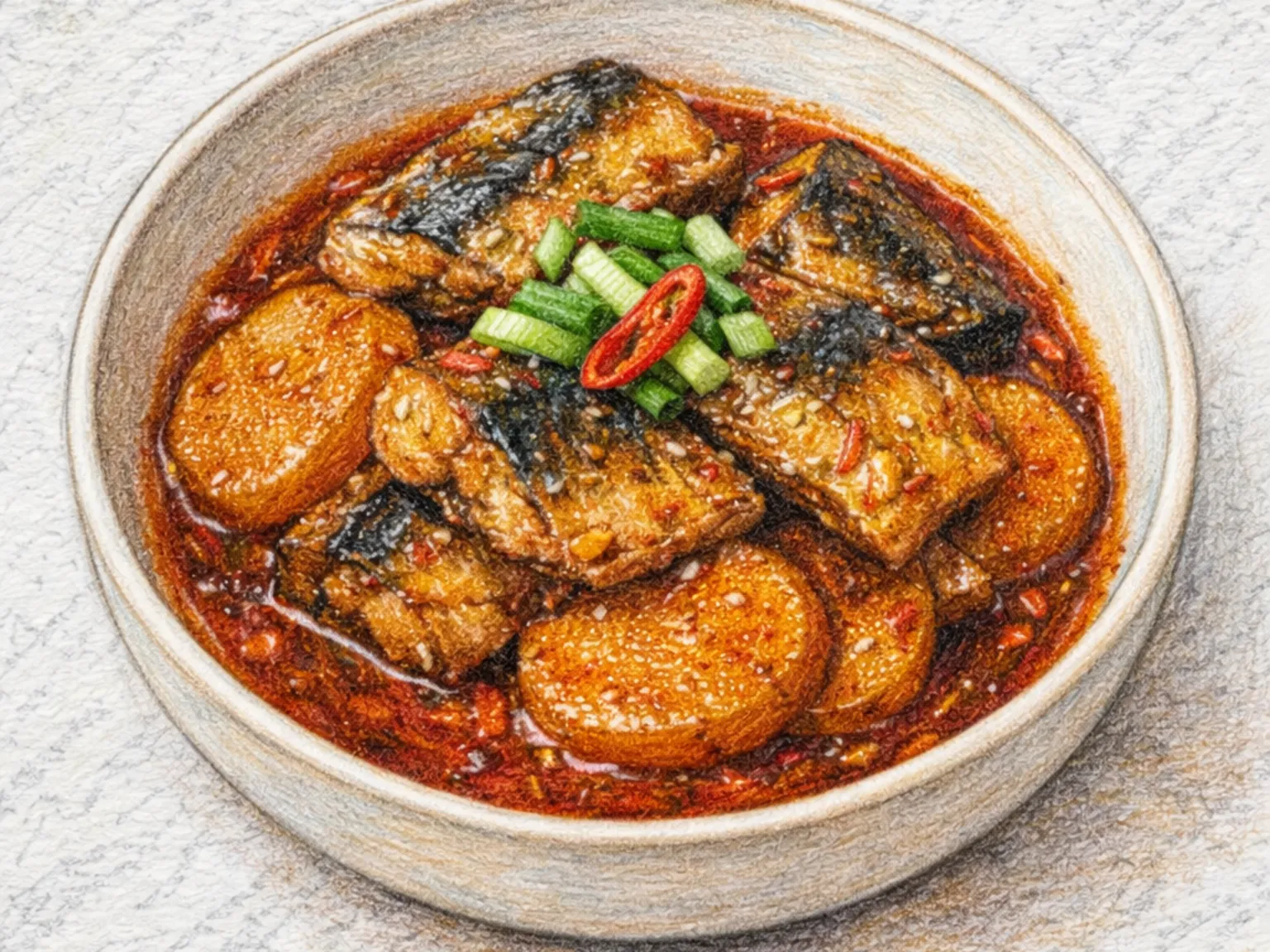
Samchi mu-jorim layers sliced Korean radish on the bottom of a pot, topped with Spanish mackerel steaks and onion, then braised in a sauce of gochujang, soy sauce, gochug...
What makes this special
- Samchi mu-jorim layers Spanish mackerel over sliced radish to absorb savory juices and prevent sticking.
- Radish lining the pot absorbs fishiness and prevents sticking
- Spoon broth over the fish instead of flipping to keep the flesh intact
Key ingredients
Core cooking flow
- 1 Slice 250 g Korean radish into 1 cm pieces and cover the bottom of the pot in an even layer.
- 2 Mix 300 ml water with 2 tablespoons soy sauce, 1 tablespoon gochujang, 1 tab...
- 3 Place 350 g Spanish mackerel over the radish without overlapping the pieces...
Samchi mu-jorim layers sliced Korean radish on the bottom of a pot, topped with Spanish mackerel steaks and onion, then braised in a sauce of gochujang, soy sauce, gochugaru, and garlic. The radish prevents the fish from sticking, absorbs the braising liquid, and turns translucent-soft as it cooks. Rather than flipping the fish, the sauce is spooned over the top repeatedly so the flesh stays intact. After about fifteen minutes of simmering on medium heat, the liquid reduces to a concentrated, mildly spicy broth with the radish's subtle sweetness woven through it.
Instructions
Read the steps as a cooking flow: prep, heat, seasoning, doneness control, and finish.
- 1Control
Slice 250 g Korean radish into 1 cm pieces and cover the bottom of the pot in an even layer.
Put any thicker pieces near the center so they cook through while protecting the fish from sticking.
- 2Season
Mix 300 ml water with 2 tablespoons soy sauce, 1 tablespoon gochujang, 1 tablespoon gochugaru, and 1 tablespoon minced garlic.
Stir until the gochujang loosens fully so the seasoning spreads evenly during braising.
- 3Season
Place 350 g Spanish mackerel over the radish without overlapping the pieces, then tuck 80 g onion into the gaps.
Pour the seasoning liquid slowly over the fish so the surface is coated before heating.
- 4Control
Bring the pot to a simmer over medium heat, then gently shake the pot once the edges start bubbling.
Do not flip the fish. Spoon the hot liquid over the top to keep the flesh intact.
- 5Control
Keep simmering over medium heat for about 15 minutes, basting every 3 to 4 minutes.
The radish should turn slightly translucent, and the sauce color should soak into both the radish and onion.
- 6Finish
Turn off the heat when the liquid is reduced but still spoonable and the mackerel flesh looks opaque and cooked through.
Let it rest briefly without stirring, then serve the fish with radish and sauce.
After the steps
Pick a recipe that fits this dish.
Continue with shared ingredients, meal pairings, or a similar method.
Recipes That Go Well With This
More Stir-fry →Based on shared ingredients and meal pairing
Korean Braised Mackerel with Radish
Layering thick slices of radish beneath fresh mackerel prevents the delicate fish from sticking to the pot while allowing the vegetables to soak up the seasoning like a sponge. This traditional Korean preparation uses a base of soy sauce, red chili powder, and red chili paste to create a thick braising liquid. As the pot simmers, the cook repeatedly spoons the sauce over the fish pieces to ensure the heat and spices reach every part of the mackerel. Ginger serves as a crucial ingredient to eliminate any strong fishy scents, so adding it early in the cooking process allows its aromatic properties to fully integrate into the broth. Over time, the radish softens into a translucent texture, absorbing the spicy and salty elements of the sauce until it becomes a substantial part of the meal. Adding onions and green onions during the final stages of cooking preserves their crispness and prevents their fresh aroma from fading. The process concludes when the liquid reduces into a glossy glaze that coats the mackerel. Serving this dish immediately over warm white rice allows the grains to catch the concentrated sauce. Beyond its taste, the mackerel provides omega-3 fatty acids while the radish contributes digestive enzymes and vitamin C to balance the natural oils of the fish.
Korean Spicy Braised Cod with Radish
Cod fillets are braised in a seasoning sauce of soy sauce, gochujang, and gochugaru until the liquid reduces and the flavors soak into the flesh. Cod is a lean fish with a clean, neutral character, and the bold seasoning penetrates the meat to add depth without overwhelming it. Daikon radish placed alongside the fish absorbs the braising liquid as it cooks, becoming as flavorful as the fish itself. Onion slowly softens and releases natural sweetness into the sauce during the simmer. The flesh flakes easily and separates cleanly from the bone, making this dish accessible for all ages. Keeping the lid on over medium heat during braising prevents the sauce from reducing too fast and ensures the fish cooks through evenly.
Ogeurakji (Dried Radish Strips)
Ogeurakji muchim is a traditional Gyeongsang-do style side dish made of dried radish strips. The cooking process starts by soaking the dried radish strips in cold water for exactly twenty minutes to retain a firm and chewy texture. After soaking, the strips are rinsed and squeezed firmly to remove excess moisture, preventing the seasoning from watering down. The dressing combines chili powder, anchovy fish sauce, soy sauce, and rice syrup. Using rice syrup instead of sugar gives the strips a heavy, glossy coating. The radish strips are massaged firmly by hand to help the spicy, salty, and sweet flavors penetrate. Minced garlic, chopped chives, and sesame seeds are folded in at the end. This side dish can be served immediately, but maturing it in the refrigerator for one day deepens the taste.
Korean Godeungeo Mu Jjigae (Mackerel Radish Stew)
Godeungeo-mu-jjigae is a spicy Korean stew that pairs mackerel with Korean radish in a gochugaru and gochujang broth. Mackerel is an oily, fatty fish, and as it simmers, those fats render into the surrounding liquid, giving the broth a richness and depth of savory flavor that leaner fish cannot produce. The radish is laid on the bottom of the pot before the mackerel is placed on top - a deliberate positioning that lets the radish absorb the direct heat of the base while soaking up the fish juices and rendered fat dripping down from above. Radish cooked this way turns tender and sweet, and each bite releases concentrated broth from within the vegetable. Using both gochugaru and gochujang in the seasoning paste is important: gochugaru provides clean, direct heat and red color while gochujang adds fermented depth and body to the broth that chili powder alone cannot achieve. Soup soy sauce for the final seasoning keeps the saltiness measured and blended rather than sharp. Sliced green onion and cheongyang chili pepper added toward the end contribute freshness and a sharper layer of heat. For those sensitive to fishiness, thin slices of ginger added to the initial seasoning paste are effective at suppressing the odor without altering the stew's overall flavor profile. The traditional way to eat this is to spoon the broth-soaked radish and a piece of mackerel over rice, letting the concentrated cooking liquid soak into each grain.
Serve with this
Korean Seasoned Tofu Pouch Sushi (Yubu Chobap)
Yubu chobap consists of seasoned tofu pouches filled with sushi rice. The preparation begins by mixing rice vinegar, sugar, and salt into hot rice, using a cutting motion to preserve the grains. Sesame oil and toasted sesame seeds are added for aroma, along with finely diced carrot and cucumber to bring color and a crisp texture. The tofu pouches are lightly pressed and filled to about 80 percent of their capacity, preventing the skin from tearing during shaping. With each bite, the pouch releases a sweet and savory sauce absorbed by the tofu, which goes well with the seasoned rice. Since they are convenient to carry and eat by hand, they are popular for lunchboxes, quick snacks, and picnics.
Korean Young Napa Soybean Paste Soup
Eolgari-doenjang-guk is a traditional Korean soup made with young napa cabbage and fermented soybean paste. The recipe uses rice-rinse water as the soup base instead of plain water, which helps reduce the sharpness of the soybean paste and adds a mild, rounded starchiness. Straining the doenjang through a sieve before boiling is recommended to ensure a smooth, lump-free broth. Once the soup comes to a boil, anchovy powder and minced garlic are stirred in to establish a rich umami depth. The young napa cabbage is added next and cooked briefly so the leaves retain their fresh flavor and crisp bite. In the final stage, sliced green onions and cheongyang chilies are added, simmering for just two minutes to infuse the broth with a clean, spicy finish. This comforting soup pairs naturally with a hot bowl of steamed rice.
Korean Kimchi Mandu Jjigae (Kimchi Dumpling Stew)
Kimchi mandu jjigae drops whole frozen kimchi dumplings straight into a simmering pot of aged kimchi, tofu, and anchovy stock. The dumpling wrappers absorb the broth as they cook, swelling plump and moist, while the kimchi filling inside echoes the stew's tangy base and doubles the fermented depth. Gochugaru and soup soy sauce add a clean chili heat, and firm tofu cubes absorb the spiced broth for a softer textural contrast. Because the dumplings themselves carry seasoning, it is better to start with less sauce and adjust after tasting the broth. This is a filling, no-fuss meal that needs nothing more than a bowl of steamed rice alongside it.
Similar recipes
Korean Braised Monkfish in Spicy Soy Sauce
Agwi-jorim is a braised monkfish dish built around a soy-based sauce rather than the chili paste used in the better-known agu-jjim. The technique is gentler and the flavor profile more balanced - salty, faintly sweet, with a moderate heat from gochugaru rather than the aggressive fire of gochujang. Thick rounds of Korean radish go into the pot first, serving two functions simultaneously: they act as a physical buffer that keeps the fish from sticking to the bottom, and they slowly absorb the braising liquid while releasing their own sweetness into it, becoming the most flavorful element in the finished dish. The braising sauce is straightforward - soy sauce, gochugaru, garlic, and water - but it concentrates significantly as it reduces, coating both the fish and radish in a deep amber lacquer. Monkfish is well suited to braising because of its high collagen content; the flesh stays tender and almost gelatinous even with extended cooking, never turning rubbery. The liver-colored skin softens into the sauce. To eat, the standard approach is to spoon the sauce-saturated radish and fish over a bowl of steamed rice, letting the braising liquid soak in. Less fiery than agu-jjim, agwi-jorim is the version more commonly made at home, where the controlled salt-sweet-spice balance appeals to a wider range of palates.
Korean Soy-Braised Rockfish
Ureok-jorim is a Korean soy-braised rockfish simmered with Korean radish, gochugaru, garlic, and rice wine. The radish goes in first and softens in the braising liquid before the cleaned whole fish is placed on top and basted with sauce over medium heat for ten minutes. Rice wine neutralizes any fishiness, while the radish absorbs the salty braising liquid and releases its own sweetness to balance the seasoning naturally. The rockfish flesh stays mild and flakes in soft layers, with gochugaru lending a gentle warmth to the overall dish.
Korean Braised Squid with Radish
Ojingeo mu jorim is a Korean braised dish where radish is cooked first in a soy-based liquid until fully softened, then squid is added and the whole pot is reduced in a spiced sauce of gochugaru and gochujang. Giving the radish time to cook alone is the structural key to this dish: as it slowly absorbs the liquid and breaks down, it releases its natural sweetness into the broth, which merges with the salt and gentle umami of soy sauce to build the braising liquid into something more complex than its ingredients suggest. When the spice paste goes in, the resulting flavor sits at the intersection of heat and coolness - the particular sensation of Korean chili that stings without overwhelming. The single most important technique in this recipe is the timing of the squid. Squid turns rubbery when overcooked, and the window between tender and tough is narrow, so it is added only in the last five minutes of cooking. That brief time is enough for the squid to absorb the surrounding flavors while holding the springy, snapping bite that makes the dish texturally rewarding. Green onion stirred in at the finish adds a sharp herbal lift. The reduced sauce left in the pan is deliberately left shallow rather than thick, concentrated with the flavors of both the squid and the radish, and it is best used by spooning it over rice and eating everything together.