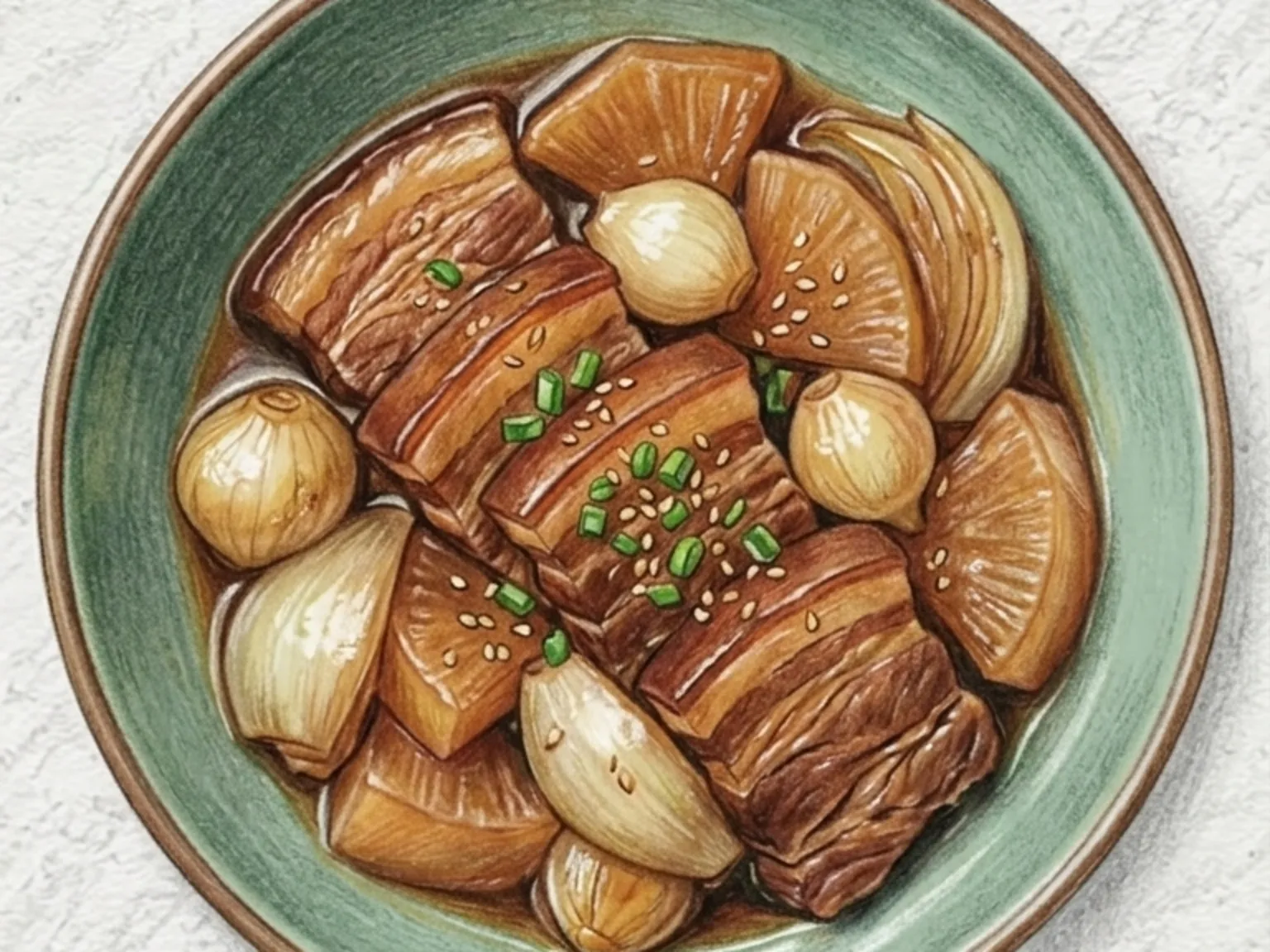
Korean Samgyeopsal Ganjang Jorim (Soy-Braised Pork Belly)
Samgyeopsal ganjang jorim is a Korean soy-braised pork belly dish where blanched pork belly is simmered with radish and onion in a soy sauce base for over forty-five minutes. Blanching first removes impurities and excess fat, leaving a clean-tasting braise. The long simmer allows soy sauce to penetrate the layered pork, building a deep flavor that is savory without being greasy. Radish chunks absorb the pork-enriched liquid and develop a richness of their own, while oligosaccharide syrup lends a natural sheen. Cooling and reheating concentrates the seasoning further, making this a strong choice for gatherings or holiday meals.
Adjust Servings
Instructions
- 1
Cut pork belly into 4 cm pieces and blanch for 3 minutes to remove impurities.
- 2
Cube the radish and cut the onion into large pieces.
- 3
Add pork belly, radish, and onion to a pot with soy sauce, wine, syrup, garlic, ginger, and water.
- 4
Bring to a boil on high heat, skim foam, then braise on medium-low for 35 minutes.
- 5
Uncover, add pepper, and reduce for 10 more minutes until glossy.
- 6
Turn off heat, rest for 5 minutes, and serve warm.
As an Amazon Associate, we may earn from qualifying purchases.
Tips
Nutrition (per serving)
More Recipes

Korean Dak Ganjang Jorim (Soy Braised Chicken)
Dak ganjang-jorim is chicken thigh braised with potato in a soy sauce glaze enriched with oligosaccharide syrup, garlic, and ginger juice. As the thighs simmer, the soy base works its way between the muscle fibers, leaving the meat deeply seasoned with a glossy brown finish. Potato chunks break down slightly at the edges and soak up the braising liquid, turning starchy and satisfying. A single cheongyang chili added to the pot gives a mild, lingering kick that keeps the sweet-salty profile from becoming one-note.

Korean Yeongeun Ganjang Jorim (Soy-Braised Lotus Root)
Yeongeun ganjang jorim is a Korean soy-braised lotus root side dish simmered in soy sauce, oligosaccharide syrup, vinegar, and cooking wine. The starchy surface of the lotus root develops a glossy glaze from the reduced sauce while the interior stays distinctly crunchy. Vinegar brightens the soy's salinity, and the syrup contributes a gentle sweetness and visible sheen. This banchan improves overnight in the refrigerator as the seasoning continues to penetrate, making it one of the most practical make-ahead side dishes in Korean home cooking.

Korean Soy-Braised Deodeok Root
Deodeok-jorim is mountain root braised in soy sauce, rice syrup, garlic, and sesame oil. The root's distinctive bitter-herbal aroma softens as the sweet-salty glaze coats it during simmering, while the interior stays dense and slightly chewy. A single green chili adds a quiet heat at the finish, and sesame seeds scattered on top bring a toasted nuttiness. It is a banchan that preserves the wild, earthy character of foraged deodeok and pairs naturally with other vegetable side dishes on a Korean table.

Korean Soy Braised Chicken Wings
Glossy, sticky Korean braised chicken wings in a sweet soy glaze - fall-off-the-bone tender and perfect as a make-ahead side dish. As the liquid reduces, the seasoning concentrates into a glossy coating on the surface of each piece. The skin becomes sticky and glazed from absorbing the sauce, while the meat inside turns soft enough to pull away from the bone easily. Ginger and green onion neutralize any gaminess, leaving a clean aftertaste. A large batch stores well in the refrigerator and reheats without losing flavor, making it a practical side dish to prepare in advance.

Korean Braised Beef and Radish
Sogogi mu jorim is a Korean braised beef and radish dish where brisket and thick-cut Korean radish are slowly simmered in soy sauce with garlic, ginger, and a touch of sugar. Boiling the beef first and skimming the foam produces a clean broth base for braising. The radish goes in later so it cooks until semi-translucent, absorbing the beef-enriched liquid and developing a natural sweetness that balances the soy. Green onion added at the end contributes a fresh note. Cutting the radish thick is important so it holds its shape through the braise, and resting the dish overnight before reheating deepens the flavor noticeably.

Korean Soy-Braised Rockfish
Ureok-jorim is a Korean soy-braised rockfish simmered with Korean radish, gochugaru, garlic, and rice wine. The radish goes in first and softens in the braising liquid before the cleaned whole fish is placed on top and basted with sauce over medium heat for ten minutes. Rice wine neutralizes any fishiness, while the radish absorbs the salty braising liquid and releases its own sweetness to balance the seasoning naturally. The rockfish flesh stays mild and flakes in soft layers, with gochugaru lending a gentle warmth to the overall dish.