Korean Sebalnamul Beoseot Bokkeum (Saltwort Mushroom Stir-fry)

Korean Sebalnamul Beoseot Bokkeum (Saltwort Mushroom Stir-fry)

Quick answer

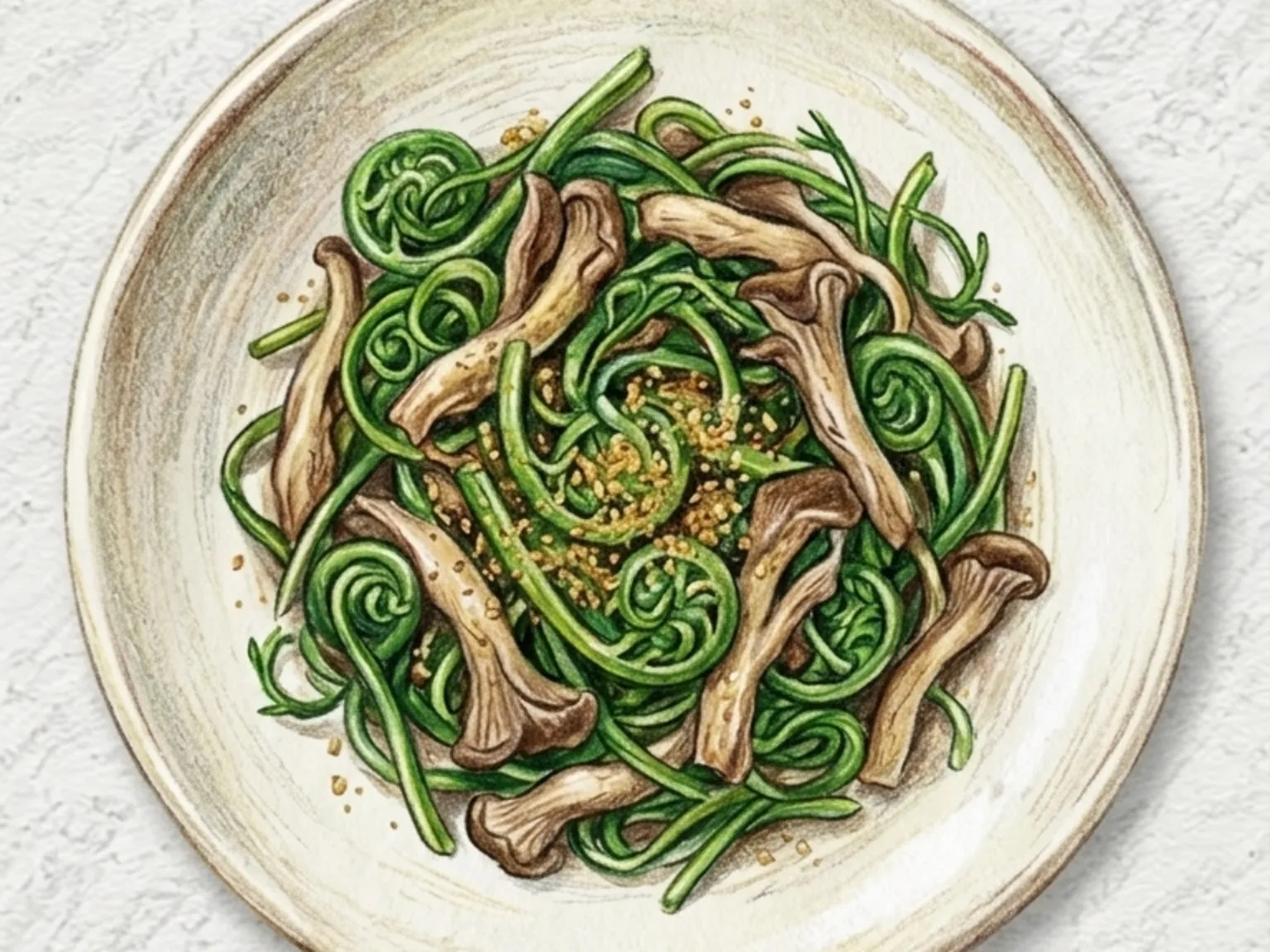
Sebalnamul beoseot-bokkeum is a Korean stir-fry of saltwort (glasswort) and oyster mushrooms finished with ground perilla seeds and perilla oil.

What makes this special

  • Sebalnamul beoseot-bokkeum uses the natural salinity of saltwort to season oyster mushrooms and perilla.
  • Sebalnamul's natural salinity means minimal added soy sauce
  • Oyster mushrooms dry-fried first on high heat for chewy texture
Total time
20 min
Level
Easy
Servings
4 servings
Ingredients
8
Calories
146 kcal
Protein
5 g

Key ingredients

saltwortoyster mushroomonionminced garlicdark soy sauce

Core cooking flow

  1. 1 Rinse 180 g saltwort in cold water, shaking off grit, then drain well and cut into 6 cm lengths.
  2. 2 Thinly slice 120 g onion and keep 1 teaspoon minced garlic beside the stove.
  3. 3 Add 1 tablespoon cooking oil to a pan and warm it over medium heat.

Sebalnamul beoseot-bokkeum is a Korean stir-fry of saltwort (glasswort) and oyster mushrooms finished with ground perilla seeds and perilla oil. The saltwort carries a natural brininess that reduces the need for added soy sauce, while the oyster mushrooms are cooked on high heat first to drive off moisture and firm their texture. The saltwort is stir-fried for just one minute to preserve its snappy crunch. Perilla powder and oil folded in at the end create a nutty, aromatic layer that bridges the briny greens and earthy mushrooms.

Prep 12min Cook 8min 4 servings

Instructions

Read the steps as a cooking flow: prep, heat, seasoning, doneness control, and finish.

6 steps
  1. 1
    Season

    Rinse 180 g saltwort in cold water, shaking off grit, then drain well and cut into 6 cm lengths.

    Tear 220 g oyster mushrooms along the grain, removing any tough base so the pieces cook evenly.

  2. 2
    Season

    Thinly slice 120 g onion and keep 1 teaspoon minced garlic beside the stove.

    Lay out the soy sauce, ground perilla seed, perilla oil, and vegetables before heating, because the stir-fry moves quickly once the pan is hot.

  3. 3
    Control

    Add 1 tablespoon cooking oil to a pan and warm it over medium heat.

    Stir-fry the onion and garlic for about 1 minute, just until the onion softens slightly and the garlic smells fragrant without browning.

  4. 4
    Control

    Increase to high heat and add the oyster mushrooms.

    Stir-fry for about 2 minutes, spreading them across the pan so their moisture evaporates and the edges look slightly dry rather than limp or watery.

  5. 5
    Control

    Pour 1 tablespoon dark soy sauce around the edge of the pan and toss quickly so it coats the mushrooms.

    Because saltwort is naturally salty, do not reduce the soy sauce aggressively. Taste before deciding if it needs more seasoning.

  6. 6
    Finish

    Add the saltwort and toss over high heat for only 1 minute, lifting and turning to keep it crisp.

    Turn off the heat, add 1.5 tablespoons ground perilla seed and 1 tablespoon perilla oil, mix for 20 seconds, and serve right away.

After the steps

Pick a recipe that fits this dish.

Continue with shared ingredients, meal pairings, or a similar method.

Recipes That Go Well With This

More Stir-fry →

Based on shared ingredients and meal pairing

Korean Beoseot Deulkkae Jeon (Mushroom Perilla Pancake)
Shared ingredient: oyster mushrooms Pancakes

Korean Beoseot Deulkkae Jeon (Mushroom Perilla Pancake)

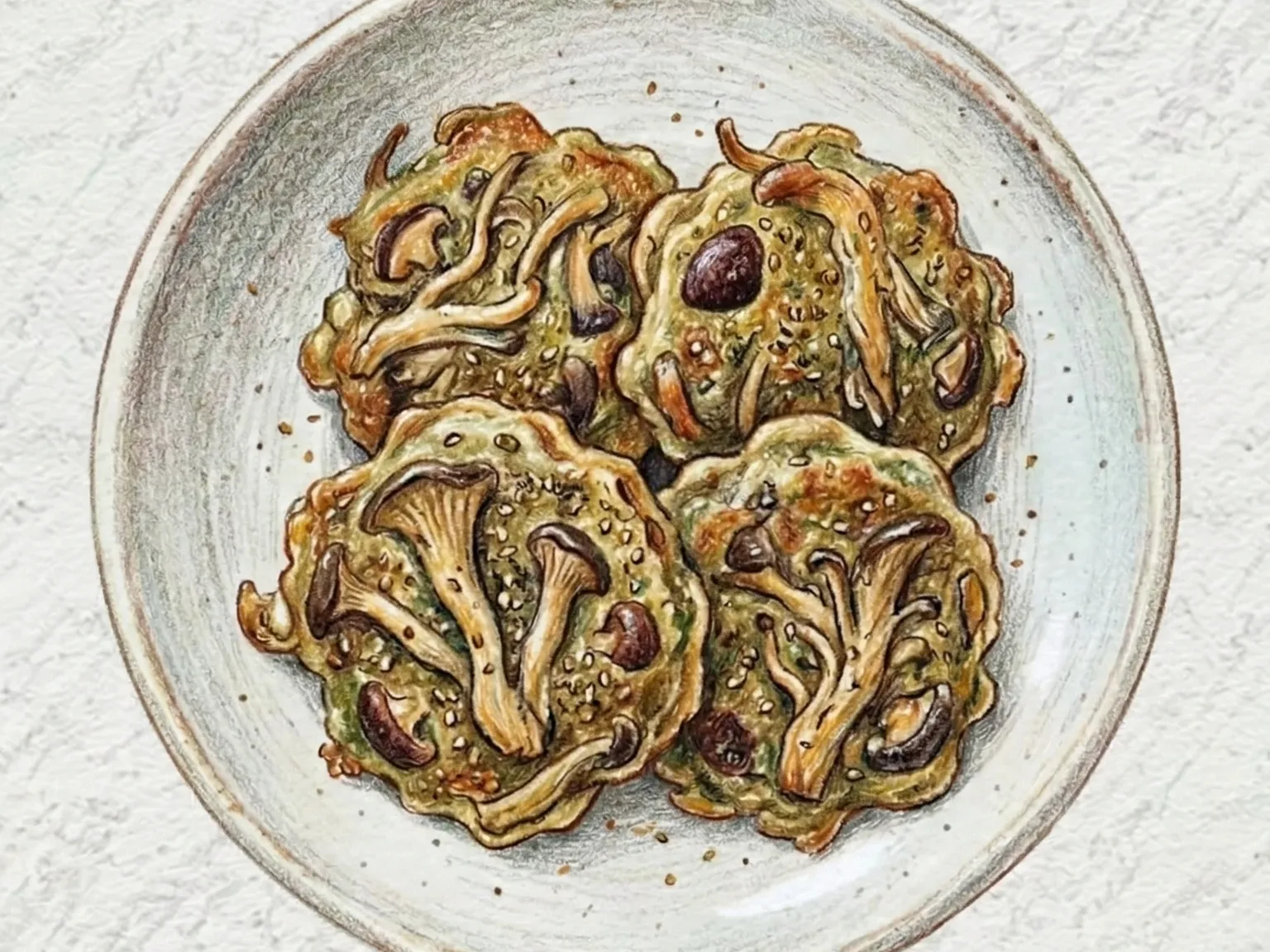
Mushroom and perilla seed jeon brings together oyster mushrooms and shiitake, sliced thin and folded into a batter built on perilla seed powder and a splash of soy sauce. Perilla seeds carry a heavier, slightly bitter nuttiness compared to sesame, and that quality anchors the earthy depth of the mushrooms rather than competing with it. Seasoning the batter directly with soy sauce means the pancake holds its own without a dipping sauce, though one on the side does not go amiss. Frying with enough oil gives the exterior a thin, crisp shell while the mushroom filling stays moist inside. Oyster mushrooms torn along their grain develop a pleasantly chewy bite as they cook; shiitake sliced fine distribute evenly so the whole pancake cooks at the same rate. It works as a makgeolli pairing or a straightforward side, and holds up well at room temperature - the perilla aroma actually deepens as it cools.

Korean Deulkkae Aehobak Beoseot Bokkeum (Perilla Zucchini Mushroom Stir-fry)
Shared ingredient: oyster mushrooms Stir-fry

Korean Deulkkae Aehobak Beoseot Bokkeum (Perilla Zucchini Mushroom Stir-fry)

Deulkkae-aehobak-beoseot-bokkeum is a Korean stir-fry of zucchini and oyster mushrooms finished with ground perilla seeds. The perilla powder is added toward the end of cooking, where it combines with the moisture released from the vegetables to form a thick, nutty coating that clings to each piece. Oyster mushroom brings natural umami and a slightly fibrous chew, while the zucchini contributes its gentle sweetness and keeps the dish from drying out. No strong spices or fermented pastes are needed - the toasted, herbal fragrance of the perilla seeds carries the flavor from start to finish. The result is a moist, mild side dish that demonstrates how a single aromatic ingredient can add significant depth to a simple vegetable stir-fry.

Korean Beef Fried Rice (Soy-Marinated Ground Beef Stir-fried Rice)
Serve together Rice

Korean Beef Fried Rice (Soy-Marinated Ground Beef Stir-fried Rice)

Sogogi bokkeumbap stir-fries soy-marinated ground beef with diced vegetables and day-old rice over high heat for a deeply savory fried rice. The beef goes in first, rendering its fat and leaving behind a flavorful fond that coats the pan. Onion, carrot, and zucchini follow, cooking just until their edges soften and their natural sugars begin to caramelize. Cold rice is added and tossed vigorously to break up clumps, picking up the soy seasoning and meat juices as it fries. A final drizzle of sesame oil right before plating adds a fragrant, nutty finish. The beef infuses the rice with a meaty depth while the vegetables keep the dish from feeling heavy, making it a quick, satisfying meal from everyday pantry ingredients.

Korean Mushroom Perilla Seed Stir-Fry
Similar recipe Stir-fry

Korean Mushroom Perilla Seed Stir-Fry

Three varieties of mushroom, shiitake, enoki, and oyster, are stir-fried over high heat until their moisture fully evaporates, then dusted with ground perilla seed that releases a surge of nutty fragrance the moment it contacts the hot surface. Each mushroom contributes a distinct texture to a single dish: shiitake offers firm, satisfying chew when torn along the grain; enoki provides delicate, threadlike strands; and oyster adds thick, meaty bites that hold their shape through the heat. The perilla seed powder must be added only in the final minute of cooking because its aromatic oils are volatile: longer exposure turns them acrid rather than nutty, and the window between perfectly toasted and burned is narrow. Soy sauce and a pinch of salt adjust the seasoning without masking the mushrooms, and a finishing drizzle of sesame oil rounds everything off with a gentle, fat-carried richness. At around 90 calories per serving, this side dish works as an everyday component of any meal without adding weight, and the unsaturated fatty acids in perilla seeds add nutritional substance well beyond what a side this light might suggest. Tearing shiitake along its natural grain accelerates moisture release during cooking, and pulling enoki apart by hand before adding it to the pan prevents the strands from clumping.

Serve with this

Korean Braised Perilla Leaves
Side dishes Easy

Korean Braised Perilla Leaves

Kkaennip jorim layers fresh perilla leaves with a soy-based sauce and simmers them gently - a banchan built for make-ahead storage. Kkaennip (perilla) is a distinctly Korean herb with an aromatic intensity comparable to basil or mint, yet it is rarely found outside Korean cuisine. The technique stacks five to six leaves at a time, spooning sauce between each layer so every leaf seasons evenly. Simmering on medium-low heat for eight to ten minutes wilts the leaves into soft, pliable sheets that wrap neatly around a mound of rice. The sauce combines soy sauce, gochugaru, sugar, garlic, and sesame oil - the last adding a nutty richness that complements the herb's own perfume. Refrigerated in an airtight container, kkaennip jorim lasts up to two weeks, making it one of the most economical banchan to batch-prepare.

🏠 Everyday 🍱 Lunchbox
Prep 10min Cook 10min 4 servings
Korean Kimchi Mandu Jjigae (Kimchi Dumpling Stew)
Stews Easy

Korean Kimchi Mandu Jjigae (Kimchi Dumpling Stew)

Kimchi mandu jjigae drops whole frozen kimchi dumplings straight into a simmering pot of aged kimchi, tofu, and anchovy stock. The dumpling wrappers absorb the broth as they cook, swelling plump and moist, while the kimchi filling inside echoes the stew's tangy base and doubles the fermented depth. Gochugaru and soup soy sauce add a clean chili heat, and firm tofu cubes absorb the spiced broth for a softer textural contrast. Because the dumplings themselves carry seasoning, it is better to start with less sauce and adjust after tasting the broth. This is a filling, no-fuss meal that needs nothing more than a bowl of steamed rice alongside it.

🏠 Everyday ⚡ Quick
Prep 8min Cook 15min 2 servings
Kongnamul-guk (Bean Sprout Anchovy Soup)
Soups Easy

Kongnamul-guk (Bean Sprout Anchovy Soup)

Kongnamul-guk is a clear Korean soup built on bean sprouts, water, soup soy sauce, and garlic, and its central technique is boiling the sprouts with the lid firmly closed for seven minutes. The reason behind the closed lid is a long-standing Korean kitchen belief: the compounds responsible for the raw, beany smell in soybean sprouts are volatile, and if the lid is left open, they do not escape with the steam but instead condense back into the pot. Whether the chemistry fully supports this, keeping the lid closed has been the standard method for generations and consistently produces a clean-tasting broth. Green onion goes in at the very end to keep its bright, mild bite without overcooking. Trimming the fine root tails from each sprout improves the texture and presentation, though it does not change the flavor and is often skipped on weekdays. Adding chili flakes and a cracked egg transforms the soup into a spicy, restorative hangover version, and a handful of clams deepens the broth with extra umami. From start to finish the soup takes about fifteen minutes, which makes it one of the fastest soups in the Korean repertoire, and the directness of its flavor -- clean, cool, and vegetal -- is exactly what makes it worth returning to.

🏠 Everyday ⚡ Quick
Prep 5min Cook 15min 2 servings

Similar recipes

Korean Seaweed, Perilla & Shrimp Stir-fry
Stir-fry Easy

Korean Seaweed, Perilla & Shrimp Stir-fry

Tot-deulkkae-saeu-bokkeum stir-fries briefly blanched tot seaweed and shrimp in perilla oil, finished with ground perilla seeds. The tot is blanched for only 30 seconds to preserve its distinctive pop-and-chew texture, and the shrimp are pre-seasoned with cooking wine to remove any fishiness before being cooked to a springy doneness. Perilla oil and ground perilla seeds merge with the oceanic salinity of the seaweed and shrimp, building a nutty-briny flavor. Seasoned lightly with soup soy sauce and green onion, it is a low-carbohydrate side dish anchored in seafood and sea vegetables.

🥗 Light & Healthy 🏠 Everyday
Prep 15min Cook 10min 2 servings
Korean Gourd Namul Stir-fry
Stir-fry Easy

Korean Gourd Namul Stir-fry

Baknamul deulkkae bokkeum is a Korean stir-fried side dish made from rehydrated dried bottle gourd strips coated in ground perilla seed. The dried gourd strips - thin slices of the gourd's inner flesh dried until pale and brittle - need at least thirty minutes of soaking to recover their characteristic chewy bite. Minced garlic is sauteed in perilla oil first to build a fragrant base, then the soaked strips go in along with soup soy sauce and small additions of water to braise them through. Ground perilla seed is added generously at the end, stirred in while the heat reduces the remaining liquid. As the moisture disappears, the perilla powder binds into a clinging, sauce-like coating on each strip rather than sitting as dry powder. This is the key technique: the coating should be smooth and adherent, not dusty. The whole dish is done in about ten minutes and offers a mild, chewy counterpoint to stronger-flavored banchan on the table.

🏠 Everyday 🍱 Lunchbox
Prep 12min Cook 10min 2 servings
Korean King Oyster Mushroom Stir-fry with Perilla
Side dishes Easy

Korean King Oyster Mushroom Stir-fry with Perilla

This stir-fry combines 250 grams of julienned king oyster mushrooms with onion, cooked rapidly over high heat in perilla oil and cooking oil to prevent the mushrooms from releasing too much water. Garlic is sauteed for 20 seconds first to infuse the oil, followed by onion for one minute to draw out its natural sweetness. The mushrooms then go in for a quick two-minute toss before soup soy sauce and a splash of water are added to create a light braising liquid. One and a half tablespoons of ground perilla seeds are stirred in during the final minute, thickening the sauce into a creamy coating without becoming pasty. Scallion is added off heat for a finishing touch of color and freshness.

🏠 Everyday 🍱 Lunchbox
Prep 10min Cook 8min 2 servings

Tips

Saltwort is naturally salty, so add soy sauce gradually.
Cook mushrooms on higher heat first for better texture.

Nutrition (per serving)

Calories
146
kcal
Protein
5
g
Carbs
11
g
Fat
10
g