Charim

2686 Korean & World Recipes

2686+ Korean recipes, clean and organized. Ingredients to instructions, all at a glance.

Korean Seasoned Glasswort Salad

Korean Seasoned Glasswort Salad

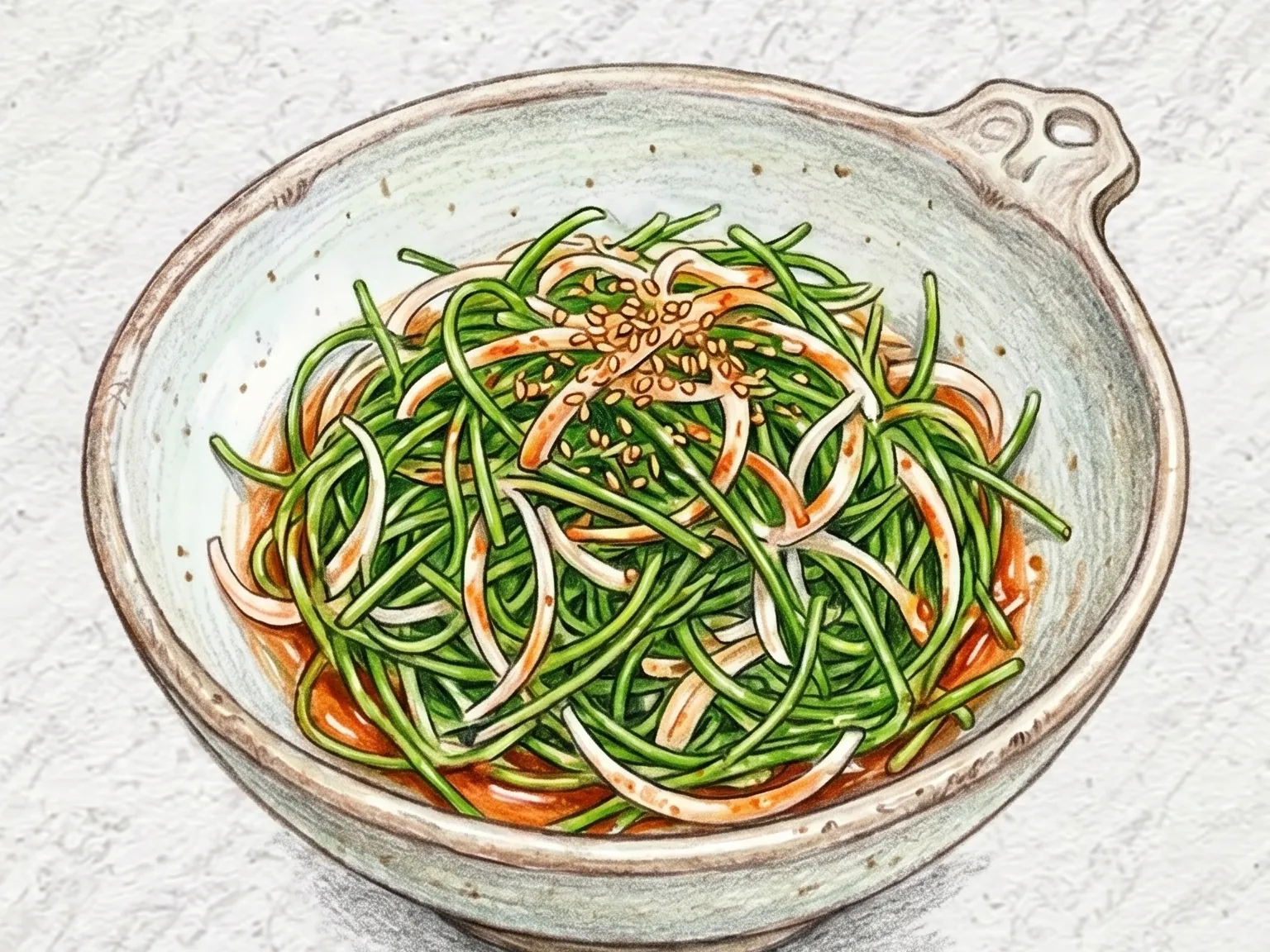
Sebalnamul-muchim features 220 grams of glasswort, a succulent coastal plant that carries a natural salinity from the tidal flats where it grows. A 10-second blanch in boiling water is enough to barely soften the thin stems while preserving their distinctive pop when bitten. The dressing of gochugaru, vinegar, plum extract, and sesame oil coats the tender shoots without masking their inherent briny flavor. Thinly sliced onion adds a sweet crunch, and the plum extract mellows the vinegar's sharpness into a rounded tartness. Because no additional salt is needed, the final seasoning relies entirely on the balance between acid, sweetness, and the glasswort's own minerality.

Prep 8min Cook 1min 4 servings

Adjust Servings

2servings
servings

Instructions

  1. 1

    Rinse glasswort lightly under running water.

  2. 2

    Blanch for only 10 seconds and remove immediately.

  3. 3

    Cool in cold water and drain well.

  4. 4

    Thinly slice onion.

  5. 5

    Mix gochugaru, vinegar, plum extract, and sesame oil.

  6. 6

    Toss glasswort and onion quickly, then top with sesame seeds.

🛒Shop Ingredients on Amazon

As an Amazon Associate, we may earn from qualifying purchases.

Tips

Glasswort is naturally salty, so extra salt is usually unnecessary.
Keep tossing brief to preserve crunch.

Nutrition (per serving)

Calories
64
kcal
Protein
2
g
Carbs
7
g
Fat
3
g

More Recipes

Korean Seasoned Stonecrop Salad
Side dishesEasy

Korean Seasoned Stonecrop Salad

Dollnamul - stonecrop, Sedum sarmentosum - is a succulent herb found along Korean stream banks in spring. Its plump, jade-green leaves burst with a mildly sour, grassy juice when bitten. Unlike most namul, dollnamul is never cooked - even seconds of heat destroy its crunch. Dressed immediately with gochugaru, vinegar, fish sauce, garlic, and sugar, it stays crisp and bright. The fish sauce provides a fermented undercurrent beneath the vinegar's sharpness. Must be eaten minutes after assembly.

🏠 Everyday🍱 Lunchbox
Prep 12min4 servings
Korean Chive Salad with Doenjang Dressing
Side dishesEasy

Korean Chive Salad with Doenjang Dressing

Garlic chives - buchu - have a sharper, more pungent bite than Western chives, and Koreans dress them raw to preserve that kick. Chives are cut, rinsed in cold water to crisp them, then tossed for only 20 seconds with a doenjang dressing spiked with vinegar and gochugaru. Over-mixing draws out moisture and turns the dish limp. The fermented paste clings to the flat blades, delivering a salty-funky punch with each bite. Best assembled minutes before serving.

🏠 Everyday🍱 Lunchbox
Prep 8minCook 2min2 servings
Seasoned Korean Wild Lettuce
Side dishesEasy

Seasoned Korean Wild Lettuce

A bold, bitter-meets-spicy Korean side dish that wakes up the entire meal - foraged wild lettuce tossed in a fiery gochujang-vinegar dressing. Godeulppaegi (Ixeris dentata) is blanched briefly, then soaked in cold water for at least thirty minutes to tame its sharp bitterness. Dressed in gochujang, gochugaru, vinegar, sugar, garlic, and sesame oil, the remaining edge transforms into a complex, layered flavor. In season from spring through early summer, this is a prized banchan at rural markets across southern Korea.

🏠 Everyday🍱 Lunchbox
Prep 20minCook 7min4 servings
Korean Fresh Eggplant Kimchi
KimchiEasy

Korean Fresh Eggplant Kimchi

Gaji kimchi is a fresh, no-fermentation eggplant kimchi made by steaming eggplant until soft, tearing it along the grain, and tossing it with gochugaru, fish sauce, garlic, and sesame oil. Tearing rather than cutting exposes the fibrous interior so the seasoning reaches deep into every strand. Scallions add a fresh, sharp lift, and sesame seeds provide a nutty finish. Since no fermentation is required, this kimchi can be eaten immediately after preparation, making it especially useful in summer when a quick banchan is needed. Mixed into a bowl of cold leftover rice, the seasoning soaks into the grains for a satisfying one-bowl meal.

🍱 Lunchbox
Prep 20minCook 10min2 servings
Korean Spicy Ponytail Radish Salad
Side dishesMedium

Korean Spicy Ponytail Radish Salad

Chonggak - small ponytail radishes with green tops attached - are a fixture of Korean autumn markets. Unlike long-fermented chonggak kimchi, this fresh muchim salts sliced radishes for just 15 minutes to draw out water and concentrate crunch. Gochugaru, fish sauce, garlic, sugar, and vinegar coat the slices in a spicy-sour glaze. The radish bites back with a sharp, peppery heat typical of young Korean radishes. Best eaten the same day, before salt continues softening the texture.

🏠 Everyday🍱 Lunchbox
Prep 20min4 servings
Korean Lettuce Kimchi (Quick Leaf Gochugaru Dressed)
KimchiEasy

Korean Lettuce Kimchi (Quick Leaf Gochugaru Dressed)

Sangchu kimchi is a quick Korean lettuce kimchi made by tearing leaf lettuce into bite-sized pieces, lightly salting for ten minutes to wilt the leaves just enough, then tossing them in a dressing of gochugaru, sand lance fish sauce, minced garlic, vinegar, and sugar. The lettuce absorbs the seasoning and softens, but eating it before it fully collapses preserves a slight crispness at the leaf edges. Fish sauce's fermented depth adds weight to the lettuce's otherwise mild green flavor, and vinegar leaves a clean, tangy finish. Sesame seeds contribute a toasted accent with each chew. Thorough drying after salting is essential - residual water dilutes the seasoning rapidly, turning the kimchi bland within hours.

🍱 Lunchbox Quick
Prep 20min2 servings
More Side dishes →