Korean Selleri Sogogi Bokkeum (Celery Beef Stir-fry)
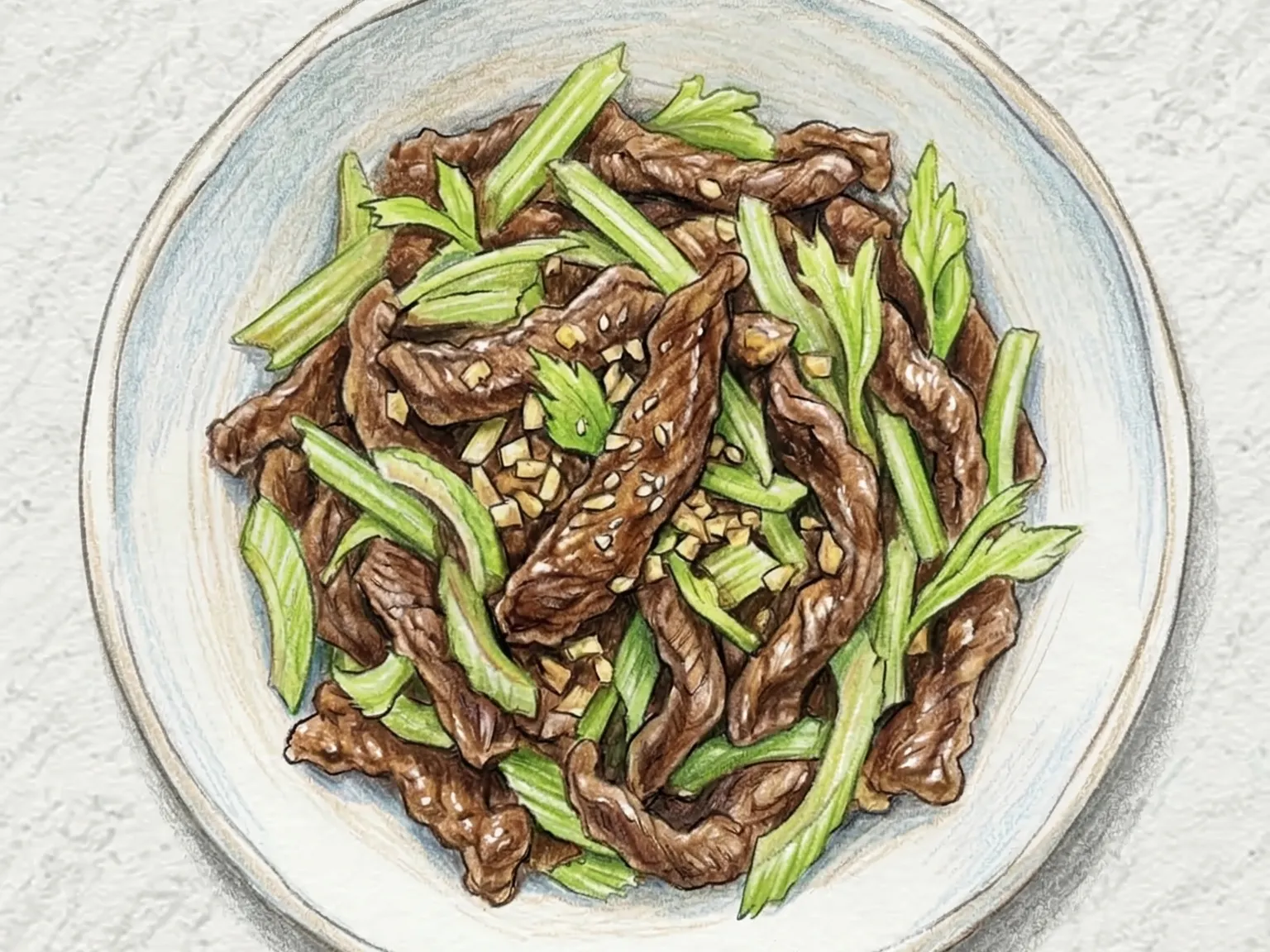
Selleri sogogi-bokkeum stir-fries soy-marinated lean beef round with celery, onion, and bell pepper over high heat. The beef is seared first for about two and a half minutes then set aside, and the vegetables are cooked separately in the same pan to keep them crisp before everything is combined. Oyster sauce and soy sauce give the beef a deep umami character, while celery's herbal freshness and firm crunch lighten the overall dish. Adding celery leaves at the very end intensifies the aromatic, almost grassy fragrance.
Adjust Servings
Instructions
- 1
Slice beef thinly and marinate with 1 tbsp soy sauce, garlic, and pepper for 10 minutes.
- 2
Slice celery diagonally and thinly slice onion and bell pepper.
- 3
Heat oil and sear beef on high heat for 2.5 minutes, then remove.
- 4
In the same pan, stir-fry onion and celery for 1.5 minutes.
- 5
Add bell pepper, remaining soy sauce, and oyster sauce; toss for 40 seconds.
- 6
Return beef and stir-fry for 1 minute until evenly coated.
As an Amazon Associate, we may earn from qualifying purchases.
Tips
Nutrition (per serving)
More Recipes

Korean Aehobak Chamchi Bokkeum (Zucchini Tuna Stir-fry)
Aehobak chamchi bokkeum is one of the most practical banchan in the Korean home-cooking repertoire - it uses canned tuna, a pantry staple that appears in nearly every Korean household. The zucchini provides mild sweetness and body, while the drained tuna brings concentrated protein and a clean saltiness that needs little additional seasoning beyond soup soy sauce. Garlic sauteed first builds an aromatic base, and cheongyang chili threads through the stir-fry with a lingering, slow-building heat. The technique is deliberately quick - zucchini must stay intact with a visible half-moon shape, not cooked into mush. Finished with sesame oil, this banchan keeps well in lunchboxes because neither ingredient deteriorates at room temperature.

Korean Beef & Lettuce Cabbage Stir-fry
Ssamchu soegogi-bokkeum stir-fries soy-and-pear-juice-marinated beef over high heat, then folds in ssamchu (Korean leafy cabbage) just long enough to barely wilt. Pear juice tenderizes the beef and lends a subtle sweetness, while soy sauce, garlic, and sesame oil form a glossy glaze as they hit the hot pan. The ssamchu stems go in a minute before the leaves and Cheongyang chili, preserving a mix of crunchy and soft textures in the finished dish. A final drizzle of sesame oil off the heat locks in the fragrance, making this a vibrant, lightly spicy beef-and-greens stir-fry.

Korean Tomato Dalgyal Bokkeum (Tomato Egg Stir-fry)
Tomato-dalgyal-bokkeum uses a two-stage cooking method: eggs are scrambled to about 70% doneness and set aside, then returned to the pan with seared tomatoes for a final quick toss. The tomatoes release a small amount of juice when cooked briefly with oyster sauce and sugar, and the partially set eggs absorb this liquid to stay soft and moist. Bright tomato acidity, mild egg richness, and oyster sauce umami layer together without any single flavor dominating. Sharing roots with Chinese tomato egg stir-fry (xihongshi chaodan), it crosses easily into Korean home cooking.

Korean Bellflower Root & Beef Stir-fry
Deodeok-sogogi-gochujang-bokkeum is a Korean stir-fry of pounded bellflower root and thinly sliced beef in a bold gochujang sauce. Pounding the root splits its fibers, allowing the spicy-sweet paste to penetrate deeply and giving each piece a crisp yet chewy texture. The beef adds a layer of meaty richness that melds with the fermented chili paste. It is a robust, highly flavorful dish that pairs exceptionally well with plain steamed rice.

Korean Yangbaechu Kkae Bokkeum (Sesame Cabbage Stir-fry)
Shredded cabbage, onion, and carrot are stir-fried over high heat with soup soy sauce and finished with sesame oil and a generous handful of toasted sesame seeds. Cabbage benefits from fast, hot cooking: the edges char lightly and caramelize while the interior retains its crisp bite, and the heat unlocks a gentle natural sweetness hidden in the raw leaves. Soup soy sauce seasons the vegetables with depth while keeping the finished dish pale and clean-looking, and minced garlic stirred in early fills the pan with fragrance. Carrot goes into the pan first to draw out its sugar, and as the onion softens, its moisture deglazes the surface and adds another layer of mellow sweetness. Sesame oil drizzled off-heat coats the vegetables in a nutty sheen, and the sesame seeds scattered on top provide a crunchy, aromatic punctuation with every bite. The dish is lean and uncomplicated, relying on the quality of fresh vegetables and precise timing rather than heavy seasoning, making it a banchan suited to daily meals.

Water Parsley & Beef Salad
Beef is marinated in soy sauce and pear juice, then seared quickly over high heat to develop a caramelized crust while keeping the interior moist and tender. The cooked bulgogi is placed over a bed of fragrant minari and crisp lettuce, creating a warm-cold contrast in every bite. Thinly sliced red onion, soaked briefly to temper its bite, melds smoothly with the beef's sweet-savory marinade. A light toss of sesame oil coats the greens with nutty aroma, and toasted sesame seeds finish the plate. Minari wilts rapidly once dressed, so it must be combined only moments before serving to preserve its grassy scent and crunchy stems.