Korean Blood Curd Soup (Spicy Ox Blood and Beansprout Stew)
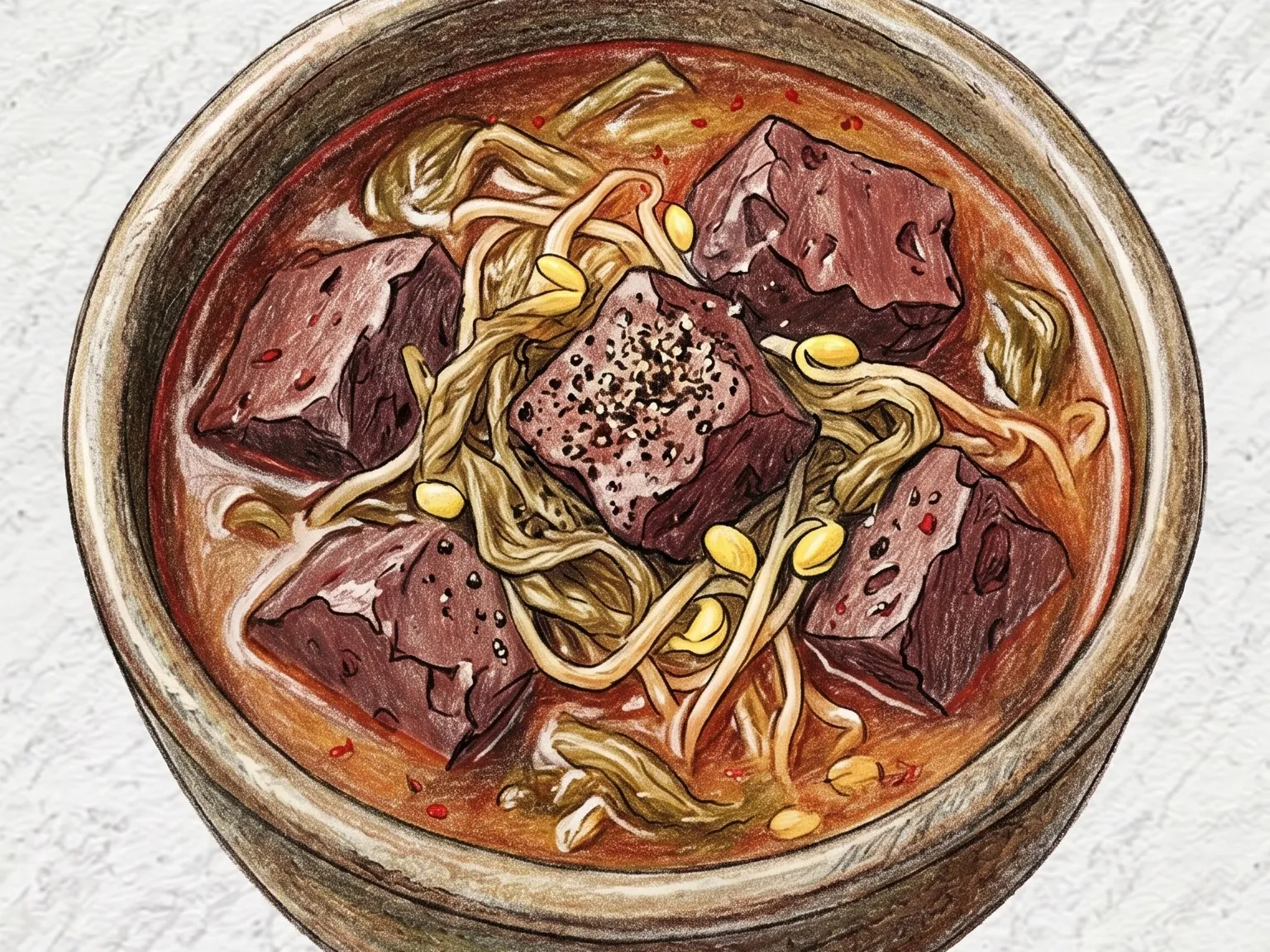
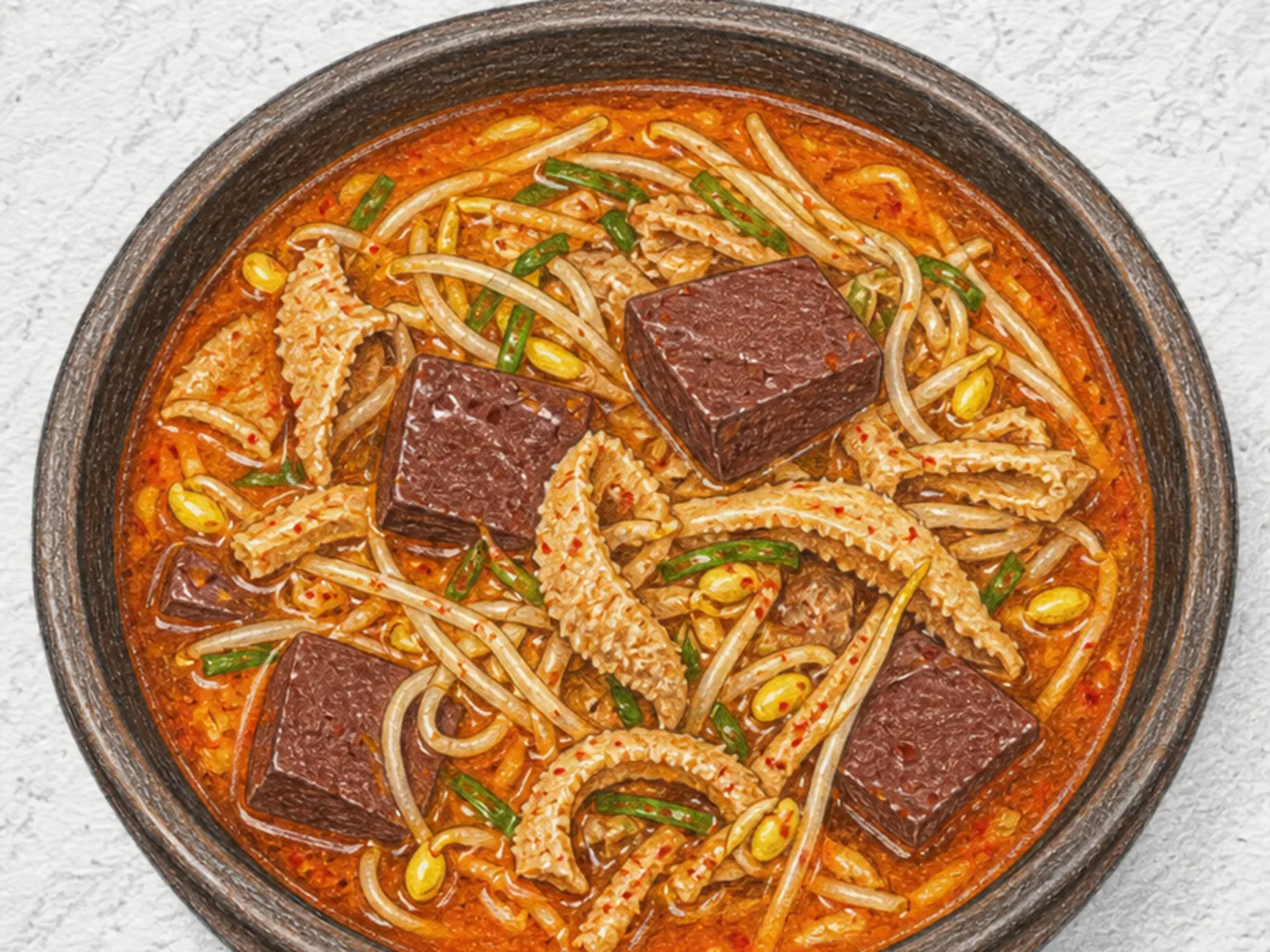
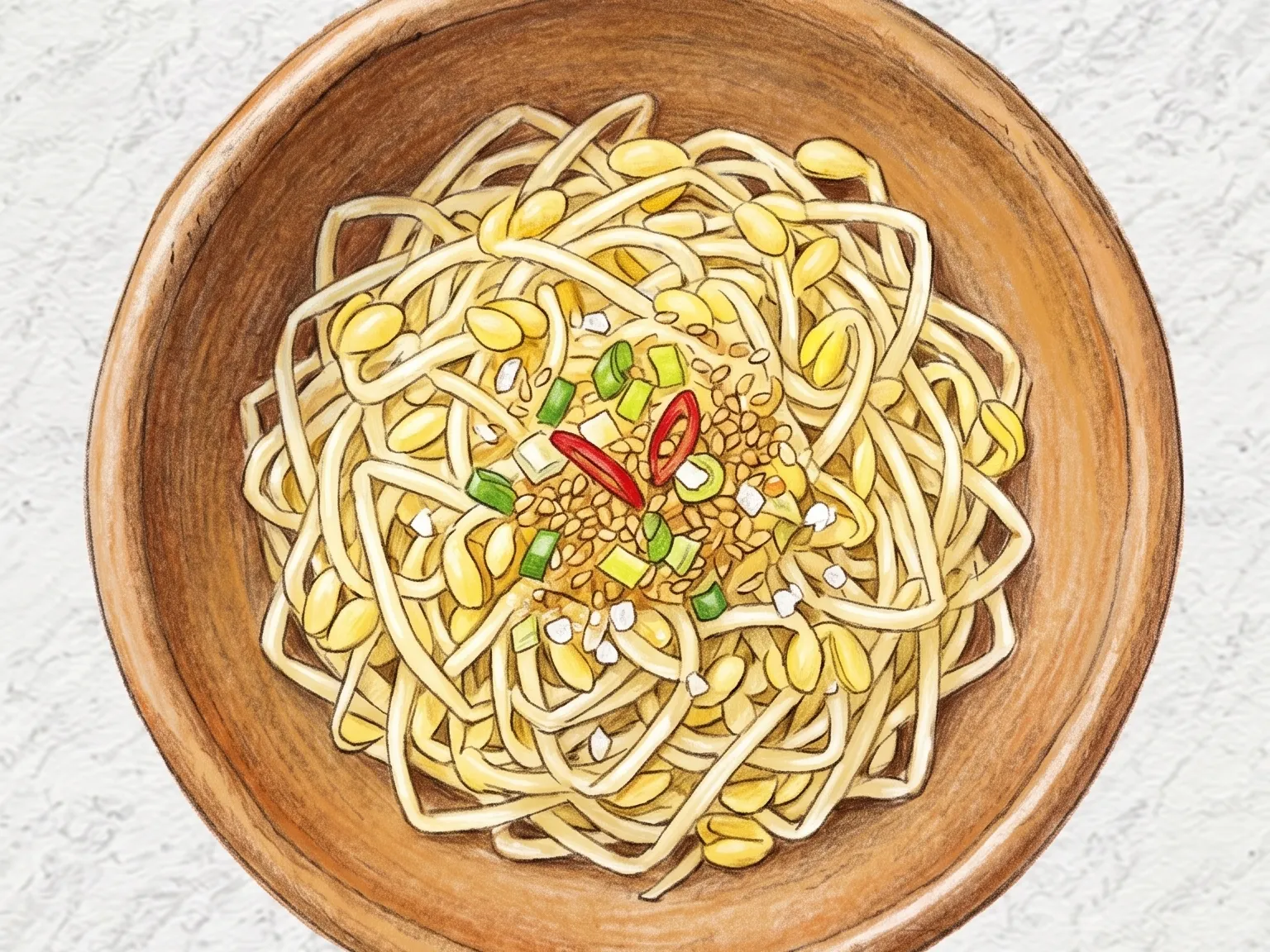
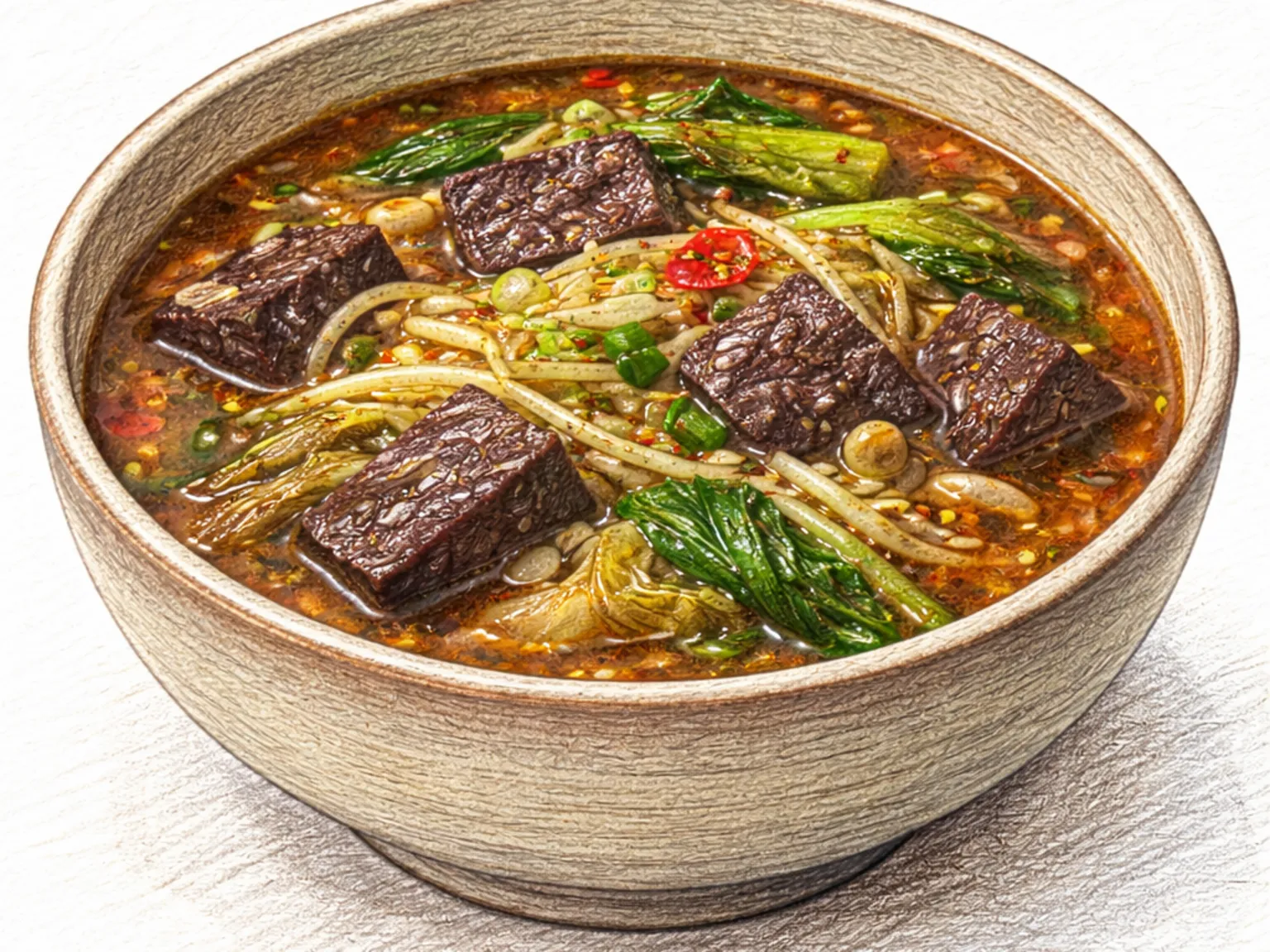
Seonji-guk is a Korean blood curd soup built from coagulated ox blood, seasoned napa cabbage outer leaves, and bean sprouts in a spicy, doenjang-accented broth. The napa greens are pre-dressed with soybean paste, garlic, and chili flakes before going into the pot, where they simmer and release an earthy, fermented depth into the liquid. Bean sprouts are added for their crisp texture and clean, refreshing bite. The blood curd - cut into large cubes - goes in partway through cooking and simmers just eight minutes to heat through without breaking apart. Its texture is soft and faintly springy, unlike anything else in the Korean soup canon, and it absorbs the surrounding spicy broth. Gochugaru gives the soup a ruddy color and a slow-building warmth. In Korea, seonji-guk is closely associated with the morning-after meal, served in dedicated haejang-guk restaurants as a restorative after heavy drinking.
Adjust Servings
Instructions
- 1
Cut napa greens and mix with soybean paste and minced garlic.
- 2
Boil water, then add bean sprouts and seasoned greens; simmer for 10 minutes.
- 3
Add chopped blood curd and cook over medium heat for 8 more minutes.
- 4
Stir in chili flakes, add green onion, and simmer for 5 minutes.
- 5
Taste and adjust with salt, then serve hot.
As an Amazon Associate, we may earn from qualifying purchases.
Tips
Nutrition (per serving)
More Recipes

Korean Spicy Freshwater Fish Soup
Eotang is a traditional Korean soup made by boiling whole freshwater fish for over forty minutes to extract every bit of flavor from the bones and flesh. The stock is strained twice through a fine sieve to remove all small bones, then returned to the pot with radish, doenjang, and garlic for another twenty minutes of simmering. Red chili flakes and green onion go in last, adding a sharp spiciness that balances the deep, earthy richness of the fish broth. The process is time-intensive, but the resulting soup has a thick body and concentrated flavor that lighter preparations cannot match.

Korean Blood Curd Hangover Stew
Seonji haejang jjigae is a traditional Korean hangover stew featuring beef blood curd (seonji), wilted napa cabbage leaves (ugeoji), and soybean sprouts simmered in beef stock. The blood curd has a soft, custard-like texture that dissolves slightly into the broth, while ugeoji adds a hearty, earthy chew and the sprouts contribute crunch. Seasoned with soup soy sauce, gochugaru, and black pepper, this stew has been a trusted morning-after remedy in Korea for generations.

Korean Blood Sausage Soup
Sundae-guk is a hearty soup built on a long-simmered pork bone broth that turns milky white from hours of boiling. Thick slices of Korean blood sausage - pork intestine casing stuffed with glass noodles, barley, and pig's blood - sit in the center of the bowl, their chewy casing absorbing the hot broth while the dense filling inside stays warm and soft. Alongside the sundae, slices of boiled pork shoulder and, in more traditional versions, offal like liver or lung add variety in texture and a faint mineral note. The broth itself is rich yet surprisingly clean, seasoned at the table with either salted shrimp paste or coarse salt depending on the diner's preference. Stirring in a spoonful of dadaegi, a thick chili paste condiment, transforms the bowl entirely, cutting through the richness with a sharp heat. Some shops finish the soup with ground perilla seeds for added nuttiness. Rice is spooned directly into the bowl and eaten together with the broth, making sundae-guk one of the most satisfying cold-weather meals in the Korean street-food tradition.

Haejangguk (Korean Pork Bone Hangover Soup)
Haejangguk is Korea's iconic hangover soup, a thick and fiery bowl designed to restore the body after a night of drinking. The base is a long-simmered pork spine broth that delivers a deep, porky richness. Napa cabbage outer leaves, called ugeoji, are seasoned with doenjang and garlic and added to the broth, contributing a chewy, fibrous texture. Congealed ox blood, known as seonji, is a traditional addition that lends an iron-rich density and dark visual contrast. Gochugaru provides a persistent, forehead-sweating heat that Koreans believe helps flush out toxins and clear the head. The finished soup is served bubbling in a stone pot, and the first few spoonfuls tend to produce an involuntary sigh of relief. Dedicated haejangguk restaurants open before dawn to serve construction workers and late-night revelers, and the dish has been a fixture of Korean culinary tradition for centuries.

Korean Dried Radish Greens Beef Soup
Siraegi-soegogi-guk combines beef brisket or shank with dried radish greens in a doenjang-seasoned broth that is simultaneously meaty, earthy, and fermented. The beef simmers first, building a clear stock with substantial body, before the pre-boiled and softened radish greens are introduced. Doenjang dissolves into the stock and acts as a bridge between the animal richness of the beef and the vegetal, slightly bitter quality of the greens, making both taste more complete than they would alone. An optional spoonful of gochugaru adds warmth and color, shifting the soup from mild to gently spicy. Garlic and green onion handle the aromatic duties, and a scoop of ground perilla seeds - stirred in near the end - gives the broth a creamy, nutty finish that softens the edges. This soup is one of the more filling options in the Korean guk repertoire because both the beef and the fibrous greens provide substance and chew. A single bowl, ladled generously over rice, can replace an entire meal without any additional banchan. The flavors deepen overnight, making leftovers an anticipated breakfast rather than an afterthought.

Korean Blood Sausage Hot Pot
This spicy hot pot features Korean blood sausage with cabbage, perilla leaves, and onion in a chili-seasoned beef bone broth. The sundae absorbs the broth and becomes even chewier, while a touch of doenjang adds fermented depth. Cabbage releases sweetness as it wilts, and the perilla leaves provide an herbal accent. The combination of rich bone broth and fiery gochugaru makes this a communal dish suited for cold weather gatherings.