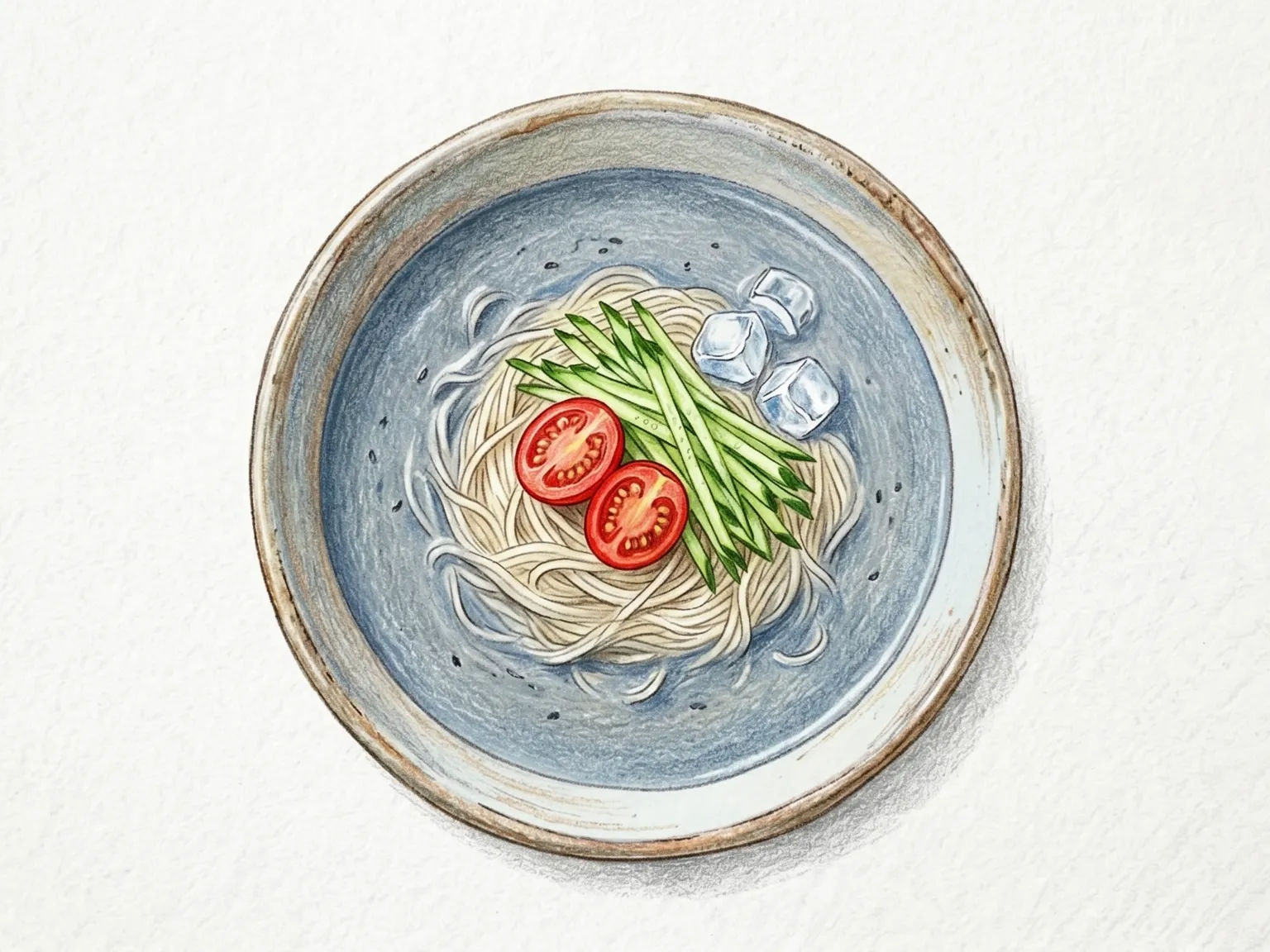
Korean Black Soybean Noodle Cup
Quick answer
- Active time
- 35 min
- Waiting
- See the steps
- Level
- Medium
- Servings
- 2 servings
- Ingredients
- 8
About this dish
Black soybeans (seoritae) turn this chilled noodle soup a soft gray, and their nuttiness runs deeper than the ivory broth made from ordinary yellow soybeans, with a clean finish.
Read more
The cooked beans are cooled completely before blending so their nutty aroma is not lost. Milk blended in with the cold water gives the broth a rounder, creamier feel, and salt is the only seasoning. Pressing the broth through a fine strainer removes bits of skin for a smooth, drinkable texture, and an hour in the fridge before serving deepens the flavor. Served in cups over thin somyeon with cucumber, cherry tomatoes, and ice, it works as a single-portion take on kongguksu, the Korean summer noodle dish.
Ingredients
Instructions
- 1
Cook the 180 g soaked black soybeans over medium heat for about 25 to 30 minutes, until they crush easily between your fingers.
Skim off only loose floating skins, then cool the beans completely before blending.
- 2
Add the cooled beans, 450 ml cold water, 120 ml milk, and 4 g salt to a blender.
Blend for at least 1 minute, until the broth turns grayish and no coarse bean pieces remain.
- 3
Press the soybean broth through a fine strainer to reduce graininess and make it silky.
If you are not serving right away, chill it for 1 hour so the nutty flavor settles and deepens.
- 4
Add 180 g somyeon to boiling water and cook over medium-high heat for 3 to 4 minutes.
Lower the heat if foam rises, and drain before the noodles soften too much.
- 5
Rinse the cooked noodles several times in cold water, rubbing gently to remove surface starch.
Drain well when they no longer feel slippery and the strands feel springy, so the broth does not turn watery.
- 6
Divide the drained noodles among cups and pour the cold soybean broth over them.
Top with 60 g cucumber, 6 cherry tomatoes, and 8 ice cubes, then serve immediately while the broth is cold and clean tasting.
Use-up ingredient planner
Turn these ingredients into two more meals
The overlap excludes basic seasonings. Open the next recipe and your selected dishes will stay with you.
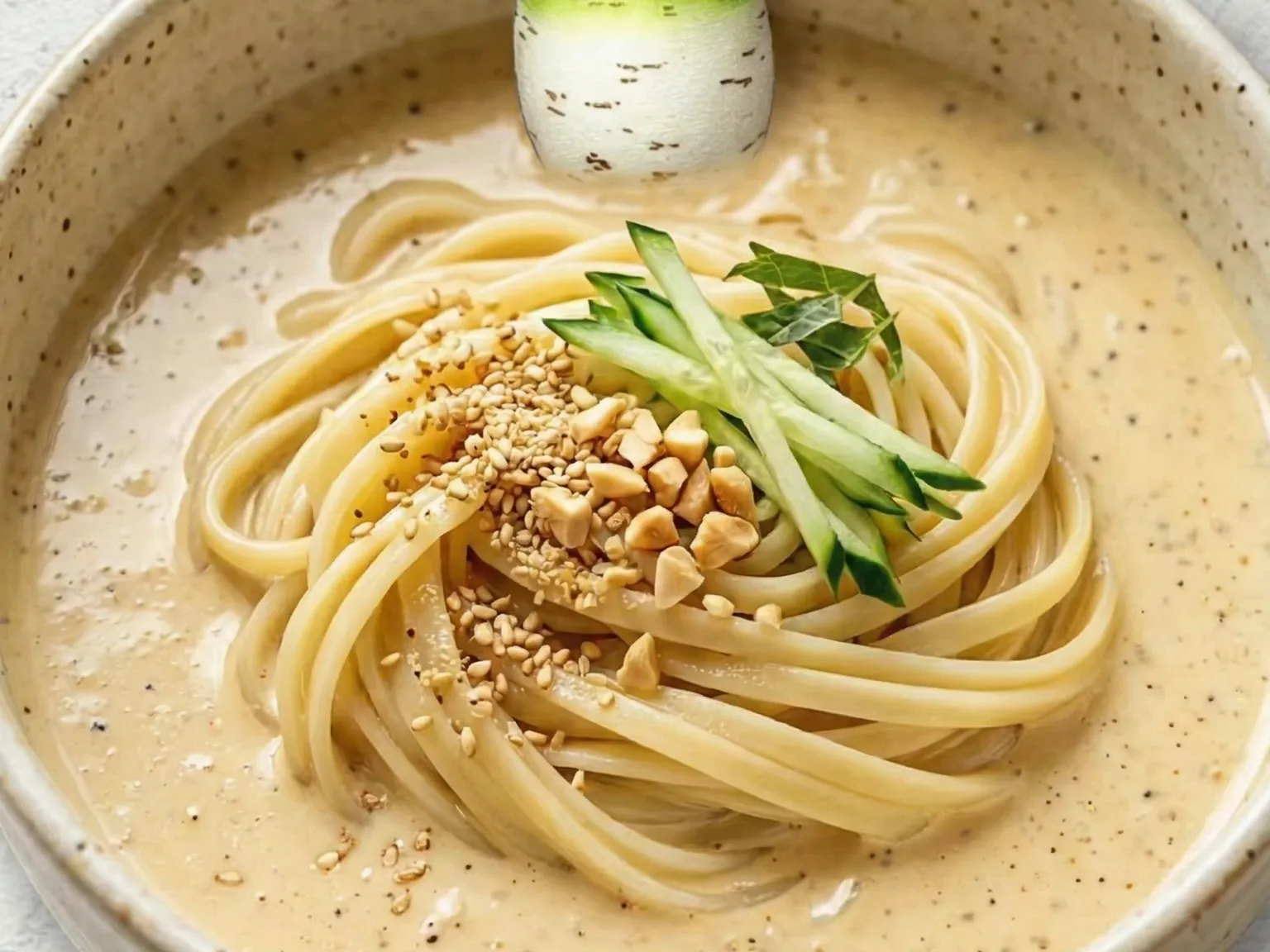
Kongguksu-Style Cold Linguine
cucumber, cherry tomatoes
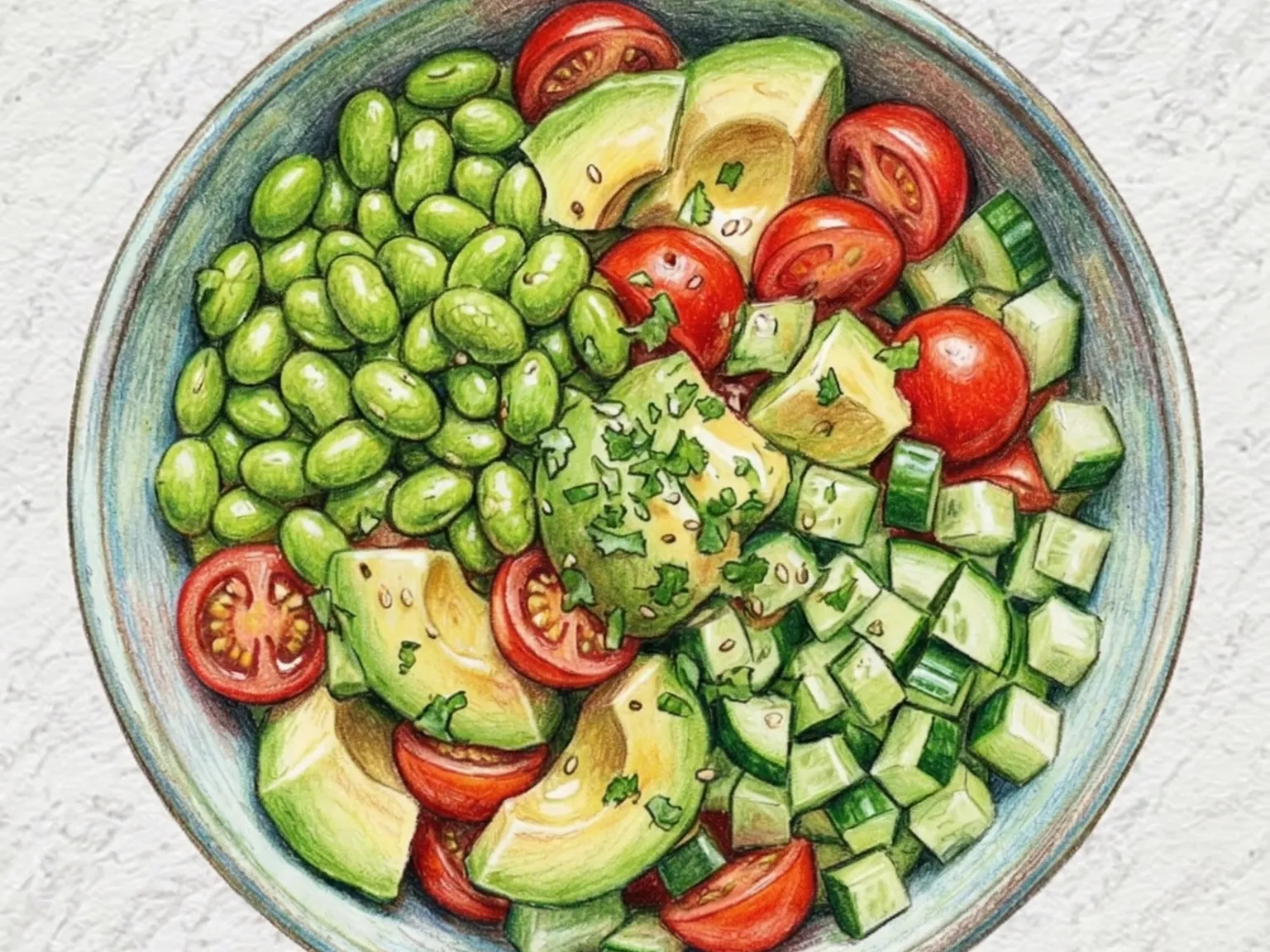
Edamame Avocado Salad
cucumber, cherry tomatoes
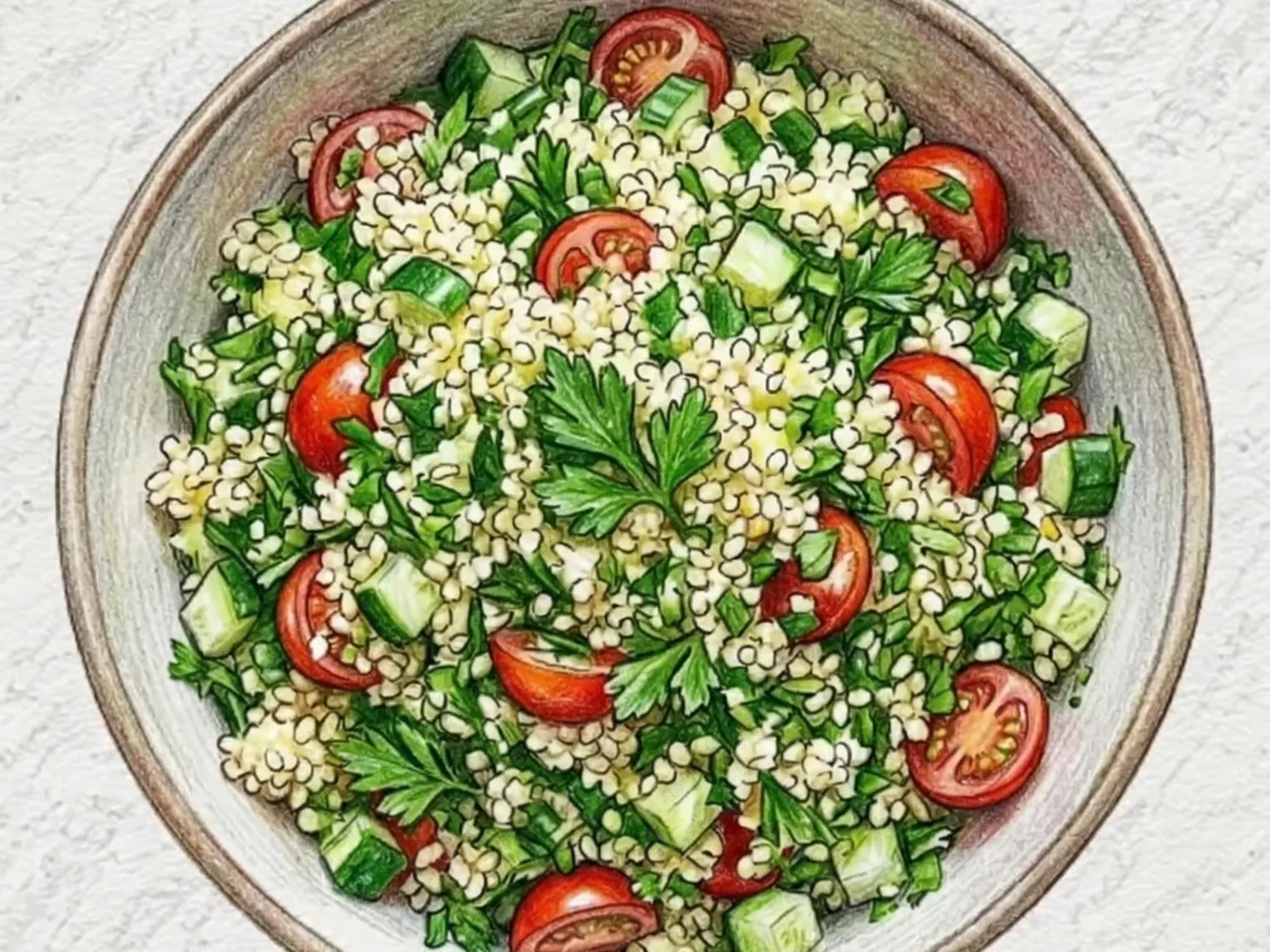
Couscous Herb Salad
cucumber, cherry tomatoes