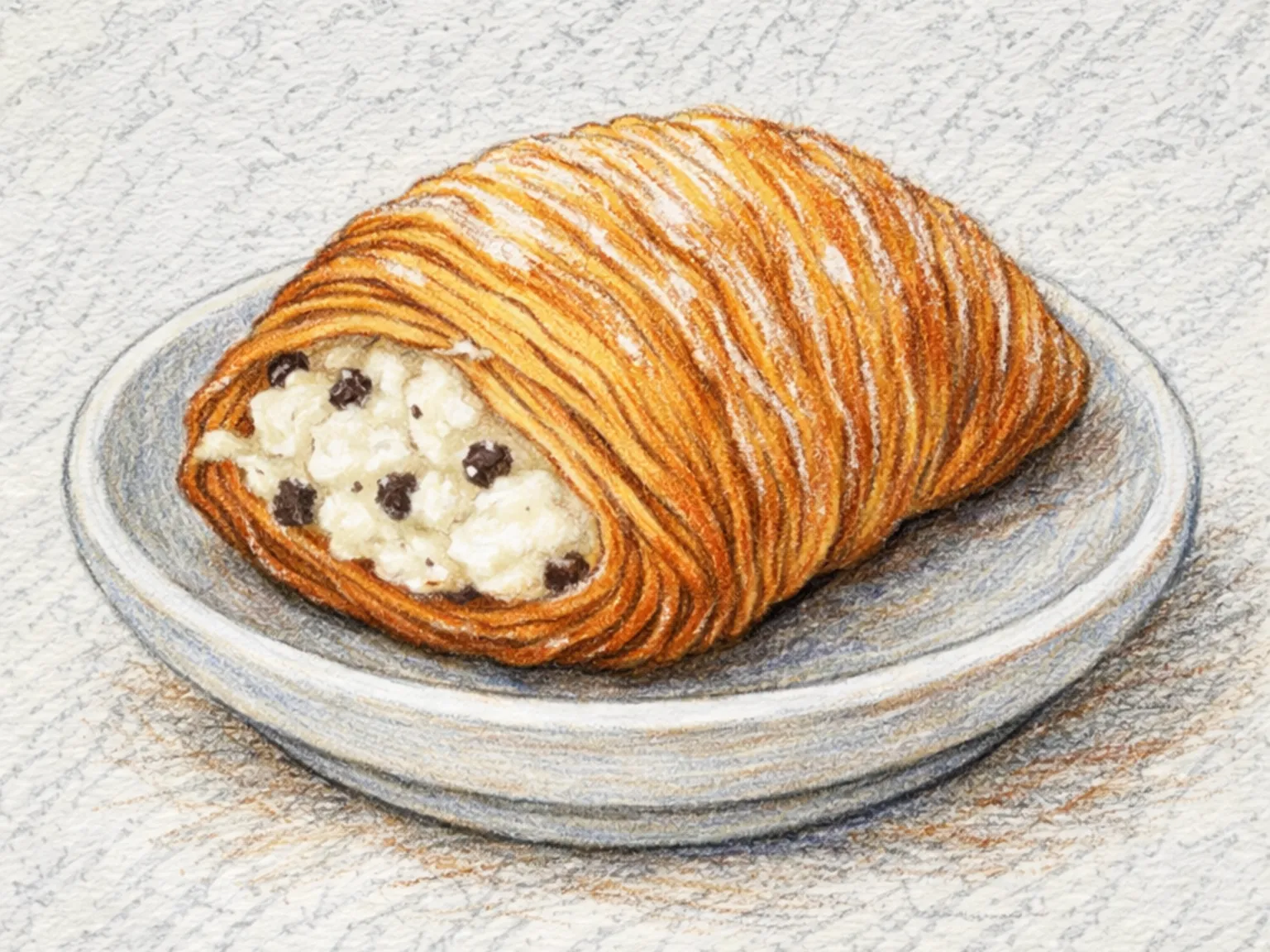
Sfogliatella (Neapolitan Layered Shell Pastry with Ricotta)
Sfogliatella is a Neapolitan pastry built from a lean flour-and-water dough that is stretched paper-thin, brushed with butter, and rolled into a tight cylinder to create hundreds of distinct layers. Slices of this cylinder are opened into a shell shape, filled with a mixture of ricotta cheese, sugar, cinnamon, and orange zest, then baked at high heat. In the oven, the butter between each layer turns to steam and forces the sheets apart, producing an exterior that shatters audibly at the first bite. Inside, the ricotta filling softens to a warm, fragrant cream with citrus and spice notes that contrast beautifully with the crisp shell. The thinner the dough is stretched before rolling, the more pronounced the layered effect becomes - professional bakers aim for near-transparency. Overfilling is the most common cause of failure, as excess moisture from the ricotta can burst through the delicate layers during baking. The ideal sfogliatella emerges from a 200-degree oven deeply golden on every ridge, with a filling that is just set and still slightly creamy in the center.
Adjust Servings
Instructions
- 1
Mix flour and water into a firm dough and rest it.
- 2
Roll dough very thin, spread butter, and roll tightly to create layers.
- 3
Mix ricotta, sugar, cinnamon, and orange zest for filling.
- 4
Cut dough pieces, open into shell shapes, and fill with ricotta mixture.
- 5
Bake at 200C for 22-25 minutes until deep golden.
As an Amazon Associate, we may earn from qualifying purchases.
Tips
Nutrition (per serving)
More Recipes

Cannoli
Cannoli are Sicilian pastries consisting of crisp, tube-shaped shells filled with sweetened ricotta cream. The shell is made from dough enriched with lard, rolled thin, wrapped around metal tubes, and deep-fried until it develops multiple flaky layers that shatter audibly with each bite. The ricotta filling has a slight graininess that distinguishes it from smooth pastry cream, giving it a lighter, more textured quality. Chopped pistachios, candied citrus peel, or chocolate chips pressed into the exposed ends add color and contrasting flavor. The cardinal rule is that shells must be filled just before serving, because any contact with the wet filling turns the crisp pastry limp. In Sicily, cannoli are traditionally tied to Carnival season, though bakeries serve them year-round.

Cassata Siciliana (Sicilian Ricotta Marzipan Layer Cake)
Cassata Siciliana is an elaborate Sicilian celebration cake that layers liqueur-soaked sponge with sweetened ricotta cream, candied fruits, and a marzipan shell. The ricotta filling is mixed with sugar, chopped pistachios, and chocolate chips, producing a cream that is smooth yet textured, with bursts of flavor from the embedded pieces. Candied cherries and orange peel contribute concentrated sweetness and chewy contrast. The entire assembly is wrapped in a thin sheet of marzipan, which adds an almond fragrance, then glazed with a white sugar icing that sets to a smooth, porcelain-like finish. Overnight refrigeration is essential - it allows the layers to meld, the sponge to absorb the surrounding moisture, and the flavors to deepen into a unified whole. Slicing reveals a cross-section of white ricotta, green marzipan, and bright fruit that is as visually striking as it is flavorful.

Affogato
Affogato means 'drowned' in Italian - a scoop of vanilla gelato submerged under a shot of freshly pulled espresso. The dessert likely originated in Milan's coffee bars during the mid-20th century, though its exact origin remains debated. What makes it work is the collision of temperatures and flavors: near-boiling espresso meets frozen cream, creating a rapidly melting pool where bitter coffee and sweet vanilla swirl together. The espresso must be poured at the table, moments after extraction, so the crema is still intact and the heat is at its peak. A shaving of dark chocolate on top adds a snap of cocoa bitterness, while toasted almond slices provide a textural crunch against the dissolving ice cream. The entire experience lasts only a few minutes before it becomes a warm coffee drink - that urgency is part of its appeal.

Bomboloni (Italian Cream-Filled Deep-Fried Yeast Doughnuts)
Bomboloni are Italian filled doughnuts made from an enriched yeasted dough that is shaped into balls, deep-fried, and piped full of cream or jam while still warm. The dough - built on bread flour, eggs, butter, and milk - develops strong gluten during proofing, which gives the fried result a thin, crisp outer shell enclosing a pillowy soft interior. Rolling the hot doughnuts in granulated sugar immediately after frying coats them in a crunchy, sweet layer that crackles on the first bite. Vanilla custard is the classic filling, its smooth richness contrasting with the airy bread, though strawberry jam and chocolate cream are equally popular variations. Bomboloni are best eaten within minutes of frying.

Classic Tiramisu
Classic tiramisu layers ladyfingers briefly soaked in a syrup of cooled espresso and Marsala wine with a cream made from egg yolks whipped with sugar over a bain-marie, then folded with mascarpone and softly whipped heavy cream. Dipping the ladyfingers for only about one second prevents them from absorbing too much liquid and collapsing. Whipping the cream to soft peaks and folding it gently keeps the filling light rather than dense. The bittersweet depth of espresso plays against the rich, buttery smoothness of mascarpone, creating a flavor contrast that develops further with chilling. A minimum of four hours in the refrigerator - ideally overnight - allows the layers to meld into a cohesive, melt-in-the-mouth texture.

Calzone
Calzone rolls pizza dough into a circle, fills one half with ricotta, mozzarella, diced ham, and basil, then folds into a half-moon shape, seals the edges with a fork, and bakes until golden at 220 degrees Celsius. Leaving a two-centimeter border free of filling is critical - overstuffing causes steam pressure to burst the seam during baking. Brushing a thin line of water along the edge before pressing with a fork creates a tighter seal. Fifteen to twenty minutes in a preheated oven produces a crisp, golden exterior while the interior heats the ricotta into a soft cream and melts the mozzarella into stretchy strings. Brushing olive oil on the surface before baking adds a richer color and a slight nuttiness to the crust. Tomato sauce served on the side for dipping provides an acidic counterpoint that cuts through the dense cheese filling.