Charim

2686 Korean & World Recipes

2686+ Korean recipes, clean and organized. Ingredients to instructions, all at a glance.

Shan Noodles (Burmese Flat Rice Noodles with Turmeric Meat Sauce)
Asian Medium

Shan Noodles (Burmese Flat Rice Noodles with Turmeric Meat Sauce)

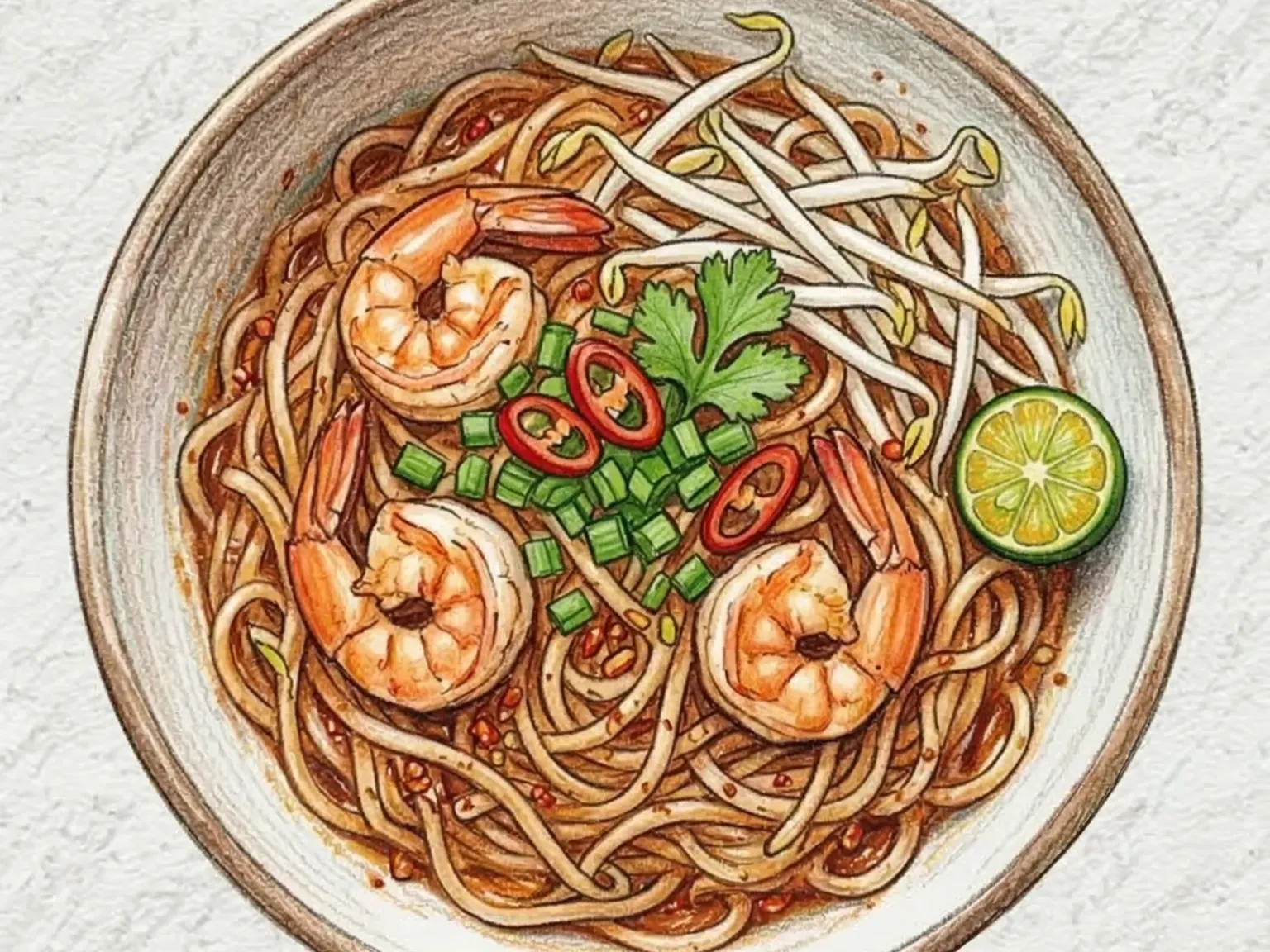
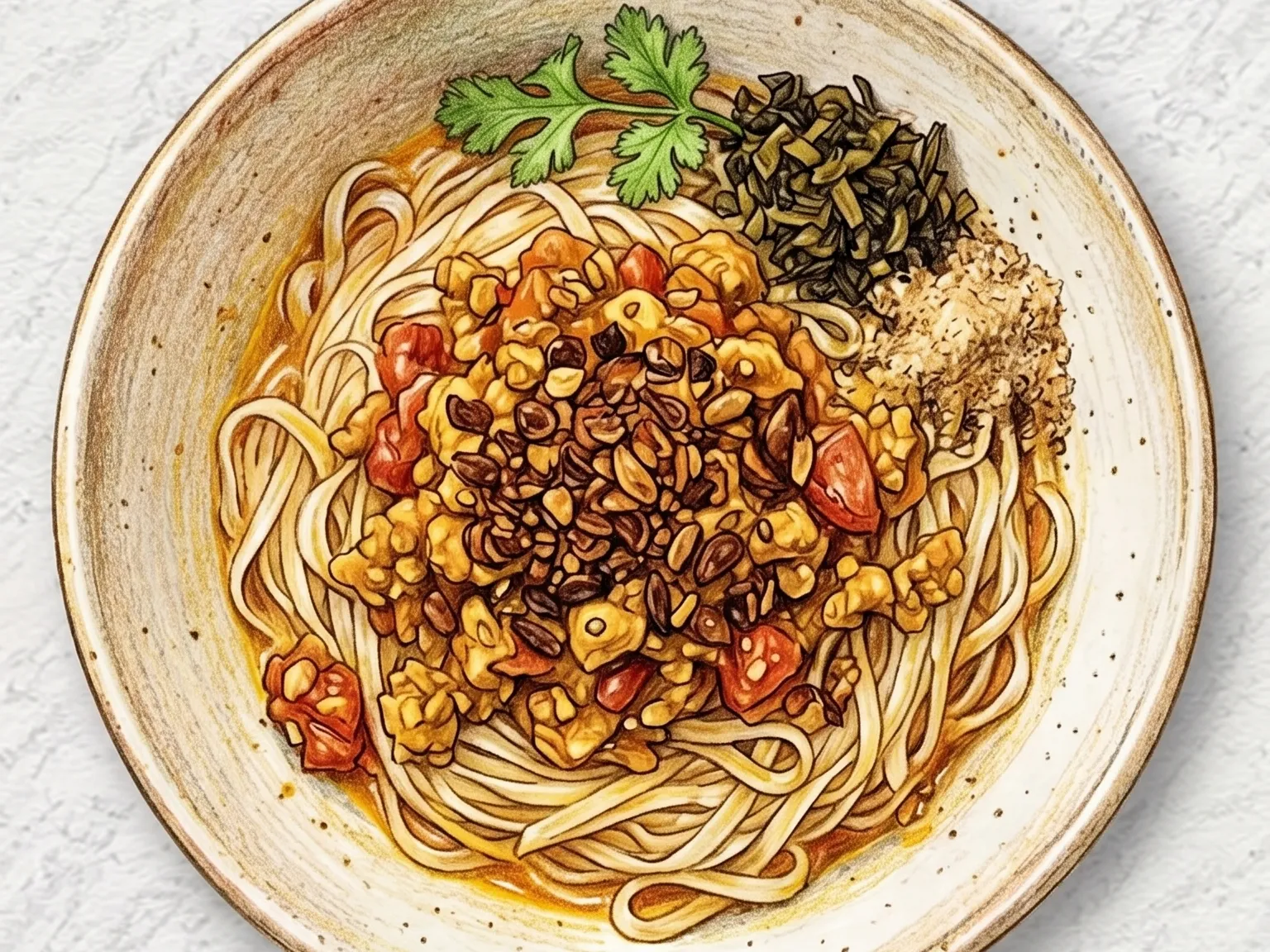
Shan noodles are the everyday noodle of Myanmar's Shan State, found at nearly every market stall and tea shop in the region. Thin, flat rice noodles are topped with a sauce of minced chicken or pork cooked with turmeric, tomato, and a touch of chili. The dish is finished with a generous pour of fried garlic oil - golden-brown garlic chips sizzling in their own rendered fat - which gives the bowl its signature aroma. Pickled mustard greens add a sour crunch on the side, and toasted chickpea flour is sprinkled over for a nutty, grainy texture. The noodles come in two styles: a dry version tossed with the sauce, and a soup version swimming in a light broth. Both are eaten with a spoon and fork rather than chopsticks, in keeping with Burmese custom.

Prep 20min Cook 20min 2 servings

Adjust Servings

2servings
servings

Instructions

  1. 1

    Cook rice noodles, rinse briefly, and drain well.

  2. 2

    Heat oil and saute garlic and onion.

  3. 3

    Add ground chicken and break it up while cooking.

  4. 4

    Season with soy sauce, fish sauce, and chili flakes.

  5. 5

    Place noodles in bowls and top with the chicken sauce.

  6. 6

    Warm remaining oil and drizzle over for aroma.

🛒Shop Ingredients on Amazon

As an Amazon Associate, we may earn from qualifying purchases.

Tips

Toss noodles with 1 tsp oil to prevent sticking.
Adjust heat by changing chili flake amount.

Nutrition (per serving)

Calories
520
kcal
Protein
29
g
Carbs
60
g
Fat
18
g

More Recipes

Mohinga (Burmese Fish Broth Rice Noodle Soup)
AsianMedium

Mohinga (Burmese Fish Broth Rice Noodle Soup)

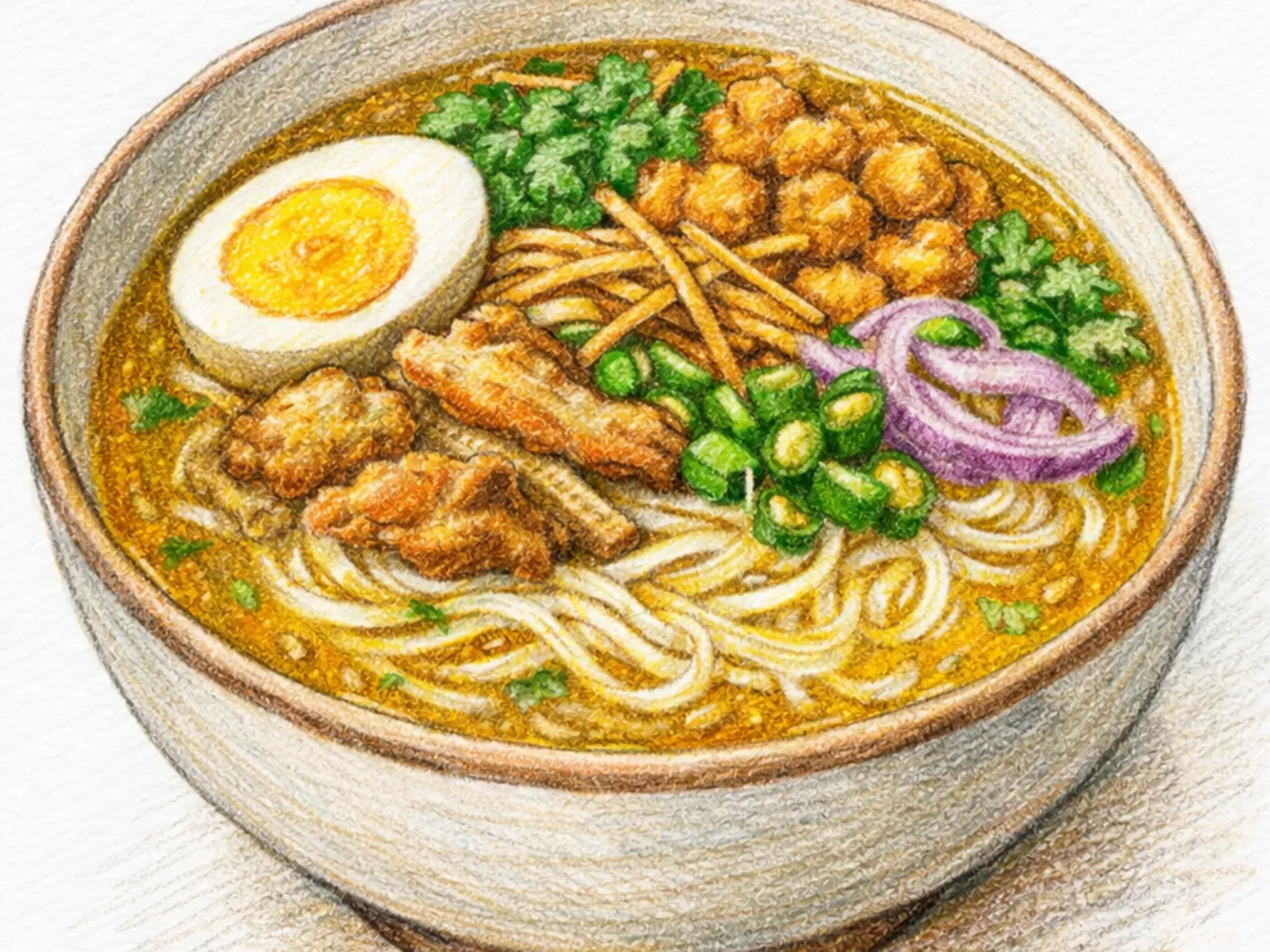
Mohinga is widely regarded as Myanmar's national dish - a fish noodle soup eaten most often at breakfast but available throughout the day from street vendors and restaurants alike. The broth is built from freshwater fish, typically catfish, simmered until the flesh falls apart, then strained and enriched with turmeric, lemongrass, ginger, and a slurry of toasted rice flour that gives the soup its signature thick, almost porridge-like consistency. Thin rice noodles are ladled into the broth and topped with crispy chickpea fritters, a halved boiled egg, fresh cilantro, and sliced banana stem. Fish sauce and a squeeze of lime at the table pull everything into focus. The broth is deeply savory with a golden color from the turmeric, and the fritters add crunch against the soft noodles.

🎉 Special Occasion
Prep 25minCook 40min4 servings
Bun Rieu (Vietnamese Crab and Pork Tomato Noodle Soup)
AsianHard

Bun Rieu (Vietnamese Crab and Pork Tomato Noodle Soup)

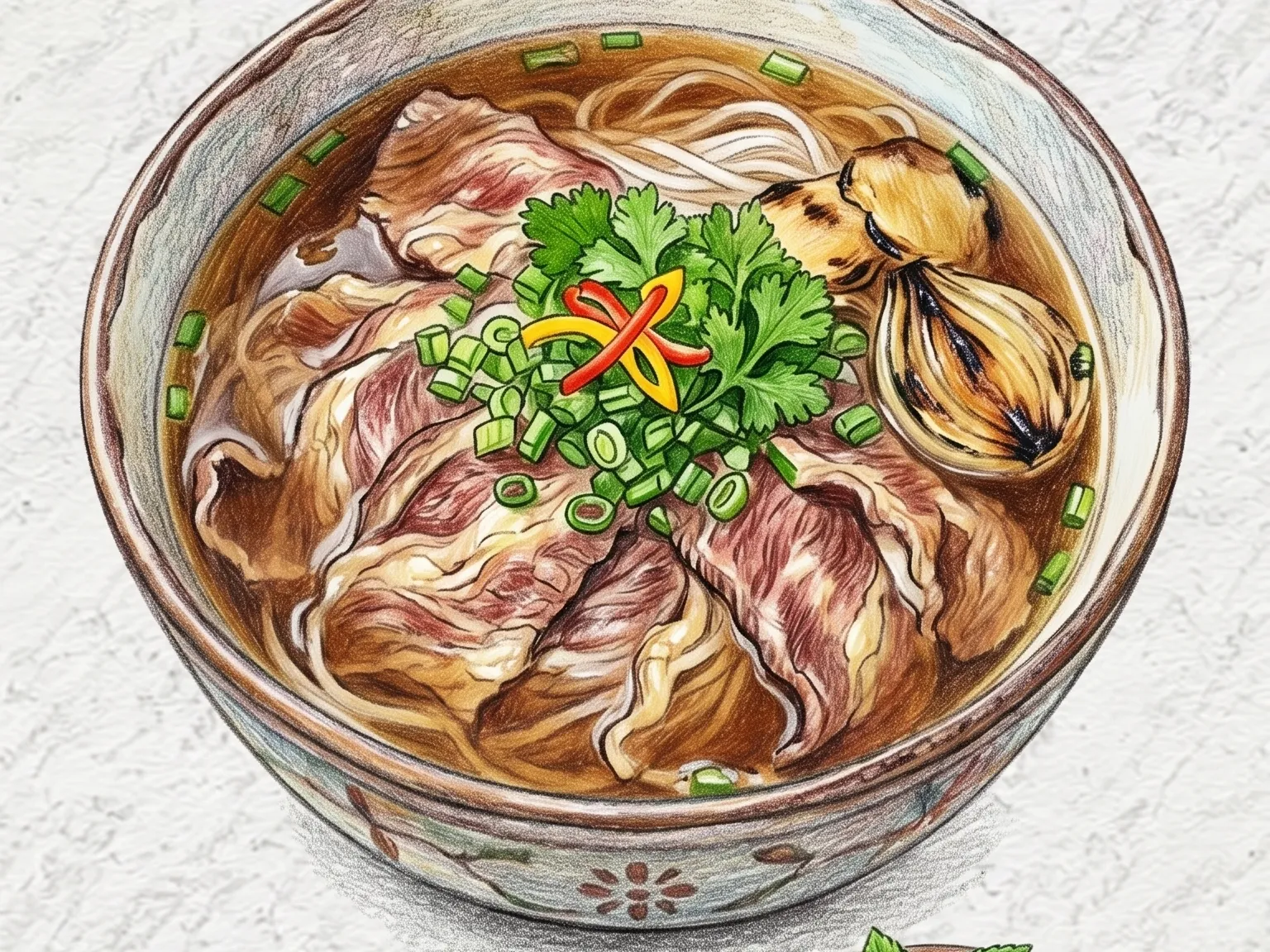
Bun rieu is a noodle soup from northern Vietnam built on two unlikely pillars - freshwater paddy crab and fermented shrimp paste - that together produce one of the most complex broths in Vietnamese cuisine. Small river crabs are pounded shell and all in a mortar, then strained through water to extract a murky liquid rich in crab essence. This liquid is heated gently until the crab protein coagulates into a soft, custard-like mass that floats to the surface - the oc, or crab cake, which is scooped and added to the finished bowl. Tomatoes dissolve into the broth during simmering, giving it a reddish hue and a fruity acidity that balances the crab's richness. Mam tom - fermented shrimp paste - is offered tableside and stirred in by each diner to taste, adding a pungent, funky depth that transforms the broth entirely. Rice vermicelli, fried tofu puffs, and a tangle of morning glory complete the bowl. Bun rieu vendors in Hanoi specialize in this single dish, ladling out hundreds of bowls each morning from a single pot.

🎉 Special Occasion
Prep 25minCook 40min4 servings
Bun Bo Nam Bo (Vietnamese Dry Beef Noodle Bowl with Herbs)
AsianMedium

Bun Bo Nam Bo (Vietnamese Dry Beef Noodle Bowl with Herbs)

Bun bo nam bo - literally 'southern beef noodles' - is a Hanoi interpretation of southern Vietnamese flavors, assembled as a dry noodle bowl rather than a soup. The dish layers cold rice vermicelli, stir-fried beef marinated in lemongrass and garlic, and a generous pile of fresh herbs - cilantro, Thai basil, mint, and perilla. Crushed roasted peanuts and fried shallots scatter on top, adding crunch and sweetness. The binding element is a bowl of nuoc cham - the sweet-sour-salty-spicy dipping sauce made from fish sauce, lime, sugar, garlic, and chili - poured over and mixed through at the table. The beef must be seared on maximum heat for under a minute so it stays medium-rare inside while the lemongrass marinade caramelizes on the edges. The beauty of the dish lies in its temperature contrasts: cool noodles, cold herbs, warm beef, and room-temperature sauce all meeting in each chopstick-lifted tangle. Found on nearly every street in Hanoi's Old Quarter, it is lunchtime fuel for office workers who line up at their preferred stall.

🎉 Special Occasion
Prep 25minCook 12min2 servings
Cao Lau (Hoi An Chewy Rice Noodles with Braised Pork)
AsianMedium

Cao Lau (Hoi An Chewy Rice Noodles with Braised Pork)

Cao lau is a dish that exists in only one place - Hoi An, a UNESCO-listed port town in central Vietnam - because its unique chewy noodles were traditionally made using water drawn from a specific ancient Cham well and lye from the ash of trees on the nearby Cham Islands. The noodles are thicker and firmer than any other Vietnamese variety, with a distinctive amber color and an almost pasta-like al dente bite. Sliced pork - braised in soy sauce, five-spice, and sugar until deeply caramelized - sits on top alongside a handful of fresh herbs, bean sprouts, and torn pieces of crispy fried won ton skin. Only a few tablespoons of the pork braising liquid moisten the bowl - this is not a soup but a dry noodle dish where each element maintains its own texture. The Cham, Chinese, Japanese, and Vietnamese trading cultures that passed through Hoi An's port over centuries all left traces in cao lau - the soy seasoning echoes Japanese udon, the five-spice recalls Chinese cooking, and the fresh herb garnish is unmistakably Vietnamese. It is a dish that cannot be authentically reproduced elsewhere, making it one of the world's most geographically anchored foods.

🎉 Special Occasion
Prep 20minCook 30min2 servings
Laphet Thoke (Burmese s signature salad)
SaladsMedium

Laphet Thoke (Burmese s signature salad)

Laphet thoke is Myanmar's signature salad, built around fermented tea leaves whose tannic bitterness and concentrated umami form the flavor foundation. Shredded cabbage provides a neutral, crunchy base, while chopped tomato adds juicy acidity that lightens the tea leaves' intensity. Roasted peanuts contribute nutty richness, and fried garlic chips deliver a salty, crispy finish that diversifies every bite. The key technique is dressing the tea leaves first with lime juice, sesame oil, and chili flakes so they absorb the seasoning before the vegetables are added, ensuring the bold flavors distribute evenly.

🥗 Light & Healthy Quick
Prep 18min2 servings
Korean Warm Perilla Mushroom Rice Noodles
NoodlesEasy

Korean Warm Perilla Mushroom Rice Noodles

Deulkkae beoseot on ssalguksu is a warm Korean noodle soup built on kelp stock simmered with oyster and shiitake mushrooms, then thickened with ground perilla seeds into a creamy, opaque broth. Rice noodles are smoother and more slippery than wheat varieties, sliding through the rich liquid with ease, while the mushrooms provide a chewy counterpoint. Adding the perilla powder at the very end preserves its roasted, nutty fragrance on the surface of each spoonful. Soup soy sauce seasons the broth cleanly without the weight of soybean paste. This is a warming bowl suited for cold weather, filling enough to serve as a standalone meal.

🥗 Light & Healthy🏠 Everyday
Prep 20minCook 20min4 servings
More Asian →