Hakodate Shio Ramen (Hokkaido Clear Salt-Seasoned Chicken Ramen)
Quick answer
Hakodate shio ramen is the oldest style of ramen in Hokkaido, originating from the port city of Hakodate in the south of the island.
What makes this special
- Hakodate Shio Ramen offers a clear chicken and pork broth seasoned with salt and clam extract.
- Clam broth blended into chicken stock for layered umami
- Salt alone seasons the broth; no tare needed
Key ingredients
Core cooking flow
- 1 Blanch 500 g chicken bones in boiling water for about 5 minutes, until foam and blood rise.
- 2 Put 1.5 L water, the rinsed bones, 10 g kombu, and green onion in a pot.
- 3 Place 200 g clams in a separate small pot and add just enough water to cover them.
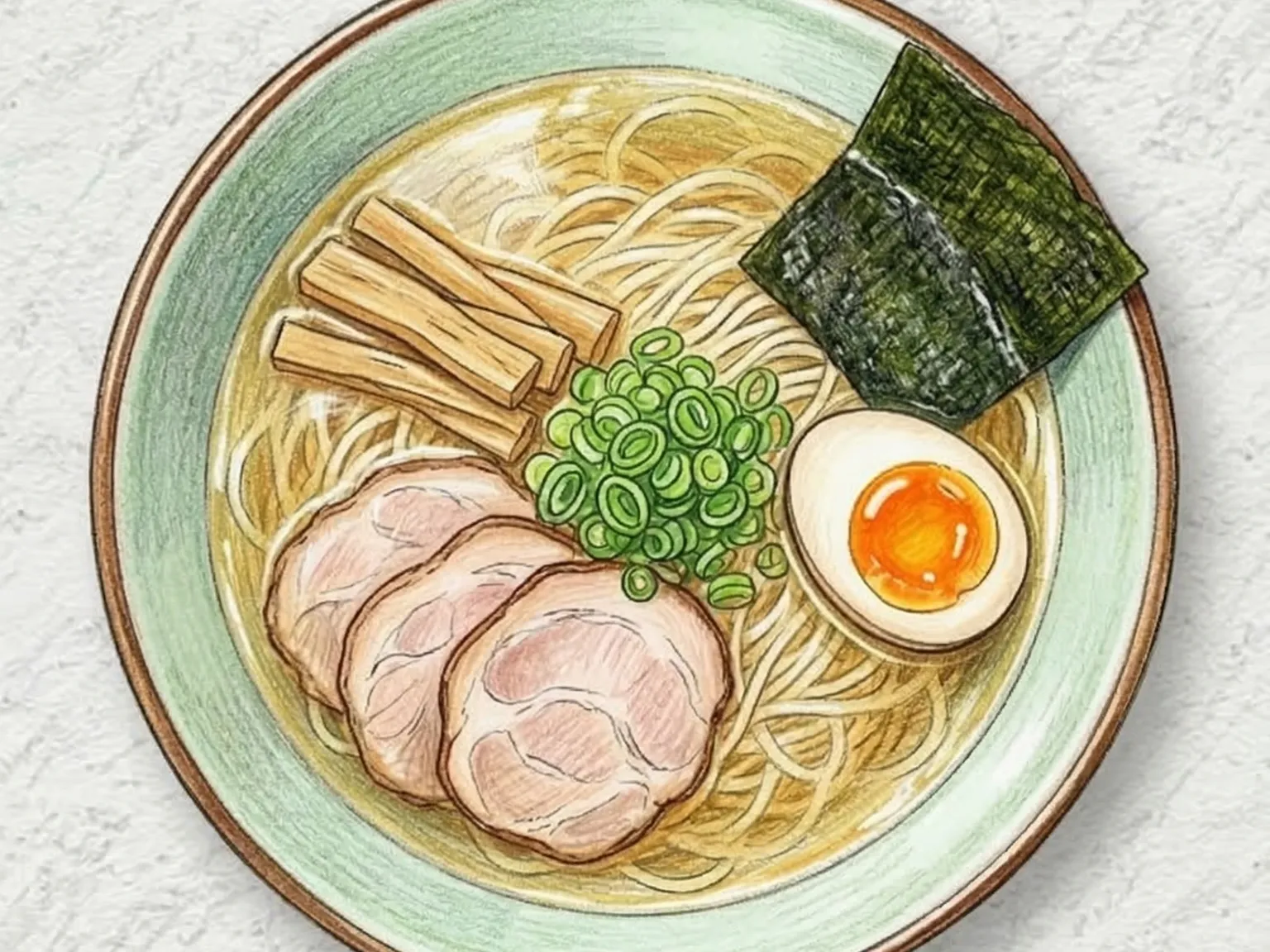
Hakodate shio ramen is the oldest style of ramen in Hokkaido, originating from the port city of Hakodate in the south of the island. The broth is built from chicken and pork bones simmered at a gentle, never rolling, boil so the liquid stays clear and golden rather than turning cloudy. Seasoning comes from salt alone - no miso, no soy sauce - which places the burden of flavor entirely on the quality of the stock. Medium-wavy noodles are the standard choice, their curls catching just enough broth in each bite. Toppings are kept minimal: a slice or two of chashu pork, strips of menma bamboo shoots, and chopped scallion. The appeal of shio ramen lies in its transparency, both visual and gustatory - there is nowhere for imperfections to hide, and every sip delivers a clean, uncluttered umami.
Instructions
Read the steps as a cooking flow: prep, heat, seasoning, doneness control, and finish.
- 1Finish
Blanch 500 g chicken bones in boiling water for about 5 minutes, until foam and blood rise.
Rinse under cold water, rubbing away clinging bits so the finished broth stays clean in taste and appearance.
- 2Control
Put 1.5 L water, the rinsed bones, 10 g kombu, and green onion in a pot.
Keep it on low heat for 90 minutes, allowing only tiny bubbles to rise, never a strong boil.
- 3Control
Place 200 g clams in a separate small pot and add just enough water to cover them.
Simmer only until the shells open, then collect the clear clam broth without scraping up grit from the bottom.
- 4Season
Combine the chicken stock with the clam broth and season with 2 tsp sea salt.
Strain slowly through a fine sieve, pouring gently so the golden liquid stays clear instead of cloudy.
- 5Season
Blanch 50 g spinach in lightly salted boiling water for about 20 seconds, then cool it in cold water and squeeze it dry.
Slice 150 g chashu pork thinly so it warms quickly on the soup.
- 6Finish
Boil 200 g ramen noodles separately and drain while still springy, before they turn soft.
Place them in hot bowls, pour over the clear broth, add chashu and spinach, and serve immediately.
After the steps
Pick a recipe that fits this dish.
Continue with shared ingredients, meal pairings, or a similar method.
Recipes That Go Well With This
More Asian →Based on shared ingredients and meal pairing
Tokyo-Style Shoyu Ramen (Classic Japanese Soy Sauce Chicken Broth Ramen)
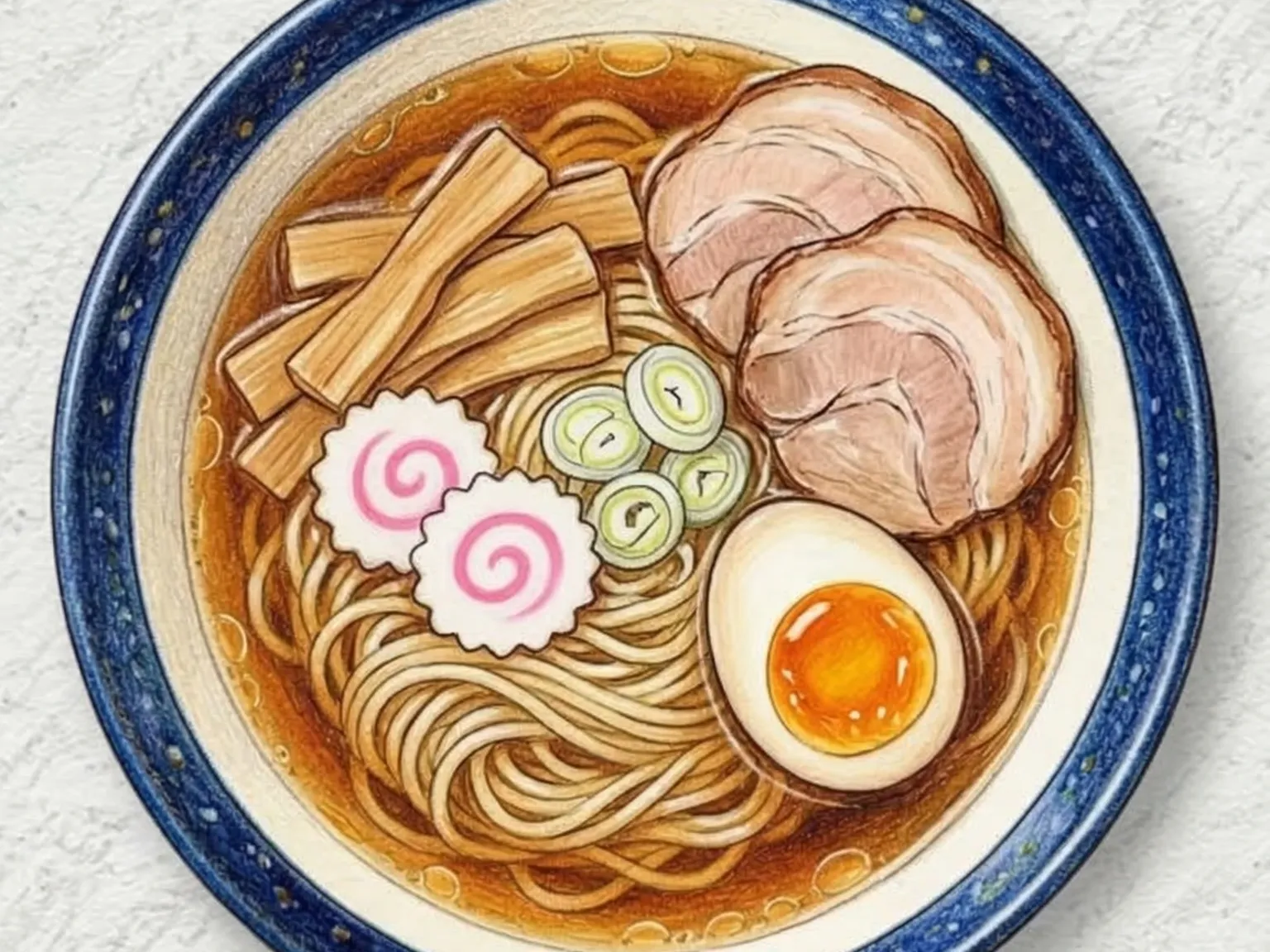
Tokyo-style shoyu ramen is considered the closest descendant of the original ramen that appeared in Japan over a century ago. The broth starts with chicken carcasses simmered until the liquid turns a warm amber, then seasoned with kaeshi - a concentrated blend of soy sauce, mirin, and sugar that has been cooked and rested. A thin film of chicken fat floats on the surface, trapping heat and delivering a gentle richness with each spoonful. The noodles are thin and straight, designed to be slurped quickly before they soften, and their wheat flavor stands distinct against the soy-tinged broth. Classic toppings include narutomaki fish cake with its pink spiral, strips of menma, a halved soft-boiled egg, and a sheet of nori. The bowl is intentionally restrained - no heavy pork fat, no thick miso - letting the clarity of the soy-chicken combination speak for itself.
Classic Tonkotsu Ramen (Pork Bone Milky Broth Noodles)
Classic Tonkotsu Ramen is a Japanese noodle dish defined by its deep, creamy pork bone broth. The foundation of this soup requires boiling pork back bones and pig trotters with garlic and ginger at a continuous, vigorous roll for seven to eight hours. This sustained high heat emulsifies the fat and breaks down the collagen, producing a milky, gelatinous broth that coats the palate. It is served with thin, firm noodles that retain a springy bite without becoming soggy in the heavy soup. Top the bowl with pork belly chashu braised in soy sauce and mirin, soft-boiled eggs marinated in the braising liquid, and sliced green onions. Maintaining a strong boil without reducing the heat is critical to achieving the characteristic white color and rich texture. Prepare the chashu a day in advance and chill it for easier thin slicing.
Roasted Kabocha Miso Nut Salad
Kabocha squash is sliced into half-moons and roasted in a hot oven until the cut surfaces caramelize and the flesh turns chestnut-soft and dry in the best possible way. The dressing combines white miso, rice vinegar, and maple syrup into a mixture where salt, acid, and a restrained sweetness reinforce each other and amplify the roasted squash underneath. Arugula provides the peppery, slightly bitter base that keeps the salad from tipping too sweet. Chickpeas add lean protein and a firm, satisfying chew that holds up against the tender squash. Walnuts, crushed roughly rather than chopped fine, contribute crunch and a deep, roasted nuttiness that layers well with the soft squash in each forkful. The contrast between textures, tender squash against resistant walnut, is what makes this salad interesting across every bite. Autumn kabocha, at the peak of its natural sugar content, delivers the most pronounced sweetness, and the dish is filling enough to stand as a vegetarian main course with nothing else alongside it. If using refrigerated squash, adjust oven time and temperature to ensure even caramelization.
Sapporo Miso Ramen (Hokkaido-Style Rich Miso Broth Ramen with Pork)
Sapporo miso ramen is a Hokkaido specialty featuring a thick broth designed to provide warmth during cold winters. The cooking process begins by sautéing minced garlic and ginger, followed by ground pork to render its fat. Cabbage and bean sprouts are then stir-fried briefly over high heat to maintain their crisp texture. The base uses a chicken broth mixed with miso paste. The miso is dissolved into the hot liquid after turning off the heat, as boiling would disperse its aroma. The dish is assembled by pouring this rich broth over separately cooked thick, curly ramen noodles that trap the savory soup in their curves. It is finished with sweet corn kernels and a pat of butter placed in the center. As the butter melts into the hot broth, it adds a smooth texture and rich flavor.
Serve with this
Japanese Dan Dan Ramen (Sesame Cream Broth with Spicy Pork)
Tantanmen is the Japanese adaptation of Sichuan dan dan noodles, served as a ramen with a thick sesame-cream broth. Ground pork is stir-fried with doubanjiang and spooned over the bowl along with chili oil. The sesame base gives the soup a dense, nutty body, while the chili oil adds a slow-building heat. Standard ramen noodles are used, paired with bok choy or scallions. Preparation takes about 45 minutes, with most of the effort going into building the sesame broth and seasoning the pork topping.
Steak Rice Bowl (Seared Beef with Soy-Garlic Glaze over Rice)
A thick-cut beef steak is seared at high heat until a deep brown crust forms, then sliced and fanned over a bowl of hot rice. A glaze of soy sauce, garlic, and mirin is spooned over the slices, coating them in a glossy, caramelized finish. As the warm rice absorbs the pan juices, each spoonful carries the full weight of the beef's seared flavor. A runny fried egg or a small dab of wasabi on the side balances the richness with creaminess or heat. Controlling resting time and grain texture helps the ingredients cook evenly while keeping the final seasoning balanced.
Dongdongju (Korean Unfiltered Fermented Rice Wine)
Dongdongju is a traditional Korean unfiltered rice wine made by steaming short-grain and sweet rice together, then fermenting the cooked grain with nuruk starter and a small amount of dry yeast for seven days. Unlike makgeolli, it passes through a coarse sieve only once, leaving rice grains floating on the surface -- a trait that gives the drink its name and provides a distinctly chewy grain texture with each sip. Stirring the mash twice daily ensures the nuruk breaks down the starches evenly throughout fermentation, and keeping the temperature low after day three prevents the batch from over-fermenting. A pinch of salt added at the finish tempers residual sweetness without flattening the fermented grain character. Home-brewed dongdongju tends to carry a more pronounced rice fragrance and a heavier body than commercial makgeolli, and its flavor shifts noticeably day by day as fermentation continues.
Similar recipes
Dipping Ramen (Japanese Thick Noodles with Concentrated Dipping Broth)
Tsukemen is a Japanese dipping ramen where thick noodles and a concentrated broth are served separately. The broth - typically tonkotsu or seafood-soy based - is reduced to roughly double the intensity of standard ramen soup. Noodles are rinsed in cold water after boiling, which firms their texture and creates a temperature contrast when dipped into the hot broth. Toppings such as chashu pork, soft-boiled egg, and nori are arranged alongside the noodles. The recipe takes about 50 minutes, with most time spent building and reducing the dipping broth.
Kiritanpo Nabe (Akita-Style Grilled Rice Stick Hot Pot)
Kiritanpo nabe is a rustic hot pot from Akita Prefecture in northern Japan, built around grilled mashed-rice sticks simmered in chicken broth. Freshly cooked rice is pounded in a mortar until partially smooth and sticky, then wrapped around cedar skewers and toasted over charcoal until the surface develops a light char and a faint smokiness. The broth begins with bone-in chicken thighs cooked until the stock is rich and clear, seasoned simply with soy sauce and mirin, then loaded with burdock root, scallions, mushrooms, and Japanese parsley. The kiritanpo sticks are cut into segments and added to the simmering pot, where they absorb the rich broth and soften into a chewy, dumpling-like texture while still holding their cylindrical shape. Akita's harsh mountain winters gave this dish its purpose as a calorie-dense, warming meal built entirely from locally available ingredients. The faint smokiness from the charcoal grilling carries through into the finished broth, and this subtle background note is what distinguishes kiritanpo nabe from similar rice-cake hot pots made elsewhere in Japan.
Japanese Dan Dan Ramen (Sesame Cream Broth with Spicy Pork)
Tantanmen is the Japanese adaptation of Sichuan dan dan noodles, served as a ramen with a thick sesame-cream broth. Ground pork is stir-fried with doubanjiang and spooned over the bowl along with chili oil. The sesame base gives the soup a dense, nutty body, while the chili oil adds a slow-building heat. Standard ramen noodles are used, paired with bok choy or scallions. Preparation takes about 45 minutes, with most of the effort going into building the sesame broth and seasoning the pork topping.