Shoyu Butter Corn Ramen
Quick answer
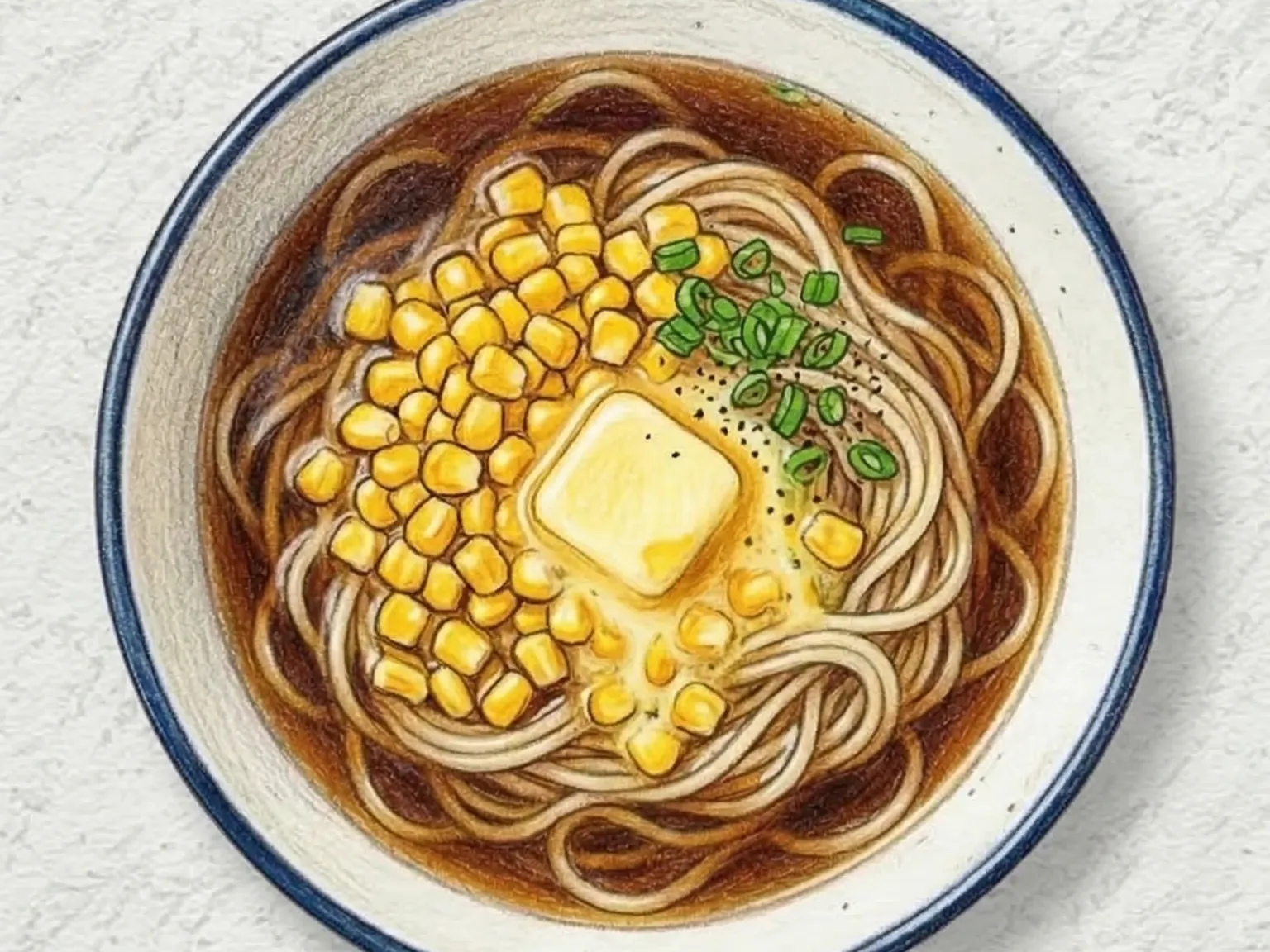
Shoyu butter corn ramen is a Japanese noodle soup built on chicken broth seasoned with soy sauce and mirin.
What makes this special
- Japanese chicken broth seasoned with soy and mirin, topped with sweet corn and butter.
- Soy-mirin ratio tunes umami and mild sweetness in chicken broth
- Butter melts last, spreading a rich film across the broth surface
Key ingredients
Core cooking flow
- 1 Slice 20 g green onion thinly and cut 2 nori sheets into easy pieces.
- 2 Put 900 ml chicken broth, 2 tablespoons soy sauce, and 1 tablespoon mirin in a pot.
- 3 Simmer the broth gently for 10 minutes over medium-low heat so the soy sauce...
Shoyu butter corn ramen is a Japanese noodle soup built on chicken broth seasoned with soy sauce and mirin. The broth simmers for ten minutes to marry the salty-sweet flavors before being ladled over separately boiled ramen noodles. A pat of butter placed on top melts slowly into the hot liquid, spreading richness across the bowl. Sweet corn kernels, crisp bean sprouts, nori, and sliced scallion complete the toppings. Serving it soon after cooking keeps the intended texture clearer, while brief resting lets the sauce or broth settle into the dish.
Instructions
Read the steps as a cooking flow: prep, heat, seasoning, doneness control, and finish.
- 1Prep
Slice 20 g green onion thinly and cut 2 nori sheets into easy pieces.
Rinse 80 g bean sprouts, drain them well, and have 120 g sweet corn ready so the toppings can go in quickly.
- 2Control
Put 900 ml chicken broth, 2 tablespoons soy sauce, and 1 tablespoon mirin in a pot.
Bring it up over medium heat, then lower to medium-low as soon as it starts bubbling to keep the broth clear.
- 3Control
Simmer the broth gently for 10 minutes over medium-low heat so the soy sauce and mirin blend into the chicken broth.
Avoid a hard boil, which can reduce the liquid too much and make it taste salty.
- 4Heat
In a separate pot, boil plenty of water and cook 260 g fresh ramen noodles.
Lift them out when the strands loosen but still feel springy, then drain very well so extra starch does not cloud the broth.
- 5Heat
Add the bean sprouts and sweet corn to the hot broth and cook for only 2 minutes.
Stop when the sprouts look slightly translucent but still crisp, then turn off the heat before they soften too much.
- 6Finish
Divide the noodles between bowls and ladle over the hot broth with the corn and sprouts.
Top with 20 g butter, sliced green onion, and nori, then serve as the butter begins melting into the soup.
After the steps
Pick a recipe that fits this dish.
Continue with shared ingredients, meal pairings, or a similar method.
Recipes That Go Well With This
More Noodles →Based on shared ingredients and meal pairing
Kake Udon (Plain Udon in Clear Dashi Broth)
Kake udon is the most elemental form of Japanese udon: thick, springy wheat noodles served in a clear dashi broth seasoned with soy sauce, mirin, and a small amount of salt. With so few components, the quality of the dashi determines everything about the dish. The broth is built on katsuobushi and dried kelp, producing a flavor that is restrained but unmistakably savory. The noodles must be thick enough to hold their chew and smooth enough to carry broth with each lift of the chopsticks. Toppings are deliberately kept to a minimum, typically sliced kamaboko fish cake and chopped green onion, so the stock and noodle texture remain the focus rather than any single garnish. The noodles should go directly from the pot into hot broth, as they soften quickly and lose their characteristic bounce if left to sit. In the Kansai region, pale usukuchi soy sauce is used to keep the broth nearly transparent, making the visual clarity of the soup another deliberate element of the dish.
Sapporo Miso Ramen (Hokkaido-Style Rich Miso Broth Ramen with Pork)
Sapporo miso ramen is a Hokkaido specialty featuring a thick broth designed to provide warmth during cold winters. The cooking process begins by sautéing minced garlic and ginger, followed by ground pork to render its fat. Cabbage and bean sprouts are then stir-fried briefly over high heat to maintain their crisp texture. The base uses a chicken broth mixed with miso paste. The miso is dissolved into the hot liquid after turning off the heat, as boiling would disperse its aroma. The dish is assembled by pouring this rich broth over separately cooked thick, curly ramen noodles that trap the savory soup in their curves. It is finished with sweet corn kernels and a pat of butter placed in the center. As the butter melts into the hot broth, it adds a smooth texture and rich flavor.
Grapefruit Shiso Shrimp Salad
Grapefruit shiso shrimp salad brings together ice-chilled blanched shrimp, membrane-free grapefruit segments, shredded shiso leaves, and thinly sliced cucumber and radish, all tossed in a yuja marmalade dressing. Blanching the shrimp for exactly two minutes and transferring them immediately to ice water locks in a firm, springy texture by contracting the protein rapidly while preventing the rubbery toughness that comes from overcooking. Removing all of the white pith from the grapefruit eliminates bitterness and leaves only the clean, tart juice of the flesh. Cutting the segments free from the membrane also makes the pieces easier to eat in a single bite. The dressing is built from yuja marmalade, rice vinegar, olive oil, and pepper, and the yuzu's floral acidity layers on top of the grapefruit to create a pronounced citrus profile that is bright but not harsh. The mint-like herbal quality of shiso leaves neutralizes any trace of fishiness from the shrimp and ties the Japanese-influenced flavor framework together. The crisp bite of cucumber and radish contrasts with the softness of the shrimp and grapefruit segments. Serving the salad well chilled is necessary to keep every texture and fragrance sharp and distinct rather than muted.
Cold Ramen Salad
Hiyashi chuka is a Japanese chilled noodle dish where ramen noodles cooked and thoroughly cooled in ice water are topped with colorful shredded garnishes and drizzled with a tangy soy-vinegar dressing. The dressing of soy sauce, rice vinegar, sugar, and sesame oil combines salt, sharpness, and sweetness; because it is poured over rather than used as a broth, the individual character of each topping stays distinct. The noodles must be chilled in ice water after boiling to achieve the firm, springy texture that holds up against the dressing without going limp, and tossing them lightly with sesame oil prevents clumping before plating. Thin strips of egg crepe, ham, cucumber, and tomato arranged by color create a visually striking presentation, and each chopstickful delivers several contrasting textures at once. In Japan this dish is a summer fixture, and at home it is a practical way to use leftover ingredients. A variation whisks mayonnaise into the dressing, which softens the acidity and adds a creamy body to the sauce.
Serve with this
Korean Shepherd's Purse & Napa Pancake
Naengi Baechu Jeon is a seasonal Korean pancake that features wild shepherd's purse and sweet napa cabbage. To prepare this dish, the roots of the shepherd's purse are thoroughly scrubbed to remove soil and chopped into short lengths, while the cabbage is sliced, lightly salted to draw out moisture, and squeezed. The batter consists of Korean pancake mix, rice flour, an egg, cold water, and soup soy sauce, which provides a clean base that allows the flavors of the vegetables to stand out. Mixing rice flour into the batter ensures that the edges of the pancake turn crispy and remain tender even after cooling. The prepared greens are gently folded into the mixture, then pan-fried in oil over medium heat until both sides are golden brown. It is sliced on a board and served warm.
Ogeurakji (Dried Radish Strips)
Ogeurakji muchim is a traditional Gyeongsang-do style side dish made of dried radish strips. The cooking process starts by soaking the dried radish strips in cold water for exactly twenty minutes to retain a firm and chewy texture. After soaking, the strips are rinsed and squeezed firmly to remove excess moisture, preventing the seasoning from watering down. The dressing combines chili powder, anchovy fish sauce, soy sauce, and rice syrup. Using rice syrup instead of sugar gives the strips a heavy, glossy coating. The radish strips are massaged firmly by hand to help the spicy, salty, and sweet flavors penetrate. Minced garlic, chopped chives, and sesame seeds are folded in at the end. This side dish can be served immediately, but maturing it in the refrigerator for one day deepens the taste.
Korean Garlic Scape Soy Pickles
Maneul jong jangajji is a Korean garlic scape pickle made by cutting fresh scapes into 5 cm lengths, packing them into a sterilized jar along with cheongyang chili peppers, and pouring over a freshly boiled brine of soy sauce, vinegar, sugar, and dried kelp. The scapes' sharp garlic bite melds gradually with the soy's salty, savory depth to produce a flavor that builds with every chew, while the kelp dissolves a subtle seaweed umami into the brine over the course of steeping. The vinegar keeps the salt in check so the overall taste stays clean rather than heavy, and the cheongyang chili adds a slow, lingering warmth at the end of each bite that prevents the pickle from tasting one-dimensional. Reboiling the brine and pouring it back over the scapes after two days is an important step for both preservation and even pickling, and repeating this process once more ensures the scapes absorb flavor uniformly throughout. Handled this way, the finished banchan keeps reliably for over a month in the refrigerator.
Similar recipes
Tokyo-Style Shoyu Ramen (Classic Japanese Soy Sauce Chicken Broth Ramen)
Tokyo-style shoyu ramen is considered the closest descendant of the original ramen that appeared in Japan over a century ago. The broth starts with chicken carcasses simmered until the liquid turns a warm amber, then seasoned with kaeshi - a concentrated blend of soy sauce, mirin, and sugar that has been cooked and rested. A thin film of chicken fat floats on the surface, trapping heat and delivering a gentle richness with each spoonful. The noodles are thin and straight, designed to be slurped quickly before they soften, and their wheat flavor stands distinct against the soy-tinged broth. Classic toppings include narutomaki fish cake with its pink spiral, strips of menma, a halved soft-boiled egg, and a sheet of nori. The bowl is intentionally restrained - no heavy pork fat, no thick miso - letting the clarity of the soy-chicken combination speak for itself.
Abura Soba (Soupless Noodles in Rich Soy Sesame Oil Sauce)
Abura soba is a noodle dish built entirely on what is in the bowl, not what surrounds it. No broth - just a concentrated sauce pooled at the bottom: soy sauce, sesame oil, oyster sauce, and a measured pour of vinegar. Cooked ramen noodles land on top, and the first task is mixing everything from below with chopsticks until each strand is fully coated. Where broth-based ramen dilutes its seasoning across liters of liquid, abura soba delivers the full flavor load directly onto the noodle. The technique developed in Tokyo's student districts in the 1950s as a cheaper, quicker option than ramen - no long broth to maintain meant faster service and lower overhead. Toppings follow the standard ramen template: chashu pork, a runny soft-boiled egg, nori, bonito flakes, and scallion add salt, fat, smoke, and freshness in sequence. The vinegar in the base sauce is not incidental - it cuts through the oil and keeps the dish from turning heavy halfway through. Adjusting the vinegar amount is considered part of eating abura soba, a small customization that regulars develop opinions about.
Dipping Ramen (Japanese Thick Noodles with Concentrated Dipping Broth)
Tsukemen is a Japanese dipping ramen where thick noodles and a concentrated broth are served separately. The broth - typically tonkotsu or seafood-soy based - is reduced to roughly double the intensity of standard ramen soup. Noodles are rinsed in cold water after boiling, which firms their texture and creates a temperature contrast when dipped into the hot broth. Toppings such as chashu pork, soft-boiled egg, and nori are arranged alongside the noodles. The recipe takes about 50 minutes, with most time spent building and reducing the dipping broth.