Shui Zhu Yu (Sichuan Poached Fish in Fiery Chili Oil Broth)
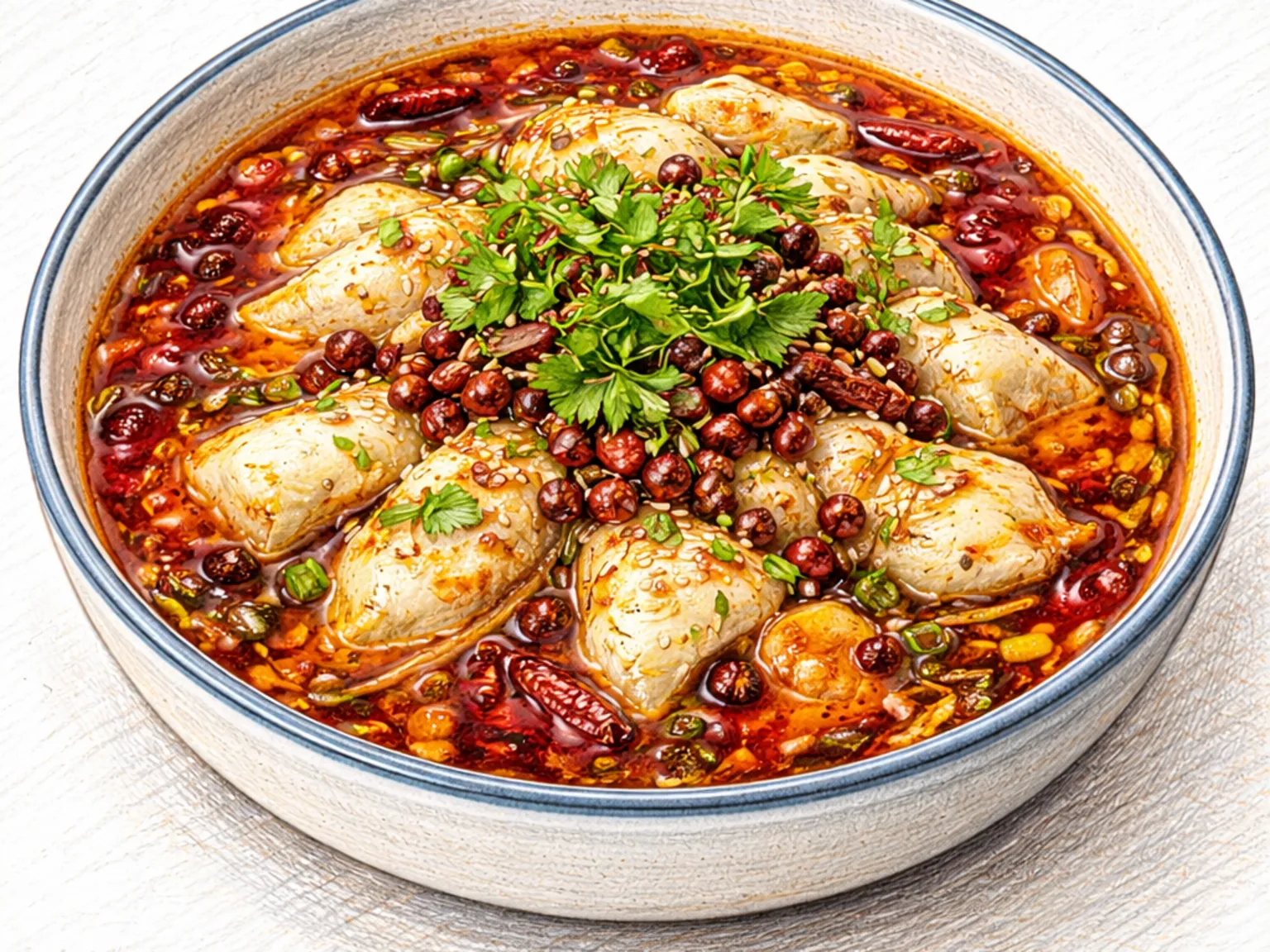
Shui zhu yu - literally 'water-boiled fish' - is one of Sichuan cuisine's most dramatic presentations, despite its modest name. Thin slices of white fish are coated in a light starch slurry and poached in a broth loaded with doubanjiang chili bean paste and Sichuan peppercorns. The fish cooks gently so each slice remains silky and intact. A wide bowl is lined with blanched bean sprouts, celery, and tofu, then the poached fish is laid on top. Dried chilies and whole Sichuan peppercorns are scattered over the surface, and smoking-hot oil is poured over them tableside - the sizzle sends a plume of chili-laced steam into the air. The resulting pool of fiery red oil looks intimidating, but the fish beneath is mild and buttery, creating a contrast between the numbing, tingling broth and the delicate flesh that defines the dish.
Adjust Servings
Instructions
- 1
Slice fish thinly and marinate with a little salt and starch for 10 minutes.
- 2
Heat 1 tbsp chili oil, then stir-fry garlic and doubanjiang until fragrant.
- 3
Add stock and boil, cook bean sprouts for 1 minute, and place them in a serving bowl.
- 4
Slide fish into the broth and poach gently for 2-3 minutes.
- 5
Pour over the sprouts, then finish with Sichuan peppercorn and remaining chili oil.
As an Amazon Associate, we may earn from qualifying purchases.
Tips
Nutrition (per serving)
More Recipes

Yu Xiang Eggplant (Sichuan Spicy Garlic Pork Eggplant)
Yu Xiang Qiezi is a Sichuan-style eggplant stir-fry with ground pork, doubanjiang, black vinegar, and sugar. The eggplant is pre-fried to firm it up so it holds its shape in the sauce, while the pork and doubanjiang create a spicy, aromatic oil base. Soy sauce, vinegar, and sugar layer sweet and sour notes over the heat, producing the characteristic Yu Xiang flavor profile. Garlic and ginger add fragrance, and the eggplant absorbs the sauce deeply so every bite releases a concentrated burst of seasoning.

Suan Cai Yu (Sichuan Pickled Mustard Greens Fish Stew)
Suan cai yu is a Sichuan fish stew that draws its defining character from pickled mustard greens-fermented vegetables whose sharp acidity provides the tangy backbone of the dish. The cooking starts with chili oil, garlic, ginger, and dried chilies sizzled together to create a pungent, aromatic base. The rinsed pickled greens go in next, their sour bite mellowing slightly as they simmer in stock for ten minutes, releasing a complex fermented depth into the broth. Thin slices of white fish, lightly dusted with starch to protect their delicate texture, are added at the very end and cooked for only a few minutes so they remain silky and intact. The finished bowl is a study in contrasts: the broth is simultaneously sour from the pickled greens, spicy from the chili oil, and savory from the stock, while the fish offers a clean, mild counterpoint. It is a deeply satisfying dish that showcases Sichuan cuisine's mastery of bold, layered flavors.

Sichuan Spicy Tofu (Mapo Tofu)
Mapo tofu is the dish that defines Sichuan cooking for much of the world. Blocks of silken tofu are slid into a wok with ground pork, doubanjiang (fermented chili bean paste), and a generous measure of ground Sichuan pepper, then cooked until the sauce thickens and clings to every cube. The doubanjiang provides a deep, fermented heat and ruddy color, while the Sichuan pepper delivers the numbing sensation - ma - that makes the dish unmistakable. Spooned over steamed rice, the sauce soaks into every grain. The interplay of ma (numbing) and la (spicy) is Sichuan cuisine's signature, and no dish demonstrates it more directly than this one.

Hui Guo Rou (Twice-Cooked Pork)
Hui guo rou, literally 'twice-cooked pork,' is a cornerstone of Sichuan cuisine where pork belly is first simmered whole until cooked through, then cooled and sliced thin before returning to the wok. The initial boiling renders some fat and firms the meat so it can be cut into uniform slices. In the wok, these slices fry until their edges curl and crisp slightly while the fat layers turn chewy rather than flabby. Doubanjiang, the fermented chili bean paste central to Sichuan cooking, goes in next along with fermented black beans, and together they create the dish's signature salty-spicy backbone. Soy sauce and a pinch of sugar round out the seasoning. Diagonally sliced leek and green bell pepper are added only in the final one to two minutes over high heat, keeping their crunch and fresh color against the deeply flavored pork.

Dry Mala Stir-fry (Sichuan Numbing Spice Dry Wok)
Mala xiangguo is a dry Sichuan stir-fry where beef slices, bok choy, shiitake mushrooms, and lotus root are coated in mala sauce and tossed over high heat without any broth. The Sichuan peppercorn's numbing tingle and the chili's sharp burn hit simultaneously, and the absence of liquid concentrates the seasoning directly onto each ingredient's surface. Lotus root adds crunch, shiitake contributes chewiness, and bok choy provides a soft counterpoint - the textural variety within a single plate is part of the appeal. Overcrowding the pan releases moisture and dilutes the sauce, so controlled portions are essential.

Ants Climbing a Tree (Sichuan Glass Noodles with Minced Pork)
Ants climbing a tree - mayi shang shu - is a Sichuan home dish whose name comes from the way tiny bits of minced pork cling to translucent glass noodles, resembling ants on branches. The noodles are soaked just until pliable, never fully softened, because they finish cooking in the pan where they absorb the braising liquid entirely. Doubanjiang - Sichuan's fermented chili-bean paste - provides a funky, spicy backbone, while soy sauce deepens the color to amber. The final dish should be nearly dry, with every strand of noodle saturated in the sauce and studded with meat. It is an everyday dish in Sichuan households, often made when the kitchen has little more than pantry staples on hand.