Korean Sautéed Spinach (Garlic Soy Sesame Spinach Side)
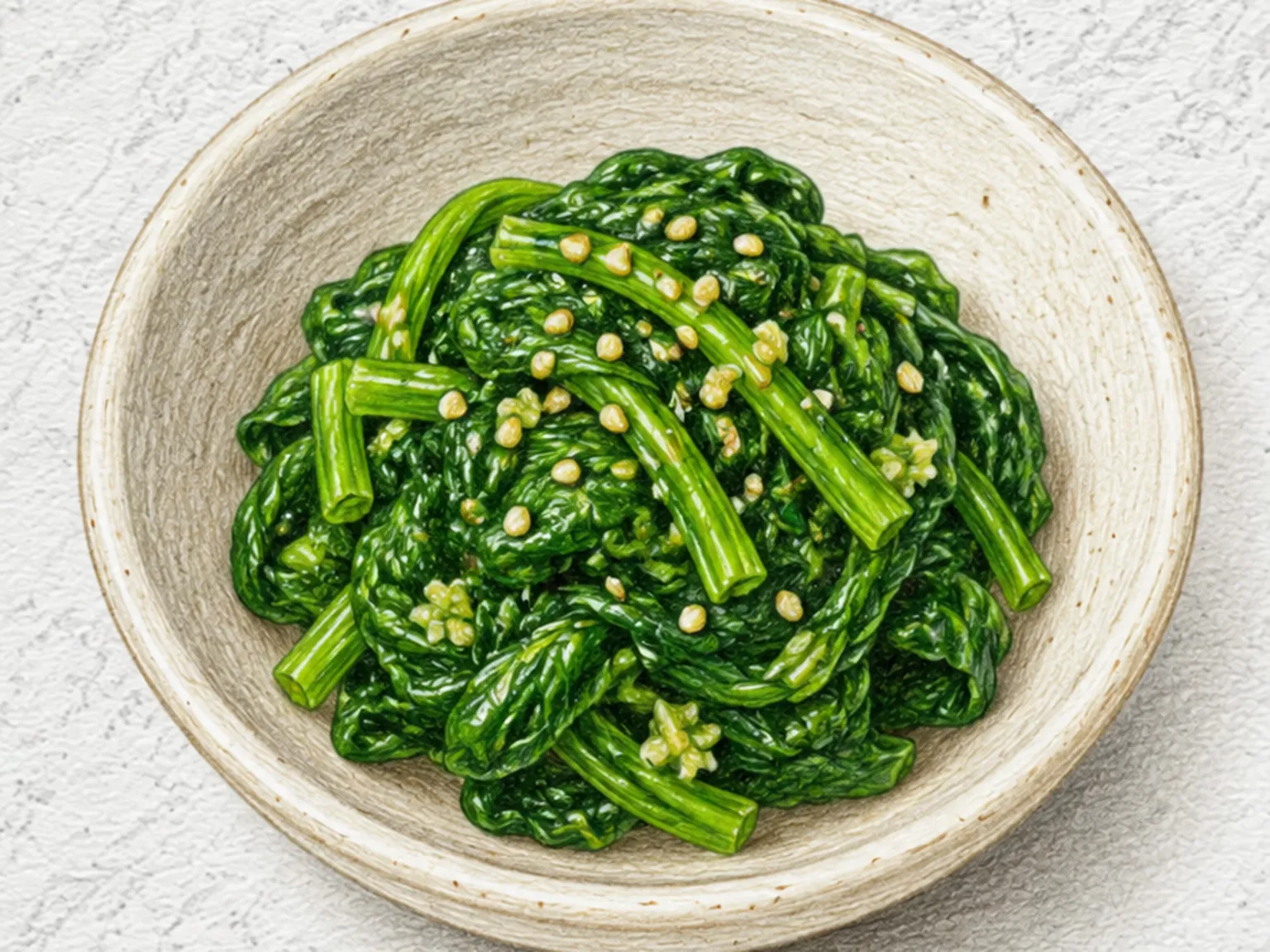
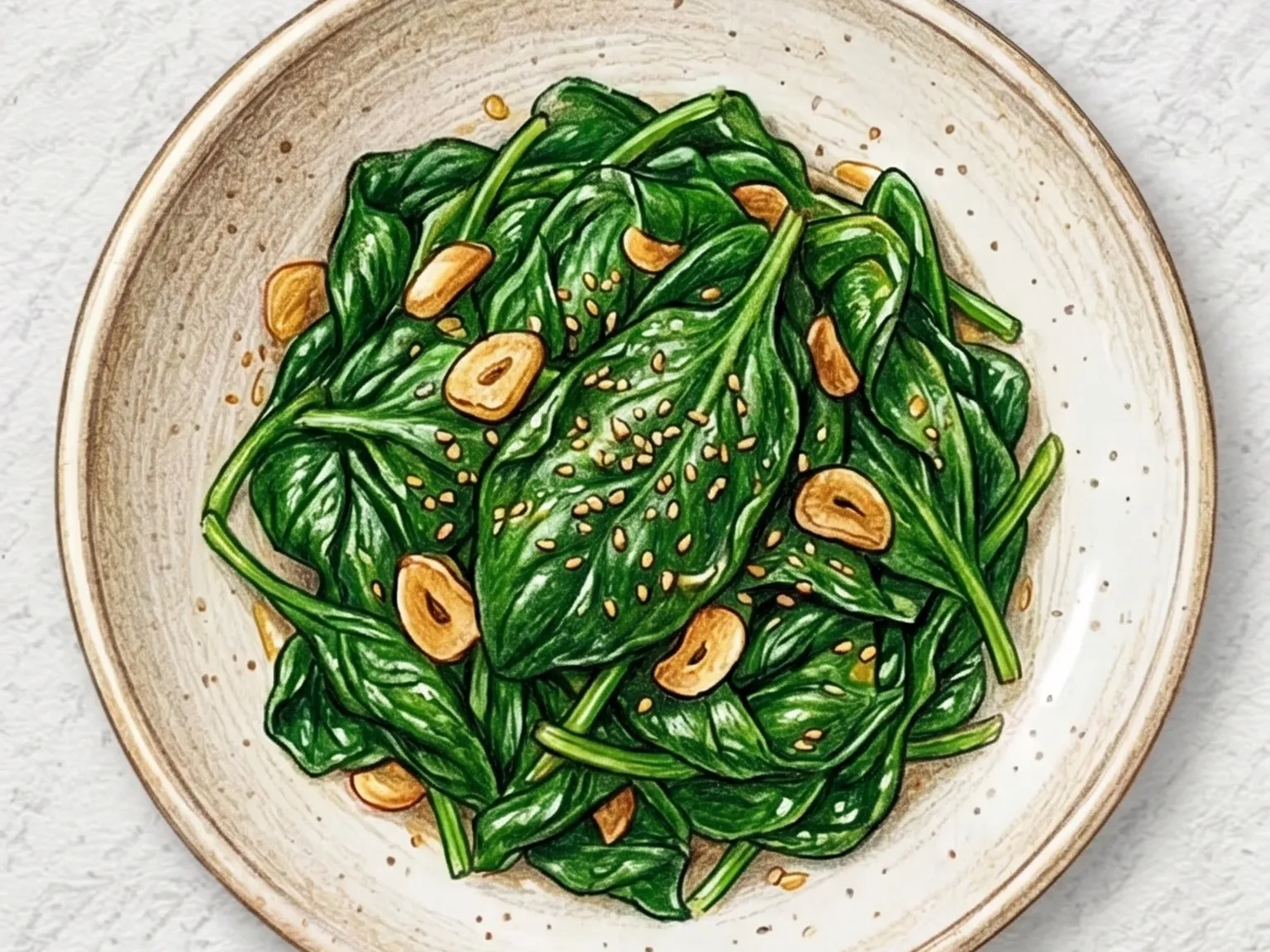
Sigeumchi-bokkeum is a Korean sauteed spinach side dish cooked in under five minutes -- spinach is stir-fried with sliced garlic in a hot pan with cooking oil for just two minutes, then seasoned with soy sauce. Draining the spinach thoroughly before cooking is essential; otherwise excess water pools in the pan and steams the leaves instead of searing them. Sesame oil and toasted sesame seeds added at the end provide a nutty finish that tempers spinach's mild grassiness. The brief cooking preserves the leaves' deep green color and most of their nutrients.
Adjust Servings
Instructions
- 1
Wash and drain spinach.
- 2
Sauté garlic in oil.
- 3
Add spinach and stir-fry on high heat 2 minutes.
- 4
Season with soy sauce, finish with sesame oil and seeds.
As an Amazon Associate, we may earn from qualifying purchases.
Tips
Nutrition (per serving)
More Recipes

Korean Stir-Fried Shrimp (Garlic Butter Soy Glazed Shrimp)
Saeu-bokkeum is a Korean shrimp stir-fry cooked in melted butter with garlic, then seasoned with soy sauce, sugar, and black pepper. The shrimp are peeled and deveined, patted dry, and cooked only until they turn pink -- a matter of minutes. Butter and garlic form the aromatic base, while soy sauce and a small amount of sugar build a savory-sweet glaze that coats each shrimp without a separate sauce. Green onion scattered on top adds a fresh bite to finish.

Korean Spicy Beef Stir-Fry
Sogogi gochujang-bokkeum marinates thin-sliced beef in a paste of gochujang, soy sauce, sugar, and minced garlic, then stir-fries it over high heat. The chili paste's spiciness and the sugar caramelize together on the meat's surface, building a dark, sticky glaze with layered heat. Onion cooked alongside the beef releases moisture that helps the seasoning distribute evenly across every slice. A finish of sesame oil adds a roasted nuttiness on top of the bold, spicy-sweet profile -- intensely flavored enough that a small portion carries a full bowl of rice.

Korean Stir-Fried Chicken
Dak-bokkeum is a Korean stir-fried chicken dish in a soy sauce-based seasoning. A mix of soy sauce, sugar, and minced garlic coats the chicken evenly, producing a salty, umami-forward flavor. Onion and carrot cook together with the chicken, and their released moisture blends with the seasoning to form a natural sauce. A final drizzle of sesame oil wraps everything in a nutty aroma. Using breast meat yields a leaner result, while thigh meat produces a more moist, succulent texture.

Korean Clam Stir-Fry (Manila Clams with Butter, Garlic and Chili)
Bajirak bokkeum is a Korean clam stir-fry where purged manila clams are cooked quickly over high heat with butter, garlic, and cheongyang chili. Rice wine goes in first and the lid is closed so the alcohol steam helps the clams open rapidly while neutralizing any briny off-notes. Once the shells open, butter is added and emulsifies with the released clam juices, forming a naturally salty, rich sauce without any additional effort. Generous sliced garlic infuses the butter sauce with depth, and the cheongyang chili cuts through the richness with its sharp heat. A small amount of soy sauce adjusts the seasoning, kept restrained because the clams carry their own salinity. Scallion is tossed in at the very end for a final layer of aroma before the pan comes off the heat. Total cooking time stays under three to four minutes to prevent the clam meat from shrinking and toughening. The remaining sauce in the pan is intensely flavored and pairs exceptionally well with bread for soaking up every last drop.

Korean Spinach Soybean Paste Soup
Sigeumchi-doenjang-guk is a foundational Korean soup that combines spinach with soybean paste in anchovy-kelp stock, producing a broth that is earthy, warm, and deeply familiar to anyone who grew up eating Korean home cooking. Doenjang is dissolved into the simmering stock first, establishing a savory, slightly funky baseline. Spinach is added near the end and wilts within seconds, contributing a soft green color and a faint bitterness that, rather than clashing with the fermented paste, amplifies its complexity. Tofu is a common addition that gives the soup more substance and a creamy counterpoint to the leafy greens. Garlic and green onion handle the aromatics, and no chili is used, keeping the soup on the gentle end of the Korean flavor spectrum. The key technical point is timing: spinach left in boiling liquid too long turns dull and mushy, so experienced cooks drop it in and turn off the heat almost immediately. This soup is one of the most frequently prepared versions of doenjang-guk in Korean kitchens precisely because spinach is available year-round, affordable, and cooks in moments. It pairs seamlessly with any banchan spread and never competes for attention on the table.

Korean Spinach Soybean Paste Porridge
Sigeumchi doenjang-juk is a Korean porridge that marries the deep, fermented savoriness of doenjang (soybean paste) with the mild green flavor of finely chopped spinach. Soaked rice is first toasted in sesame oil to build a nutty base, then simmered in anchovy stock with doenjang and minced garlic until the grains break down into a thick, creamy consistency. Spinach goes in at the very end and cooks just long enough to wilt, preserving its bright color and delicate vegetal aroma. The soybean paste rounds out any slight astringency from the spinach, creating a smooth, easy-to-eat bowl. This porridge is a go-to when the stomach needs something gentle - warm, savory, and quietly nourishing.