Korean Spinach Soybean Paste Soup
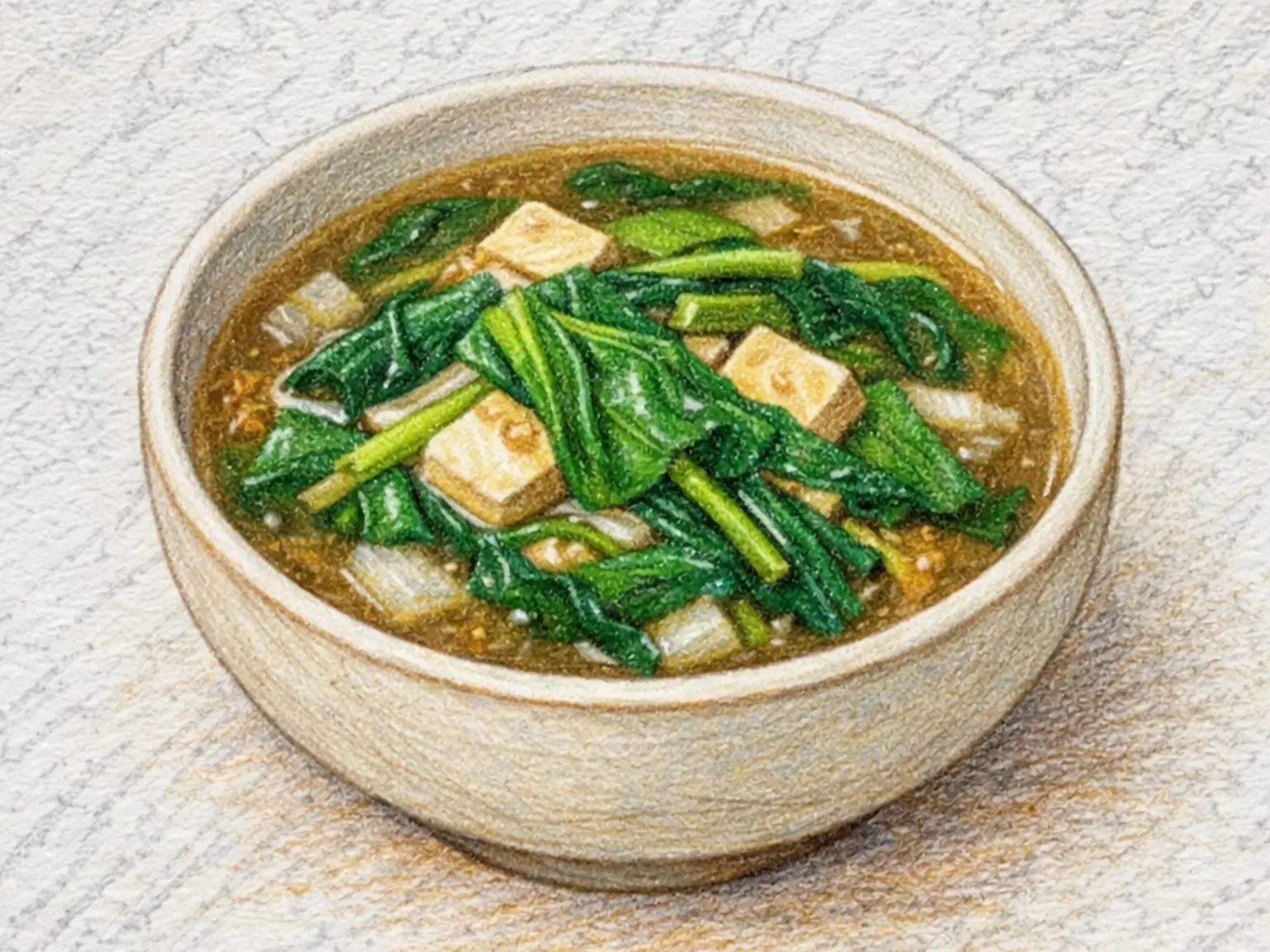
Sigeumchi-doenjang-guk is a foundational Korean soup that combines spinach with soybean paste in anchovy-kelp stock, producing a broth that is earthy, warm, and deeply familiar to anyone who grew up eating Korean home cooking. Doenjang is dissolved into the simmering stock first, establishing a savory, slightly funky baseline. Spinach is added near the end and wilts within seconds, contributing a soft green color and a faint bitterness that, rather than clashing with the fermented paste, amplifies its complexity. Tofu is a common addition that gives the soup more substance and a creamy counterpoint to the leafy greens. Garlic and green onion handle the aromatics, and no chili is used, keeping the soup on the gentle end of the Korean flavor spectrum. The key technical point is timing: spinach left in boiling liquid too long turns dull and mushy, so experienced cooks drop it in and turn off the heat almost immediately. This soup is one of the most frequently prepared versions of doenjang-guk in Korean kitchens precisely because spinach is available year-round, affordable, and cooks in moments. It pairs seamlessly with any banchan spread and never competes for attention on the table.
Adjust Servings
Instructions
- 1
Trim, wash, and halve the spinach.
- 2
Bring stock to a boil and dissolve soybean paste through a strainer.
- 3
Add diced tofu and simmer for 5 minutes.
- 4
Add spinach and garlic, then cook 3 more minutes.
- 5
Add green onion and turn off heat to keep freshness.
As an Amazon Associate, we may earn from qualifying purchases.
Tips
Nutrition (per serving)
More Recipes

Korean Spring Cabbage Soybean Paste Soup
Spring cabbage and doenjang are simmered in rice-rinsing water, which adds a subtle starchy body to the broth. The thicker cabbage stems go in first to soften properly, while the tender leaves are added later to preserve their natural sweetness. Tofu, a touch of red chili flakes, and green onion round out the bowl, making it a seasonal home-style soup with layered flavor and gentle warmth.

Korean Zucchini Soybean Paste Soup
Aehobak doenjang-guk is the soup Koreans think of when they think of home - a bowl of soybean paste broth with soft zucchini that appears on dinner tables more often than any other guk. The foundation is anchovy-kelp stock, which provides a clean umami base for the doenjang to dissolve into. Zucchini is added after the broth has simmered with onion and garlic, cooking just five minutes so each half-moon slice holds its shape while releasing a gentle sweetness into the liquid. Cubed tofu goes in last, warming through without breaking apart. The finished soup is cloudy and golden, with the earthy funk of fermented soybean paste sitting underneath the vegetable sweetness. It is the kind of dish that Korean mothers make when nothing else seems right - uncomplicated, warm, and restorative.

Korean Turnip Soybean Paste Soup
Sunmu doenjang-guk is a homestyle soybean paste soup that uses turnip as its starring vegetable and rice-rinsing water as its liquid base. The starchy water softens the doenjang's salinity, giving the broth a rounded, almost creamy quality that straight water cannot achieve. Turnips cook faster than daikon and yield a more delicate sweetness, along with a faint peppery edge that adds quiet complexity. As the turnip pieces simmer, a subtle purple blush from the skin tints the broth, making it a shade more elegant than an ordinary doenjang-guk. Cubed tofu is a natural companion, its neutral creaminess absorbing the fermented broth, while sliced scallion adds a final aromatic layer. The soup is at its best between autumn and early winter when turnips are in season, their sugars concentrated by cooler soil temperatures. Because the ingredient list is short, the quality of the doenjang matters more here than in busier soups - a well-aged paste with deep fermentation will carry the bowl, while a mediocre one will leave it flat.

Korean Napa Outer Leaf Soybean Soup
Ugeoji doenjang-guk is a deeply comforting soybean paste soup made with the tough outer leaves of napa cabbage that might otherwise be discarded. The leaves are first massaged with doenjang, perilla oil, and garlic, a step that drives the fermented paste deep into the cabbage's thick veins so that when the soup simmers, the flavor releases gradually into the broth. Rice-rinsing water replaces plain stock as the cooking liquid, adding a gentle starchiness that rounds the doenjang's salt into something softer and more enveloping. As the ugeoji cooks down, it turns from a leathery sheet into a silky, almost melting tangle that drapes over the spoon and floods the mouth with concentrated vegetable-and-miso flavor. The broth itself becomes a murky, golden-brown pool of umami, tasting of earth, fermentation, and the quiet bitterness that only well-cooked greens provide. Cubed tofu gives textural relief, and thin rings of cheongyang chili pepper, if added, introduce a sharp heat that cuts the richness. It is a soup that transforms humble ingredients into something far greater than their parts.

Korean Spinach Soybean Paste Porridge
Sigeumchi doenjang-juk is a Korean porridge that marries the deep, fermented savoriness of doenjang (soybean paste) with the mild green flavor of finely chopped spinach. Soaked rice is first toasted in sesame oil to build a nutty base, then simmered in anchovy stock with doenjang and minced garlic until the grains break down into a thick, creamy consistency. Spinach goes in at the very end and cooks just long enough to wilt, preserving its bright color and delicate vegetal aroma. The soybean paste rounds out any slight astringency from the spinach, creating a smooth, easy-to-eat bowl. This porridge is a go-to when the stomach needs something gentle - warm, savory, and quietly nourishing.

Korean Soybean Paste Stew
Doenjang jjigae is one of the most iconic stews in Korean home cooking. Fermented soybean paste is dissolved into a simple broth and simmered with tofu, potato, zucchini, and onion until everything melds together. Garlic and a Cheongyang chili add aromatic warmth and a mild kick that lifts the rich, earthy base. This is the kind of everyday stew that anchors a Korean meal, pairing effortlessly with rice and any combination of banchan.