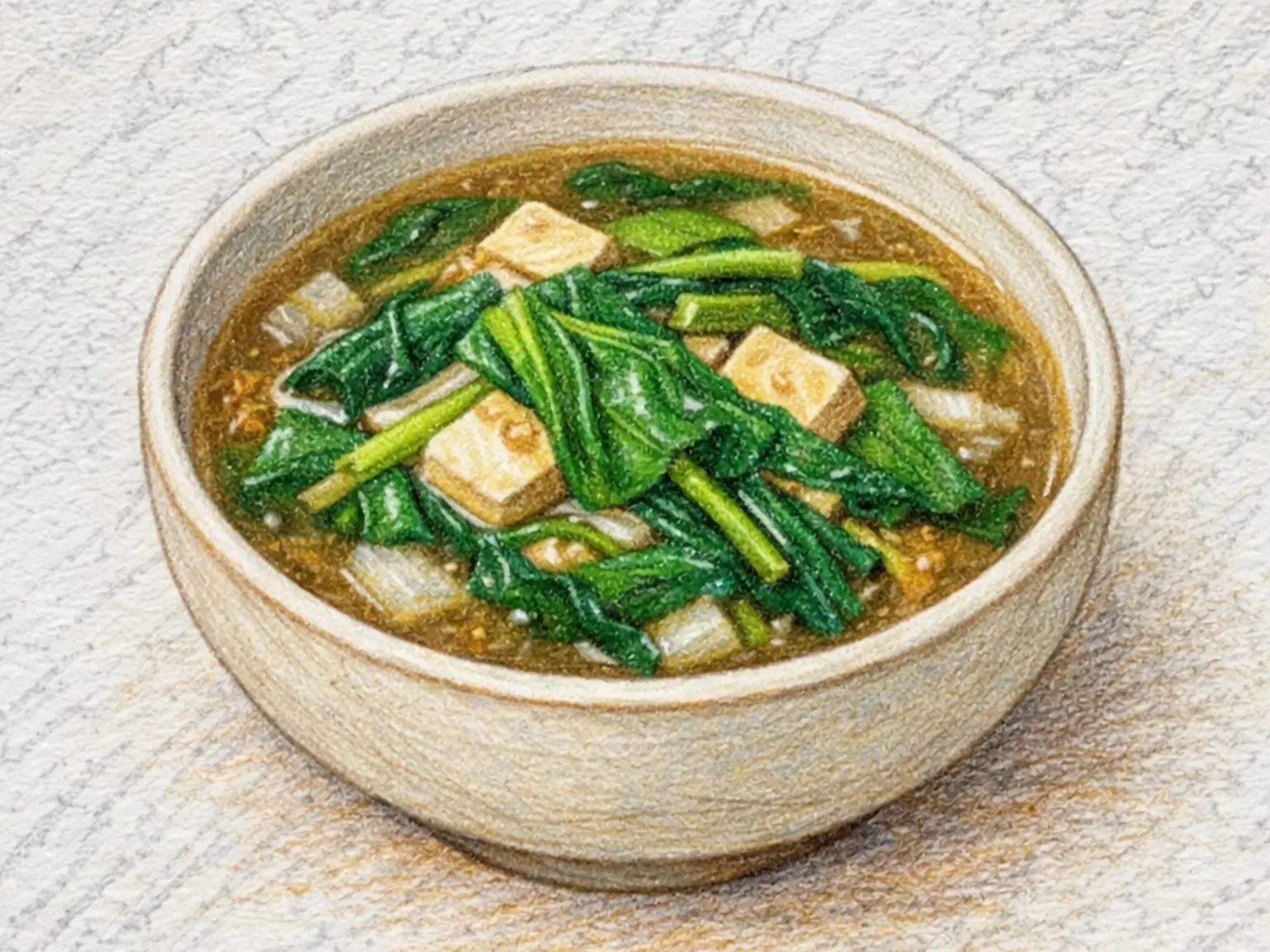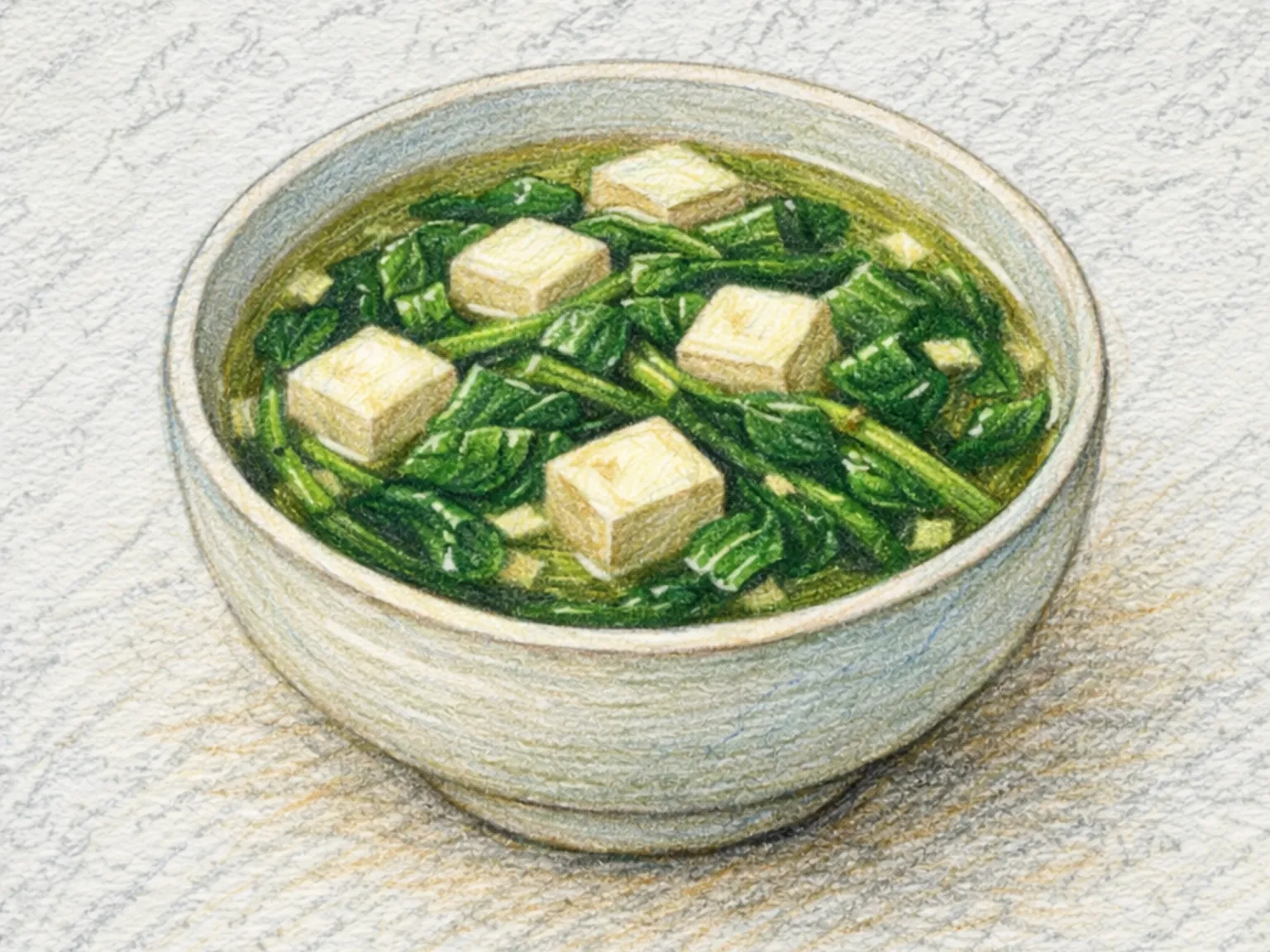
Korean Spinach Tofu Soup
Sigeumchi-dubu-guk is a clear, mild Korean soup in which spinach and tofu float in an anchovy-kelp broth seasoned only with soup soy sauce - no fermented paste, no chili. The result is a bowl of quiet transparency where each ingredient's natural flavor is audible: the green, slightly mineral taste of spinach, the neutral creaminess of tofu, and the clean savor of the stock. A small amount of minced garlic builds umami in the background, and a single drop of sesame oil on the surface adds a whisper of richness. This soup is intentionally gentle, which is exactly why Korean families rely on it so heavily - it suits every palate and every age group, from toddlers to grandparents. Cooks often serve it alongside bold, spicy dishes because the clear broth acts as a reset between intense bites. The technique is straightforward but timing matters: tofu should be cut into generous cubes so it holds its shape during simmering, and spinach should enter the pot only at the very end to preserve its color and a touch of texture. The entire preparation takes under fifteen minutes and requires only four or five ingredients, making it one of the most practical everyday soups in Korean cooking.
Adjust Servings
Instructions
- 1
Trim and wash spinach, then cut into 4 cm lengths.
- 2
Dice tofu and finely slice green onion.
- 3
Bring anchovy-kelp stock to boil, then add garlic and soup soy sauce.
- 4
Add tofu first and simmer for 5 minutes to absorb flavor.
- 5
Add spinach and cook only 2 minutes to keep color and texture.
- 6
Adjust with salt, add green onion and sesame oil, and finish immediately.
As an Amazon Associate, we may earn from qualifying purchases.
Tips
Nutrition (per serving)
More Recipes

Korean Sigeumchi Dubu Jjigae (Spinach Tofu Stew)
This light stew combines fresh spinach and soft tofu simmered in an anchovy-kelp stock seasoned with soup soy sauce and perilla oil. Zucchini and onion add natural sweetness to the clean, mild broth. The earthy flavor of spinach pairs naturally with the creamy texture of tofu, making this a comforting everyday Korean stew that is gentle on the stomach.

Korean Spinach Soybean Paste Soup
Sigeumchi-doenjang-guk is a foundational Korean soup that combines spinach with soybean paste in anchovy-kelp stock, producing a broth that is earthy, warm, and deeply familiar to anyone who grew up eating Korean home cooking. Doenjang is dissolved into the simmering stock first, establishing a savory, slightly funky baseline. Spinach is added near the end and wilts within seconds, contributing a soft green color and a faint bitterness that, rather than clashing with the fermented paste, amplifies its complexity. Tofu is a common addition that gives the soup more substance and a creamy counterpoint to the leafy greens. Garlic and green onion handle the aromatics, and no chili is used, keeping the soup on the gentle end of the Korean flavor spectrum. The key technical point is timing: spinach left in boiling liquid too long turns dull and mushy, so experienced cooks drop it in and turn off the heat almost immediately. This soup is one of the most frequently prepared versions of doenjang-guk in Korean kitchens precisely because spinach is available year-round, affordable, and cooks in moments. It pairs seamlessly with any banchan spread and never competes for attention on the table.

Korean Water Dropwort Tofu Soup
Minari-dubu-guk is a mild, clear Korean soup that pairs soft cubes of tofu with water dropwort, an herb prized for its bright, celery-like fragrance. The soup is built on a simple anchovy-kelp stock, into which the tofu goes first and simmers gently. Water dropwort is added only in the final moments before the flame is turned off, so its hollow stems retain a slight crunch and its volatile aromatic compounds stay intact rather than cooking away. Seasoning is minimal - soup soy sauce, garlic, and perhaps a pinch of salt - because the point of this soup is restraint: the clean stock, the herb's green perfume, and the pillowy tofu are meant to speak quietly. Spring is the ideal season, when water dropwort is at its most tender and aromatic. Korean cooks often serve this alongside richer, heavier dishes because the light broth acts as a palate cleanser between bites. It is the kind of soup that rarely draws attention at the table yet is always missed when absent.

Korean Green Seaweed Tofu Soup
Salted cheonggak seaweed is desalinated in cold water, then simmered with tofu and onion in a broth built on perilla oil, tuna extract, and soup soy sauce. The seaweed introduces an oceanic brininess and a distinctive crunchy texture that contrasts with the soft tofu cubes. Sauteing onion and garlic in perilla oil first layers in a nutty aroma, and at 140 calories per serving, the soup stays notably light.

Korean Spinach Clam Soup (Light Shellfish and Greens Broth)
Sigeumchi-bajirak-guk pairs spinach and manila clams in a light, transparent broth that showcases the natural flavor of both ingredients with minimal interference. The clams are purged of sand, placed in cold water, and brought to a boil; as each shell opens, it releases a briny, mineral-rich liquor that becomes the soup's foundation without any need for additional stock. Spinach is added only in the final minute so the leaves wilt just enough to soften while retaining their vivid green color and nutritional content. Soup soy sauce and a touch of garlic round out the seasoning, and the restraint is intentional - anything heavier would mask the delicate sweetness of the clam broth. The spinach's mild, grassy undertone quietly absorbs any seafood sharpness, leaving the overall flavor clean and balanced. Nutritionally, the pairing is notable: spinach is rich in iron, and clams are high in taurine and zinc, making this a soup frequently recommended for children and pregnant women in Korean households. From start to finish, the whole process takes about fifteen minutes, which explains why it appears so often on weeknight dinner tables.

Korean Steamed Tofu with Spinach
Sigeumchi dubu jjim is a Korean steamed dish of firm tofu, spinach, and shiitake mushrooms seasoned with regular and soup soy sauce, then covered and gently steamed over low heat. Patting the tofu dry beforehand keeps the broth clear, and the natural moisture released by the vegetables creates enough steam to cook everything evenly. Shiitake adds an umami layer that gives the simple soy seasoning unexpected depth, and perilla oil drizzled at the very end brings a distinctive nutty fragrance. Low in calories yet high in protein, it makes a light and nourishing side dish for weeknight dinners.