Korean Seasoned Spinach (Garlic Sesame Oil Blanched Namul)
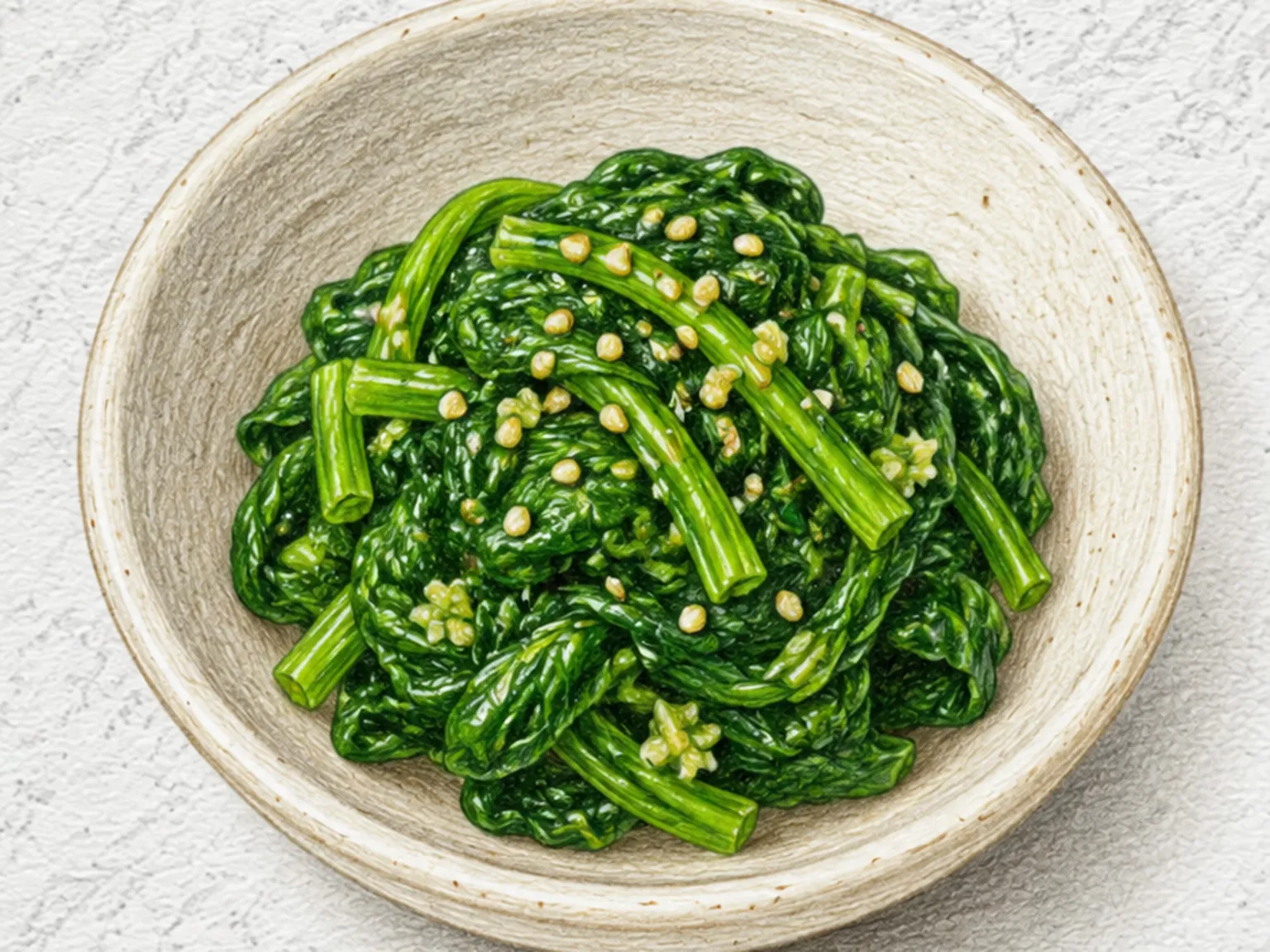
Sigeumchi-namul blanches 300 grams of spinach in salted boiling water for exactly 30 seconds - any longer and the leaves turn mushy. An immediate rinse in cold water stops the cooking and locks in the bright green color. After squeezing out as much water as possible, the spinach is cut into 5-centimeter lengths and dressed by hand with minced garlic, soy sauce, sesame oil, and a pinch of salt. Mixing by hand rather than with utensils ensures the seasoning reaches every fold and crevice of the wilted leaves. Sesame seeds finish the dish with a light crunch, and the result is a clean, nutty-flavored namul that appears on nearly every Korean home-cooked table.
Adjust Servings
Instructions
- 1
Wash 300g spinach thoroughly, removing dirt from the roots.
- 2
Blanch spinach in salted boiling water for 30 seconds.
- 3
Rinse in cold water immediately, then squeeze out excess water.
- 4
Cut into 5cm lengths.
- 5
Add minced garlic, soy sauce, sesame oil, and salt, then mix by hand.
- 6
Garnish with sesame seeds.
As an Amazon Associate, we may earn from qualifying purchases.
Tips
Nutrition (per serving)
More Recipes

Korean Seasoned Bracken Fern
Gosari - bracken fern - is one of Korea's oldest foraged vegetables, with consumption records dating to the Three Kingdoms period. It is a mandatory component of bibimbap and a required dish on ancestral rite tables (jesa). Dried gosari must soak overnight and then boil until the tough fibers relax into a distinctive springy chew. The rehydrated fern is stir-fried in perilla oil with garlic, then briefly braised with soup soy sauce and a splash of water. Perilla oil rather than sesame is the traditional choice because its herbal note pairs more naturally with gosari's woodsy, forest-floor flavor. Koreans prepare large batches during holidays and eat it over several days.

Korean Seasoned Carrot Namul
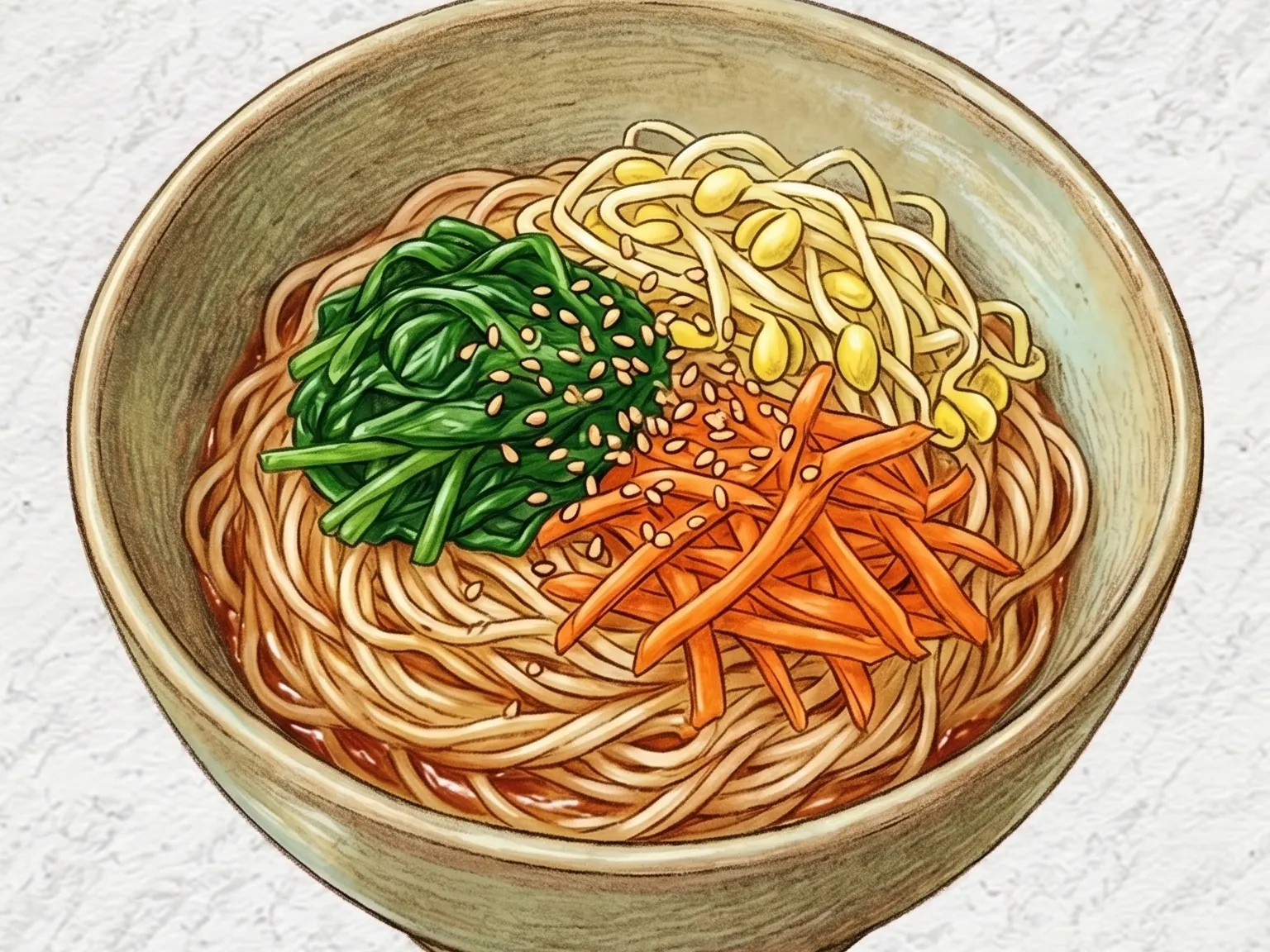
Carrot namul is one of the five-color banchan Koreans prepare for ancestral rites, where orange represents fire. Julienned thin, the carrots are salted briefly to shed water, then stir-fried with garlic for two to three minutes - just enough to soften the raw edge while keeping an audible crunch. No soy sauce or chili enters the pan; seasoning stays minimal to preserve natural sweetness. A final toss with sesame oil and seeds rounds out this clean, single-ingredient side.

Korean Seasoned Amaranth Greens
Amaranth greens - biryeom - are a summer vegetable with deep green, purple-tinged leaves that bleed reddish into the blanching water. Blanched one minute, squeezed, and dressed with doenjang, soup soy sauce, garlic, and scallion. Perilla oil replaces sesame oil, lending a herbal note matching amaranth's mineral taste. The leaves hold firmer than mallow or spinach, gripping the dressing without collapsing. A countryside banchan tied to the short summer harvest.

Korean Seasoned Bean Sprouts
Kongnamul-muchim is arguably the most frequently served banchan on Korean family tables - boiled soybean sprouts dressed simply with sesame oil, garlic, and salt. The famous never-open-the-lid rule during cooking has a biochemical basis: the lipoxygenase enzyme in soybeans activates during early heating and produces the raw-bean off-odor. Keeping the lid sealed maintains a full boil at 100 degrees Celsius, which rapidly deactivates the enzyme. Three minutes of covered boiling is the standard. Cold water rinse after cooking halts carryover heat, preserving the crisp stem texture, and thorough squeezing prevents the dressing from becoming watery. Adding gochugaru creates the spicy red version; omitting it yields the white baek-kongnamul variant. This namul is one of the mandatory components of bibimbap and is particularly associated with Jeonju, where kongnamul-gukbap (sprout rice soup) and bibimbap together define the city's culinary identity.

Korean Sautéed Spinach (Garlic Soy Sesame Spinach Side)
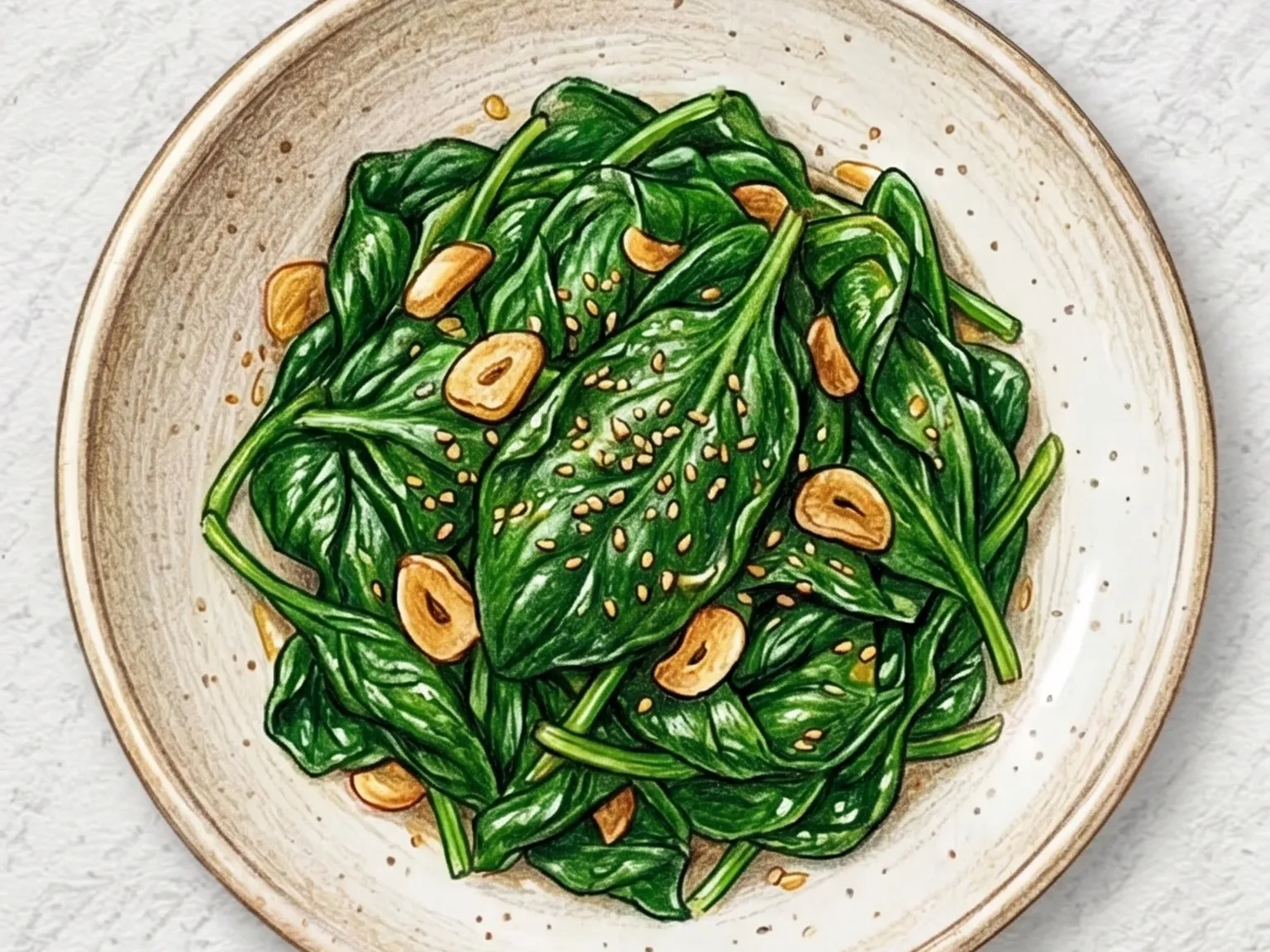
Sigeumchi-bokkeum is a Korean sauteed spinach side dish cooked in under five minutes -- spinach is stir-fried with sliced garlic in a hot pan with cooking oil for just two minutes, then seasoned with soy sauce. Draining the spinach thoroughly before cooking is essential; otherwise excess water pools in the pan and steams the leaves instead of searing them. Sesame oil and toasted sesame seeds added at the end provide a nutty finish that tempers spinach's mild grassiness. The brief cooking preserves the leaves' deep green color and most of their nutrients.

Korean Doenjang Braised Tofu
Doenjang-dubu-jorim is a Korean braised tofu dish cooked in a fermented soybean paste sauce. The doenjang penetrates the tofu as it simmers, infusing each slice with a nutty, salty depth characteristic of Korean fermented condiments. Zucchini and onion cook alongside the tofu, contributing natural sweetness that tempers the salt. It is an economical, easy-to-prepare side dish that keeps well in the refrigerator for several days.