Korean Konjac Noodle Salad
Quick answer
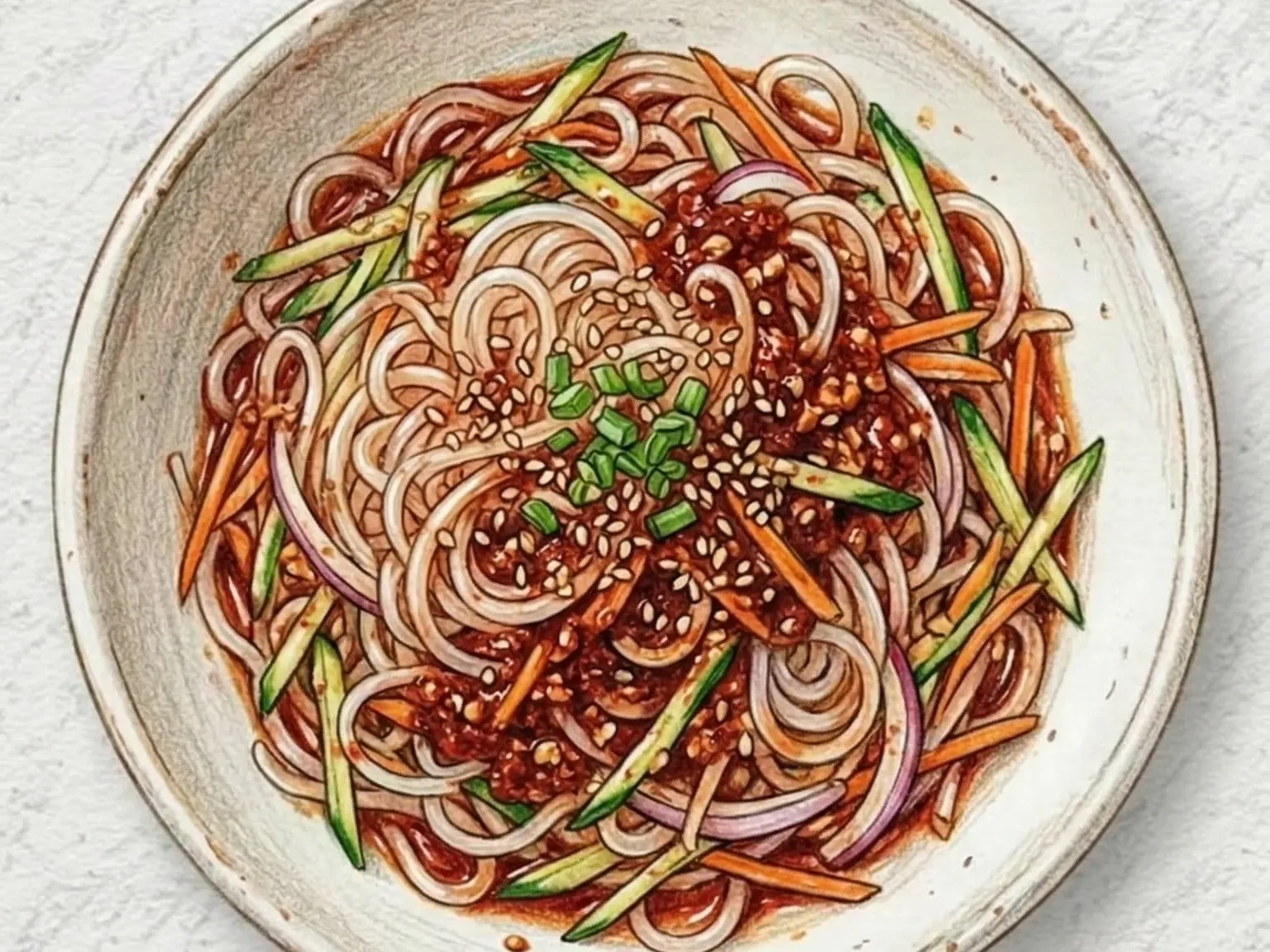
Silgonyak-chae-muchim tosses 250 grams of blanched konjac noodles with julienned cucumber, carrot, and onion in a gochujang-based dressing spiked with vinegar, sugar, soy...
What makes this special
- Silgonyak-chae-muchim tosses chewy konjac noodles in a spicy gochujang and vinegar sauce.
- 2-minute boil removes the earthy off-smell specific to konjac noodles
- Chewy konjac against crisp cucumber and carrot is the defining texture contrast
Key ingredients
Core cooking flow
- 1 Rinse 250 g of konjac noodles under cold water, then blanch in vigorously bo...
- 2 Cut 100 g cucumber, 60 g carrot, and 50 g onion into thin julienne strips about 0.3 cm wide.
- 3 Combine 1.5 tbsp gochujang, 1 tbsp vinegar, 1 tsp sugar, 1 tsp soy sauce, an...
Silgonyak-chae-muchim tosses 250 grams of blanched konjac noodles with julienned cucumber, carrot, and onion in a gochujang-based dressing spiked with vinegar, sugar, soy sauce, and garlic. Blanching the noodles for two minutes removes their faint alkaline smell and softens their rubbery chew to a pleasant springiness. The vegetables provide crisp contrast - cucumber adds a cool snap, carrot a mild sweetness, and onion a sharp bite. The dressing clings to the translucent noodles, turning them a vivid reddish hue. At only 95 calories per serving, this banchan relies on texture and bold seasoning rather than fat for its appeal. Chilling for 10 minutes before serving firms up the noodles and intensifies the tangy-spicy flavor profile.
Instructions
Read the steps as a cooking flow: prep, heat, seasoning, doneness control, and finish.
- 1Heat
Rinse 250 g of konjac noodles under cold water, then blanch in vigorously boiling water for 2 minutes to remove their faint alkaline smell. Drain through a colander and press gently to squeeze out excess moisture.
- 2Prep
Cut 100 g cucumber, 60 g carrot, and 50 g onion into thin julienne strips about 0.3 cm wide.
Keep the cuts uniform so each piece absorbs the dressing evenly and provides consistent crunch.
- 3Season
Combine 1.5 tbsp gochujang, 1 tbsp vinegar, 1 tsp sugar, 1 tsp soy sauce, and 0.5 tsp minced garlic in a mixing bowl and stir until the dressing is smooth and evenly blended.
- 4Season
Add the drained konjac noodles and julienned vegetables to the dressing and toss for about 30 seconds, turning steadily until every strand and piece is coated with the spicy-tangy sauce.
- 5Season
Drizzle 1 tsp sesame oil evenly over the salad to add a toasted, nutty fragrance, then scatter 1 tsp sesame seeds on top and fold them in lightly before serving.
- 6Step
Transfer the bowl to the refrigerator and chill for 10 minutes before serving cold.
The temperature firms up the springy noodle texture and intensifies the tangy heat of the gochujang dressing noticeably.
After the steps
Pick a recipe that fits this dish.
Continue with shared ingredients, meal pairings, or a similar method.
Recipes That Go Well With This
More Side dishes →Based on shared ingredients and meal pairing
Korean Tofu and Bell Pepper Salad
Paprika-dubu-muchim combines 300 grams of blanched firm tofu, crumbled coarsely by hand, with julienned red and yellow bell peppers, cucumber, and onion in a soy-vinegar dressing. Blanching the tofu for just one minute removes any raw bean flavor while preserving a soft, creamy texture that contrasts with the crisp, sweet snap of the peppers. The onion is soaked in cold water for three minutes to tame its bite before joining the bowl. Sesame oil and minced garlic round out the dressing, adding depth without heaviness. Chilling the finished dish for 10 minutes before serving sharpens the vegetable flavors and makes the tofu firmer to the bite.
Korean Crisp Chili Pepper Salad
Asakigochu is a specific variety of Korean pepper characterized by its thick walls and a distinct snap when bitten. This pepper was developed to prioritize texture over spiciness, resulting in a vegetable that offers a significant crunch without the heat of other varieties. The preparation of this dish involves a brief blanching process where the peppers are submerged in boiling water for a duration of exactly twenty seconds. This short exposure to heat is sufficient to eliminate the raw, grassy aroma often found in uncooked peppers, yet it is not long enough to soften the cellular structure. Consequently, the characteristic crispness remains unchanged. The seasoning sauce is a mixture of two traditional fermented pastes. Doenjang provides a salty and fermented depth, while gochujang adds complexity. To balance these heavy flavors, vinegar is added for sharpness and oligosaccharide syrup is used to adjust the consistency and add a subtle sweetness. This combination creates a contrast between the deep, funky notes of the fermented beans and a bright acidity that highlights the clean taste of the pepper. Timing is important for the final result. It is best to allow the seasoned peppers to rest for five minutes before serving. This pause allows the flavors from the thick sauce to soak into the pepper walls instead of simply sitting on the exterior. This side dish functions well as a standard accompaniment to a bowl of rice or as a more fullly flavored snack to be consumed while drinking soju.
Korean Steamed Soybean Sprouts
Kongnamul-jjim is a traditional Korean side dish centered on steamed soy bean sprouts. The preparation involves layering fresh bean sprouts with a mixture of red chili flakes, soy sauce, and finely minced garlic before placing them in a pot. A critical aspect of the cooking process is keeping the lid tightly closed from the beginning until the sprouts are fully cooked. This sealed environment creates a build-up of steam that is essential for maintaining the natural crispness of the sprouts while ensuring that the savory and spicy seasoning permeates each individual strand. The resulting flavor profile features a sharp heat from the red pepper that complements the clean and refreshing qualities of the bean sprouts, resulting in a light and clear finish. To finish the dish, a generous drizzle of sesame oil and a handful of sliced scallions are added to provide a fragrant, toasted aroma and a layer of savory depth. Because the primary ingredients are inexpensive and the entire process from preparation to plating takes less than fifteen minutes, this dish serves as a dependable addition to any meal when the table requires an extra side dish on short notice. For a different aromatic profile, perilla oil can be substituted for sesame oil to introduce an earthy and more herbaceous scent. Individuals seeking a more intense level of spice can add sliced Cheongyang chilies during the cooking stage to elevate the heat.
Korean Broccoli Doenjang Salad
Blanched broccoli tossed in doenjang dressing is a modern Korean banchan that pairs Western ingredients with traditional fermented seasoning. Florets and thinly sliced stems blanch for ninety seconds in salted boiling water, then shock in cold water to lock in vivid green color and a firm, crisp bite. The dressing is built from doenjang stirred with rice vinegar and oligosaccharide syrup, combining fermented salt depth, acidity, and a gentle natural sweetness that lifts rather than masks the vegetable's mild bitterness. Using the stems alongside the florets eliminates waste and adds textural variety to each bite. Ready in under ten minutes and holds well refrigerated for two days.
Serve with this
Korean Stir-fried Mushrooms
Oyster mushrooms and shiitake are stir-fried over high heat until their moisture evaporates and their natural umami concentrates into each bite. Wiping the mushrooms with a damp cloth instead of rinsing under water is not a minor detail: washing introduces excess moisture that lowers pan temperature the moment the mushrooms hit the surface, which causes them to steam rather than sear. The pan must stay hot enough that the mushrooms develop light golden edges through the Maillard reaction, and that narrow window is when the deepest nutty flavor emerges. Water-logged mushrooms never reach it. Soy sauce supplies the salinity, and black pepper adds a sharp accent without obscuring the mushrooms' own flavor. Sesame oil is added after the heat is turned off to preserve its volatile fragrance; adding it while the pan is still hot burns off the aromatic compounds before they have a chance to coat the mushrooms. A handful of sliced green onion tossed in at the end brings color and a sharp, fresh bite against the earthy backdrop. At roughly 120 calories per serving, this side dish fits comfortably into any calorie-conscious meal plan while delivering plant-based protein and dietary fiber in a form that actually tastes worth eating.
Korean Perilla-Grilled Mushrooms
Songhwa mushrooms have thick caps with high moisture content, so they stay succulent and chewy when grilled. Sliced into thick pieces and tossed with a simple mix of perilla oil, soy sauce, garlic, salt, and pepper, they cook for about three minutes per side on a hot pan. The perilla oil imparts a distinctly nutty, toasted aroma that differs from sesame. Ground perilla seed is sprinkled on just before the heat is turned off, releasing fragrance without scorching. Finished with chopped chives, this vegetarian dish works equally well as a rice side or a drinking snack.
Refreshing Spicy Mulhoe Broth
Refreshing Spicy Mulhoe Broth is a Korean cold soup base for raw fish dishes. This recipe combines red pepper paste, red pepper powder, vinegar, sugar, plum syrup, and minced garlic. The mixture of six tablespoons of vinegar and two of plum syrup provides a double acidity that blocks fishy notes from seafood. Adding one hundred milliliters of lemon-lime soda introduces carbonation that lifts a bright, airy note in the broth. Alternatively, using pear juice instead of soda offers a sophisticated sweetness. To prepare, mix the paste first to remove dry pockets, stir in water, and add the soda last to preserve carbonation. Chill the broth for at least two hours or ferment it for a day to deepen the flavor. Serving it semi-frozen as a slushy lets the ice dilute the seasoning gradually as sashimi thaws.
Similar recipes
Korean Cucumber Doenjang Salad
Oi-doenjang-muchim dresses cucumber in a doenjang-based seasoning - a milder alternative to the gochugaru-forward oi-muchim, foregrounding the fermented soybean paste's savory depth over spicy heat. Cucumber is sliced into half-moons or diagonal cuts and salted for five minutes to draw out moisture; skipping this step dilutes the dressing into a watery puddle. The seasoning blends doenjang, soup soy sauce, minced garlic, sesame oil, and sesame seeds, with the doenjang quantity being the critical ratio - too much and the dish is aggressively salty, too little and the cucumber's blandness dominates. Roughly one tablespoon of doenjang to two cucumbers is the working proportion. The cucumber's cool moisture meets doenjang's deep umami to produce a combination that is refreshing yet substantial enough to anchor a rice meal, especially in summer. This banchan must be eaten promptly after assembly - over time, osmotic pressure draws water from the cucumber and collapses its crunch. Served alongside grilled meat, the doenjang's savoriness complements the char while cleansing the palate.
Korean Spicy Braised Tofu
Spicy dubu-jorim pan-sears firm tofu slabs cut 1.5 centimeters thick until golden on both sides, then braises them in a sauce of soy sauce, gochugaru, garlic, and sugar. Searing first firms the tofu so it holds its shape through the eight-minute simmer, during which onion and green onion cook alongside in the reducing liquid. The chili flakes deliver a direct, persistent heat that penetrates the tofu as the sauce thickens, balanced by the sugar's sweetness. A final circle of sesame oil ties the flavors together with a roasted, nutty aroma.
Bellflower Root and Pear Salad
Bellflower root, called doraji in Korean, is rubbed with salt to draw out its natural bitterness, then briefly blanched until its texture softens just enough at the surface while retaining a firm, pleasantly chewy bite. Julienned Korean pear is mixed in to bring cool sweetness and plenty of juice that offsets the root's dryness. The seasoning follows a traditional Korean muchim pattern: gochugaru for heat, vinegar for a sour lift, and fish sauce for a deep savory base. Sesame oil is drizzled in last, adding a toasted, nutty aroma that ties the whole dish together. The combination of bitter root, sweet pear, and sharp dressing makes each bite shift slightly as the flavors blend on the palate.