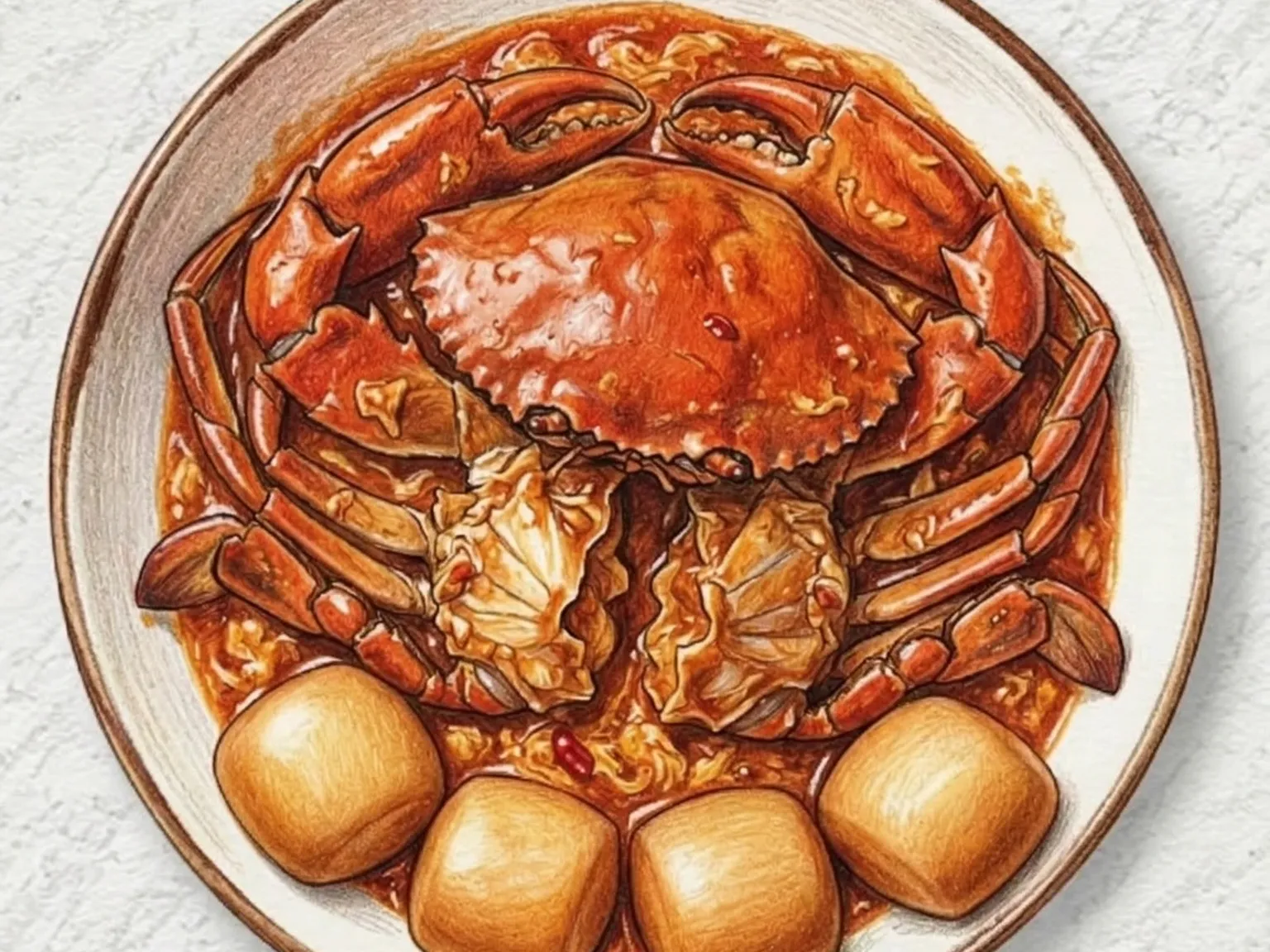
Singapore Chili Crab (Singaporean Whole Mud Crab in Sweet Spicy Sauce)
Singapore chili crab is a national dish built around whole mud crabs wok-fried in a thick, glossy sauce that balances sweet, sour, and spicy in every spoonful. The sauce is a mixture of ketchup, sambal, garlic, and sugar, brightened with rice vinegar and thickened at the end with beaten egg, which curdles into soft ribbons throughout the gravy. The crabs are cracked but not fully shelled, so diners must work for each piece of meat - prying open claws, sucking sauce from joints, and using the back of a spoon to scoop gravy-coated flesh from the body. Deep-fried mantou buns served alongside are the essential mop for the remaining sauce; no self-respecting plate leaves any behind. The eating is loud, messy, and communal, with stacks of napkins and finger bowls as standard table settings.
Adjust Servings
Instructions
- 1
Clean and halve crabs; lightly crack claws for better sauce penetration.
- 2
Heat oil in a wok and stir-fry garlic and ginger until aromatic.
- 3
Add ketchup, chili sauce, and sugar; cook 1 minute to build the base.
- 4
Add crab and stock, cover, and simmer for 8 minutes until crab is cooked.
- 5
Stir in starch slurry, then drizzle beaten egg slowly for silky ribbons.
- 6
When thickened, turn off heat and serve with bread or rice.
As an Amazon Associate, we may earn from qualifying purchases.
Tips
Nutrition (per serving)
More Recipes

Fish Head Curry (Coconut Tamarind Curry)
Fish head curry was born in 1940s Singapore when M.J. Gomez, a Keralite immigrant, noticed his Chinese customers' fondness for fish heads and married it with a South Indian curry base - creating a dish that belongs to no single culture but has become Singapore's own. A whole snapper head, sometimes weighing over a kilogram, simmers in a thick gravy of coconut milk, tamarind, curry leaves, fennel seeds, and fish curry powder; the collagen from the head dissolves into the broth, giving it a sticky, lip-coating richness. The cheek meat and the gelatinous flesh around the eyes absorb the most curry and are the most prized portions - fought over equally by Indian, Malay, and Chinese diners at the table. Okra, eggplant, and tomato stew alongside, each vegetable interacting with the gravy differently: okra thickens, eggplant absorbs like a sponge, and tomato contributes a fruity acidity. The dish is traditionally served on a banana leaf with steamed rice at restaurants along Singapore's Little India, where the head arrives in a clay pot still bubbling from the kitchen.

Hokkien Mee (Prawn Broth Stir-Fried Noodles)
Hokkien mee is a Singaporean stir-fried noodle dish that uses two types of noodles, yellow egg noodles and thin rice vermicelli, cooked together in rich prawn stock. The stock, made by roasting shrimp heads and shells until deeply fragrant, is what separates this dish from ordinary stir-fried noodles. High wok heat is non-negotiable; insufficient heat leaves excess moisture and mutes the flavors. Shrimp and squid are seared quickly over maximum flame to avoid overcooking, then both noodle types are tossed in and drenched with the prawn stock and soy sauce, cooking until the liquid is nearly absorbed into the strands. Bean sprouts go in for the final thirty seconds to preserve their snap. A squeeze of lime just before eating brings acidity that lifts the rich, marine-heavy flavors.

Hainanese Chicken Rice (Poached Chicken on Fragrant Rice)
Hainanese chicken rice begins with bone-in chicken thighs poached at a gentle simmer with ginger and scallion, never at a rolling boil, so the meat stays silky rather than stringy. The poaching broth is then strained and used to cook jasmine rice that has been briefly sauteed with garlic and ginger, giving each grain a fragrant, lightly oily coating. Adding a spoonful of rendered chicken fat to the rice pot deepens the aroma considerably. The chicken is cooled, sliced against the grain, and served alongside fresh cucumber slices that provide a crisp counterpoint to the soft meat. Two condiments define the dish: a chili-ginger dipping sauce that brings heat and acidity, and a thick dark soy sauce for caramel-like sweetness. Despite using only fundamental ingredients, the technique of temperature-controlled poaching and broth-cooked rice elevates the dish into something distinctly precise.

Korean Kkotge Gochujang Gui (Spicy Grilled Crab)
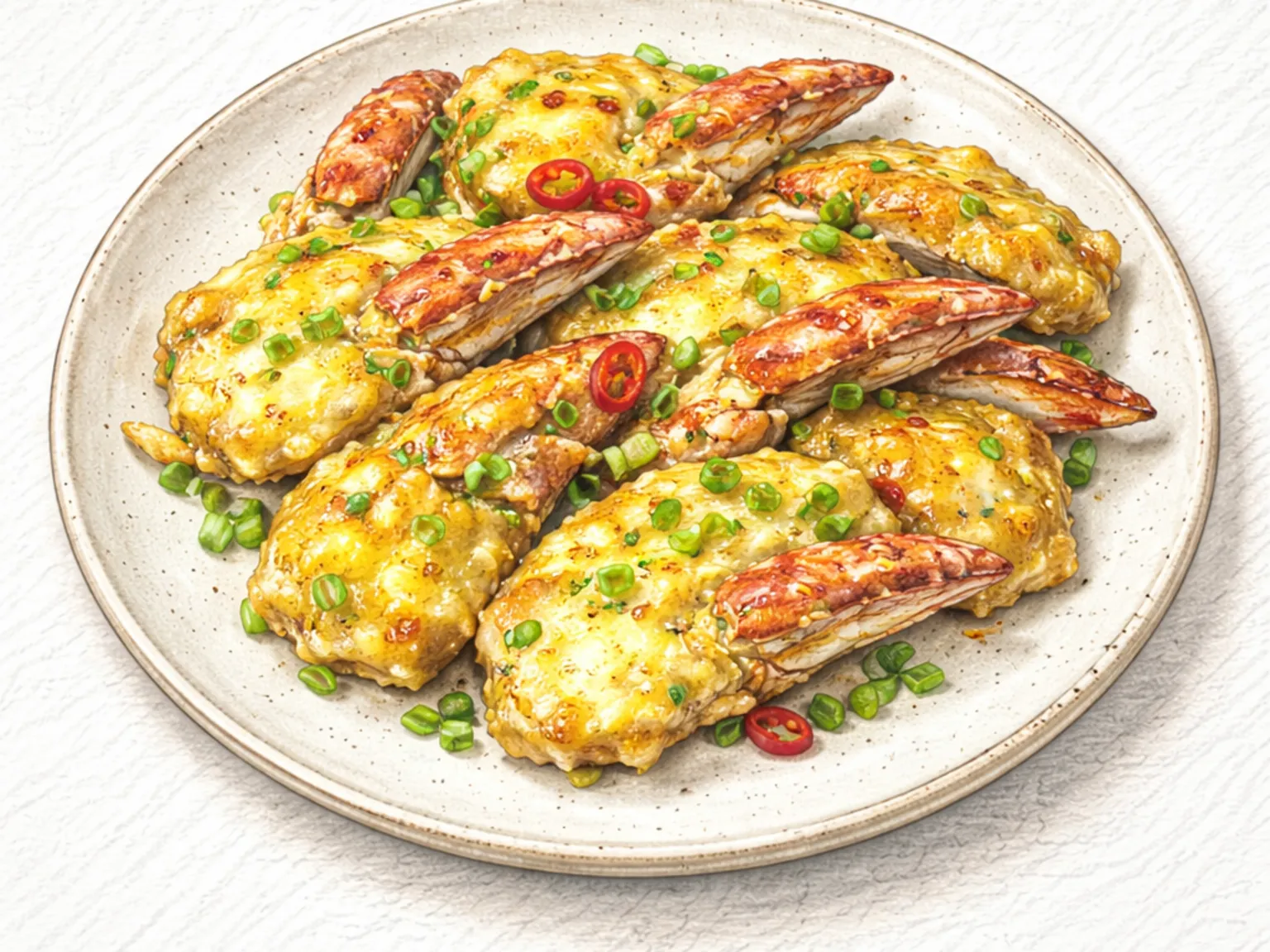
Kkotge-gochujang-gui is a Korean spicy grilled crab where halved blue crabs are coated in a thick paste of gochujang, gochugaru, soy sauce, oligosaccharide syrup, and garlic, then marinated for fifteen minutes before going on a medium-heat grill. The sugar in the syrup and the fermented compounds in gochujang caramelize over the direct flame, forming a glossy, dark-red glaze on the shell while the crab meat beneath stays sweet and succulent. The sauce burns easily, so controlled medium heat and cooking shell-side down first for four minutes, then flipping for another five to six minutes is critical. A finish of sesame oil and toasted sesame seeds layers a nutty fragrance over the spicy coating.

Korean Butter-Grilled Crab
Kkotge-beoteo-gui is a Korean butter-grilled blue crab where halved crabs are basted with melted unsalted butter, minced garlic, soy sauce, and lemon juice as they cook. The butter seeps into the crevices of the shell, coating every strand of crab meat with a nutty richness, while soy sauce and lemon add salinity and acidity that amplify the crab's inherent sweetness. A preliminary splash of rice wine on the cleaned crab neutralizes any briny smell before grilling begins. Cooking shell-side down first for four minutes transmits heat through the shell to steam the interior, and the total grill time stays under ten minutes to keep the flesh from drying out.

Kaya Toast (Singaporean Coconut Jam Butter Toast)
Kaya toast is a cornerstone of the Singaporean breakfast table, consisting of crisp-toasted white bread filled with kaya - a jam made from coconut milk, eggs, sugar, and pandan leaf - and a thick slab of cold butter. The kaya is cooked low and slow, stirred constantly until it thickens into a pale green spread with a fragrance that is floral, nutty, and caramel-sweet all at once. When the cold butter meets the hot toast, it begins to soften without fully melting, creating pockets of salt against the sweet jam. The traditional accompaniment is a pair of soft-boiled eggs seasoned with dark soy sauce and white pepper, meant to be mixed into a loose dip for the toast. The entire meal is washed down with kopi, a strong local coffee sweetened with condensed milk. This combination has remained virtually unchanged in Singaporean coffee shops for decades.