Singapore Rice Noodles (Curry-Spiced Stir-Fried Vermicelli with Shrimp)
Quick answer
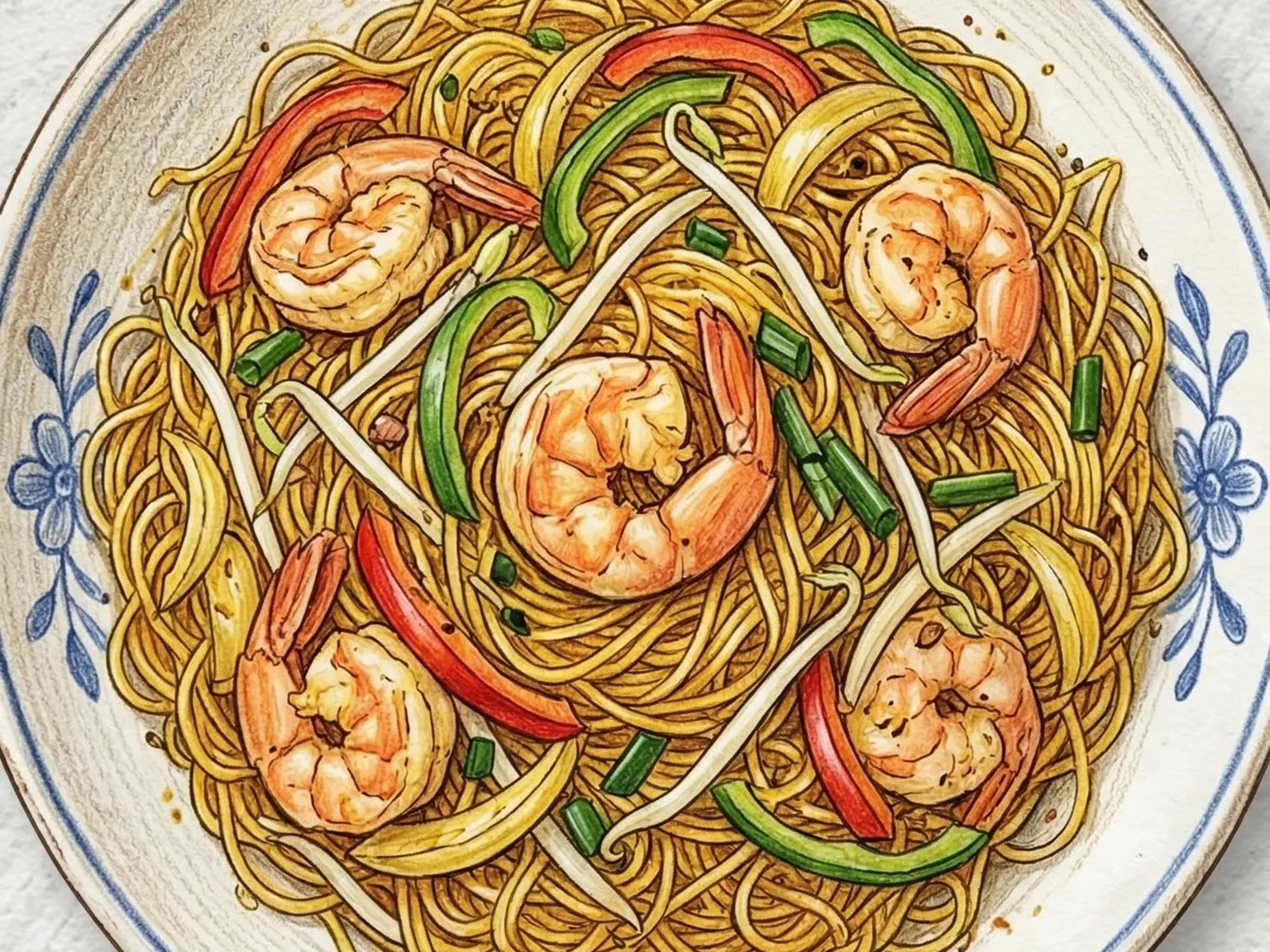
Singapore rice noodles are a Cantonese-style stir-fry of thin rice vermicelli tossed with curry powder, shrimp, and mixed vegetables over high heat.
What makes this special
- Curry-spiced rice vermicelli stir-fried with shrimp and mixed vegetables over high heat.
- Curry powder hits hot oil at pan edge first to bloom before noodles join
- 8-minute soak gives vermicelli optimal elasticity without breaking when stir-fried
Key ingredients
Core cooking flow
- 1 Soak 180 g rice vermicelli in lukewarm water for only 8 minutes.
- 2 Slice 70 g onion and 70 g bell pepper thinly, and shake excess water from 80 g bean sprouts.
- 3 Heat the pan well over high heat, then add 1 tablespoon cooking oil.
Singapore rice noodles are a Cantonese-style stir-fry of thin rice vermicelli tossed with curry powder, shrimp, and mixed vegetables over high heat. The curry powder is bloomed in hot oil at the edge of the wok to unlock its full aroma before being mixed into the noodles. Soy sauce adds seasoning depth, and bean sprouts go in during the last thirty seconds to keep their crunch. Soaking the vermicelli for only eight minutes prevents the noodles from breaking apart during stir-frying. It can be served as a noodle dish, with simple accompaniments chosen to match the sauce, broth, or topping.
Instructions
Read the steps as a cooking flow: prep, heat, seasoning, doneness control, and finish.
- 1Step
Soak 180 g rice vermicelli in lukewarm water for only 8 minutes.
Drain well in a sieve, gently loosen the strands with your fingers, and keep them ready so they do not clump or break in the pan.
- 2Control
Slice 70 g onion and 70 g bell pepper thinly, and shake excess water from 80 g bean sprouts.
Keep every ingredient beside the stove, because this stir-fry needs high heat and quick additions without long pauses.
- 3Finish
Heat the pan well over high heat, then add 1 tablespoon cooking oil.
Add 140 g shrimp and stir-fry just until the outside turns pink and the centers are still slightly underdone, so they finish later without becoming tough.
- 4Heat
Add the onion and bell pepper and stir-fry quickly for about 1 minute.
When the onion edges look slightly translucent and the bell pepper is glossy, push everything to one side to make space at the pan edge.
- 5Season
Add 2 teaspoons curry powder to the hot oil at the pan edge and bloom it for about 10 seconds.
Add the drained noodles and 1 tablespoon soy sauce, then toss until the strands turn evenly yellow.
- 6Finish
If the noodles clump, lift and loosen them with chopsticks while stir-frying about 1 more minute.
Add the bean sprouts and toss for only 30 seconds, then serve as soon as they are crisp and lightly warmed.
After the steps
Pick a recipe that fits this dish.
Continue with shared ingredients, meal pairings, or a similar method.
Recipes That Go Well With This
More Noodles →Based on shared ingredients and meal pairing
Spicy Fried Chicken Stir-fry
Rajogi is a Korean-Chinese dish of chicken thigh pieces coated in potato starch and deep-fried at 170 degrees Celsius until golden, then tossed in a sauce built from gochujang, ketchup, and vinegar. Onion and bell pepper are stir-fried separately to form the sauce base before the crispy chicken is folded in. The coating absorbs just enough glaze to deliver sweetness, tanginess, and chili heat simultaneously while retaining crunch underneath. Timing is critical -- the chicken must be tossed in sauce moments before serving to preserve its texture.
Chinese Chow Mein
Chinese chow mein stir-fries boiled noodles with vegetables and protein over fierce wok heat. The noodles are parboiled, lightly oiled, then tossed in a screaming-hot wok until the exterior crisps while the interior stays chewy. A sauce of soy, oyster sauce, and sesame oil lacquers each strand with salty depth and umami, while bean sprouts, cabbage, and carrot contribute crunch. The hallmark smoky flavor known as wok hei comes only from sustained high heat, so home cooks achieve the closest result by working in small batches and letting the pan fully recover between additions. Chicken, shrimp, or beef can replace one another as the main protein, making chow mein endlessly adaptable. A squeeze of lime at the table brightens the overall flavor.
Yu Sheng Prosperity Salad
Yu sheng prosperity salad arranges thinly sliced sashimi-grade salmon and finely julienned daikon, carrot, and cucumber in a ring on a large platter, dressed with plum sauce, lemon juice, and sesame oil, then tossed vigorously just before eating. The salmon must be sashimi-grade for food safety, and patting it dry before slicing thin allows the sweet-tart plum sauce to cling more effectively to the fish surface. Cutting all vegetables as finely as possible maximizes the surface area in contact with the dressing, ensuring every chopstick-full carries the full spectrum of flavors. Keeping the prepared vegetables chilled maintains the freshness of the raw fish once assembled. Sesame seeds sprinkled on top add a nutty aroma that layers over the fruity plum sauce, completing the festive character of the dish.
Chinese Lo Mein
Lo mein is a Chinese noodle dish where boiled noodles are tossed gently with vegetables, protein, and a soy-based sauce, resulting in a soft, glossy finish that sets it apart from the crisper chow mein. The sauce - soy sauce, oyster sauce, and a small amount of sugar - is premixed so it coats evenly during the brief time in the pan. Shrimp is seared first until half-cooked, then broccoli and carrot are stir-fried just until they lose their raw crunch. The warm, drained noodles go in last, and everything is tossed together until the sauce is absorbed and the noodles gleam. The key is restraint: lo mein should stay moist and supple, not charred or dry. The protein can be swapped freely - chicken, beef, or tofu all work with the same sauce and technique.
Serve with this
Dollnamul Muchim (Korean Seasoned Stonecrop Salad)
Dollnamul muchim is a spring banchan of raw stonecrop (Sedum sarmentosum) dressed in a seasoning mix of gochugaru, vinegar, fish sauce, garlic, and sugar. The plant grows on rocky stream banks and low walls across Korea; its plump, jade-green leaves carry a faintly sour, grassy juice that releases when bitten. Heat collapses the texture entirely - a few seconds of blanching is enough to destroy the crunch - so dollnamul is always dressed raw. The process is minimal: a quick rinse in cold water, a firm shake to remove excess moisture, and an immediate toss with the seasoning. The structural logic of the dressing has fish sauce providing fermented depth beneath the vinegar's sharp acidity; if either element dominates, the herb's clean, fresh aroma disappears. The dish must be eaten within minutes of dressing. Osmotic pressure begins pulling juice from the leaves almost immediately, and the texture softens to a limp mass within half an hour. Dollnamul muchim is a common addition to spring picnic lunches and is best served cold.
Korean Eggplant & Pork Pancake
Thick eggplant slices are topped with seasoned ground pork, coated in Korean pancake batter, dipped in beaten egg, and pan-fried until golden on both sides. As the eggplant absorbs oil over heat, it cooks through to a silky, yielding texture, and the pork filling stays juicy inside the batter crust. Minced garlic and onion season the pork mixture and mask any gaminess, while the egg coating forms a thin, evenly browned exterior. A soy-based dipping sauce sharpens the mild eggplant and savory pork into a balanced bite.
Korean Salted Anchovy Jeotgal
Myeolchi jeotgal is a traditional Korean fermented anchovy preserve made by layering cleaned small anchovies with coarse sea salt in a sterilized container, pressing firmly to eliminate air pockets, then refrigerating for extended aging. As salt draws moisture from the fish, it begins breaking down proteins into concentrated umami compounds, stripping away the raw fishiness and building the deep, complex flavor that defines this preserve. On the fifth day of fermentation, minced garlic, grated ginger, chili flakes, and rice wine are folded in to add aromatic layers on top of the developing fermented base. The salt ratio must stay at or above twenty percent of the anchovy weight throughout the process, as dropping below this threshold allows harmful bacteria to take hold and risks spoilage. The finished jeotgal has two primary uses in Korean cooking: stirred in small amounts into kimchi seasoning paste as an umami backbone, or spooned directly over hot rice as a pungent, savory side dish. It can also substitute for fish sauce in doenjang jjigae or seasoned vegetables, adding a more pronounced fermented character.
Similar recipes
Hakka Noodles (Indo-Chinese Stir-Fried Noodles)
Hakka noodles represent the Indo-Chinese culinary tradition, a fusion cuisine that originated in the Chinese immigrant community of Kolkata and has since spread to cities across India. Egg noodles are boiled just short of fully cooked, rinsed under cold water to stop cooking, and tossed with a small amount of oil so the strands stay separate and pick up seasoning evenly during stir-frying. The vegetables, cabbage, carrot, and bell pepper, are julienned into matchstick-width strips that match the diameter of the noodles, ensuring a balanced forkful in every bite, and are cooked for no more than two minutes over intense heat to preserve their snap. The seasoning mix is deliberately spare: soy sauce for salinity, a splash of rice vinegar for a faint sour note, and black pepper for warmth. What matters more than the ingredient list is the speed and heat of the cooking. The intense wok temperature creates a light char and smoky depth on the noodles and vegetables, a quality called wok hei that cannot be achieved at lower temperatures regardless of the seasoning. Spring onions are added only after the heat is off to keep their fresh aroma and bite intact. Slightly undercooking the noodles before the wok is key; overcooked noodles turn mushy under the heat of stir-frying.
Crispy Chili Garlic Chicken
Kkanpunggi is a Korean-Chinese chicken dish where bone-in or boneless thigh pieces are coated in potato starch and deep-fried until the crust is completely shatter-crisp, then tossed quickly over high heat in a sauce built from garlic, dried red chilies, soy sauce, rice vinegar, and sugar. The sauce must go on while the chicken is still hot from the fryer: the heat helps the thin glaze bond to the surface without softening the coating, while allowing the seasoning to penetrate just enough. Leaving the chicken in the sauce any longer causes the starch shell to absorb moisture and go limp, which destroys the entire point of the dish. The balance of salty, sour, and sweet in the sauce coats each piece evenly, and the assertive garlic aroma combined with the slow heat of dried chilies forms the flavor signature that makes kkanpunggi instantly recognizable. Additional sliced fresh chilies, green or red, can be added at the end to control heat intensity to personal preference. Crisping the skin side of the thigh thoroughly during frying deepens both the textural contrast and the roasted savory aroma. This is one of the most popular anju dishes in Korea, routinely paired with beer or soju, and it must be eaten immediately while the crunch is intact.
Guilin Rice Noodles (Silky Rice Noodles in Beef Brisket Broth)
Guilin rice noodles are the signature noodle dish of Guilin in Guangxi, China, built on a clear beef brisket broth that has been simmered until the collagen fully dissolves and the liquid turns deeply savory without becoming heavy. The slender rice noodle strands are smooth and slightly springy, and they absorb the broth as the bowl sits. Soy sauce seasons the soup with a salty, round undertone rather than any sharp edge. Pickled daikon radish is added as a topping for its crisp bite and vinegary tang, which cuts through the richness of the beef broth and resets the palate between mouthfuls. A drizzle of chili oil introduces a warm, slow-building heat that spreads through the soup. Fresh cilantro placed on top at the end adds a bright, citrus-forward herbal fragrance that ties the Southeast Asian-influenced profile of the bowl together. The combination of broth, noodles, and contrasting toppings is what makes Guilin rice noodles a dish people return to repeatedly.