Sinigang na Baboy (Filipino Tamarind Sour Pork Rib Soup)
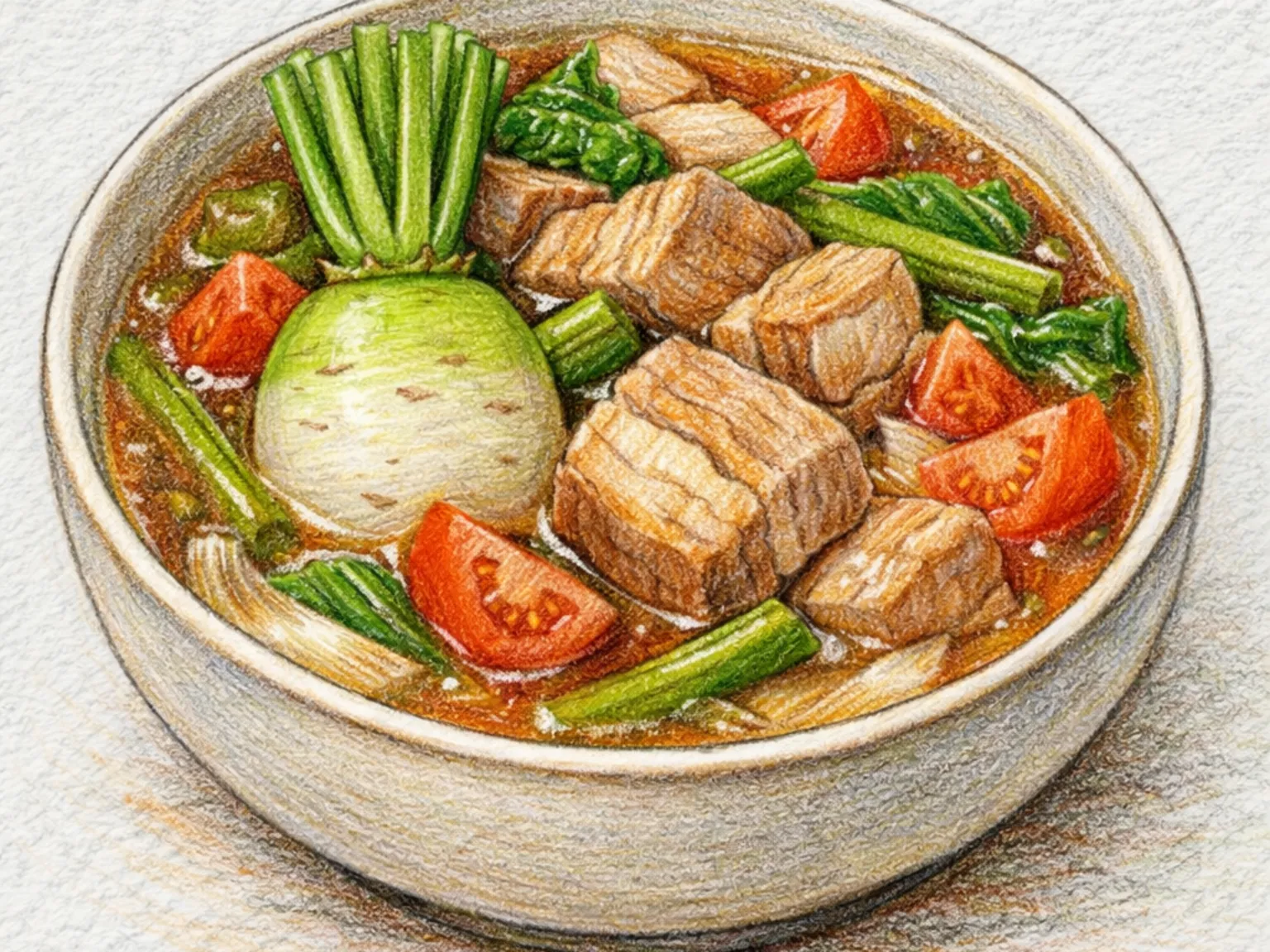
Sinigang na baboy is the quintessential Filipino sour soup, a dish that appears on family tables across the Philippines with the comforting regularity of a weekly ritual. Pork ribs are simmered until the meat loosens from the bone, then the broth is sharpened with tamarind - either fresh pods pounded and strained, or a spoonful of tamarind paste for convenience. Tomatoes, onions, and daikon radish go in early and soften into the broth, while eggplant, long green beans, finger chilies, and leafy greens like water spinach are added toward the end so they keep their color and bite. The resulting broth is clear, tart, and savory all at once, with the pork fat adding a subtle richness beneath the acidity. Filipinos ladle the soup generously over steamed rice, and the sourness is said to sharpen the appetite rather than satisfy it, which explains why second helpings are almost mandatory.
Adjust Servings
Instructions
- 1
Soak pork ribs in cold water for 10 minutes, then rinse to remove impurities.
- 2
Add water and ribs to a pot, bring to a boil, and skim off foam.
- 3
Add onion and tomato, then simmer for 30 minutes over medium-low heat.
- 4
Add thick-cut radish and cook for another 10 minutes until tender.
- 5
Stir in tamarind paste and season with fish sauce.
- 6
Add long green chili, simmer for 3 more minutes, then turn off heat.
As an Amazon Associate, we may earn from qualifying purchases.
Tips
Nutrition (per serving)
More Recipes

Tinola (Filipino Ginger Chicken Soup with Green Papaya)
Tinola is a Filipino home-style chicken soup defined by its prominent ginger character and its clear, light broth. The aromatic base is built by sauteing julienned ginger, sliced garlic, and onion in a little oil until fragrant, then adding chicken pieces and cooking them until the surfaces turn opaque. Fish sauce goes in next, providing a salty depth that anchors the broth, followed by a generous pour of water. The chicken simmers until fully tender, at which point wedges of green papaya are added-their mild sweetness and yielding texture complementing the peppery warmth of the ginger. Spinach or other leafy greens are stirred in at the very end, wilting in the residual heat and adding a fresh, verdant note to the bowl. The finished soup is remarkably clean in flavor despite its depth, with the ginger threading through every spoonful as a persistent, warming presence. In Filipino households, tinola occupies the same comforting role that chicken noodle soup holds elsewhere-it is the first dish prepared when someone is unwell or in need of nourishment.

Chicken Adobo (Filipino Vinegar Soy Braised Chicken)
Chicken adobo is the unofficial national dish of the Philippines, rooted in a pre-colonial preservation technique of braising meat in vinegar to extend its shelf life in tropical heat. Chicken simmers uncovered in soy sauce, cane vinegar, crushed garlic cloves, bay leaves, and whole black peppercorns until the sharp acidity of the vinegar mellows into a salty-sour sauce with caramelized depth. Once braised, the chicken is pan-fried until the skin turns golden and crisp, then reunited with the reduced sauce - the moment the crackling skin meets the thick, glossy liquid is the dish's defining pleasure. Every Filipino household has its own ratio of soy to vinegar, and the debate over whose mother makes the best adobo is a national pastime that never resolves. It is always served over steamed white rice, with extra sauce spooned over generously. Adobo famously tastes better on the second day, after the flavors have deepened overnight in the refrigerator.

Sisig (Filipino Crispy Chopped Pork with Chili and Calamansi)
Sisig is a quintessential Filipino bar food built around chopped pork that is boiled first for tenderness, then pan-fried in butter until the edges turn deeply crisp. Diced onion and fresh chilies are tossed in briefly, adding crunch and a sharp bite that cuts through the richness. Calamansi juice-a small citrus native to the Philippines-brings a tart brightness that lifts the entire dish, while a finishing fold of mayonnaise binds everything together in a creamy coating without dulling the flavor. The mixture is traditionally served on a sizzling cast-iron plate so it arrives at the table still popping and hissing. Each forkful delivers a layered experience: the crunch of the fried pork, the cool tang of citrus, and the lingering heat of the chili. Sisig is inseparable from Filipino drinking culture and remains one of the country's most iconic street-to-table dishes.

Bibingka (Filipino Coconut Rice Cake)
Bibingka is a Filipino baked rice cake inseparable from the Christmas season, eaten warm outside churches after Simbang Gabi - the series of dawn masses held in the nine days before Christmas. A batter of rice flour, coconut milk, eggs, and sugar is poured into a clay pot lined with banana leaves and baked between two layers of charcoal heat; the banana leaves release a green, vegetal fragrance into the batter as it cooks. Slices of salted duck egg and fresh coconut are pressed into the surface, then the top is brushed with butter and returned to the heat for a final browning that caramelizes the edges and sends up a triple aroma of banana leaf, coconut, and butter. The texture sits between a rice cake and a sponge - slightly sticky and chewy yet airy and moist. At four in the morning in December, the sight of bibingka vendors tending charcoal braziers outside Philippine churches, smoke curling into the pre-dawn air, is one of the country's most iconic holiday scenes.

Korean Braised Pork Ribs
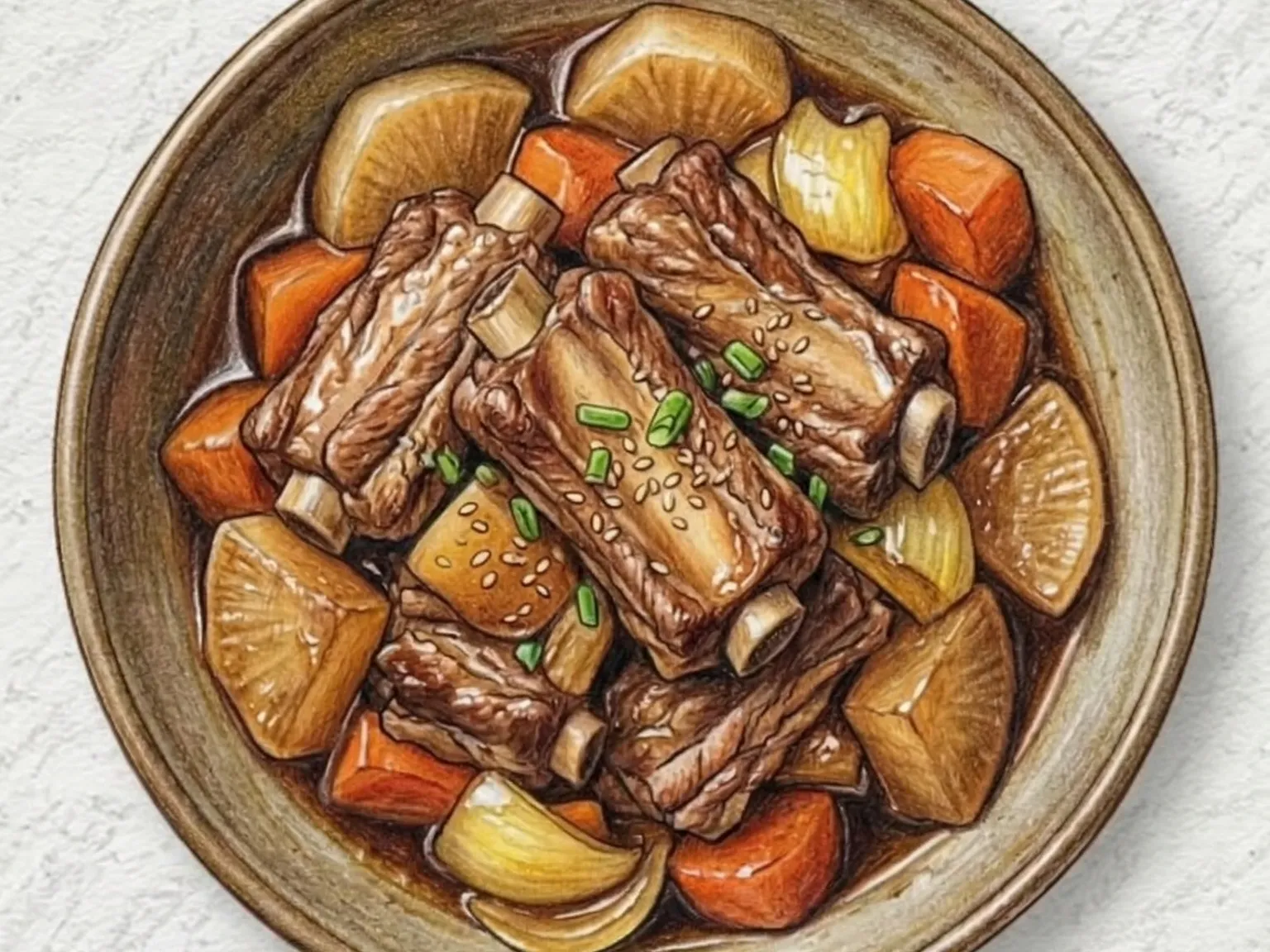
Dwaeji galbi-jjim is a Korean braised pork rib dish simmered in a soy sauce base with Korean radish, carrots, and onion. The ribs cook low and slow until the meat practically falls off the bone, absorbing the ginger- and garlic-infused braising liquid along the way. The radish chunks turn translucent and soak up the seasoning, becoming as flavorful as the meat itself. Served with steamed rice, this dish is a hearty main course suited to cooler weather.

Keullaem Chaudeo (Clam Chowder)
Clam chowder is a thick American soup that combines clams, diced potatoes, onion, and celery in a milk-based broth thickened with a butter-and-flour roux. Sauteing the onion and celery in butter for three minutes draws out their natural sweetness before the flour goes in. Adding milk gradually while whisking prevents lumps and builds a smooth, creamy consistency. The potatoes simmer for twelve minutes until tender, and the clams are added only in the final three minutes to keep them from turning rubbery. Each spoonful delivers a balance of briny, oceanic depth from the clams and mild richness from the milk base.