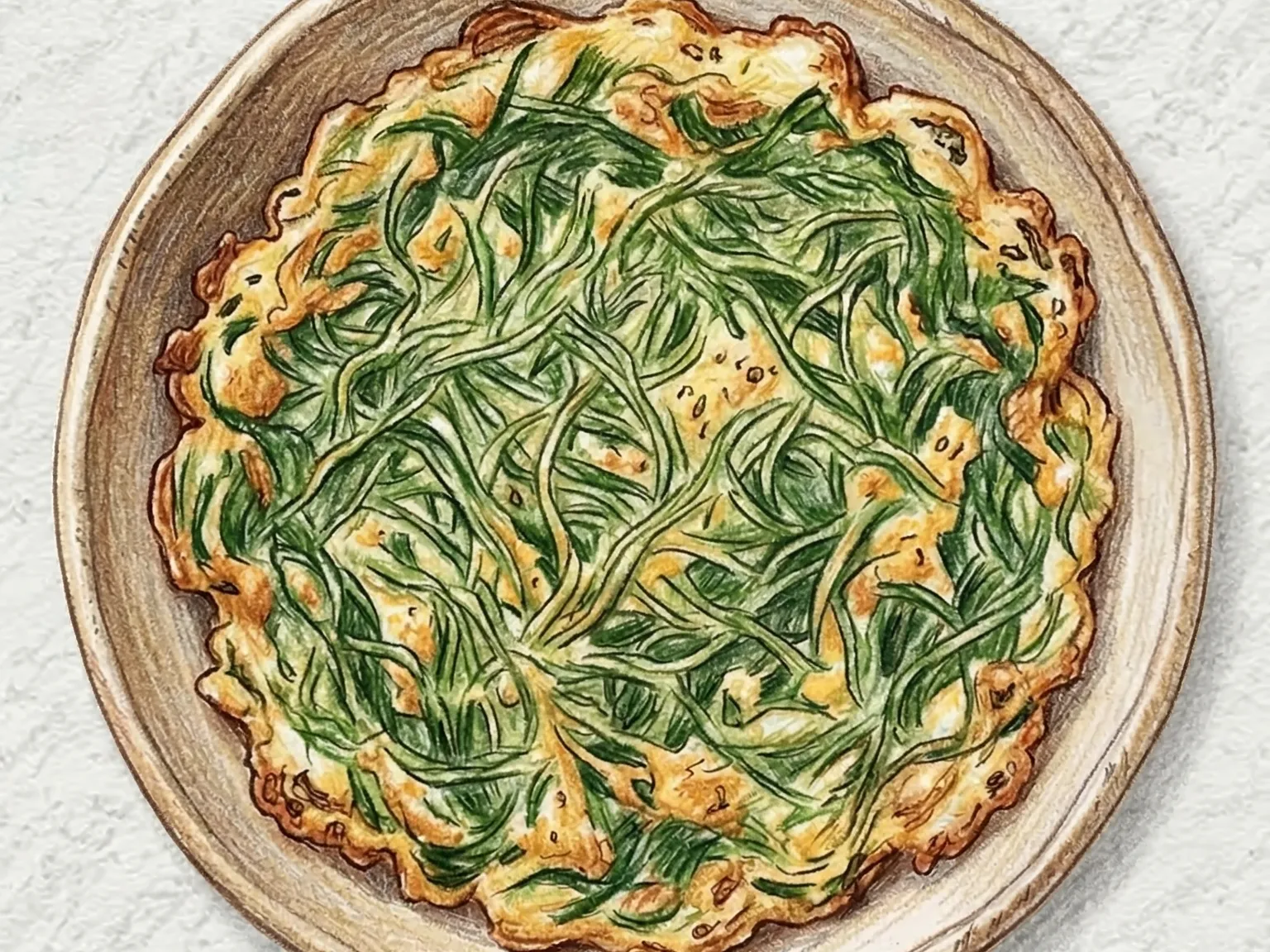
Korean Dried Radish Greens Pancake
Quick answer
Boiled dried radish greens are combined with doenjang and pan-fried into a dense, rustic jeon with deep fermented character.
What makes this special
- Rustic radish greens pancake saturated with fermented doenjang flavor for a deep, savory chew.
- Doenjang fermentation permeates the batter, needing no dipping sauce
- Fibrous dried radish greens are the chewy backbone of this jeon
Key ingredients
Core cooking flow
- 1 Pull back the outer skin of each boiled siraegi stalk (180 g) to remove the tough fiber.
- 2 Add soybean paste (1 tbsp), garlic (1 tsp), and cold water (130 ml) to a bowl.
- 3 Add pancake mix (100 g) and buckwheat flour (30 g) to the doenjang liquid.
Boiled dried radish greens are combined with doenjang and pan-fried into a dense, rustic jeon with deep fermented character. The fibrous texture of the radish greens gives the pancake a satisfying chew, and the soybean paste saturates the batter so thoroughly that no dipping sauce is necessary. Buckwheat flour adds an earthy coarseness that suits the greens well. Cheongyang chili provides a spicy accent throughout. Minced garlic benefits from a brief saute in oil before being mixed into the batter-the raw edge cooks off and the garlic's savory depth integrates fully into the finished pancake. Cooking over low heat lets the inside set without burning the outside, producing a crisp surface and a tender, flavorful center.
Instructions
Read the steps as a cooking flow: prep, heat, seasoning, doneness control, and finish.
- 1Heat
Pull back the outer skin of each boiled siraegi stalk (180 g) to remove the tough fiber.
Cut trimmed stalks into 3 cm pieces, wrap in cloth, and squeeze firmly to remove as much moisture as possible.
- 2Prep
Add soybean paste (1 tbsp), garlic (1 tsp), and cold water (130 ml) to a bowl.
Stir with chopsticks until the paste is completely dissolved. If lumps remain, press it through a strainer.
- 3Prep
Add pancake mix (100 g) and buckwheat flour (30 g) to the doenjang liquid.
Whisk until combined. Buckwheat adds a nutty aroma and makes the batter slightly coarser, which is normal.
- 4Prep
Add siraegi and diagonally sliced chili (1 ea) to the batter.
Stir with chopsticks until the ingredients are evenly distributed throughout.
- 5Control
Heat oil (2 tbsp) in a pan over medium heat.
Spread the batter wide to less than 1 cm thick. Cook 2-3 minutes until the edges are golden and firm, then flip.
- 6Finish
Cook the other side 2-3 minutes until crisp and golden.
Transfer to a cutting board, slice into serving pieces, and plate right away while still warm.
After the steps
Pick a recipe that fits this dish.
Continue with shared ingredients, meal pairings, or a similar method.
Recipes That Go Well With This
More Pancakes →Based on shared ingredients and meal pairing
Korean Radish & Shrimp Pancake
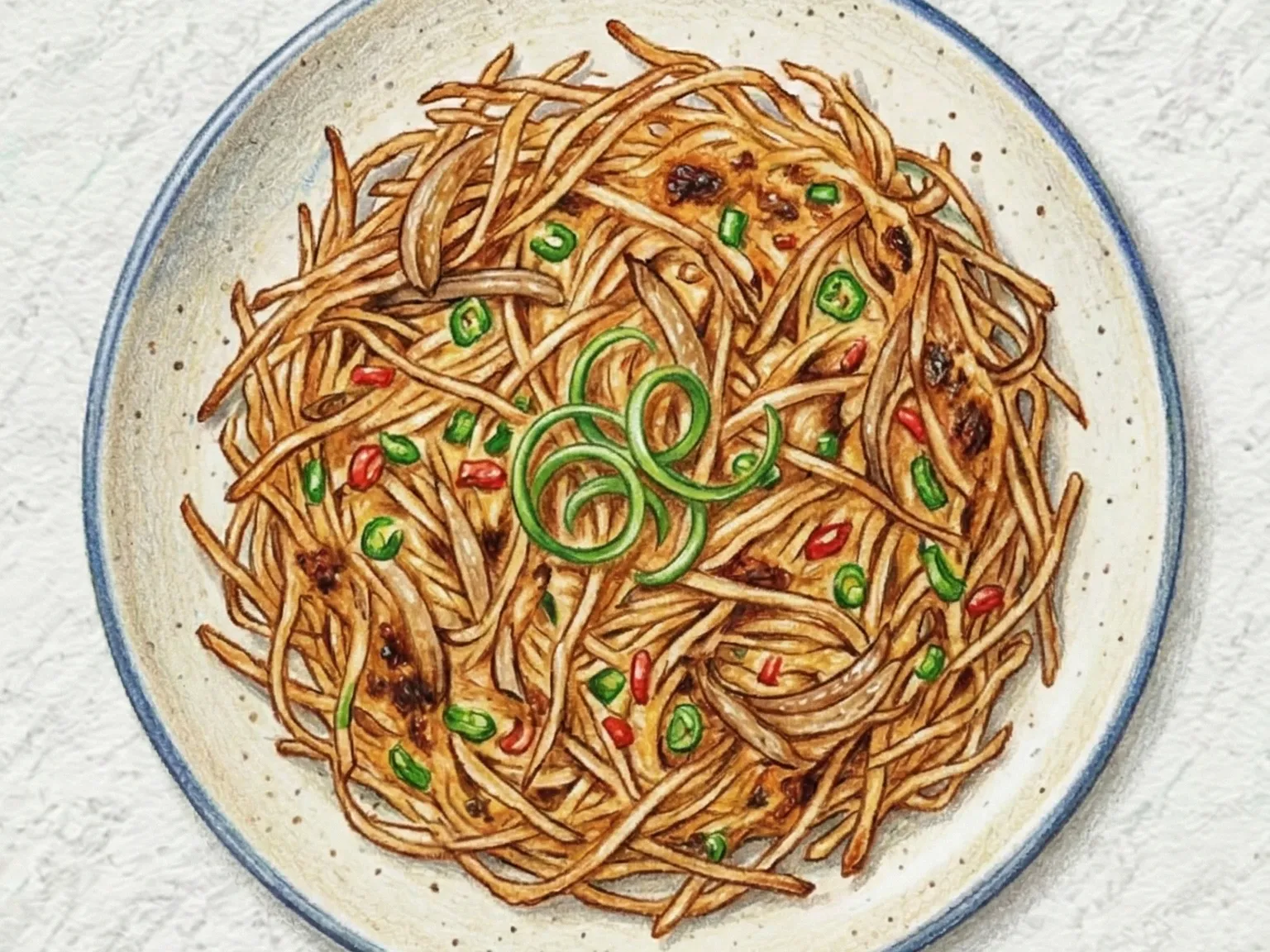
Julienned Korean radish and small peeled shrimp are combined in a pancake batter fortified with a measured amount of potato starch for added crispiness. Egg is mixed into the batter to improve binding and keep the pancake intact when flipped. Scallions are distributed throughout for a mild, grassy fragrance. Radish releases notable moisture as it cooks, so frying over high heat is essential to drive off that liquid quickly and achieve a crisp outer surface. The sharp, slightly bitter edge of raw radish disappears with heat and gives way to a gentle natural sweetness that pairs cleanly with the mild, delicate flavor of the shrimp. Pressing the center of the pancake down with a spatula while frying encourages even browning all the way through.
Korean Braised Dried Radish Greens
Siraegi jorim is a traditional Korean braise of boiled dried radish greens seasoned with doenjang, soup soy sauce, and garlic, then simmered in perilla oil and water over low heat for twenty minutes. The doenjang slowly permeates the tough, fibrous greens, infusing them with deep fermented soybean flavor while the perilla oil adds a smooth richness. The longer the dish simmers, the more pronounced the earthy, malty depth becomes. Scallion stirred in at the end brightens the otherwise dense, savory profile of this slow-cooked banchan.
Korean Spicy Stir-Fried Anchovies
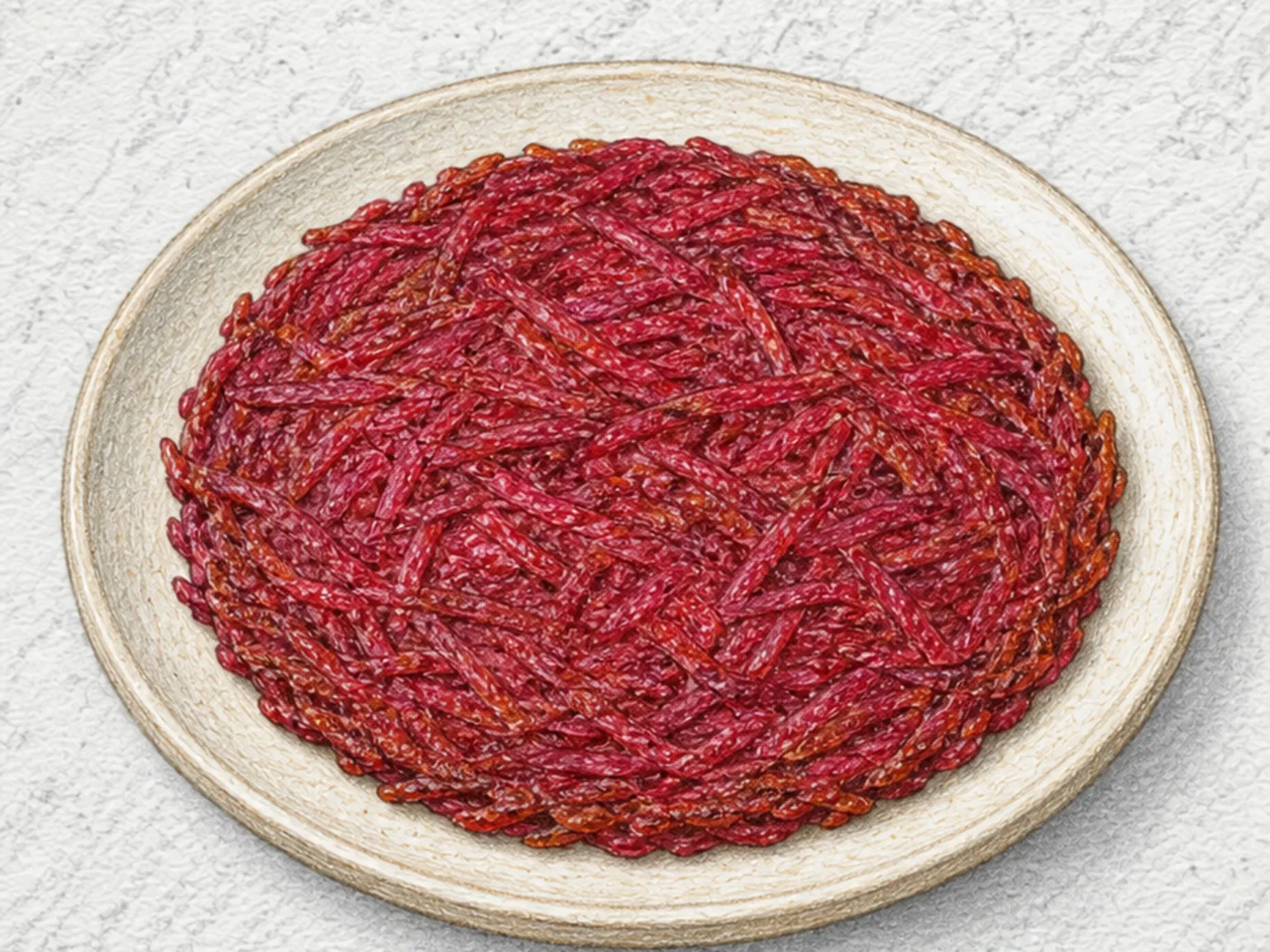
Spicy stir-fried anchovies (maeun myeolchi-bokkeum) toss medium-sized dried anchovies in a gochujang-gochugaru glaze, occupying the opposite end of the flavor spectrum from the sweet jiri-myeolchi version and targeting adult palates. Medium anchovies are larger and thicker than the tiny variety, requiring individual head-and-gut removal to eliminate bitterness - a tedious prep step that nonetheless determines the dish's clean finish. After dry-toasting to drive off moisture, the anchovies simmer in a sauce of gochujang, gochugaru, soy sauce, oligosaccharide, and minced garlic until each piece is coated in a rust-colored glaze. The gochujang's fermented heat combines with gochugaru's vivid red to create both flavor depth and visual appeal. The larger anchovy size delivers a satisfying crunch that lingers alongside a lasting savory umami. Heat intensity is adjustable via gochugaru quantity - adding chopped cheongyang chili ratchets it up another notch. This banchan doubles as a soju drinking snack, appearing as frequently on bar tables as on dinner tables.
Korean Dried Radish Greens Perilla Stew
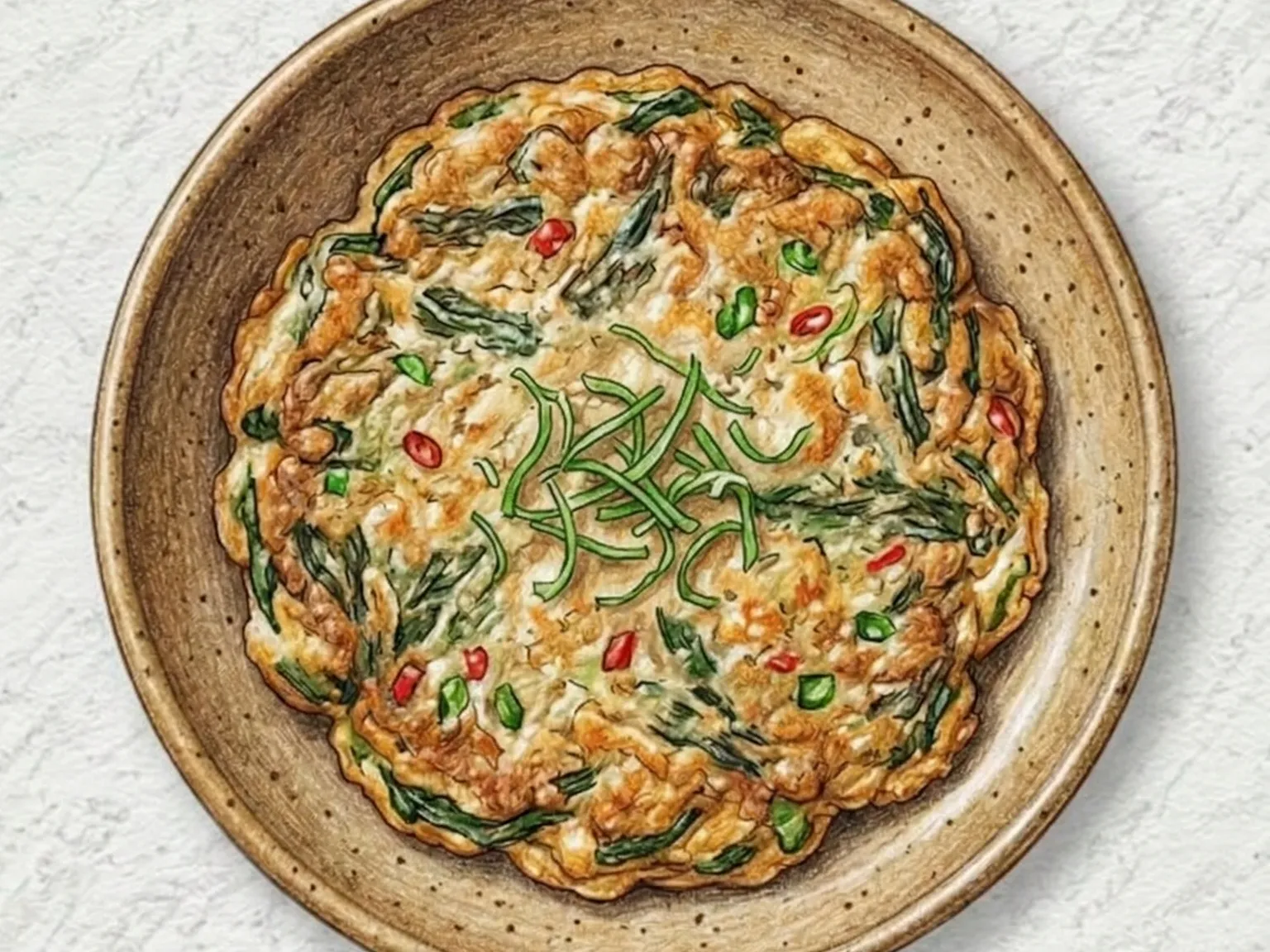
This stew simmers rehydrated dried radish greens in rice-rinse water thickened with a generous four tablespoons of perilla seed powder. A small amount of doenjang and gochujang provides savory depth, and using rice-rinse water instead of plain water adds a natural starchiness that helps the perilla powder integrate into the broth more smoothly. The perilla powder creates a creamy, nutty soup with a pale beige hue, and the chewy, fibrous texture of the radish greens contrasts with the richness of the liquid. The radish greens need to be fully rehydrated and pre-boiled so they absorb the broth evenly during cooking rather than remaining tough. Onion and green onion add layers of sweetness and fragrance, and seasoning gradually while the stew cooks produces a more balanced result than adding everything upfront. Served bubbling in an earthenware pot on cold days, this is one of the most comforting staples in Korean winter home cooking.
Serve with this
Korean Spam Fried Rice (Crispy Spam Cubes with Egg and Rice)
Spam bokkeumbap is a Korean fried rice built around crispy cubes of pan-seared Spam, whose salty, caramelized edges give the dish an addictive quality. The Spam is diced small and dry-fried without added oil - its own rendered fat crisps the outside while keeping the inside moist and savory. Onion and scallion go in next for aromatic depth, followed by cold leftover rice that is tossed over high heat until every grain picks up the salty pork flavor left in the pan. Beaten egg is scrambled into the rice, coating the grains in a thin, soft layer. A splash of soy sauce and a drizzle of sesame oil finish the dish with umami and nuttiness. The whole thing comes together in under ten minutes, making it one of the fastest comfort meals in the Korean home-cooking repertoire.
Korean Whelk Stew (Spicy Canned Whelk & Cabbage Pot)
Golbaengi-jjigae is a spicy Korean stew made with canned whelk as the centerpiece. Because the whelk is already fully cooked inside the can, it goes in near the end of cooking rather than at the start, allowing the broth and vegetables to reach their full flavor first. Extended heat makes whelk rubbery, so a brief simmer of two to three minutes is enough to warm the pieces through while preserving their distinctive chewy texture. Anchovy stock forms the savory foundation of the broth, delivering a clean seafood depth that amplifies the whelk's flavor without masking it. Gochujang and gochugaru combine to give the stew its fiery, full-bodied heat, while cabbage and onion absorb the broth over time and release a gentle sweetness that balances the spice. A single cheongyang chili added whole sharpens the heat at the finish, pulling the entire broth taut with a bright, clean burn. A handful of sliced green onion stirred in at the end brings a fresh aroma that lifts the richness of the stew. It works equally well as a rice-side dish or as an accompaniment to soju.
Korean Soft Tofu Soup (Mild Clear Broth with Silken Tofu)
Sundubu-guk is the gentler sibling of the more widely known sundubu-jjigae, trading the latter's fiery red broth for a clear, mild soup that puts silken tofu front and center. The base is a simple anchovy and kelp stock, seasoned with soup soy sauce and nothing more assertive, so the broth stays transparent and clean on the palate. Blocks of unpressed soft tofu are slipped into the simmering liquid and heated just until they are warmed through - overcooked sundubu loses the trembling, custard-like texture that defines the dish. Each spoonful collapses gently on the tongue, releasing a faint, sweet soybean flavor that pairs effortlessly with the umami-rich stock. A small addition of salted shrimp paste can be stirred in at the table to introduce a subtle marine depth without disrupting the soup's calm character. This is the soup Koreans turn to when appetite is low, digestion needs rest, or the body simply craves something warm and uncomplicated. It is equally suitable for young children and elderly diners, and its quiet simplicity is precisely its strength.
Similar recipes
Korean Dried Radish Leaf Rice
Sirae-gi-bap cooks dried radish greens with rice, then mixes everything with a doenjang-based seasoning sauce for a deeply savory bowl. The dried greens are first boiled until soft and pliable, cut into bite-size pieces, and layered over soaked rice before the pot is sealed. As the rice steams, the greens release their concentrated earthy aroma into every grain. The dipping sauce - doenjang, soy sauce, sesame oil, chili flakes, and scallion - is folded in at the table, adding layers of salty, nutty, and mildly spicy flavor. The fibrous texture of the reconstituted greens provides a satisfying chew that makes the meal feel substantial. This is a traditional Korean home-cooked dish that turns humble winter-dried vegetables into a warm, filling meal.
Korean Dried Radish Greens Beef Soup
Siraegi-soegogi-guk combines beef brisket or shank with dried radish greens in a doenjang-seasoned broth that is simultaneously meaty, earthy, and fermented. The beef simmers first, building a clear stock with substantial body, before the pre-boiled and softened radish greens are introduced. Doenjang dissolves into the stock and acts as a bridge between the animal richness of the beef and the vegetal, slightly bitter quality of the greens, making both taste more complete than they would alone. An optional spoonful of gochugaru adds warmth and color, shifting the soup from mild to gently spicy. Garlic and green onion handle the aromatic duties, and a scoop of ground perilla seeds - stirred in near the end - gives the broth a creamy, nutty finish that softens the edges. This soup is one of the more filling options in the Korean guk repertoire because both the beef and the fibrous greens provide substance and chew. A single bowl, ladled generously over rice, can replace an entire meal without any additional banchan. The flavors deepen overnight, making leftovers an anticipated breakfast rather than an afterthought.
Korean Braised Dried Radish Greens with Doenjang
Dried radish greens, once rehydrated and boiled tender, are braised in a doenjang-based seasoning until the liquid reduces to a concentrated glaze. The fermented soybean paste melts into the coarse fibers of the greens, infusing each strand with deep, earthy umami. A splash of anchovy stock is added after the initial stir-fry in perilla oil, and the pan is covered so the greens can absorb the broth slowly over low heat. As the liquid evaporates, the seasoning thickens and clings to every piece, producing a chewy, salty-savory bite that releases its flavors gradually when chewed. Gochugaru contributes a mild, lingering warmth rather than sharp heat, while garlic softens into a mellow sweetness that rounds out the intensity of the doenjang. Patience during the final reduction is essential: only when the braising liquid has nearly disappeared does the dish reach the dense, flavorful consistency that makes it an ideal topping for steamed rice.