Korean Hairtail Braised with Dried Greens
Quick answer
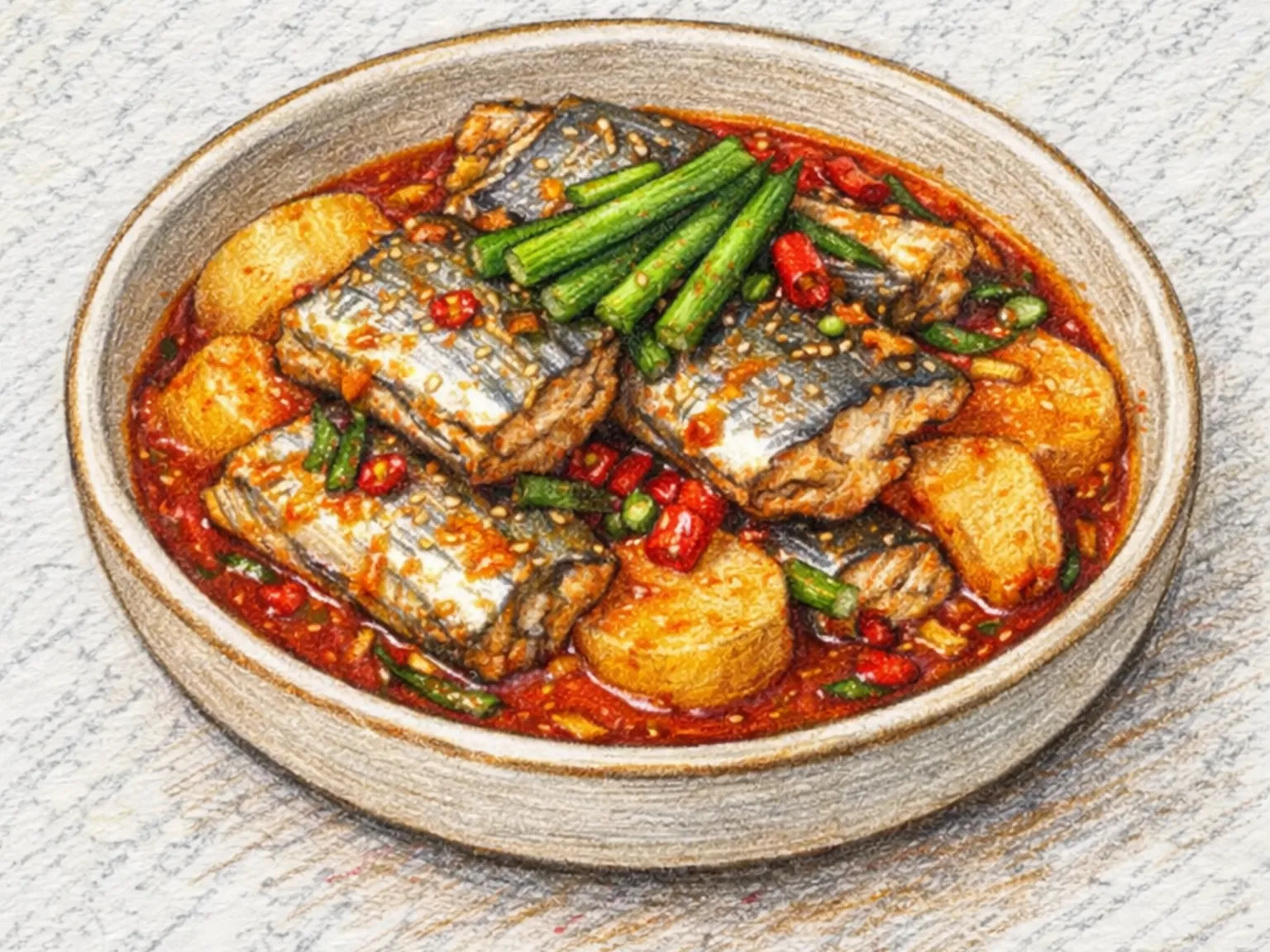
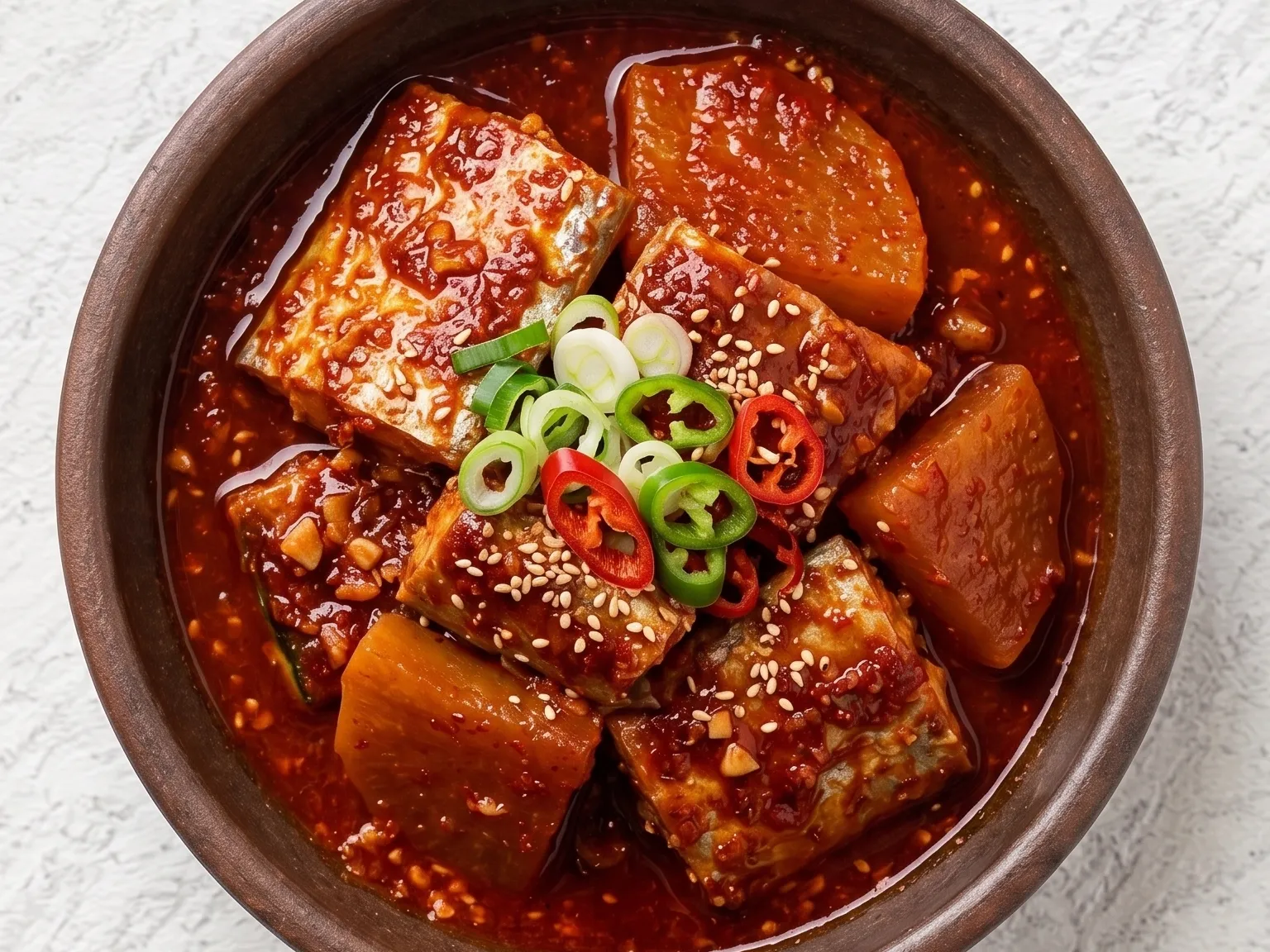
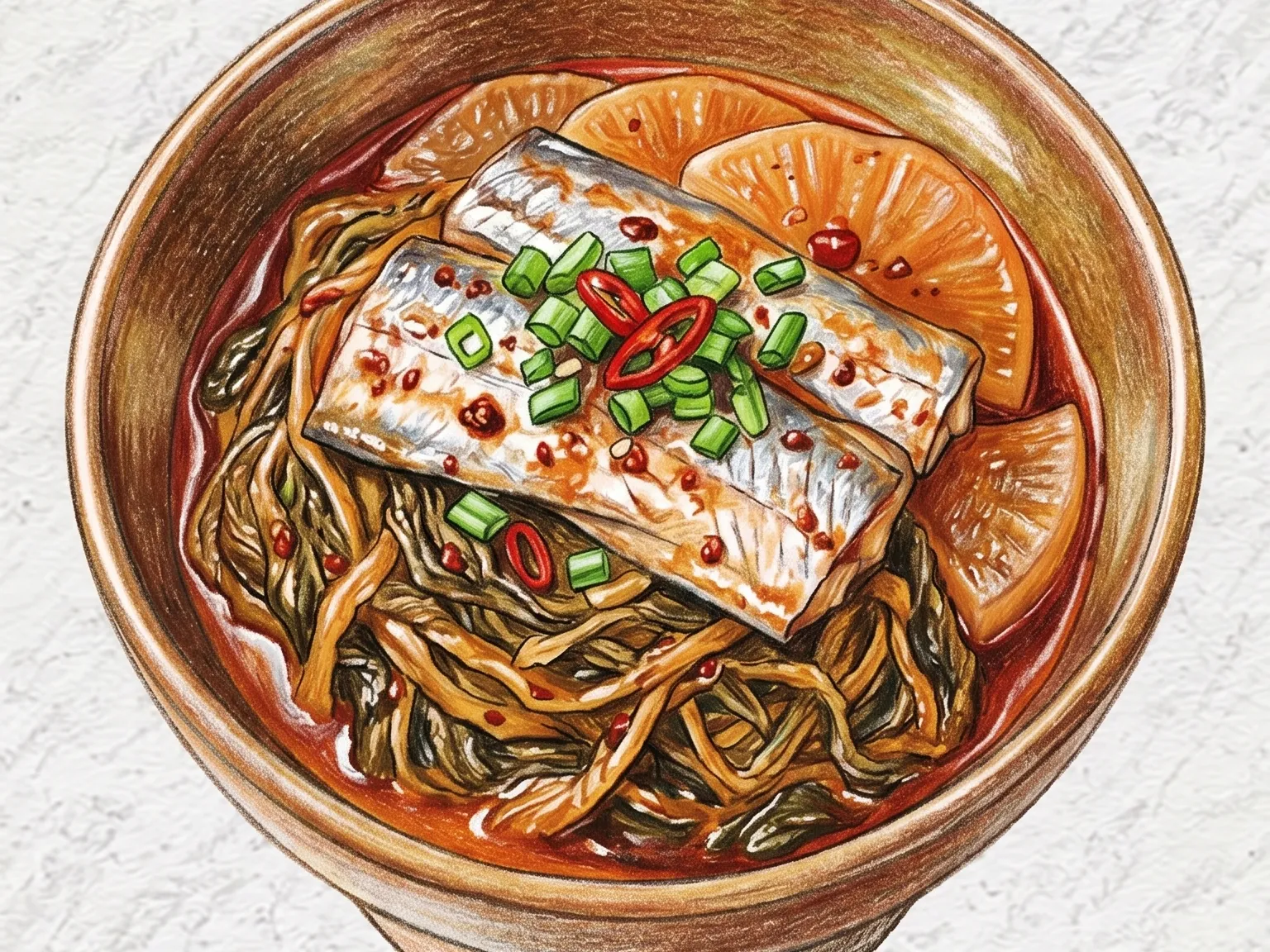
Siraegi galchi jorim is a Korean braised hairtail fish dish assembled by layering boiled dried radish greens, radish, and hairtail in a pot, then simmering everything tog...
What makes this special
- Siraegi galchi jorim lets rich hairtail umami soak into dried radish greens during a slow simmer in spicy gochujang sauce.
- Hairtail and siraegi braised together in gochujang sauce lets the fish umami soak into the greens
- Layering daikon at the bottom first draws out moisture and prevents the fish from sticking
Key ingredients
Core cooking flow
- 1 Cut 800 g hairtail into serving pieces, soak it in lightly salted water for...
- 2 Slice 250 g Korean radish thickly and spread it across the bottom of the pot.
- 3 Whisk 4 tablespoons soy sauce, 2 tablespoons gochugaru, 1 tablespoon gochuja...
Siraegi galchi jorim is a Korean braised hairtail fish dish assembled by layering boiled dried radish greens, radish, and hairtail in a pot, then simmering everything together in a sauce built from gochugaru, soy sauce, and gochujang. Rubbing the dried radish greens with a teaspoon of doenjang before they go into the pot allows fermented earthiness to penetrate the greens during cooking, adding a layer of depth that the braising sauce alone cannot provide. The greens are firm and springy enough that long simmering does not cause them to fall apart, and their cellular structure soaks up the braising liquid so thoroughly that every bite releases a concentrated burst of the seasoned sauce. Radish absorbs the stock produced by the fish and the greens as it cooks, developing a clean, gentle sweetness that grounds the spice of the sauce. The hairtail is never turned during cooking; the braising liquid is spooned over it repeatedly instead, which preserves the delicate, layered texture of the flesh and prevents it from flaking and falling apart in the pot. Closing the lid and maintaining a steady medium-low heat while basting only between lid lifts gives the fish the best chance of arriving at the table intact. The finished dish is the kind of strongly seasoned, deeply savory Korean side that makes a full bowl of white rice disappear without effort.
Instructions
Read the steps as a cooking flow: prep, heat, seasoning, doneness control, and finish.
- 1Season
Cut 800 g hairtail into serving pieces, soak it in lightly salted water for 5 minutes, then rinse and pat dry.
Squeeze excess water from 300 g boiled dried radish greens and rub in 1 teaspoon doenjang lightly.
- 2Season
Slice 250 g Korean radish thickly and spread it across the bottom of the pot.
Add the seasoned greens and 120 g onion on top so the hairtail will not sit directly against the hot base.
- 3Season
Whisk 4 tablespoons soy sauce, 2 tablespoons gochugaru, 1 tablespoon gochujang, minced garlic, ginger juice, and 500 ml anchovy stock until smooth. Break up any paste clumps so the seasoning spreads evenly while braising.
- 4Control
Lay the hairtail in one layer over the vegetables and pour the sauce around the edges.
Bring it to a boil over high heat, skim foam, cover, then braise over medium-low heat for 20 minutes.
- 5Step
Do not flip the hairtail; each time you lift the lid, spoon the braising liquid over the fish.
Continue braising about 10 minutes, until the radish turns translucent and the greens look fully moistened.
- 6Finish
Add 1 sliced hot green chili and simmer 2 more minutes to release its aroma.
When the sauce is slightly thickened and the hairtail flesh has turned opaque white, turn off the heat and serve carefully.
After the steps
Pick a recipe that fits this dish.
Continue with shared ingredients, meal pairings, or a similar method.
Recipes That Go Well With This
More Steamed →Based on shared ingredients and meal pairing
Korean Braised Hairtail Fish
Galchi-jjim is a Korean braised hairtail fish dish where sliced hairtail and Korean radish are simmered together in a seasoned broth of gochugaru, soy sauce, garlic, and ginger until the liquid reduces to a concentrated glaze. The fish has a rich, oily white flesh that drinks in the bold seasoning while staying tender and intact. Ginger juice is added specifically to neutralize the oceanic smell that hairtail can carry, keeping the finished dish clean and approachable. The radish cooks down in the braising liquid, becoming deeply seasoned throughout as it absorbs the spiced sauce. The remaining sauce is intentionally left in small quantity so it can be spooned directly over steamed rice, which is considered the most satisfying way to eat this dish. It is a staple Korean fish preparation that appears on home dinner tables across the year.
Korean Spicy Braised Hairtail
Galchi-yangnyeom-jorim is a Korean braised hairtail made by simmering sectioned cutlassfish and radish in a spicy-sweet sauce of gochugaru, soy sauce, and minced garlic. The seasoning penetrates the hairtail flesh as it cooks, suppressing any lingering fishiness while developing a layered, concentrated umami. Radish pieces are laid on the bottom of the pot first so they cook through completely and absorb the braising liquid, turning sweet and tender in a way that contrasts with the flaky fish above. Finishing with the lid off allows the sauce to reduce until it clings to the fish surface in a glossy, tight glaze. Fresh hairtail holds its shape better under heat, so the flesh can be lifted with chopsticks intact, while older fish tends to break apart during cooking. Adding Cheongyang chili increases the sharp heat, and a thin slice of fresh ginger worked into the sauce at the start removes any remaining fishiness before braising begins.
Korean Beef & Shiitake Japchae
Japchae originated as a Joseon royal court dish of stir-fried vegetables before sweet potato glass noodles were added to create the form recognized today. This version pairs glass noodles with soy-marinated beef and sliced shiitake mushrooms. Each component cooks separately: beef and mushrooms stir-fried with garlic, spinach blanched and squeezed dry, carrots and onions sauteed until just tender. A final toss with sesame oil brings everything together. The noodles should be translucent and springy, carrying a sweet-salty soy glaze into each forkful. A standard presence on every Korean holiday table at Chuseok, Seollal, and birthday celebrations alike.
Korean Braised Mackerel with Dried Radish Greens
Siraegi godeungeo jorim is a Korean braised mackerel dish in which the fish and pre-boiled dried radish greens are cooked down with radish and onion in a chili-soy seasoning. The richness of mackerel fat and the earthy, fibrous character of dried radish greens share the same braising liquid, each amplifying what the other brings to the pot. The radish greens must be boiled thoroughly before braising to soften their tough fibers and leach out any residual bitterness, which is then washed away with a cold rinse. Mackerel seasoned lightly with cooking wine is placed over the greens and vegetables, and the pot braises over medium-low heat for more than twenty minutes so the seasoning penetrates the flesh all the way through. Spooning the braising liquid over the fish two or three times during cooking ensures an even coating on the upper surface. Radish becomes sweeter and more concentrated as it reduces, neutralizing any fishiness from the mackerel. The finished dish, spooned generously over steamed rice with its spicy braising sauce, delivers a layered depth of flavor that is unmistakably Korean.
Serve with this
Korean Cockle & Water Parsley Mixed Rice
Kkomak-minari bibimbap is a seasonal rice bowl that comes together when cockles are at their peak in early spring, pairing the ocean sweetness of briefly blanched cockle meat with the clean, grassy sharpness of raw water parsley (minari). The cockle meat is rinsed in light salt water to remove any residual sand, then blanched for no more than thirty seconds in boiling water so the flesh stays springy rather than contracting into a rubbery texture. Julienned carrot and zucchini are each stir-fried separately, controlling moisture and flavor independently, then set aside to cool before assembly. A bowl of well-steamed rice is layered with the blanched cockles, the sauteed vegetables, and the raw minari placed on top last to protect its volatile fragrance from the heat below. A bibimbap sauce made from gochujang, sesame oil, minced garlic, and a touch of vinegar ties everything together when mixed, balancing the briny umami of the cockles against the brightness of the parsley. Sesame oil and toasted sesame seeds added at the end round the flavors and give the bowl a warm, nutty finish.
Imja-sutang (Royal Chilled Pine Nut Soup)
Imja-sutang is a royal Korean chilled soup that combines finely ground pine nuts and sesame seeds with chicken broth to create an opaque, creamy liquid of remarkable richness. The nut paste is blended with cooled chicken stock and a touch of milk until smooth, producing a porridge-like consistency that coats the palate with a gentle, lingering nuttiness. Poached chicken breast is shredded along the grain and submerged in the broth, and thin slices of cucumber are sometimes added for a cool, crisp contrast. The soup is traditionally served cold or at room temperature, making it especially refreshing in summer. Seasoning is minimal - just salt - because the natural oils in the pine nuts and sesame provide all the depth the dish needs. Imja-sutang traces its origins to Joseon dynasty court cuisine, where it was prepared for royal banquets, and it retains an air of elegance that elevates any table it appears on.
Korean Kohlrabi Kimchi (Cubed Gochugaru Fermented Crisp)
Kolrabi kimchi is made by cutting kohlrabi into 2 cm cubes, brining them in coarse salt, then mixing with gochugaru, fish sauce, minced garlic, and plum syrup before fermentation. Kohlrabi has lower moisture content and a denser cellular structure than Korean radish, which means its crunch holds up through days of fermentation without softening into mush. The brining step draws internal moisture out of the kohlrabi while driving salt evenly into the tissue, and this stage must be completed thoroughly so that seasoning can penetrate all the way through during fermentation. Kohlrabi's natural sweetness creates a clear contrast against the heat of gochugaru, adding textural depth to the flavor profile. Fish sauce builds the savory fermented foundation, while plum syrup contributes both acidity and sweetness to keep the overall seasoning in balance. Eaten immediately after mixing, the kimchi tastes fresh and light, similar to a dressed salad. After one to two days at room temperature or three to four days in the refrigerator, the umami deepens noticeably and the characteristic tang of fermentation emerges. It works well as a substitute for kkakdugi alongside rice and grilled meats.
Similar recipes
Korean Jeju-style Braised Hairtail
Galchi-jorim-jeju is a regional specialty of Jeju Island in which thick-cut hairtail is braised with radish and potato in a bold, deeply seasoned chili sauce. Unlike mainland versions, the Jeju style uses considerably more sauce and cooking liquid, producing a result that sits closer to a jjigae than to a dry braise, and it is common to eat the leftover sauce mixed into plain rice. Radish provides a cooling, clean sweetness that tempers the intensity of the chili and brings balance to the overall flavor, while potato absorbs the sauce and thickens the liquid naturally as it cooks. Jeju silver hairtail is prized for its thick, fatty flesh, which holds together without falling apart during the long braise and absorbs the pungent, layered sauce deeply into each piece. The result is a dish that is simultaneously fiery, savory, and faintly sweet.
Korean Braised Beltfish with Potatoes
Galchi-gamja-jorim is a Korean braise of ribbonfish and potatoes cooked together in a soy-based sauce seasoned with gochugaru, garlic, and onion. Ribbonfish has naturally oily, tender flesh that holds together well during braising, and as the fat renders into the liquid it builds a deep seafood umami that defines the dish. The potatoes absorb this concentrated broth as they cook, becoming floury and well-seasoned all the way through rather than just on the surface. Onion breaks down and dissolves into the sauce as it reduces, contributing sweetness that balances the salt and spice. The heat level is adjustable: standard gochugaru gives color and mild warmth, while adding cheongyang chili peppers sharpens the spice. The dish is best served when the sauce has reduced to a thick, glossy consistency that clings to each piece. A spoonful of that sauce over plain rice rounds out the meal. Sliced Korean radish added to the pot introduces a clean, slightly peppery sweetness to the broth.
Korean Spicy Braised Cod with Radish
Cod fillets are braised in a seasoning sauce of soy sauce, gochujang, and gochugaru until the liquid reduces and the flavors soak into the flesh. Cod is a lean fish with a clean, neutral character, and the bold seasoning penetrates the meat to add depth without overwhelming it. Daikon radish placed alongside the fish absorbs the braising liquid as it cooks, becoming as flavorful as the fish itself. Onion slowly softens and releases natural sweetness into the sauce during the simmer. The flesh flakes easily and separates cleanly from the bone, making this dish accessible for all ages. Keeping the lid on over medium heat during braising prevents the sauce from reducing too fast and ensures the fish cooks through evenly.